A good mat does more than mark the throw line. It protects the floor, steadies your stance and helps the whole home setup feel more like a proper oche. Regular darts mat cleaning keeps grit, dust and sticky marks from building up, but the way you clean, dry and store it matters just as much as how often you do it.
The aim is simple: keep the mat flat, clean, dry and easy to position. That means light routine care after normal use, deeper cleaning when grime builds up, and sensible storage when the board area is not permanently set up.
The big picture
Most home darts mats suffer from three problems: dirt walked in from shoes, curled edges from poor storage, and throw-line movement during play. None of these needs a complicated fix, but ignoring them can shorten the mat’s useful life and make the oche feel less stable.
Rubber, PVC, carpet-style and hybrid mats all behave slightly differently, so the safest approach is to start with the manufacturer’s care label where one is supplied. If there is no clear guidance, use mild cleaning methods first and avoid anything harsh, abrasive or heavily scented.
- Remove grit before it gets ground into the surface.
- Wipe spills quickly, especially sugary drinks or beer.
- Let the mat dry fully before rolling or storing it.
- Check the oche line has not shifted before each session.
- Keep edges flat so they do not become a trip point.
Everyday cleaning after a normal session
For regular home play, you do not need to deep-clean the mat after every match. A quick sweep, vacuum or wipe is usually enough, especially if the mat lives in a spare room, garage conversion or garden room where dust and grit collect easily.
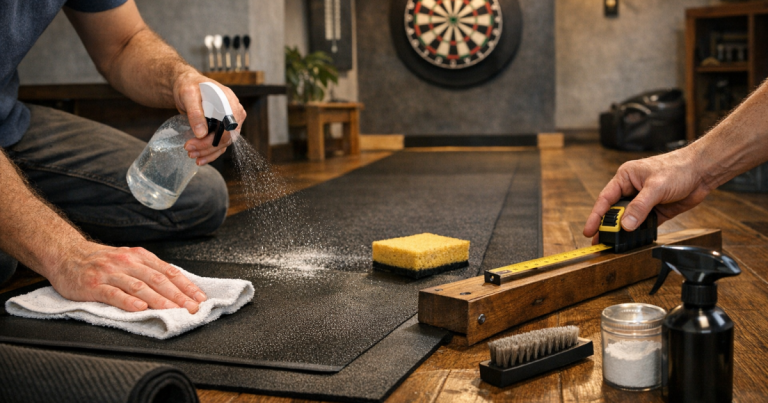
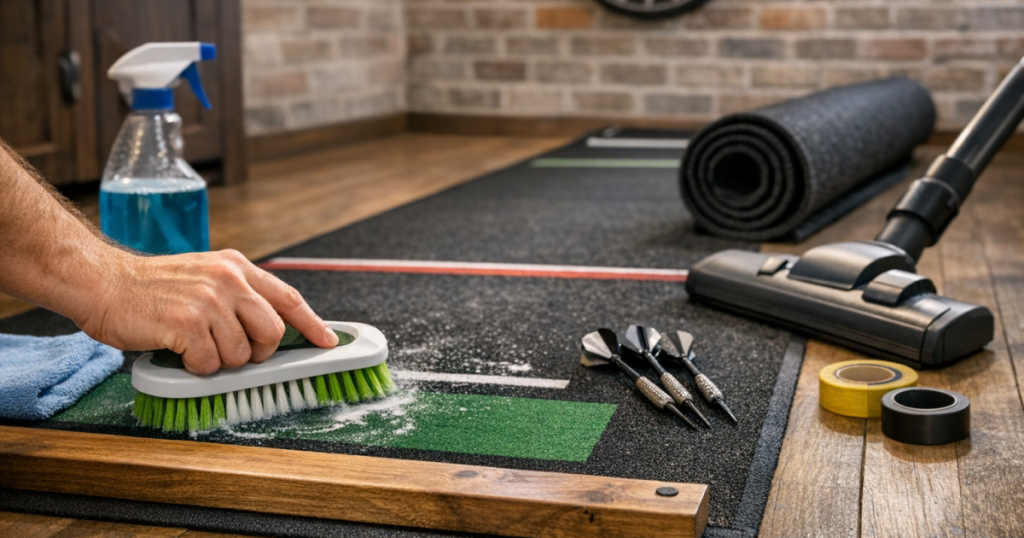
Use a soft brush or vacuum cleaner on a low setting to lift crumbs, sisal dust, pet hair and loose grit. If the mat has a raised oche or printed throw line, pay attention to the edges where dirt gathers. Avoid dragging a stiff metal-edged tool across printed markings because it can scuff the surface over time.
For light marks, wipe with a damp microfibre cloth and a small amount of mild washing-up liquid diluted in warm water. The cloth should be damp, not soaking. Too much water can sit beneath the mat, affect grip and create musty smells if it is rolled away too soon.
Deeper cleaning without damaging the surface
When the mat looks dull, feels sticky underfoot or has visible marks around the oche area, it is time for a deeper clean. Work on a hard, clean floor and clean one section at a time rather than flooding the whole mat.
- Rubber and PVC mats: wipe with warm water and mild soap, then rinse with a clean damp cloth. Avoid bleach, solvent cleaners and aggressive degreasers unless the mat maker specifically allows them.
- Carpet-style mats: vacuum first, then spot-clean marks gently. Do not soak the backing, as trapped moisture can affect shape and smell.
- Printed mats: test any cleaner on a small, less visible area before using it across numbers, logos or throw-line markings.
- Raised oche mats: clean around the raised section carefully so dirt does not build up along the seam or join.
After cleaning, lay the mat flat in a ventilated room until it is completely dry. Do not put it directly against a radiator or use high heat to speed things up, as excessive heat can encourage warping, curling or surface cracking.
Drying and odour control
Damp is the quiet enemy of a stored darts mat. A mat that feels dry on top may still hold moisture underneath, especially after cleaning a textured or fabric-backed surface. Before rolling it up, lift the mat and check the underside as well as the top.
If the mat smells musty, air it flat for longer before using any cleaner. Fresh air and full drying are usually better than masking the smell with sprays. Strong fragrances can make a small darts room unpleasant and may leave a slippery residue if overused.
If your darts area is in a garage, conservatory or outbuilding, allow for changes in temperature and humidity. Cold floors can hold condensation, while warm rooms with poor airflow can slow drying. A simple habit of lifting and airing the mat occasionally can prevent most problems.
Storage that keeps the mat flat
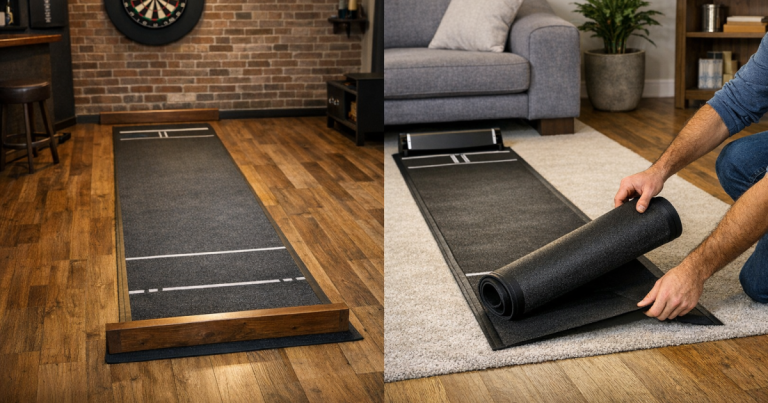
Storage has a direct effect on how the mat behaves the next time you play. Rolling is usually better than folding, because folds create sharp creases that may not settle back down. If your mat came supplied with a storage tube or strap, use it without over-tightening.
Roll the mat with the playing surface facing out or in only if the manufacturer gives a clear preference. In the absence of instructions, use the method that results in the least edge curl when the mat is unrolled. Store it horizontally where possible, away from heavy objects that could press dents into the surface.
Do not store the mat damp, pinched behind furniture or under a stack of boxes. If space is tight, a clean cupboard, under-bed space or wall-mounted storage hook can work, provided the mat is supported and not sharply bent.
If you are still planning the footprint of your throw area, the measurements and layout notes in the darts mat size, grip and oche features guide are a useful next step before committing to a permanent position.
Keeping the oche line accurate
Cleaning the mat is only part of the job. The oche needs to remain correctly placed, visible and stable. If the mat creeps forward or sideways during play, the throw line becomes unreliable and your stance may change without you noticing.
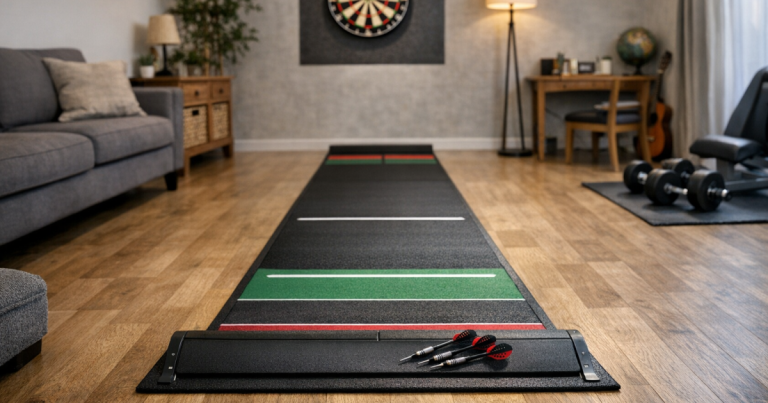
Before a session, check that the oche mark is square to the board and that the mat has not twisted. If you use a raised oche, make sure it sits firmly and has not loosened, lifted or shifted. A raised section that moves underfoot is more distracting than helpful.
For roll-out mats, mark the floor discreetly at the back edge or corners if you are happy to do so. This makes setup quicker and helps you return the mat to the same place each time. Use a floor-safe method that suits your surface, and avoid anything that could leave residue on wood, laminate or vinyl.
Oche stability is also a safety issue. Curled corners, loose edges and mats placed over uneven flooring can catch shoes during a throw. The mat safety and trip hazards guide covers those checks in more detail, particularly for busy homes where the darts area doubles as a living space.
What to do about curling edges
Curled edges are common after storage, especially with thinner roll-out mats. Start by unrolling the mat well before play and letting it relax flat at room temperature. Avoid forcing the corners down sharply, as that can create a new crease.
If the edge still lifts, roll the mat gently in the opposite direction for a short period, then lay it flat again. Some mats settle better with time and light foot traffic, but persistent curling can be a sign that the mat has been stored too tightly or exposed to heat.
Never tape down an edge with a product that could damage the floor or leave a sticky strip on the mat. If you need temporary help, use a floor-safe solution and remove it after play. The aim is to improve stability without creating a new cleaning problem.
Protecting the floor underneath
A darts mat is often treated as floor protection, but the floor beneath still needs attention. Dust and grit trapped under the mat can act like sandpaper, especially on smooth laminate or sealed wood. Lift the mat regularly and sweep or vacuum underneath.
Check for damp patches, flattened areas or discolouration if the mat stays down permanently. This matters more in rooms with cold floors or limited airflow. Letting both the mat and floor breathe occasionally helps prevent odours and keeps the setup looking cared for.
If you also maintain the board, surround and cabinet area, it makes sense to treat the oche as part of the same routine. The same principle applies across the setup: small, regular checks prevent bigger issues. For the board end of the room, see the guide on how to maintain a dartboard and prevent wear.
A simple maintenance rhythm
For most home players, darts mat cleaning works best as a light routine rather than an occasional rescue job. Use this rhythm as a sensible starting point and adjust it for how often you play.
- After each busy session: brush or vacuum loose dirt, check the oche line, and wipe obvious marks.
- Weekly for regular players: lift the mat, clean underneath and let both sides air briefly.
- Monthly: inspect edges, seams, printed markings and raised oche areas for wear or movement.
- After spills: blot immediately, clean lightly, then dry fully before the next use.
- Before storage: make sure the mat is completely dry, roll it neatly and keep it away from heat or heavy pressure.
Helpful questions
Can I use a steam cleaner on a darts mat?
Only use steam if the mat manufacturer specifically says it is safe. Heat and moisture can affect rubber, backing materials, adhesive areas and printed markings.
How do I stop my mat sliding on laminate flooring?
Clean dust from both the floor and the underside of the mat first. If it still moves, look for a floor-safe anti-slip underlay that will not mark the surface.
Should I leave my darts mat down all the time?
Yes, if the room allows it and the edges stay flat. Lift it occasionally to clean underneath, check for moisture and let the floor breathe.
Why does my mat smell after storage?
It was probably rolled away slightly damp or stored in a poorly ventilated space. Unroll it flat, air it thoroughly and avoid using strong sprays to cover the smell.
Can I clean chalk, dust or sisal marks from the oche area?
Usually, yes. Vacuum loose dust first, then use a damp cloth with mild soap. Avoid scrubbing printed throw-line markings too aggressively.
Key takeaways
A clean, flat darts mat makes the home oche feel better and safer without needing much effort. Keep grit away from the surface, wipe marks early, dry the mat fully and store it rolled rather than folded. Just as importantly, keep checking that the oche line remains accurate and stable, because a tidy setup should support consistent throwing rather than distract from it.