A home board takes a surprising amount of punishment, even if you only throw a few legs in the evening. The aim of dartboard maintenance is simple: spread the wear, keep the surface clean and avoid the habits that make one section break down long before the rest of the board.
Most of the useful care is low-effort. You do not need sprays, sanding, soaking or clever tricks; you need consistent rotation, sensible room conditions and darts that are not chewing up the sisal more than necessary.
Main points
- Rotate a bristle board regularly so the 20, 19 and treble areas do not take all the damage.
- Keep the board dry, away from direct heat and out of damp rooms where fibres can swell or soften.
- Remove darts by twisting gently rather than yanking them straight out.
- Check points, burrs and rough barrels, because damaged metal can pull fibres from the board.
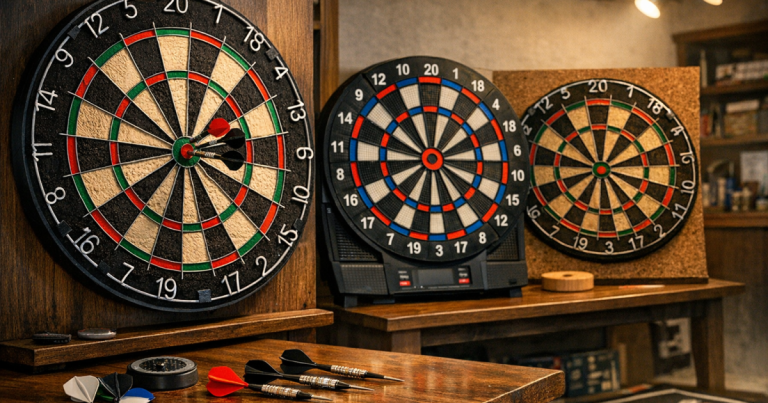
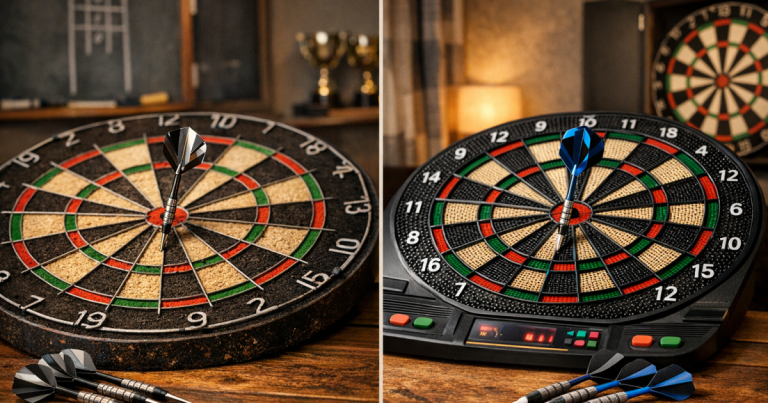
- Electronic and soft-tip boards need different care from bristle boards, so it helps to understand the main dartboard types before applying the same routine to every setup.
Why dartboards wear unevenly
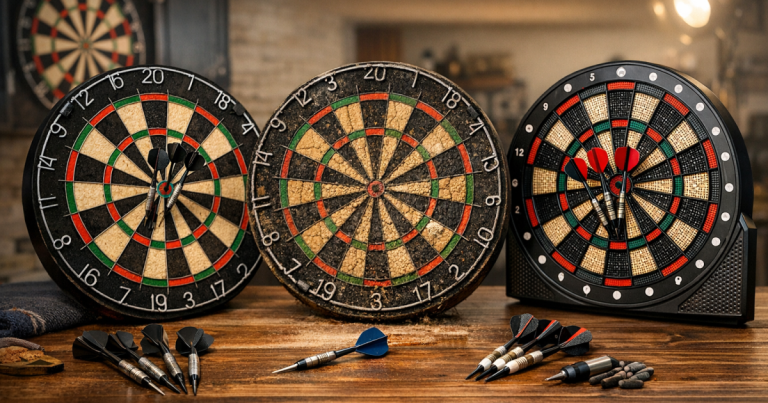
The most obvious wear usually appears around the treble 20. That is not because the board is faulty; it is simply the most targeted area in darts. Over time, repeated impacts compress and cut the sisal fibres, leaving a pale, fluffy or slightly hollow-looking patch. The same can happen around treble 19, bullseye and any doubles you practise heavily.
Good bristle boards are designed to self-heal to a point. When a dart enters the sisal, the fibres move aside rather than forming a permanent hole every time. However, that only works well when the board is dry, not over-compressed, and not being hammered in one small zone every session.
Wear also comes from the room. A board kept in a cold garage, a damp utility space or beside a radiator may age faster than one kept in a stable indoor room. UK homes often have mixed-use darts spaces: spare bedrooms, sheds, dining rooms, garden rooms and loft conversions. The board care routine should match the environment, not just the number of darts thrown.
Rotate the board before damage becomes obvious
Regular rotation is the single most useful habit for a bristle dartboard. The number ring is removable on most traditional boards, so you can lift it off, turn the board, and replace the ring with 20 at the top. This moves the heavily used scoring areas onto a fresher section of sisal.
For regular home practice, rotating every week or two is sensible. If you throw daily, rotate more often. If the board is only used at weekends, a monthly rotation may be enough. The key is not to wait until the treble 20 bed looks tired; by then, you are trying to rescue damage rather than prevent it.
A simple rotation routine
- Take off the number ring carefully and set it aside.
- Turn the board by a small, consistent amount rather than spinning it randomly.
- Put the number ring back with 20 at the top.
- Check that the bull remains at the correct height before playing.
- Look over the most-used trebles and doubles so you can spot early softening.
Do not rotate electronic boards unless the manufacturer specifically designs the playing face for it. Many soft-tip boards have fixed segments, wiring, sensors or scoring layouts that are not intended to move in the same way as a bristle board.
Keep moisture, heat and sunlight under control
Sisal is tough, but it is not happy in extreme conditions. Too much moisture can make fibres swell or soften. Too much heat can dry the board out. Strong sunlight can fade the surface and may make the face age unevenly, particularly if one side of the board is exposed more than the other.
A darts setup in a living room or spare room is usually fine. The trickier spaces are garages, sheds and conservatories, where temperature and humidity swing more dramatically. If that is where your board lives, keep it off cold external walls where possible, allow airflow around the setup, and avoid covering it with anything that traps moisture against the face.
Never soak a bristle dartboard, steam it, oil it or spray it with water. These old tips still get repeated, but they can do more harm than good. A board that looks dry or tired is usually better helped by rotation, cleaner darts and better storage conditions, not added liquid.
Use the right dart-removal technique
How you remove darts matters. Pulling a dart straight out with force can drag fibres forward, especially when the point has small burrs. A gentle twist as you remove the dart is kinder to the surface and usually feels smoother too.
Steel-tip darts should enter cleanly and come out cleanly. If you notice a dart tearing fibres, snagging or leaving a rough-looking hole, inspect the point. A bent, burred or heavily worn point can damage a board faster than normal throwing. Replace or smooth damaged points rather than letting them keep cutting into the sisal.
Also pay attention to grouping. Tight grouping is the goal, of course, but repeated dart-on-dart contact can roughen points and barrels. If a dart starts behaving differently after a heavy deflection or bounce-out, check it before carrying on. A few seconds spent inspecting the point can save weeks of unnecessary board wear.
Check the setup, not just the board face
A board can wear faster if the setup encourages awkward throwing, repeated bounce-outs or inconsistent impact. If the board is mounted too loosely, darts can hit with a different feel. If the oche position is wrong, your practice pattern may become strained or inconsistent. Confirming the correct board height and throwing distance is a basic but important part of keeping the whole setup fair and repeatable.
Lighting also plays a role indirectly. Shadows do not damage the board, but they can encourage poor aiming and repeated overcorrection. If you are constantly leaning, squinting or favouring one side because the board is poorly lit, you are not practising under consistent conditions. That can lead to odd wear patterns, especially on home boards used for drills.
Make sure the board sits flat and stable against its mounting. If it rocks when darts land, tighten the mounting system or use the stabilisers supplied with the board where appropriate. A stable board feels better, sounds better and reduces unnecessary movement at impact.
Clean the board gently
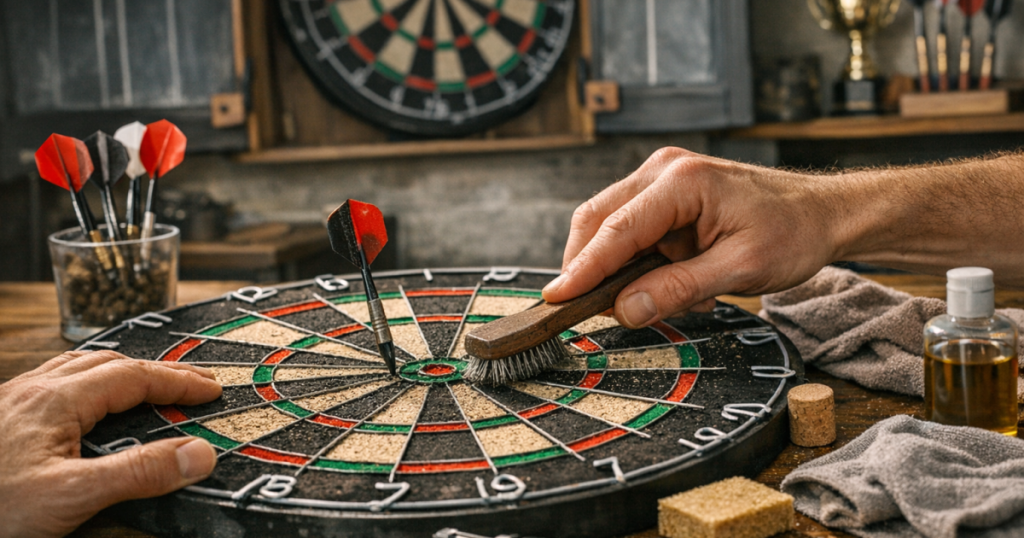
Most dartboards need very little cleaning. Dust can be removed with a soft, dry cloth or a gentle brush. Work lightly across the face rather than scrubbing at individual marks. Scrubbing can lift fibres and make a worn patch look worse.
Do not use household cleaners, polish, alcohol sprays or wet wipes on a bristle board. They can affect the fibres, inks and adhesives. For marks on the number ring or outer metalwork, wipe carefully with a dry cloth. If a board has a cabinet, surround or backboard, clean those parts separately so dust and debris do not sit around the playing area.
Loose fibres are normal as a board ages, but clumps, deep pitting or a treble bed that no longer holds darts well are signs that the board is nearing the end of its useful life. Maintenance can slow wear; it cannot make a heavily damaged board play like new again.
Protect the area around the board
Preventing wear is not only about the circular playing surface. A tidy wall area helps keep the board properly positioned, reduces knocks and makes the setup more pleasant to use. Surrounds, cabinets and backboards all have a role, especially in family rooms or rented spaces where stray darts are a concern.
A surround can absorb missed darts around the board edge. A cabinet can hide the board when not in use and provide a neat visual frame. A larger backboard can protect a wider area, which is useful for newer players or mixed-skill households. For a deeper look at the surrounding area, see the guide to wall protection around a dartboard.
Floor protection matters too, though more for darts and flooring than for the board itself. Bounce-outs can blunt points, mark hard floors and create trip hazards if the oche area is cluttered. A clear, consistent throwing area helps everyone use the setup properly.
Small habits that extend board life
Good dartboard maintenance becomes easier when it is part of your normal practice rhythm. You do not need a checklist every time you play, but a few repeated habits make a noticeable difference over months of use.
- Rotate the board before the treble 20 looks heavily worn.
- Store darts safely so points do not become bent or damaged between sessions.
- Keep drinks, damp cloths and cleaning sprays away from the board.
- Close the cabinet doors, if you use one, when the board is not being played.
- Check the mounting if the board starts to wobble or sound loose.
- Encourage guests to retrieve darts carefully rather than pulling them out at an angle.
If several people use the board, it is worth making the routine obvious. A quick reminder to twist darts out and avoid leaning on the board can prevent a lot of unnecessary damage, especially when casual players are involved.
When maintenance is no longer enough
A worn board does not always fail all at once. It may still look acceptable from a distance but start dropping darts, rejecting points around the trebles, or developing hard and soft patches. If darts no longer stay in reliably despite clean points and sensible throwing, the playing surface may simply be tired.
Another sign is uneven performance between sections. If one treble bed feels dead while rotated sections still feel firm, earlier wear has probably gone too far. You can continue using the board for casual play, but serious practice becomes less useful because the surface is no longer giving consistent feedback.
For home players, the right time to replace a board is when it starts affecting scoring, confidence or practice quality. A board does not need to look perfect, but it should hold darts consistently and give you a fair playing surface.
Things readers ask
How often should I rotate my dartboard?
For frequent home practice, rotate a bristle board every one to two weeks. For lighter use, monthly rotation is usually enough. Rotate before the treble 20 looks badly worn.
Should I spray water on a dry dartboard?
No. Water can swell, soften or distort the sisal. A dry-looking board is better managed through rotation, stable room conditions and careful dart removal.
Why are my darts falling out of the board?
Common causes include worn sisal, damaged points, a loose board mount or darts landing in an overused section. Check the dart points and rotate the board before assuming it needs replacing.
Can I clean a bristle board with household cleaner?
No. Use a soft, dry cloth or gentle brush only. Household cleaners and wet wipes can affect the fibres and printed surface.
Do electronic dartboards need the same care?
No. Electronic boards need gentle cleaning and suitable soft-tip darts, but they should not be rotated or treated like bristle boards unless the maker’s instructions say so.
Why it matters
A well-kept dartboard gives truer practice, fewer bounce-outs and a more enjoyable home oche. The routine is not complicated: rotate it, keep it dry, remove darts carefully, look after your points and make sure the surrounding setup supports consistent throwing.
Those small habits are especially valuable in a UK home setup where the board may share space with furniture, heating, pets, children or changing room conditions. Look after the board little and often, and it will stay playable for longer without needing fussy treatments or risky shortcuts.