A good darts mat should do three jobs at once: mark a reliable throw line, protect the floor, and feel steady underfoot. The right choice depends less on looks and more on darts mat materials, thickness, grip and the surface it will sit on at home.
In brief
For most home setups, a mat needs enough weight to lie flat, enough surface grip to stop foot movement, and a clear oche marking that stays aligned with the board. Thickness helps with comfort and floor protection, but a very thick mat can create a raised edge, collect dirt, or feel awkward if it sits on carpet.
Rubber and heavy PVC mats are usually the most stable on hard floors. Carpet-topped mats can feel comfortable and quieter, but they need a backing that resists movement. Foam-backed mats can be pleasant underfoot, though they are not always the most durable choice for frequent steel-tip use. The key is matching the mat to your room rather than assuming the thickest option is automatically better.
What the material changes
Material affects grip, roll-flat behaviour, floor protection, cleaning and how the oche feels during a long session. Two mats can look similar online but behave very differently once they are placed on laminate, carpet or a garage floor.
Rubber mats
Rubber is popular because it tends to have useful weight and natural grip. A heavier rubber mat is less likely to creep forward during repeated throws, which matters if your toe line is printed directly onto the surface. Rubber also copes well with regular foot traffic and is generally easy to wipe down.
The trade-off is that rubber can be bulky to roll and store, and some new mats may have a noticeable smell at first. If the mat will live in a spare room or dining space, check how easily it rolls away and whether the underside is suitable for your flooring.
PVC and vinyl-style mats
PVC-style mats are often easy to clean and can show printed oche lines clearly. They suit players who want a wipeable surface for a multipurpose room, especially where drinks, dust or outdoor shoes are part of the setup. The main point to check is whether the underside grips your floor. A light, smooth-backed mat on laminate can slide more than expected.
Thin vinyl-style mats may protect against scuffs and foot wear, but they should not be treated as a guarantee against every dropped steel tip. If your floor is soft wood, luxury vinyl tile or another mark-prone surface, test cautiously and consider extra protection around the landing zone.
Carpet-topped mats
Carpet-topped mats can make a home oche feel more like a dedicated playing area. They are often quieter underfoot and can be comfortable for longer practice sessions. They can also blend better in living rooms than a plain rubber mat.
The practical questions are cleaning and stability. Carpet fibres can hold dust, chalk, pet hair and small debris, so routine care matters. A carpet surface also needs a backing that stops the mat bunching or shifting, particularly if it sits on another carpet.
Foam-backed and cushioned mats
Foam-backed mats are about comfort first. They can reduce foot fatigue and give a softer feel, which some home players like during repeated practice. However, too much cushioning can feel spongy at the toe line and may compress unevenly over time.
If you prefer a crisp, planted stance, a very soft mat may not suit you. Look for firmness as well as comfort, and check whether the oche line remains flat and visible when the mat is used regularly.
Thickness: useful, but not the whole answer
Mat thickness is easy to focus on because it is a simple number, but it does not tell the full story. A dense, thinner rubber mat may feel more stable than a thicker but lighter foam-backed mat. Weight, backing texture and edge shape often matter just as much.
When judging darts mat materials and thickness together, think about four practical outcomes:
- Floor protection: thicker or denser materials can help absorb foot traffic and minor drops, but steel-tip darts can still damage vulnerable flooring.
- Stance stability: the surface should not stretch, wrinkle or compress noticeably under your front foot.
- Trip risk: raised edges should lie flat, especially in rooms used by other people.
- Oche accuracy: the printed line or raised toe stop must stay in the correct place once the mat settles.
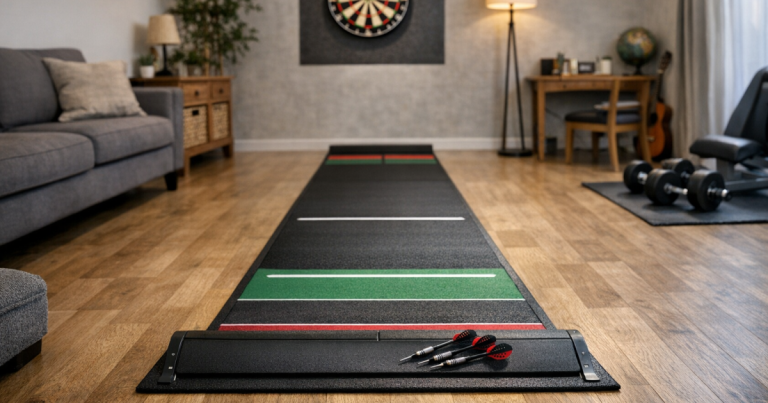
A raised oche or toe stop can be useful because it gives a physical reference without looking down. It also adds height, so check whether it feels comfortable and whether it will get in the way when the mat is stored.
Matching the mat to your floor
Laminate and engineered wood
Hard, smooth floors make mat grip especially important. A mat that slides even a little can slowly move your throw line out of position. Choose a backing that grips without leaving residue, and lift the mat periodically so grit does not get trapped underneath and act like sandpaper.
Carpet
On carpet, the main issue is creeping and rucking. A very light mat can move with your stance, while a very thick mat may feel uneven if the pile beneath is soft. Heavier mats with a flatter underside tend to behave better, but the only reliable test is whether the mat stays aligned after a real practice session.
Vinyl, lino and luxury vinyl tile
These floors can be comfortable for a home setup, but they may mark more easily than they appear to. Avoid assuming a thin mat is enough if steel tips are regularly dropped. Also check that the underside of the mat is compatible with the floor finish and does not cause staining or sticking.
Tiles and concrete
Tiles and concrete are stable bases, but they can be unforgiving. A mat adds comfort and helps define the throw area, but dropped steel tips may still chip points or bounce unpredictably. In garages or outbuildings, also think about cold floors, dust and moisture before leaving a mat down permanently.
Oche alignment matters as much as the mat
A good mat can still give you a poor setup if the throw line is not positioned correctly. Measure from the face of the dartboard to the front of the oche line, not from the wall, and make sure the mat is square to the board. For a deeper walkthrough of distances and toe-line positioning, use our oche measurement and mat alignment guide.
If your mat has multiple printed lines for different formats, make sure everyone in the room knows which line you are using. This is particularly useful in family setups where soft-tip and steel-tip play may happen in the same space.
Checks before you settle on a setup
- Does it lie flat? Curled ends are annoying and can become a trip point in a shared room.
- Does it move after ten minutes of throwing? If it creeps, the oche line will creep with it.
- Is the oche line easy to see? A subtle line may look tidy but can be awkward in low light.
- Can it be cleaned easily? Think about dust, shoes, pets and drink spills, not just dart use.
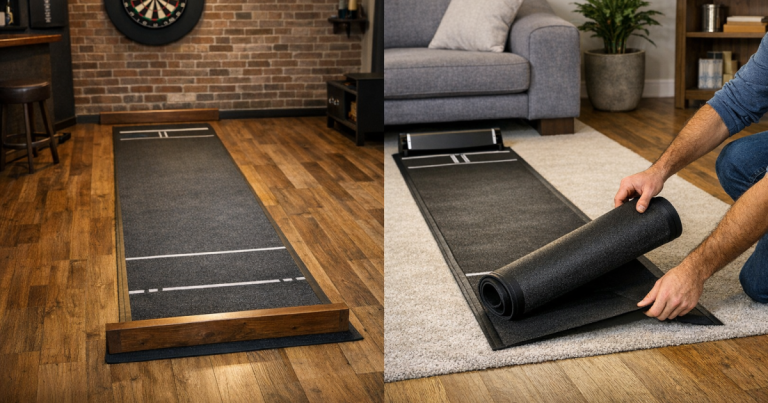
- Will it store without damage? Some mats tolerate rolling better than folding or being trapped under furniture.
For a real-world example of how a heavier home oche mat can change the feel of a setup, our Winmau Xtreme Dart Mat review looks at the upgrade from a basic throw line to a more serious home mat.
Care and storage habits that extend mat life
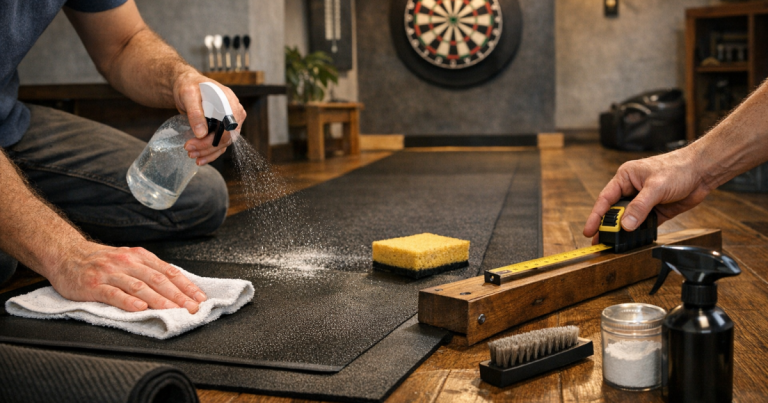
Most mats last longer when they are kept clean, dry and flat. Shake off loose debris, wipe suitable surfaces with a damp cloth, and let the mat dry properly before rolling it away. Avoid dragging furniture across it, and do not leave grit underneath on hard floors.
If the mat is used in a garage, shed or multi-use room, storage matters more than it does in a permanent darts corner. Rolling too tightly can encourage curling, while folding can create creases that never quite disappear. For more detailed care routines, see our mat cleaning and oche maintenance guide.
Helpful questions
Is a thicker darts mat always better?
No. Thickness can improve comfort and protection, but density, weight, edge design and backing grip are just as important. A thick mat that moves underfoot is worse than a thinner mat that stays planted.
Can a darts mat fully protect wooden flooring?
It can reduce scuffs and everyday wear, but it cannot guarantee complete protection from missed or dropped steel-tip darts. For delicate wood floors, consider extra protection in the bounce-out and drop zone.
Why does my mat keep moving on carpet?
Carpet pile lets lightweight mats creep as you step and throw. A heavier mat, flatter backing and regular realignment can help, but deep or soft carpet will always be more difficult than a firm hard floor.
Should I choose a printed oche line or a raised toe stop?
A printed line keeps the surface flatter and easier to store. A raised toe stop gives a clearer physical reference, but it adds bulk and may not suit rooms where the mat is rolled away after each session.
What stands out
The best home darts mat is the one that stays still, keeps the oche honest and suits the floor beneath it. Material sets the character of the mat, thickness influences comfort and protection, but floor compatibility decides how well it works day after day. Get those three parts right and your home oche feels more consistent without making the room harder to use.