A good home oche should feel steady before the first dart is thrown. Darts mat safety is not just about avoiding slips; it is about keeping the throwing line consistent, protecting the floor and making sure people can move around the setup without catching a heel on a curled edge. Small details matter more than most players expect, especially in spare rooms, garages and living spaces where the darts area shares space with normal household traffic.
Most problems come from three places: the mat moves, the edge lifts, or the oche line is vague. Fix those and the whole setup feels calmer, more repeatable and far less annoying during practice.
The short version
- Use a mat that lies flat across its full length, with no curled corners, ripples or raised joins.
- Place the mat on a clean, dry floor so the underside can grip properly.
- Keep the oche line clear and repeatable, whether it is printed, raised or marked separately.
- Avoid putting the mat across a doorway, main walking route or cluttered storage area.
- Check the board height and throw distance before positioning anything permanent.
- Re-check the mat after moving furniture, vacuuming, cleaning the floor or rolling it away.
Why mats become trip hazards
A darts mat is a long, narrow object placed exactly where people step in and out repeatedly. That makes it more vulnerable to movement than a normal rug. Even a good mat can become awkward if it is used on dusty laminate, thick carpet, uneven tiles or a floor with a slight slope.
The most common trip hazards are easy to spot once you know what to look for:
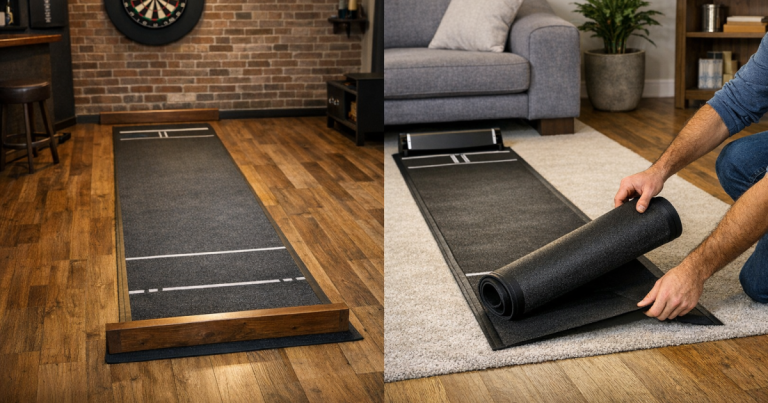
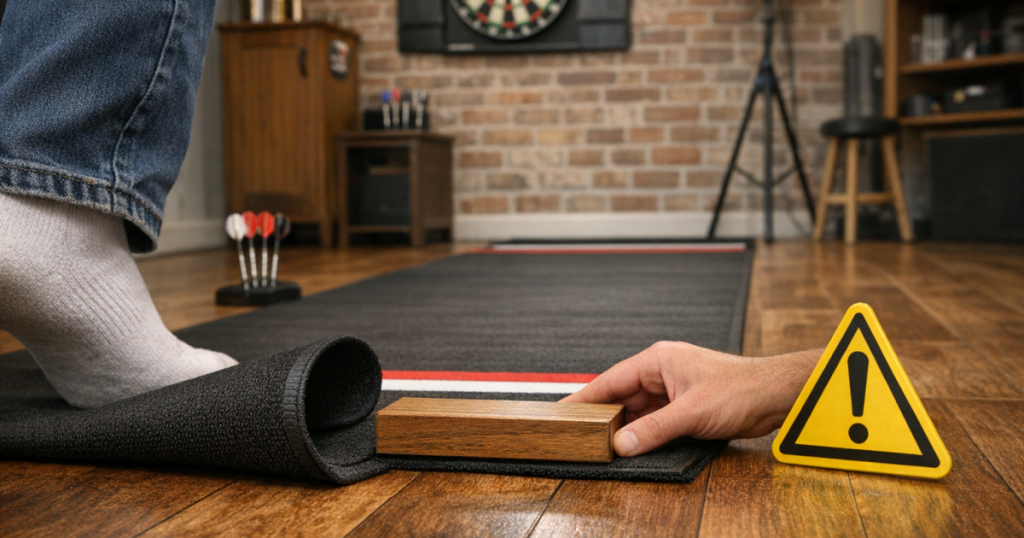
- Curled ends: often caused by rolling the mat too tightly or storing it on its edge.
- Lifted corners: a problem in rooms where people walk across the mat sideways.
- Ripples through the centre: more likely if the mat has been rolled out quickly on carpet.
- Loose floor debris: dust, grit or pet hair can reduce grip on hard floors.
- Clutter near the oche: dart cases, shoes, stools and drinks can create awkward foot placement.
It is tempting to blame the mat immediately, but the floor surface and room layout are often just as important. A mat that behaves well in a garage may slide on polished laminate. One that sits neatly on hard flooring may bunch slightly on a deep carpet.
Start with the correct oche position
Safety and consistency both begin with measurement. If the oche is in the wrong place, players tend to shuffle, overreach or stand partly off the mat, which increases the chance of catching an edge. For a standard steel-tip setup, the board centre is normally 1.73 m from the floor and the throwing line is 2.37 m from the face of the board. If you are setting up from scratch, confirm the basics with our guide to dartboard height and throwing distance before fixing your toe line.
Measure from the board face, not the wall. Cabinets, surrounds and board brackets can change the board’s position by enough to matter. Once the line is measured, use the mat’s oche marking as a reference rather than assuming it is automatically correct in every room.
Oche stability: printed line, raised oche or floor marker?
A stable oche gives the front foot a repeatable stopping point. It also reduces the little half-steps that make a mat shift over time. Different setups solve this in different ways.
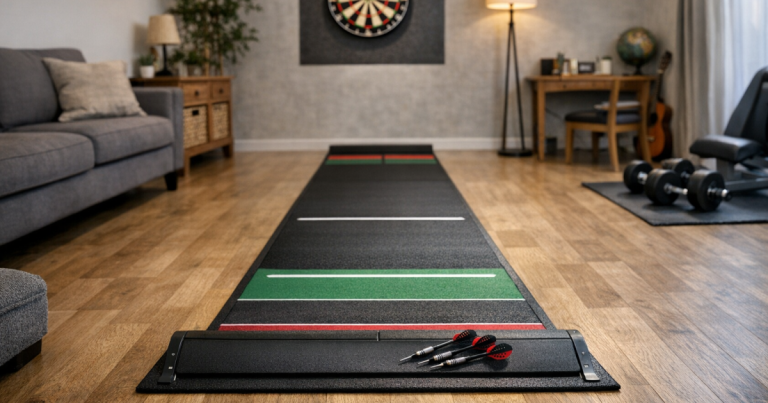
Printed oche line
A printed line is simple and unobtrusive. It works well when the mat stays in place and the player is disciplined about foot position. The weakness is that there is no physical stop, so some players creep forward without noticing. If the mat moves even slightly, the line moves with it.
Raised oche
A raised oche gives clearer feedback under the foot. It can make practice feel more like a club or match environment, but it needs to sit securely. A raised strip that shifts, rocks or catches the toe can create a worse hazard than a flat line. Check that the front and side edges feel smooth under normal foot movement.
Separate floor marker
Floor markers can suit compact rooms or shared spaces where a full mat is not practical. They reduce floor coverage, so they do not offer the same protection from dropped darts, but they can be tidy if the walking route is tight. For a deeper look at the trade-offs, see our guide to roll-out mats, fixed oches and floor markers.
Match the mat to the floor underneath
The same mat can behave very differently depending on what it sits on. Before worrying about brands or style, think about the surface you are actually using.
Laminate, vinyl and wooden floors
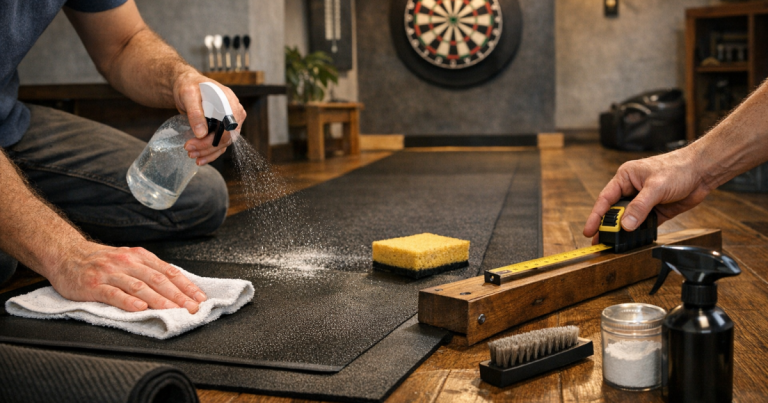
Hard, smooth floors are easy to clean but can let a mat drift, especially if the underside is dusty. Wipe the floor before laying the mat and check that the edges do not curl upwards. Avoid placing the mat where chair legs or doors repeatedly push against it.
Carpet
Carpet can help stop sliding, but it can also make a mat ripple. Thick pile is the trickiest because the mat may not sit evenly when players step forward and back. Let the mat settle flat before playing and watch for ridges near the oche area.
Garage and shed floors
Concrete or painted floors can be practical for darts, but dust and moisture matter. A mat placed on a damp or gritty surface is less predictable and may degrade faster. Let the floor dry after cleaning and avoid storing a rolled mat in a cold, damp corner.
Tiles and uneven surfaces
Tiles can create small height changes under the mat. If grout lines or uneven sections are noticeable underfoot, they may affect stance comfort. The key is not perfection, but stability: the mat should not rock, bunch or create a raised ridge where your front foot lands.
Grip, thickness and edge profile
Good grip is not only about the underside. A mat that is too light may move easily; one that is very thick may have a more noticeable edge. The safest-feeling setup is usually one where the mat has enough weight to stay put, a surface that feels secure under trainers or socks, and edges that do not sit proud like a step.
Pay attention to the front third of the mat, because that is where most pressure goes during throwing. If the oche area starts to crease or lift, deal with it early rather than waiting until it becomes part of your routine. Our wider guide to darts mat size, grip and oche features explains how length, width and surface finish affect a home setup.
Thickness is also about comfort. A slightly cushioned mat can make longer practice sessions easier on the feet, but too much softness can feel vague at the toe line. The best balance is a mat that protects the floor without making your stance feel spongy.
Keep the walking route clear
Many home darts setups sit in multi-use rooms. That makes the space around the mat just as important as the mat itself. A tidy oche is easier to use safely because players are not stepping around obstacles between throws.
Try to avoid these layouts:
- A mat running across a doorway or busy route to the kitchen, hall or garden.
- A toe line placed too close to a sofa, desk, radiator or storage unit.
- A darts mat partly tucked under furniture, which can pull it out of shape.
- Loose cables, extension leads or lamps near the player’s feet.
- Pets or children regularly crossing the throw area during play.
If the room is tight, a shorter floor marker may be safer than forcing a full-length mat into a walkway. If floor protection is the priority, keep the full mat but shift furniture so the edges are not constantly being stepped across from the side.
A quick check before you throw
A thirty-second check is enough for most home sessions. It feels fussy at first, but it quickly becomes part of setting up the board, switching on the light and picking up your darts.
- Look along both long edges for curling or rippling.
- Press the oche area lightly with your shoe to check for movement.
- Make sure the throwing line still matches your measured distance.
- Move dart cases, drinks and spare flights away from the standing area.
- Check that the retrieval path to the board is clear.
- After play, roll or store the mat in a way that does not crease the corners.
If you share the room with family, it also helps to make the darts area obvious when play is in progress. Good lighting, a clear toe line and a clutter-free floor reduce interruptions and make the space easier for everyone to read.
Different home setups, different compromises
There is no single perfect arrangement. A dedicated darts room can use a heavier mat or a more permanent oche because the space is always set up for play. A living room setup needs to be easier to move, store and keep out of the normal walking route. A garage setup may need tougher floor protection but more attention to dust and moisture.
The key is to choose the compromise deliberately. A roll-out mat is convenient, but it must lie flat every time. A fixed oche feels stable, but it commits the room to darts more permanently. A floor marker is neat, but it does not protect the floor in the same way. Stability, convenience and floor protection pull in slightly different directions, so the right answer depends on how often you play and how shared the room is.
Common questions
Can I put a darts mat on carpet?
Yes, but check for ripples and movement before playing. Thick carpet can make a mat sit unevenly, so let it settle flat and avoid using a raised oche that rocks underfoot.
How do I stop a darts mat sliding on laminate?
Clean and dry the floor first, then check whether dust or grit is stopping the underside from gripping. If it still moves, the mat may be too light for that surface or the room may need a different oche solution.
Is a raised oche safer than a printed line?
Not automatically. A raised oche can improve foot consistency, but only if it is stable, smooth-edged and positioned correctly. A loose raised strip can become a trip point.
Should the darts mat cover the whole throw area?
It should at least cover the standing zone and the most likely dropped-dart area. In tight rooms, make sure extra length does not create a hazard across a main walkway.
How often should I check my mat?
Check it briefly every session, especially if it is rolled away between uses. Darts mat safety is mostly about catching small changes before they become habits.
What to remember
A safe, stable mat is one that stays flat, keeps the oche clear and fits the room rather than fighting it. Measure from the board face, keep the floor clean, remove clutter and watch the edges. If your current setup makes players shuffle, dodge furniture or step over lifted corners, it is worth changing the layout before changing your throw.
The best home darts spaces feel simple: clear board, clear line, steady footing and enough room to retrieve darts without stepping around hazards. Get those basics right and the mat becomes part of the rhythm of play rather than something you have to think about.