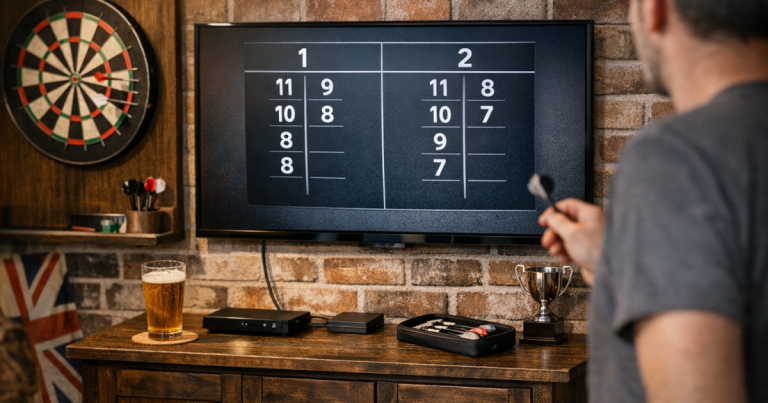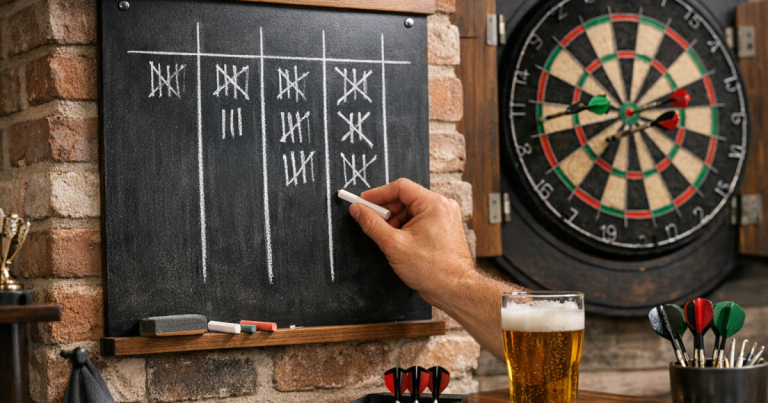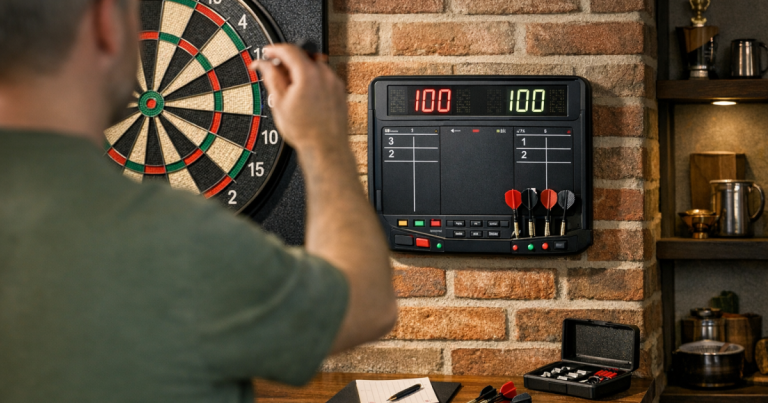
A smudged home scoreboard turns a good leg of 501 into a running argument over what was actually written down. The simplest way to reduce dry-wipe darts scoreboard smudging is to use the right marker, keep the writing surface clean and stop hands, sleeves and erasers brushing the ink before it has settled.
Most problems are not caused by one big fault. They usually come from a mix of old pens, greasy residue, rushed scoring and awkward board placement beside the throw area.
At a glance
- Use a proper dry-wipe marker, not a permanent marker, chalk marker or pen that has dried out.
- Clean the board surface before a session, then dry it fully with a soft cloth.
- Give fresh writing a few seconds before touching, rubbing or leaning near it.
- Keep one cloth for erasing scores and a separate cloth for deeper cleaning.
- Move the board if the scorer keeps brushing it while stepping back, marking or collecting darts.
Why the scores smear in the first place
Dry-wipe ink is designed to sit on the surface rather than soak in. That is why it can be wiped away quickly, but it also means fresh writing is vulnerable to fingers, cuffs and the edge of a score sheet. In a darts setup, the scoreboard is often used quickly between visits, so the ink is touched before it has had time to settle.
Residue makes this worse. Finger oils, old marker film, general dust and cleaning sprays can leave a slick layer on the board. Instead of laying down a clear line, the marker skates across the surface and leaves ink that smears as soon as it is touched.
The other common cause is position. If the board is too close to the oche path, too low on the wall, or awkwardly mounted beside a cabinet, the scorer may naturally rest a hand on the writing area. If that sounds familiar, it is worth revisiting how to mount a darts scoreboard without damaging the wall so the board is easier to use without being in the way.
Step 1: Start with the marker
Before blaming the board, test the pen. A tired marker often leaves patchy, wet-looking lines that take longer to dry and wipe unevenly. If the nib is flattened, fluffy or inconsistent, retire it from scoring duty and keep it only for rough notes.
Use a marker sold specifically for whiteboards or dry-wipe boards. Examples such as Staedtler Lumocolor Whiteboard Marker or Pilot V Board Master Whiteboard Marker are typical of the sort of product to look for, but the important checks are simple: it should say dry-wipe or whiteboard on the pen, the nib should suit your writing size, and the line should erase cleanly from your particular board.
Avoid mixing marker types during the same session. Chalk-style pens, permanent markers and low-odour dry-wipe markers can behave differently on coated boards. If you change marker type, clean the board properly first rather than writing over old residue.
Step 2: Clean the surface properly, not aggressively
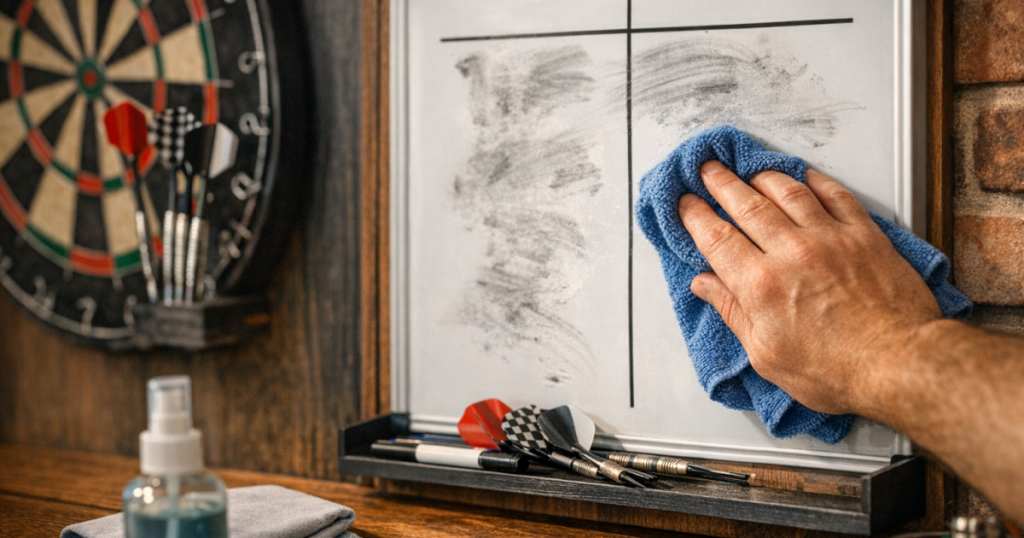
A quick wipe with the same eraser used all night can spread ink film around instead of removing it. For a better reset, wipe the board with a clean, slightly damp microfibre cloth, then dry it with a second cloth. The surface should feel dry and smooth before you write again.
For stubborn ghosting, check the board maker’s care guidance before using any stronger cleaner. Some boards tolerate dedicated whiteboard cleaner well; others can be marked by harsh solvents, abrasive pads or household polish. Never scrub with anything rough, because fine scratches hold ink and make future smudging harder to control.
A useful two-cloth routine
- Match cloth: keep one dry cloth or eraser for rubbing out leg scores during play.
- Cleaning cloth: keep a separate microfibre cloth for wiping the whole board before and after the session.
- Hand towel: do not use the same towel for hands, darts and the scoreboard, especially if it picks up grip wax, food grease or drink residue.
Step 3: Change how scores are written and erased
During home matches, smudging often happens because the scorer writes too low, too close to previous numbers or directly over half-erased marks. Leave enough space between columns so the hand does not drag across earlier scores. If you are using a small board, shorter notation helps: write the score and remaining total clearly, but avoid cramming every detail into one tight corner.
Let new writing sit for a moment before wiping the next line. It does not need a long pause; even a short beat while the next player retrieves darts can help. If someone is scoring and throwing in the same tight area, make the scoreboard action part of the rhythm: score, cap the pen or move it to its holder, then step clear.
When erasing, wipe in one direction rather than rubbing in small circles over the same damp ink. Circular rubbing can spread fresh marker film across the board. For busy match nights, a top-to-bottom wipe between legs gives a cleaner reset than constantly polishing one patch.
Step 4: Check the scoreboard position in the room
A scoreboard that is technically visible can still be badly positioned. The best spot is easy to reach for the scorer but not so close that players brush it on the way to the board. It should also be far enough from the dartboard surround that missed darts, bounce-outs or retrieval movement do not knock the pen tray or eraser.
Look at the full scoring routine, not just the wall space. Can the scorer stand square to the board? Does a right-handed or left-handed scorer drag their sleeve across the writing? Is the marker ledge directly above the oche mat, where it gets kicked or nudged? If your layout feels cramped, rechecking the available playing area with this guide to measuring oche space before setting up a dartboard can help you find a cleaner scoring position.
Step 5: Reduce smudges during actual play
Once the board and pen are sorted, small habits make the biggest difference. Keep the marker capped between uses so the nib stays consistent. Put the pen in the same place every visit, rather than laying it across fresh writing. Ask players not to lean on the board while checking the remaining total.
If younger players or guests are scoring, make the system simple. Use fixed columns for player names, scores and remaining totals. A board that is easy to read at a glance gets touched less, corrected less and wiped less often.
When the board itself is the problem
If a clean board still smears badly with a fresh dry-wipe marker, the coating may be worn. Budget laminated surfaces can become dull or slightly textured over time, particularly where the same scoring area is used every week. Once the surface is scratched or porous, ink clings in the marks and becomes harder to erase cleanly.
You do not always need to replace it immediately. Rotate the writing area if the board layout allows, clean more regularly, and use a bolder but not overly wet marker. If the board is permanently ghosted, though, replacement may be the only tidy fix. For some households, a scoring app used alongside or instead of a wall board is also worth considering; choosing a scoring app for home darts matches explains the practical trade-offs.
Quick match-night reset
- Wipe the whole board before the first leg, not halfway through the night.
- Test the marker in a corner and erase it before play starts.
- Keep drinks, snacks and hand towels away from the scoring area.
- Use a separate cloth for final cleaning after the last match.
- Store markers horizontally or as recommended by the maker, with caps firmly on.
FAQ
Why does my scoreboard smudge more after cleaning?
It is usually because the cleaner has left a film, or the board was not dried fully before writing. Wipe again with a damp microfibre cloth, dry with a second cloth, and avoid polish or oily household sprays.
Can I use permanent marker and remove it later?
No. Permanent marker is not suitable for normal darts scoring and can stain the surface. If it happens accidentally, follow the board maker’s cleaning advice rather than using harsh solvents straight away.
Does marker colour affect smudging?
Colour is usually less important than marker type, age and ink flow. However, very pale colours can make people press harder or overwrite lines, which increases rubbing and mess.
Should I use a magnetic eraser or a cloth?
Either can work if it is clean and dry. A dirty eraser is one of the quickest ways to spread old ink, so replace or clean it when it starts leaving grey streaks.
Why does dry-wipe darts scoreboard smudging happen mostly during close games?
Close legs create more corrections, checks and quick rewrites. Slow the scoring routine slightly, keep columns clear and avoid resting a hand on fresh totals while working out the finish.
What to remember
Stopping smudges is mostly about controlling contact and residue. Use a suitable dry-wipe marker, clean the surface gently, give fresh writing a moment to settle, and place the board where the scorer can use it without brushing the scores. Once those basics are right, the board should stay readable for casual practice, family games and longer match nights.