A comfortable darts setup starts on the floor, not the wall. Before you measure oche space, you need to know where the board face will sit, how much room the thrower needs, and whether the surrounding room will interrupt a natural stance.
The aim is not just to hit the official distance. It is to create a clear, repeatable throwing lane that works with the room you actually have.
The short version
For a standard steel-tip home setup, the front edge of the oche should be 2.37 m from the face of the dartboard, not from the wall. The bull should sit 1.73 m above the floor. Those two measurements matter because a dartboard stands proud of the wall, and measuring from the wrong reference point can make the throw too long or too short.
Allow extra space behind the oche so the player can stand, step back and swap turns without bumping into furniture. If possible, keep clear space to both sides of the throwing lane as well. A technically correct oche can still feel poor if the player is hemmed in by a sofa, doorway, radiator or sloping ceiling.
Step 1: decide where the board face will be
The most common measuring mistake is starting from the wall rather than the playing face of the board. A dartboard has depth, and a cabinet, surround or backing panel can move the face further into the room. That small difference affects the oche line.
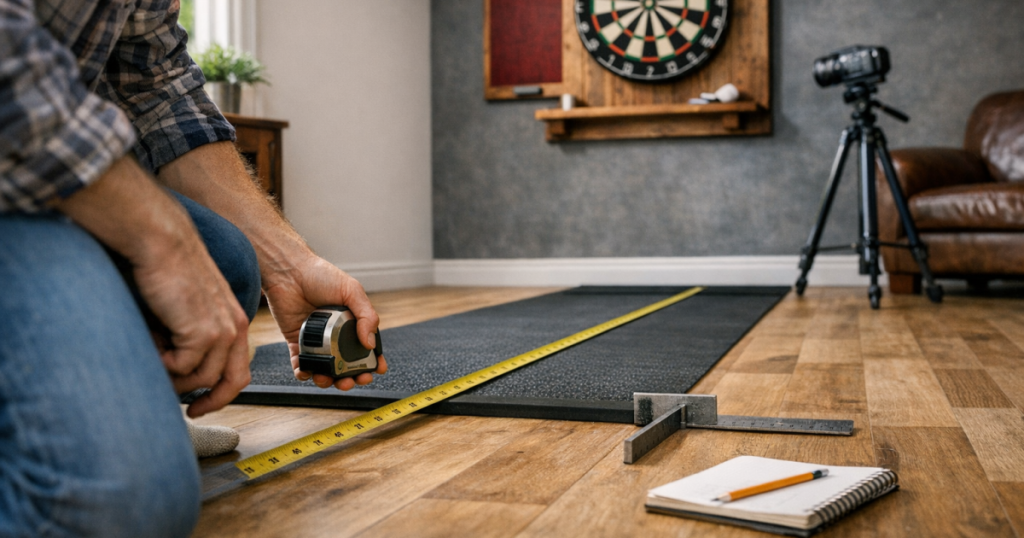
If the board is already fitted, place the end of your tape measure against the board face at the centre line and run it straight out along the floor. If the board is not fitted yet, mark the intended centre of the bull on the wall first, then account for the board depth once the board, bracket and any surround are in place.
For the full official setup, use the board height and throw distance together. The clearest reference is our guide to setting dartboard height and oche distance correctly, which explains the standard measurements and how they relate to one another.
Once you measure oche space from the board face rather than the wall, you will get a more reliable toe line and fewer small inconsistencies between home practice and match-night setups.
Step 2: mark the centre line on the floor
Before worrying about the oche itself, mark a straight centre line from the bull down to the floor and out into the room. This keeps the throwing lane square to the board and helps you spot whether the layout is drifting towards furniture, a doorway or a narrow section of floor.
A simple way to do this is:
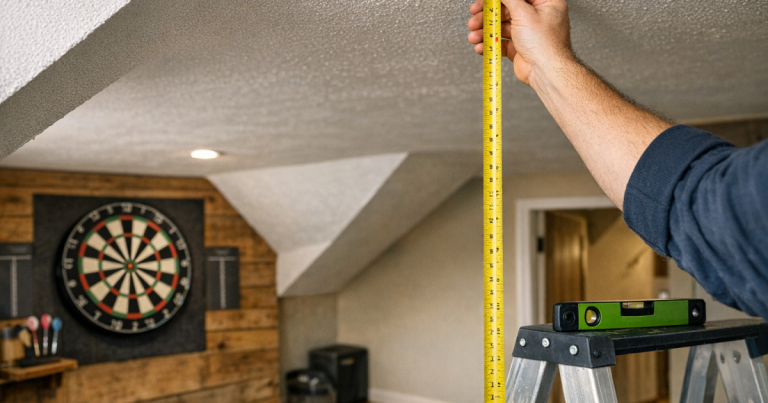
- Mark the intended bull position on the wall at 1.73 m from the floor.
- Drop a vertical line down from that point to the skirting or floor.
- Use that floor point as the start of your centre line.
- Run the tape measure straight out from the board face position, keeping it aligned with the bull.
- Mark the oche line at 2.37 m from the board face.
Do not follow the angle of a skirting board, rug edge or floorboard if the wall is not perfectly square. Darts rooms in UK homes are often spare rooms, garages, dining areas or converted corners, and the room itself may not give you a clean visual guide. The board centre line is the reference that matters.
Step 3: check the player’s standing area
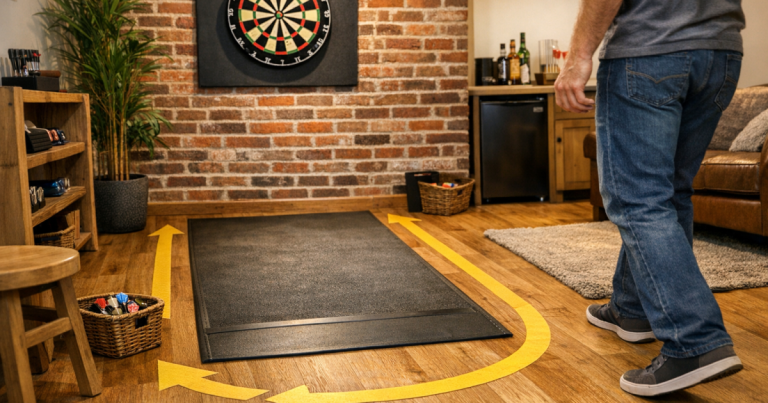
The oche line is only the front edge of the throwing position. A player still needs space for their feet, balance and follow-through routine. Some players stand with both feet close to the line; others angle one foot back or reset between darts. If the space immediately behind the line is tight, the throw can feel rushed even when the distance is correct.
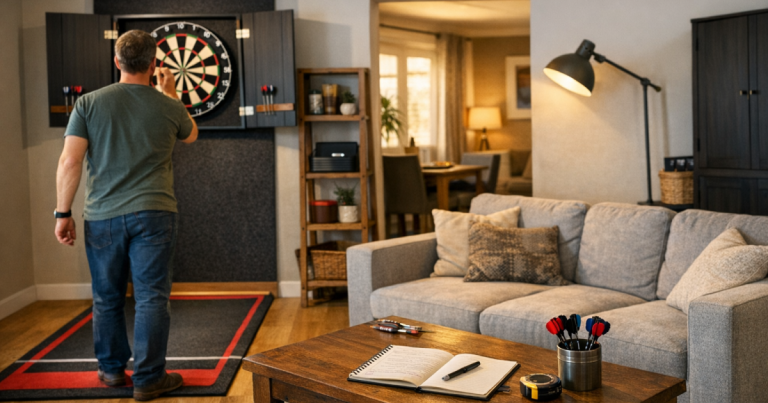
As a practical home-room check, stand at the marked line and go through a normal throw without darts. Then step back as though another player is taking their turn. If you are immediately touching a sofa, bed, garage storage unit or wall, the oche is likely to feel cramped during real play.
Try to leave a clear movement zone behind the oche where people can stand, turn and move away from the board safely. In a narrow room, the space does not need to be luxurious, but it should be predictable. Avoid layouts where the thrower has to place one foot around a chair leg or where a door opens into the throwing stance.
Step 4: allow side clearance, not just length
A darts lane needs width as well as length. The throw itself is forward, but people naturally sway, lean, change stance and step aside between visits. Side clearance also matters for retrieving darts, keeping score and letting another player wait without standing directly in the line of throw.
If the dartboard is squeezed into an alcove, check whether your throwing arm feels restricted. Right-handed and left-handed players may need slightly different comfort zones, so do not test the space with only one stance if several people use the board.
Watch for common side-clearance problems:
- A radiator or shelving unit close to the throwing shoulder.
- A cabinet door that opens into the playing lane.
- A doorway where someone could walk across the throw.
- A low lampshade or sloping ceiling near the player’s arm.
- A narrow garage bay where stored items creep back into the lane over time.
If the room forces compromises, prioritise a clear throwing line and a safe retrieval route. You can often improve the feel of the space by moving small furniture, changing where people stand between throws, or using wall-mounted scoring rather than a freestanding item beside the player.
Step 5: test the oche before making it permanent
Use masking tape, low-tack tape or a temporary marker before fitting a fixed oche strip or cutting a mat to position. The test mark lets you check stance, visibility, flooring and room flow before committing.
Throw a few practice visits only after confirming the area is clear and suitable for darts. Pay attention to how the setup feels rather than only whether the tape measure says it is correct. If you have to lean around furniture, adjust your feet to avoid a rug edge, or move every time someone enters the room, the layout needs more thought.
Many small layout faults show up at this stage. For a deeper look at the habits and room errors that can interfere with your throw, see our guide to darts mat and oche setup mistakes.
Step 6: choose the right reference for a dart mat
If you plan to use a dart mat, measure the oche position first, then position the mat to suit that line. Do not assume the printed or raised oche on a mat will land in the right place automatically when the mat is simply rolled out from the wall.
The board face remains the fixed reference. If the mat moves, the oche moves with it, which can quietly change your throwing distance. On smooth laminate, tiles or garage floors, check whether the mat creeps forward during play. On carpet, check whether it bunches or sits unevenly underfoot.
A good test is to mark the correct oche line on the floor first, place the mat so its toe line matches, then throw several visits and recheck the alignment. If the mat shifts, solve that before you rely on it for regular practice. Our guide on positioning a dart mat so it stays put covers the practical floor checks in more detail.
Room examples and what to watch
Spare bedroom
A spare room often has enough length but poor flow. Beds, wardrobes and door swings can interfere with the oche area. Check the standing zone with the door open and closed, and make sure the player is not forced into a narrow strip beside furniture.
Garage setup
Garages are popular for home darts because they offer hard walls and flexible space. The main issue is clutter. Measure the lane with bikes, tools and storage boxes in their normal positions, not after a one-off tidy. If the space only works when everything is moved, it may not stay usable.
Hallway or through-room
Hallways can give a clean straight distance, but they are rarely ideal for shared homes. The biggest issue is people crossing the throwing lane. If the oche sits in a route between rooms, the setup may be frustrating even when the measurements are technically correct.
Garden room or outbuilding
A garden room can work well, but check floor level, lighting position and ceiling height. If the floor slopes or flexes, recheck the oche line after the board is mounted and the mat is in place. A small change in board face position can affect the final distance.
Quick measurement checklist
Before you drill, fit a surround or settle on a mat position, run through this checklist:
- The bull position is marked at 1.73 m from the finished floor.
- The oche line is measured 2.37 m from the dartboard face.
- The measurement is taken straight along the centre line, not diagonally across the room.
- The board depth, bracket, cabinet or backing panel has been allowed for.
- There is enough standing room behind the oche for a natural stance.
- The throwing arm is not restricted by walls, furniture or ceiling angles.
- Doors, walkways and waiting players stay out of the throwing lane.
- The dart mat, if used, lines up with the measured oche and does not creep during play.
- The scoring position can be reached without standing in front of the thrower.
- The layout still works when the room is in its normal everyday state.
FAQ
Do I measure the oche from the wall or the dartboard?
Measure from the face of the dartboard. Measuring from the wall ignores the depth of the board, bracket, surround or cabinet and can leave the oche in the wrong place.
How much total room length do I need?
You need the 2.37 m throwing distance from the board face plus standing and movement space behind the oche. The exact total depends on the player’s stance and how the room is used.
Can I put a dartboard in a narrow alcove?
Sometimes, but test both right-handed and left-handed stances first. If the throwing shoulder, arm movement or retrieval route feels restricted, the alcove is likely to be awkward for regular play.
Should I mark the oche before mounting the board?
You can mark an estimated line, but recheck it once the board is fitted. The final measurement should always be taken from the actual board face.
Does carpet affect the oche measurement?
Carpet does not change the official distance, but it can affect mat movement and foot stability. Make sure any mat or tape marker stays aligned after a few throws.
In brief
Good oche planning is about more than one number on a tape measure. Start from the dartboard face, keep the line square to the bull, allow space for a real stance, and test the room before making anything permanent. If the layout feels natural when people are moving, scoring and retrieving darts, you are far more likely to build a home setup that gets used regularly.