A dart mat that curls at the end can turn a tidy home darts area into something that looks unfinished and feels awkward underfoot. The easiest way to store a dart mat is to roll it loosely, keep the playing surface facing out where suitable, and avoid heat, tight straps and heavy pressure.
Most curling comes from how the mat is rolled, where it is kept, and whether it has been left compressed for too long. The aim is not to make the mat perfectly rigid, but to help it settle flat quickly when you roll it out for a game.
In brief
- Roll the mat loosely rather than folding it.
- Avoid storing it beside radiators, sunny windows, boilers or damp garage corners.
- Use wide fabric straps rather than tape, string or tight elastic bands.
- Let the mat cool and relax flat before rolling it away after use.
- Do not stack toolboxes, dartboard stands or storage boxes on top of it.
Why dart mats curl in storage
Dart mats usually curl because the material has been trained into a tight curve. Rubber, vinyl, PVC and carpet-backed mats all behave slightly differently, but the principle is the same: pressure, warmth and time encourage the mat to remember the shape it has been stored in.
Folding is the biggest culprit. A fold creates a sharp crease, which is much harder to flatten than a gentle roll. Tight rolling can cause a similar issue, especially near the leading edge where players stand. If that edge lifts even slightly, it can be irritating during a throw and may make the mat feel less secure underfoot.
Cold storage can also make the problem more noticeable. A mat kept in a shed or unheated garage may feel stiffer when brought inside, so the curled ends take longer to relax. Heat has the opposite problem: it can soften some materials enough for them to deform if they are wrapped tightly or squashed behind furniture.
Step 1: clean and dry the mat before rolling
Before putting the mat away, brush off grit, chalk dust and small debris. A dry cloth or soft brush is usually enough for routine cleaning. If the mat has picked up mud from shoes, wipe it with a slightly damp cloth and leave it flat until fully dry.
Rolling a damp mat is a bad habit because moisture can sit between the layers. That is not just unpleasant when you unroll it; it can also make the backing feel tacky, musty or uneven. In a typical UK home setup, where mats may be moved between a spare room, hallway, garage or garden room, drying time matters more than people expect.
Step 2: roll it the right way
For many printed dart mats, rolling with the playing surface facing out helps reduce upward curling when the mat is next laid down. The edges are encouraged to sit towards the floor rather than spring upwards. This is especially useful if the mat has a printed oche line or distance markings that need to sit cleanly on the surface.
That said, do not force a stiff mat in the opposite direction if it resists strongly. Start with a broad, gentle roll and avoid pulling the first turn too tight. A useful rule is simple: if the roll feels like it is fighting you, loosen it.
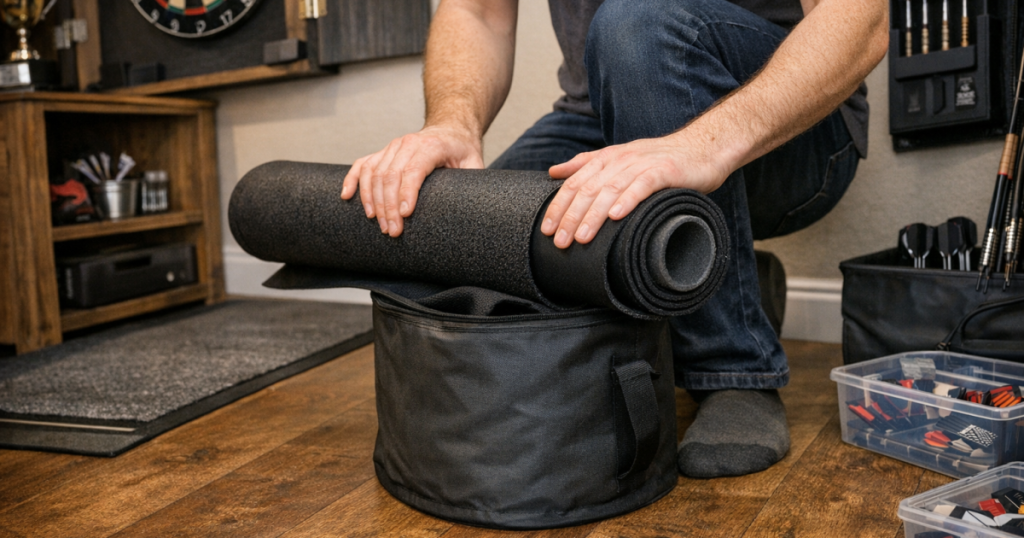
For thicker rubber mats, a larger roll is normally better than a compact one. If space allows, aim for a roll wide enough that the mat is curved rather than coiled. The tighter the tube, the more likely the ends are to hold that curve.
Step 3: secure it without pinching the edges
Use two or three wide fabric straps, hook-and-loop bands or soft luggage-style ties. Place one near each end and, for longer mats, one in the middle. The straps should stop the roll from opening, not compress it into a smaller shape.
Avoid narrow string, parcel tape, cable ties or tight elastic bands. They create pressure lines and can leave dents, marks or sticky residue. Tape is particularly annoying because adhesive can transfer onto the mat surface and pick up dust from the floor.
If the mat came with a storage strap or sleeve, use it only if the mat fits easily. A sleeve that requires wrestling the mat into a very tight roll is convenient in the short term but often makes curling worse.
Step 4: choose a sensible storage spot
The best storage position is horizontal on a shelf, under a bed, inside a cupboard or along the back of a low storage unit, with nothing heavy pressing on it. If you store it upright, make sure the roll is supported along its height rather than leaning at an angle for weeks.
Avoid leaving it directly against a radiator, in a conservatory window, next to a tumble dryer, or on a concrete garage floor where damp and cold can be an issue. A mat does not need pampering, but it does benefit from steady indoor conditions.
In a shared living space, think about the whole setup rather than just the mat. If your oche needs to disappear after each session, the ideas in removable oche setups can help you keep the throwing area neat without leaving permanent marks or trip hazards.
Step 5: avoid storing weight on top
A rolled dart mat often looks like a handy place to rest other gear, but that is where many curling problems start. Heavy boxes, dartboard stands, folding chairs and tool bags can flatten one side of the roll and make the mat settle unevenly.
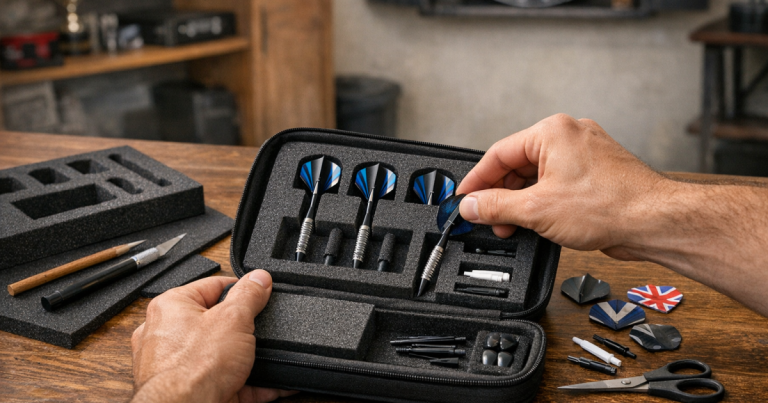
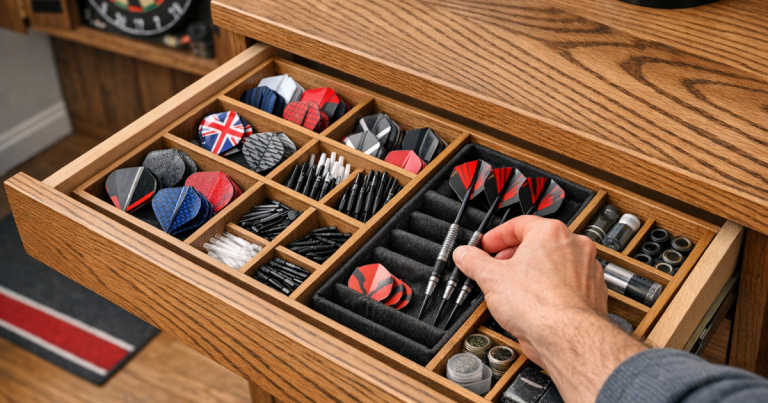
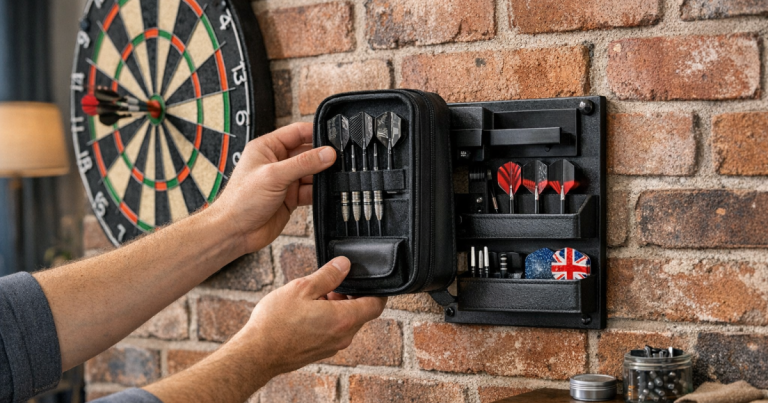
If you are organising a dedicated darts corner, separate soft items from heavy ones. Darts, flights, shafts, chalk and spare accessories are better kept in a drawer or small organiser. For a tidier home setup, drawer dividers for darts accessories are a simple way to stop small kit migrating onto the mat or being piled around the board area.
Step 6: flatten it properly before play
When you unroll the mat, give it a few minutes to relax before throwing. Place it on a clean, dry floor and smooth it from the centre outwards with your hands or feet. If the ends still lift, reverse-roll the curled section gently for a short time rather than folding it back sharply.
For stubborn corners, lay the mat flat in a warm room and place broad, light pressure over the lifted area. A stack of books spread over a towel can help, but avoid anything with sharp edges or concentrated weight. Do not use direct heat from a hairdryer, heater or iron, as overheating can damage the surface or backing.
If your darts space is in a garden room, stable storage becomes even more important because temperatures can vary more than in the main house. It is worth pairing mat storage with the wider room plan, including lighting, board position and walking space; the guide to laying out a darts area in a garden room covers those practical layout decisions in more detail.
Good storage habits for different home setups
Spare room or office
Keep the mat rolled loosely in a wardrobe, under a day bed or on a shelf. This is usually the easiest environment because temperature and humidity are fairly stable. Make sure chair wheels and desk legs are not pressing into the roll.
Garage or utility space
Keep it off the floor where possible. A shelf or wall-mounted cradle is better than a cold concrete surface. If the room gets damp, let the mat come back to room temperature before unrolling it fully.
Living room setup
Use straps and a simple storage sleeve or basket so the mat is easy to put away without being jammed behind the sofa. The easier the routine, the less likely it is to be folded in a rush.
Club-style home setup
If the mat stays down most of the time, rotate or lift it occasionally to check for trapped grit and floor marks. Even a mat that is rarely stored can curl at the edges if it is constantly nudged, kicked or partly tucked under furniture.
FAQ
Can I fold a dart mat just for a short time?
It is better not to. A short fold may be harmless once, but repeated folding creates creases that are harder to remove than normal rolling curl.
Should the printed side face in or out?
For many mats, printed side out helps the ends settle downwards when unrolled. If your mat feels too stiff that way, use the gentlest roll it will accept without strain.
What is the best way to store a dart mat long term?
Roll it loosely, secure it with wide soft straps, and keep it indoors in a dry, steady-temperature place with no heavy items on top.
How do I fix a mat that already curls?
Lay it flat in a warm room, smooth it out, and use broad light pressure on the curled ends. Gentle reverse-rolling can help, but avoid sharp bends and direct heat.
Can I leave my dart mat down all the time?
Yes, if it is not a trip hazard and the floor beneath stays clean and dry. Lift it occasionally to remove grit and check that the edges are still sitting flat.
Final thoughts
Curling is usually caused by storage habits rather than a single mistake. Roll the mat loosely, keep it dry, avoid tight restraints and give it a sensible place to live between sessions. Those small habits make the oche quicker to set up, neater to look at, and more comfortable when you step up for a throw.