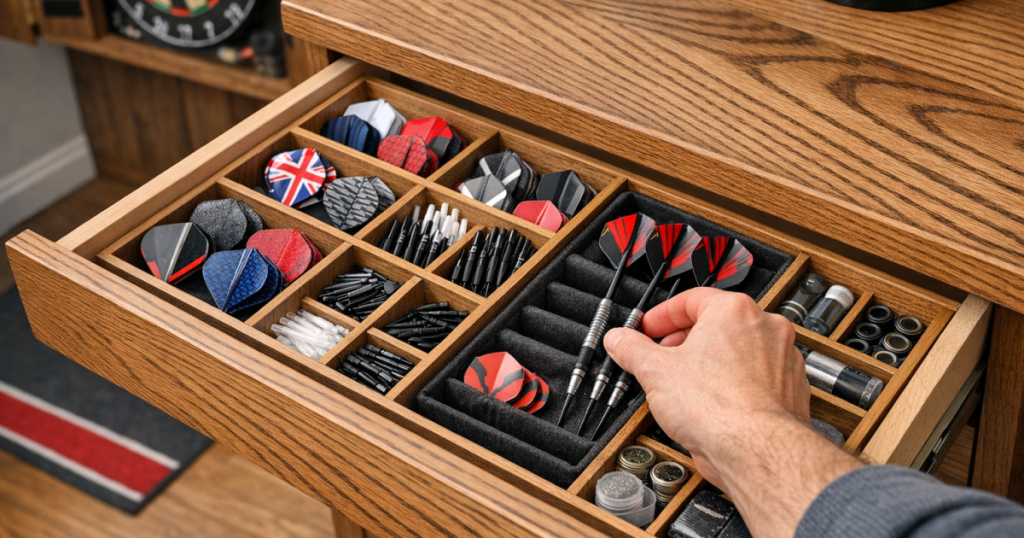
Loose flights, spare shafts and tiny tools have a habit of spreading through a home darts area. Using drawer dividers for darts accessories turns one messy drawer into a reliable kit station, so you can find the right part before practice instead of rummaging. For a home setup, aim for simple compartments that match the way you play: everyday darts at the front, spares in the middle, and rarely used tools towards the back.
The short version
A good darts drawer is not about cramming in as much as possible. It should make the items you use most often easy to see, easy to reach and easy to put back.
- Empty the drawer fully before adding any dividers.
- Group accessories by use: playing kit, spares, tools, scoring items and cleaning bits.
- Keep sharp or delicate items in smaller containers inside the divided drawer.
- Put everyday items nearest the front so the drawer stays tidy after normal use.
- Leave one small spare compartment for new flights, shafts or tools you add later.
Start by choosing the drawer’s job
Before measuring or moving dividers around, decide what the drawer is meant to do. A drawer beside the dartboard has a different role from a deeper storage drawer in a cupboard or sideboard. The closer it is to the oche, the more it should favour speed and convenience over bulk storage.
For a board-side drawer, keep it focused on throw-ready items: current darts, spare flights, stems, a checkout card, a pencil, a sharpener if you score on paper, and one or two small tools. Bulk packs, spare boardside clutter and old accessories can live elsewhere.
If the drawer is part of a bigger darts wall, it can sit alongside cabinets, surrounds and visible display storage. For a more complete wall layout, the ideas in building a tidy dartboard wall with cabinets and surrounds are useful when deciding what should be hidden in drawers and what should stay on show.
Step 1: Empty the drawer and sort everything properly
Take everything out rather than trying to organise around the mess. Darts drawers often contain a mix of current kit, forgotten spares and bits that do not belong there at all. Spread the contents on a table so you can see what you actually own.
Sort the items into practical groups:
- Ready-to-play darts: your main set, guest darts or a casual family set.
- Flights: standard, slim, pear or shaped flights, plus any sets you are saving.
- Shafts and stems: different lengths, materials and colours, including spare packs such as Harrows Supergrip Shafts if you keep them for replacements.
- Barrels and point-related items: spare barrels, soft-tip points, steel-tip accessories and small washers where relevant.
- Tools: flight punch, multi-tool, point protector, small screwdriver or sharpening stone.
- Scoring and room items: chalk, marker pens, checkout cards, spare batteries for electronic scorekeeping where relevant, and a cloth for the board area.
- Odd items: broken stems, damaged flights, empty packets and anything you no longer use.
Be honest at this stage. If a flight is badly bent, a stem is cracked, or a small accessory has been sitting unused for months, it probably does not deserve prime drawer space.
Step 2: Measure the drawer before fitting dividers
Measure the internal width, depth and height of the drawer in millimetres. The height matters because darts accessories can sit taller than expected once they are in small pots or boxes. A shallow drawer may suit flat trays, while a deeper drawer can handle stacked tubs or upright sections.
Check how far the drawer opens as well. Some fitted units do not pull out fully, which makes the rear section awkward to use. If the back of the drawer is hard to reach, reserve it for rarely used items such as spare packaging, seasonal novelty flights or duplicate tools.
Do not make every compartment the same size. Flights need broad, flat space. Stems need longer narrow slots. Tools often need a short but deeper section. The aim is to let each group sit naturally, rather than forcing everything into identical squares.
Step 3: Pick divider styles that suit darts kit
You do not need anything complicated. The best divider arrangement is usually a mixture of long channels, shallow trays and one or two lidded containers for tiny parts.
Adjustable strips
Adjustable plastic, bamboo or metal divider strips are good for creating long lanes. Use them for stems, checkout cards, pens and packaged flights. They work well when your collection changes because you can widen or narrow a section without rethinking the whole drawer.
Small trays
Low trays are useful for loose flights, flight protectors and small tools. A tray stops light items drifting across the drawer every time it opens and closes. Choose shallow trays if you want to see everything at a glance.
Lidded mini boxes
Use small lidded boxes for the fiddly bits: washers, soft-tip points, spare springs, tiny screws or anything sharp enough to catch a finger. These can sit inside a larger divided section, so you get the benefit of both separation and protection.
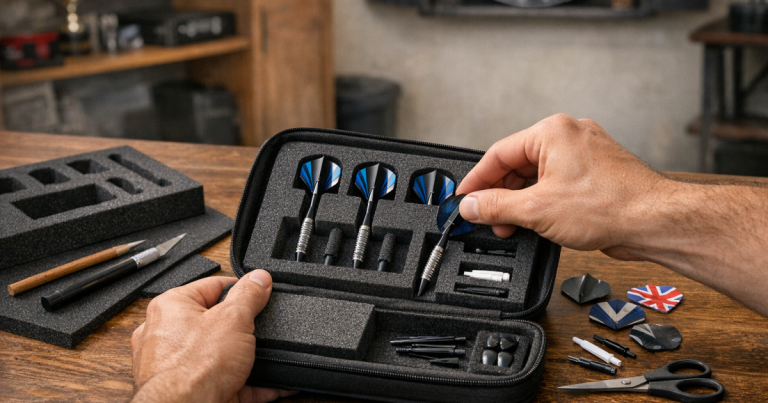
Foam or soft inserts
If you keep a valuable or favourite set in the drawer, a soft insert can stop barrels knocking against each other. This is most useful when darts are stored loose rather than in a case, although a proper case is usually better for transport.
Step 4: Build zones from front to back
Think of the drawer as a small workflow. The front should hold what you use during a normal throw. The middle should hold spares you reach for every few sessions. The back should hold the items you rarely need but still want near the board.
- Front left: current darts or a small dart case.
- Front right: one set of spare flights and one set of spare stems.
- Middle left: grouped flights by shape or colour.
- Middle right: stems, soft-tip points or small replacement parts.
- Rear left: tools and maintenance items.
- Rear right: spare scoring cards, pencils, cloths or rarely used accessories.
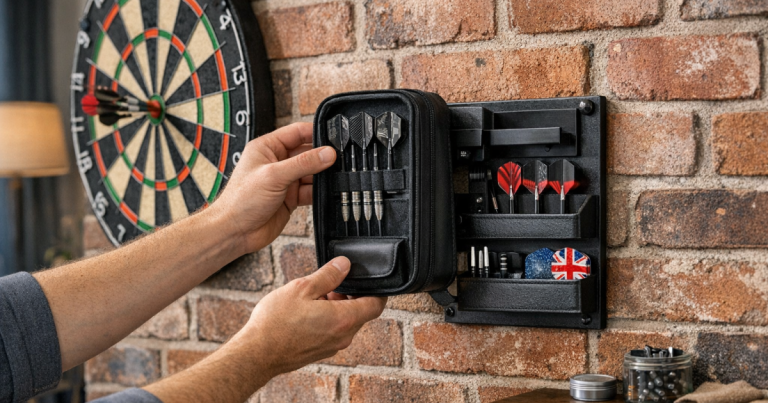
If your main darts already live in a wall-mounted case, keep the drawer for consumables and tools instead. When the area around the board is short on drawer space, mounting a dart case holder beside your board can free up the drawer for flights, shafts and small spares.
Step 5: Store flights so they do not get crushed
Flights are light, cheap to replace in many cases, and surprisingly easy to damage. The main mistake is piling them into a deep compartment where they curl, flatten or catch on points and tools.
Give flights a shallow, flat section. Keep matching sets together, either in their original sleeve or clipped with a small band. If you use several shapes, split them by type rather than by colour. Shape affects the way your darts fly, so it is more useful to know where your standard, slim or pear flights are than to create a rainbow display that mixes everything together.
Avoid putting anything heavy on top of flights. Multi-tools, barrels and spare points belong in a different section. If a drawer is shared with household items, use a lidded tray for flights so they do not get caught under tape measures, keys or batteries.
Step 6: Keep shafts and stems easy to match
Shafts are awkward because they are small enough to scatter but long enough to waste space in tiny compartments. A narrow lane works better than a square box. Place sets together, with similar lengths grouped in the same row.
If you regularly experiment with weight, grip and balance, keep the stems and flights you use for testing in a clearly marked section. That makes it easier to return to a previous setup instead of guessing what worked. For the barrel side of that process, choosing darts barrels by grip and balance gives a useful framework for thinking about how the whole dart feels in the hand.
For broken stems, be ruthless. One emergency spare is fine; a drawer full of cracked parts just creates clutter and makes good spares harder to find.
Step 7: Control sharp, tiny and messy items
Some darts accessories should not be loose in a drawer. Steel-tip points, small blades, screws, washers and repair bits can disappear into corners or catch your fingers when you reach in quickly.
Use lidded containers for anything sharp or tiny. If the container is transparent, even better: you can see what is inside without opening it. Place these boxes in a rear or side compartment so they stay accessible but are not the first thing your hand hits.
Keep chalk, marker pens and cleaning cloths separate from flights and stems. Chalk dust and ink marks can make a tidy drawer look grubby, and a leaking pen can ruin paper checkout cards or packaging. A small tray or wipe-clean pot is enough to separate these items.
Step 8: Add simple labels without overdoing it
Labels help most when more than one person uses the setup. You do not need printed stickers for every single compartment. Small handwritten labels such as “flights”, “stems”, “tools” and “scoring” are enough for most home drawers.
If the drawer is used by family, guests or casual players, make the labels action-based rather than technical. “Spare tips” is clearer than a very specific description if not everyone knows the terminology. For your own practice drawer, more detailed labels can help: “short stems”, “standard flights”, “soft-tip points” and “match set”.
Leave one compartment deliberately unlabelled. It gives you a landing spot for new accessories, temporary spares or items you want to test during a practice week. Empty that section during your monthly reset so it does not become the new junk zone.
Example layouts for different home setups
Small drawer under a scoreboard
Keep this drawer lean. Use one long lane for pens and chalk, one shallow tray for flights, one lane for stems, and one small lidded box for tiny parts. Store full dart cases elsewhere so the drawer stays easy to open during a game.
Shared family darts drawer
Give each regular player one small section for their own darts or preferred accessories. Keep communal spares in the middle. Put sharper tools or point-related items towards the back in a lidded container, especially if younger players are around the setup.
Practice-focused drawer
Use the front section for your current match setup and the middle for test parts. Separate flights and stems by shape and length so you can make controlled changes. Keep a small notebook or practice card in the drawer if you track what feels right.
Quick reset routine
A divided drawer only works if it is easy to maintain. Build a short reset into your normal darts routine rather than waiting until the drawer is a mess again.
- After a session, return spare flights and stems to their labelled sections.
- Throw away visibly damaged flights, cracked stems and empty packets.
- Check that small tools are back in their tray rather than loose in the drawer.
- Wipe chalk dust or marker smudges before they spread.
- Once a month, empty the spare compartment and decide what should stay.
This takes a minute or two, but it stops the drawer sliding back into chaos. It also makes it easier to spot what is running low before you need it mid-session.
Helpful questions
Are drawer dividers for darts accessories better than a dart case?
They do different jobs. A dart case is better for carrying a complete set around, while a divided drawer is better for organising spares, tools and accessories at home.
Should I store assembled darts in a drawer?
You can, but they should be protected from knocks and pressure. A case, foam insert or dedicated section is better than letting assembled darts roll around loose.
How deep should the compartments be?
Use shallow sections for flights and paper items, longer narrow sections for stems, and slightly deeper sections for tools or small lidded boxes. Measure your own drawer rather than guessing.
What should not go in the same compartment as flights?
Avoid storing flights with barrels, sharp points, heavy tools, pens or chalk. These can bend, mark or damage them.
How often should I reorganise the drawer?
A quick reset after playing and a fuller tidy once a month is enough for most home setups. Rework the layout when you change how you practise or add new kit.
What to remember
The best darts drawer is simple, visible and easy to reset. Use dividers to match the way you actually play: current kit at the front, spares in the middle, tools and rarely used items towards the back. Protect flights from pressure, keep tiny or sharp parts contained, and avoid filling every gap just because it is available. With a little structure, the drawer becomes part of a smoother home darts routine rather than another place for clutter to hide.