A damp garage can turn a good set of steel-tip darts blotchy surprisingly quickly, but you can stop darts rusting with a few simple storage and drying habits. The main aim is to keep moisture away from the steel points, avoid trapping condensation inside cases, and give your darts somewhere dry to live between throws.
Most home players do not need complicated maintenance. What matters is consistency: dry the darts after use, store them off cold concrete floors, and control the worst of the garage damp before it reaches your kit.
The short version
- Do not leave darts in the board overnight in a cold or damp garage.
- Wipe the points and barrels dry after every session, especially if your hands are warm or the room is cold.
- Store darts in a closed case with a small desiccant sachet, then keep the case inside a cupboard, drawer or lidded storage box.
- Avoid sealing already-damp darts into an airtight case; dry them first.
- Check the garage itself for condensation, leaks and poor airflow around your darts area.
Why darts rust in a garage
Rust is most common on steel points because they are exposed, handled often, and sometimes left sitting in a damp sisal board. Tungsten barrels are less likely to rust in the same way, but they can still pick up surface marks, grime or discolouration around grooves, paint, grip cuts and joins. Brass darts and cheaper plated finishes may show wear more visibly if moisture and hand oils are left on them.
Garages are awkward because they swing between cold nights and warmer daytime air. When a metal dart is colder than the surrounding air, condensation can form on the point and barrel. If the darts are then left in the board, on a shelf, or inside a soft case that has absorbed moisture, the problem repeats every time the temperature changes.
The good news is that you do not need to polish your darts after every throw. A reliable routine is enough to prevent most surface rust before it becomes pitting, roughness or staining.
Step 1: take darts out of the board after playing
Leaving darts stuck in the board is convenient, but it is one of the easiest ways to invite rust in a damp garage. The points sit inside sisal, which can hold a little moisture from the air. If the board is mounted on a cold wall, the points may also cool down quickly after you finish playing.
At the end of a session, pull the darts out, give the points a quick look, and store them properly. This also protects the board face from unnecessary pressure marks and stops flights being knocked when other people use the garage.
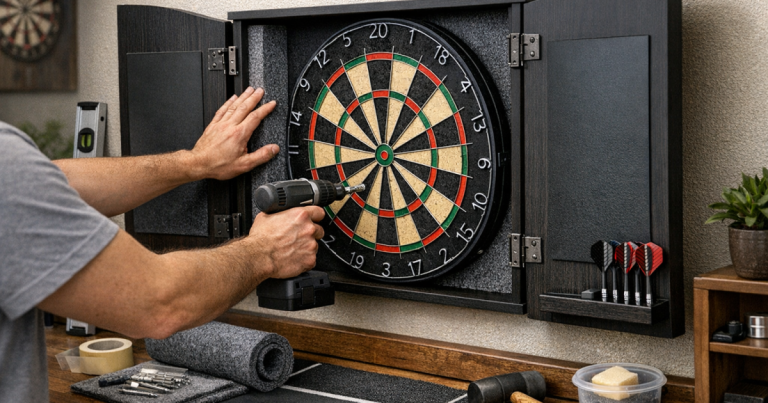
If your board or cabinet is on an external wall, it is worth checking the wider setup too. A poorly fixed cabinet, damp backing surface or cold exposed wall can all make the playing area less stable and more prone to condensation. For wall-specific fixing considerations, see the guide to dartboard cabinets on different wall types.
Step 2: dry the points and barrels properly
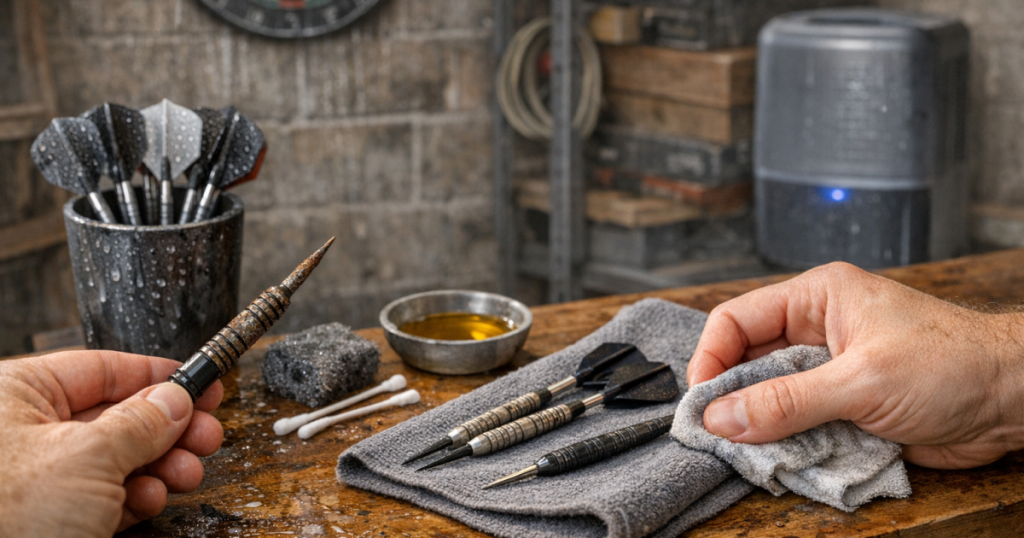
After playing, use a clean, dry microfibre cloth or cotton cloth to wipe each dart from point to stem. Pay attention to the shoulder where the point enters the barrel, because moisture and dirt often collect there. If you use grip wax, chalk, hand cream or anything similar, wipe the barrels a little more carefully so residue is not left in the grooves.
For light orange surface marks on points, rub gently with a dry cloth first. If that is not enough, use very fine abrasive care only on the point, not across painted or coated barrel sections. Avoid aggressive wire brushing on barrels, as it can mark finishes and soften crisp grip edges.
Do not soak darts in water, household cleaners or strong solvents. Even if the barrel itself seems fine, liquid can sit around joins, point holes, stems and inserts. A dry wipe is usually safer and more useful for everyday care.
Step 3: use the right kind of storage
A case helps, but only if the darts go into it dry. Soft fabric cases can absorb moisture in a garage, while hard cases can trap damp air if closed too quickly after a cold session. The better approach is to wipe the darts, leave the case open for a short while if it feels cold or clammy, then close it once everything is dry.
Add a small silica gel or desiccant sachet to the case or storage box. Replace or dry the sachet according to its instructions, because a saturated sachet will not keep doing the job. If you have several sets, keep them in one lidded plastic storage box with the cases inside rather than scattered on shelves.
Keep the storage box away from the garage floor. Concrete stays cold and can encourage condensation around anything placed directly on it. A shelf, cupboard or wall-mounted storage unit is better, ideally on an internal wall rather than next to the garage door.
Step 4: avoid oily quick fixes on the barrel grip
A tiny amount of protective oil can help bare steel points, but it needs to be used carefully. If oil transfers to the barrel, fingers or board, it can affect grip and leave marks. If you choose to use oil, apply a very small amount to a cloth, wipe the point only, then wipe again with a clean dry section so the point is not wet.
Do not oil the barrel as a routine habit. Many barrels have painted rings, coatings, knurled grip, scallops or fine cuts, and oily residue can make them feel inconsistent. For most players, drying and better storage are more reliable than coating the darts in anything.
Step 5: control the damp around the darts area
If your garage regularly smells musty or has visible condensation on windows, tools or metal shelves, dart care alone will only go so far. Look for obvious water entry around the door, roof edges and walls. Keep wet coats, towels, gardening kit and car-cleaning cloths away from the board area, as they add moisture to the room.
Ventilation helps, but it needs to be balanced. Opening the door briefly on a dry day can clear stale air; leaving damp air blowing through on a wet evening can make things worse. A moisture absorber can help in a small enclosed cupboard or storage box, while a dehumidifier may suit a frequently used garage room. Follow the manufacturer’s instructions for any electrical equipment and keep it positioned safely away from the throw line.
If your garage setup includes mats, oches or other floor accessories, store those properly too. A damp mat can hold moisture close to your playing area and make the whole space feel colder. The same storage logic applies to floor kit, and the guide on storing a dart mat without curling is a useful next step if your mat lives in the same garage.
Step 6: inspect points before rust becomes damage
Make a quick inspection part of your normal routine. Roll each dart gently between your fingers and look for roughness, orange marks, black staining, or pitting on the point. Surface rust is usually manageable if caught early. Deeper pitting can weaken the point, make it rough on the board, and create an uneven feel on release.
Also check that the point is not catching excessively in the board. A slightly textured point is normal for many players, but a corroded or jagged point can pull fibres and make removal rougher than it needs to be. If a point is badly rusted, bent or deeply pitted, replacement is usually the cleaner solution than trying to rescue it.
Common garage scenarios and what to do
The darts are fine during summer but mark up in winter
This usually points to condensation rather than direct water contact. Store the darts somewhere warmer and more stable between sessions, such as inside the house or in a sealed box brought indoors after play. If that is not practical, keep them in a lidded box with desiccant on a shelf away from external walls.
The points rust but the barrels look normal
That is common. The points are the most exposed steel part and spend time inside the board. Focus on removing darts after play, drying the points, and using a dry case. You do not need to change your whole setup unless the room itself is visibly damp.
The barrels feel gritty or dull
Start with a dry brush or cloth rather than liquid cleaning. A soft toothbrush can lift dust from grooves without being too harsh. If the barrels have coloured rings or coatings, avoid anything abrasive across those areas.
The board area is next to the garage door
Garage doors can be draughty and cold, which increases condensation risk. If possible, move dart storage away from the door even if the board stays where it is. For broader room planning, including keeping accessories out of the way of the throw, the advice on laying out a darts area in a garden room also translates well to converted garages and hobby rooms.
A simple after-session routine
- Remove all darts from the board.
- Wipe points, barrels and stems with a dry cloth.
- Let the case air briefly if it feels cold or damp.
- Put the darts in the case with a desiccant sachet.
- Store the case inside a lidded box, drawer or cupboard, off the floor.
- Check the points once a week during colder months if the garage is unheated.
This takes less than two minutes once it becomes habit. It also keeps flights, stems and spare accessories tidier, which matters in a garage where darts gear often shares space with tools, bikes and storage boxes.
Helpful questions
Can I keep my darts in the garage all year?
Yes, if the garage stays reasonably dry and the darts are stored in a case or box off the floor. In a very damp or unheated garage, bringing the darts indoors between sessions is the safer option.
Should I leave darts assembled or take them apart?
For normal storage, leaving them assembled is fine. If the case is tight or the flights get crushed, remove the flights, but make sure all parts are dry before closing the case.
Does rust on the point mean the dart is ruined?
Not always. Light surface rust can often be wiped away. Deep pitting, flaking or a rough jagged feel is different and usually means the point should be replaced.
Will a dartboard surround or cabinet stop rust?
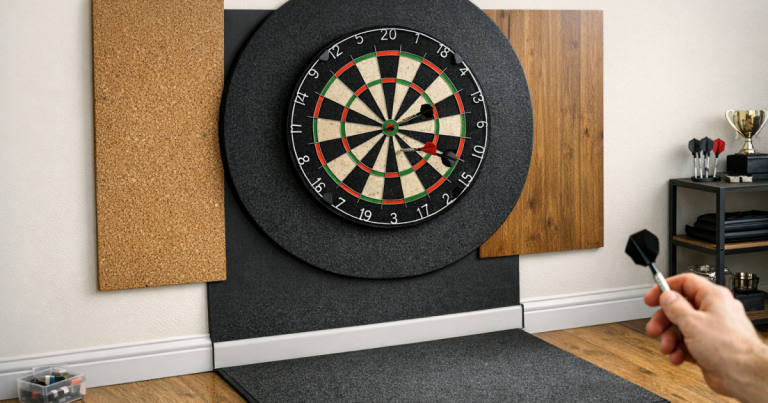
Not directly. A surround or cabinet protects the wall and can make the area neater, but rust prevention still depends on dry storage, airflow and removing darts from the board after play.
Is it safe to use rusty darts on a bristle board?
A small surface mark is unlikely to matter, but rough or pitted points can damage fibres and make retrieval harsher. Smooth, clean points are better for both feel and board care.
The big picture
Damp garages are tough on any exposed metal, and dart points are no exception. The best fix is not one dramatic clean-up; it is a repeatable routine that keeps moisture away before it has time to settle. Take the darts out of the board, dry them, store them in a proper case with desiccant, and keep that case away from cold floors and external damp spots.
Once the storage side is under control, your darts should feel more consistent from session to session, and you will spend less time dealing with rough points, stained barrels and messy garage clutter.