An open-plan darts area needs more than a spare wall: it needs a safe throw line, clear movement around furniture and lighting that does not ruin the rest of the room. The aim is to make the board feel permanent while keeping the room comfortable for eating, watching television, working or relaxing.
The best layouts usually come from marking the space first, then adjusting furniture, storage and protection around real throwing movement rather than guessing from a floor plan.
At a glance
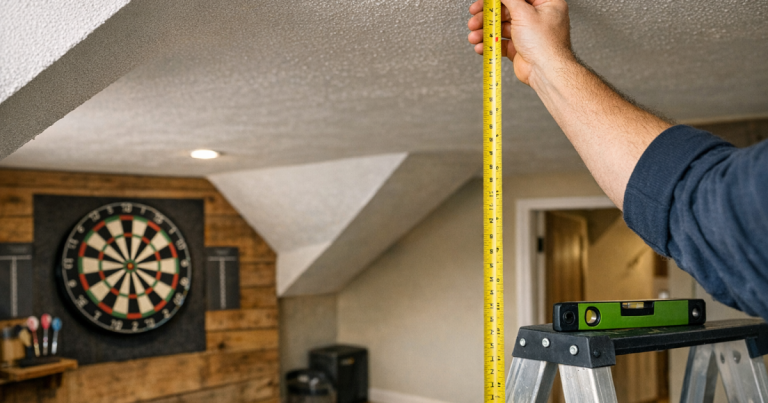
- Use the standard steel-tip measurements: bullseye centre 1.73m from the floor and 2.37m from the dartboard face to the front of the oche.
- Keep the throwing lane out of normal walkways, especially between kitchen, sofa, doors and garden access.
- Plan for bounce-outs, wall marks, floor protection, noise and where darts will be stored when the room is being used for something else.
- Test lighting at the time of day you actually play, not just at midday with the curtains open.
- Use visual cues such as a mat, slim oche, cabinet, surround or furniture edge to make the darts zone obvious without making the room feel cluttered.
Any new mains electrical work for dartboard lighting, sockets or cable routing should be carried out by a qualified electrician to meet UK electrical safety standards and Building Regulations requirements.
Step 1: choose the wall before you choose the look
In an open-plan room, the board wall has to do more than hold a dartboard. It must face a clear throwing lane, avoid cross-traffic and give you enough room to stand, retrieve darts and step away without bumping into furniture.
Start by ruling out walls where people naturally walk. Common problem spots include the route from the kitchen to the dining table, the path from the sofa to the hallway, patio doors, utility-room access and the line between a fridge and a worktop. A dartboard placed across one of these routes will feel awkward even if the official measurement technically fits.
Look for a wall where the throw travels into a quiet edge of the room rather than across the centre of daily life. A chimney breast, alcove wall, side wall in a kitchen-diner or the end of a long lounge can all work, provided the throwing line does not cut through the main seating area.
Step 2: mark the throwing lane on the floor
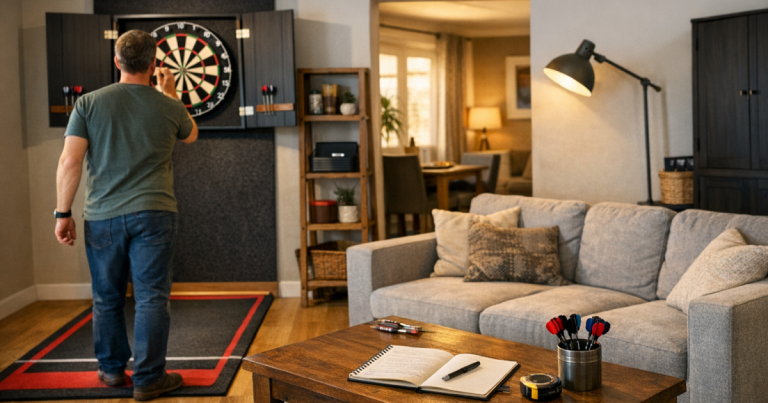
Before fitting anything, mark the board position and throwing lane with masking tape. Put a temporary mark where the bullseye will sit, then measure 2.37m from the face of the board position to the front of the oche. Remember that this measurement starts from the playing face of the dartboard, not from the wall behind it.
If the board is not yet mounted, allow for the depth of the board and bracket when marking the floor. Once the board is up, you can also check the diagonal measurement from the bullseye to the oche, which is 2.93m for a standard steel-tip setup.
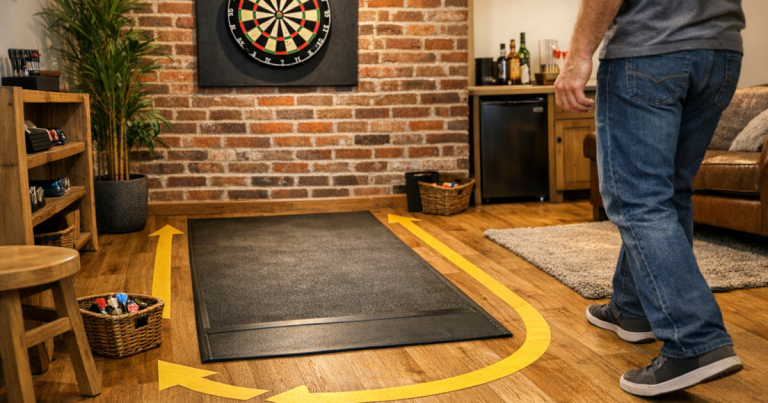
Stand at the marked line and make a few slow practice motions without releasing a dart. Then walk the room as you normally would. If someone has to cross in front of the thrower to reach the kettle, sofa, sink or back door, the layout needs changing.
For a fixed line, raised stop or mat-based solution, the permanent darts oche and mat planning guide goes deeper into measuring, positioning and avoiding annoying mat creep.
Step 3: protect the wall without making the room look temporary
Open-plan rooms are usually more visible than garages, spare rooms or sheds, so wall protection matters visually as well as practically. A bare board on a painted wall can look neat for a week, then quickly show small marks from missed darts and bounce-outs.
A dartboard surround is the simplest visual boundary. It frames the board, catches many stray darts and can often be removed without changing the feel of the room. A cabinet gives a more furniture-like finish and hides the board when not in use, but you need enough clearance for the doors to open fully without clashing with shelves, picture frames or adjacent cupboards.
If you rent, avoid assuming you can drill freely. Check your tenancy terms and think about non-permanent protection around the board area. The guide to dartboard cabinets and surrounds for rented homes covers the trade-offs between neatness, wall protection and removability.
Step 4: plan floor protection and retrieval space
The floor below the board takes more punishment than many people expect. Darts can bounce out, fall from the board or be dropped during retrieval. Hard flooring can be noisy and unforgiving; carpet can hide small points or make a mat sit unevenly.
A darts mat can define the lane, protect the floor and make the throwing position obvious to anyone else in the room. In a kitchen-diner or lounge, choose a position where the mat does not become a trip point across a main route. If you need to roll it away, leave somewhere sensible to store it flat or loosely rolled so it does not curl at the corners.
Also allow space at the board end. You need to step in, remove darts, turn round and walk back without colliding with a dining chair, sideboard or coffee table. The best open-plan layouts feel calm during retrieval, not just during the throw.
Step 5: control sightlines, noise and household flow
A darts setup in an open room is shared with the rest of the household, so the plan should make non-players feel considered. Think about what someone sees from the sofa, whether the board is visible from the kitchen, and whether darts noise will be irritating during television, work calls or family meals.
Small changes can make a big difference:
- Use a cabinet if you want the board hidden outside playing time.
- Keep darts in a closed case, drawer or high shelf when not in use, particularly in homes with children or pets.
- Position seating to the side or behind the thrower, never within the throwing lane.
- Avoid placing the board on a party wall if repeated impact noise may bother neighbours.
- Keep fragile items, mirrors and glass-fronted furniture away from the board zone.
Sound is worth testing before you commit. A board on a solid internal wall can sound very different from one on a lightweight partition. If you are sensitive to noise, temporarily hold the board position and tap the wall to get a rough sense of how much impact travels.
Step 6: get the lighting right for both darts and daily use
Open-plan lighting is often designed for atmosphere rather than precision. Pendant lights, downlights, kitchen task lighting and floor lamps can all create awkward shadows on a dartboard, especially if the thrower stands between the main light and the board.
Test the board position in daylight, evening light and with the room set up as you normally use it. Watch for shadows across the treble bed, glare from glossy nearby surfaces and reflections in picture frames or television screens. A dedicated dartboard light can help, but it should not dazzle people sitting nearby or make the room feel like a sports bar unless that is what you want.
If the room has several uses, it is worth planning zones: softer general lighting for eating or relaxing, then focused board lighting only when playing. For more detailed placement ideas, the dartboard lighting guide for multi-use spaces explains how to reduce glare and shadows without over-lighting the whole room.
Step 7: build storage into the room, not around it
Loose darts, flights, shafts, chalk, markers and cloths quickly make an open-plan room feel messy. Storage does not need to be large, but it should be close enough that putting things away is easier than leaving them on a dining table.
Good storage spots include a shallow drawer in a sideboard, a small lidded box in a cabinet, a wall-mounted case beside the board or a shelf above adult reach. Keep the scoring method with the board as well. A small dry-wipe board, chalkboard or phone-free score pad is often easier in a shared room than asking everyone to move things off the table before a quick leg.
If you use a roll-out mat, decide where it lives before you buy or fit anything else. A mat that has no natural home usually ends up leaning against a wall, curling at the edges or being moved from room to room.
Three open-plan layouts that usually work
Kitchen-diner end wall
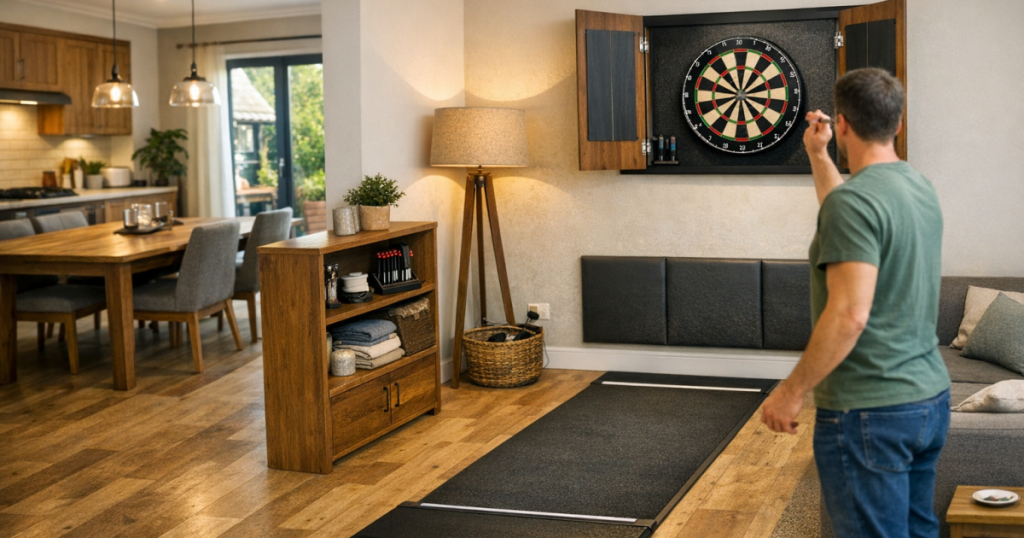
This works well when the dining table sits to one side and the throwing line runs parallel to the table rather than through it. The danger is placing the oche where chairs need to pull out. Test the table with people seated, not just pushed neatly under.
Lounge side wall
A side-wall setup can be tidy if the sofa faces away from the throwing lane or sits safely behind it. Avoid throwing towards television equipment, glazed doors or display shelves. A cabinet can make this layout feel more like part of the room when darts is not the main activity.
Open study or work corner
A work corner can double as a darts area if the desk is outside the line of throw and the chair can tuck away fully. Check laptop stands, monitors, glass frames and desk lamps. This setup suits quick practice sessions, but only if the room can be switched back to work mode without clutter.
Pre-fit checks before you drill or commit
- Can someone enter the room without crossing the throwing lane?
- Does the oche position still work when chairs, stools or footrests are in their normal places?
- Is there enough room to retrieve darts comfortably?
- Will the board be affected by direct sunlight, glare or a shadow from the thrower?
- Are sharp darts stored securely when the room is used by children, guests or pets?
- Can the wall and floor protection stay in place without making the room feel unfinished?
- Does the setup still feel usable in the evening, when most home darts sessions actually happen?
If the answer to any of these is no, adjust the room before fitting the board. Moving a chair, changing a lamp or shifting the board to the next wall is easier before holes are drilled and mats are bought.
Things readers ask
Can a darts area work in a small open-plan flat?
Yes, but only if the throwing lane does not cut through the main living route. In compact flats, a cabinet, removable mat and careful dart storage usually matter more than creating a dedicated games-room feel.
Should the board go near the television?
Only if the television sits well outside the throwing lane and is protected from bounce-outs. In most rooms, it is better to keep screens to the side or behind the thrower.
Is a mat enough to mark the oche?
A mat can work well if it stays flat and does not slide. For regular play, a small raised oche or a consistent floor marker gives a clearer toe line and reduces measuring mistakes.
How do you stop the setup dominating the room?
Use a cabinet or neat surround, keep accessories stored, and choose a board wall that already feels like a natural zone. The less the throwing lane disrupts furniture flow, the calmer the room feels.
Can guests sit nearby while someone is playing?
They should sit behind or well to the side of the thrower, never ahead of the oche or close to the board. Make the no-walk zone obvious before play starts.
Why it matters
A good open-plan darts area feels intentional rather than squeezed in. The board is visible when you want to play, protected when you miss, and easy to live with when the room returns to normal.
Measure from the board face, keep the lane clear, test real household movement and plan lighting before you commit. Do those steps in order and you will end up with a darts setup that gets used more often because it fits the room, not because everyone has to work around it.