A spare room, garage bay or garden room rarely belongs to darts alone. Dartboard lighting planning helps you see the treble bed clearly without turning the rest of the space into a harsh, single-purpose corner. The aim is simple: keep the board evenly lit, protect sightlines for the thrower, and let the room switch back to work, storage, relaxing or family use without fuss.
Fixed mains wiring, new ceiling fittings and additional sockets should be carried out by a qualified electrician to meet UK Building Regulations, BS 7671 wiring standards and manufacturer safety requirements.
The short version
- Light the board face, not the thrower. The board should be bright and even, while the oche area stays comfortable.
- Avoid relying on one ceiling pendant behind the thrower, as it often creates hand, dart and body shadows across the scoring area.
- Plan for how the room is used when darts is not being played: watching TV, working, storing bikes, using gym kit or letting children move through safely.
- Keep light fittings, cables and floor equipment out of the throwing lane and the walking route to the board.
- Use layered lighting where possible: general room light, focused board light and softer background light for the rest of the space.
Why shared rooms make dartboard lighting harder
A dedicated darts room can be arranged around the board. A multi-use space cannot. In a lounge, the dartboard may sit near a TV wall or bookcase. In a garage, the board might share space with tools, storage shelves and a freezer. In a garden room, it may need to work alongside a desk, sofa bed or gym area.
The lighting problem is not simply brightness. It is direction, consistency and control. Too little light makes trebles and doubles harder to read. Too much light in the wrong place causes glare, harsh reflections on number rings, and distracting shadows. A good layout lets you throw without squinting, stepping around lamps or apologising for turning the whole room into match-night mode.
Before choosing fittings or moving furniture, mark the board position, the throwing line and the walking route between them. The standard steel-tip throw line is measured from the face of the board, so check your setup before fixing anything permanently. Once those points are clear, the lighting can be planned around real movement rather than a rough idea of where darts might happen.
Start with the board face, then work outwards
The board is the priority. The segment boundaries, wire or blade system, numbers and outer ring should be visible from the oche without uneven patches. A common mistake is to make the whole room bright and assume the board will be fine. In practice, the board can still sit in a shadow if the main light is behind the thrower or offset at an awkward angle.
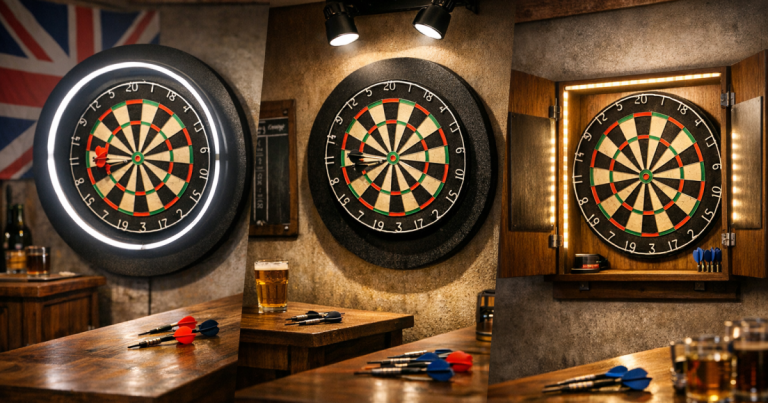
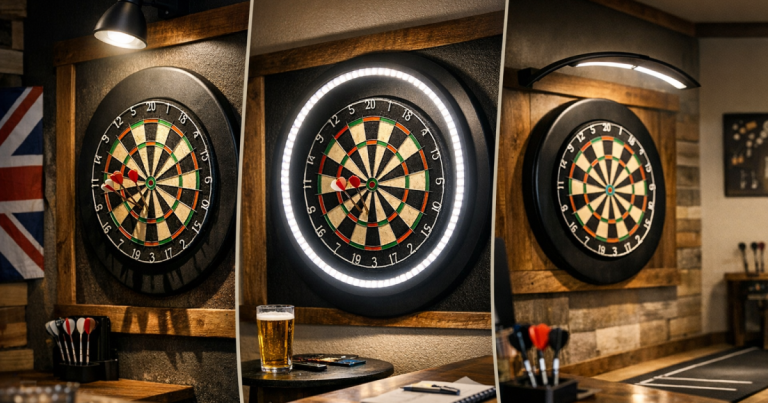
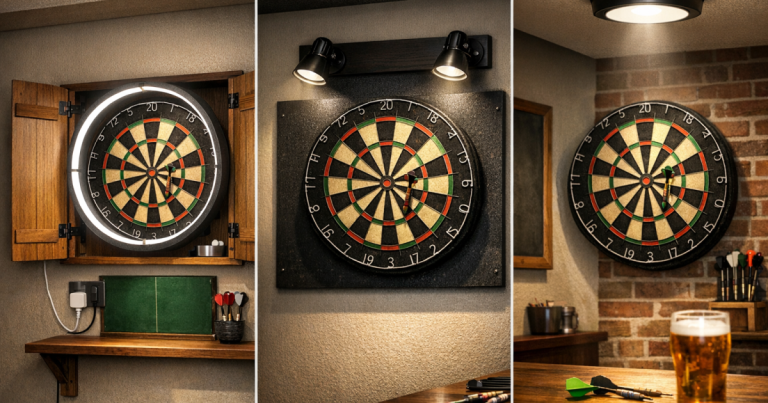
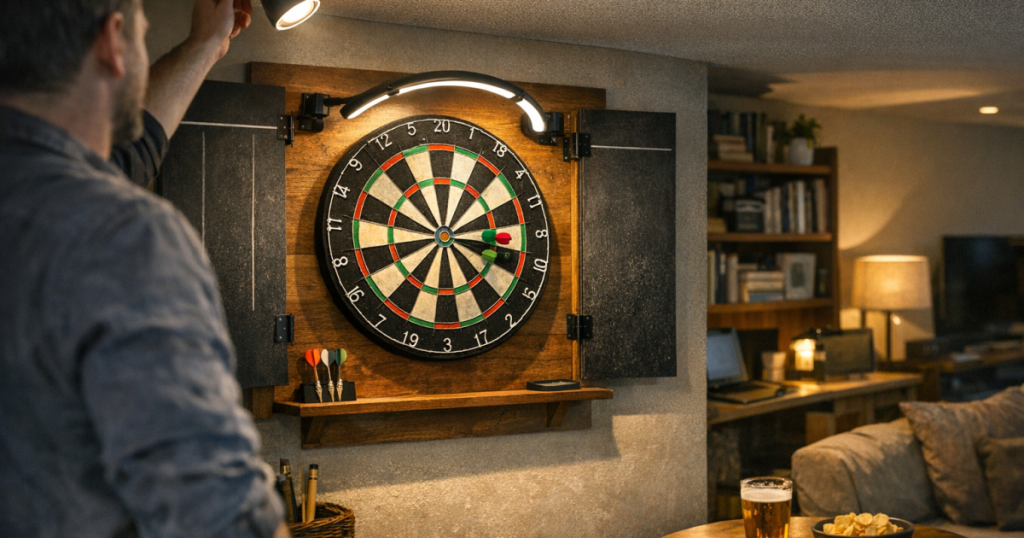
Focused dartboard lighting works best when it illuminates the board from around the front or perimeter, rather than from a single point behind the player. Dedicated board lights, carefully aimed spotlights and some track-light arrangements can all work, provided they avoid glare and do not obstruct darts being removed.
If you are weighing up the features of dedicated systems, it is worth reading the site’s guide to features that matter in dartboard lighting. For a shared room, the most useful features are usually even coverage, low-profile design, easy access to the board and sensible cable management.
Match the lighting style to the room’s other jobs
Lounges and dining rooms
In a living space, the main challenge is making the darts corner feel intentional without dominating the room. A bright exposed fitting can be fine while playing, but irritating during a film or evening meal. Dimmable room lighting, a neat board-focused light and a cabinet or surround can help the area blend in when the darts are packed away.
Watch for reflections from glass picture frames, TV screens and glossy cabinet doors. If a board light points across the room rather than towards the board, it can become more noticeable than helpful. Sit in the normal viewing position and check whether the darts light catches your eye when the board is not in use.
Garages and utility spaces
Garages often have colder surfaces, lower ambient light and more visual clutter. The board may be technically lit, but surrounded by dark shelving and shadowy corners. A separate general light for the garage can make the space feel safer and easier to move through, while the board light handles scoring visibility.
If the garage is damp or unheated, consider the environment around the whole setup. Lighting is only one part of usability; boards, darts and accessories also need protection from moisture and temperature swings. Keep cables tidy, avoid trailing leads through storage routes, and position the board away from places where people carry tools, bikes or laundry baskets through the throwing lane.
Garden rooms and outbuildings
Garden rooms can be excellent for darts because they are usually easier to zone than a main living room. The trade-off is that they often have large windows, compact footprints and mixed uses. Daylight may be strong from one side in the afternoon, then disappear completely in the evening.
Plan how the space looks in both daylight and darkness. If the board is opposite a window, reflections and contrast can change dramatically. Blinds or curtains may matter as much as the board light itself. For a fuller room-planning view, including furniture placement and circulation, see how to lay out a darts area in a garden room.
Shadows, glare and sightlines: the three checks that matter
Once a temporary setup is in place, test it from the oche rather than judging it from beside the board. Stand in your normal throwing position, hold a dart up, and look at the board through your usual line of sight. Small shadows that seem harmless up close can cover the treble 20 or double 16 from the throw line.
- Shadow check: thrower shadows should not fall across the board face. If they do, the main light is probably behind or above the player rather than focused on the board.
- Glare check: the number ring and outer board area should be readable without bright hotspots. Glare is tiring even when the board seems bright enough.
- Sightline check: the fitting should not sit where it distracts your eye during the throw or blocks access when removing darts.
- Room-use check: people should be able to walk around the room safely when the lighting is on, dimmed or switched off.
A useful test is to play a few legs at the time of day you expect to use the room most. Evening play under artificial light often reveals issues that are invisible during a quick daytime setup.
Rented homes need reversible choices
Renters and anyone in a shared property have an extra constraint: the setup may need to come down cleanly. That affects both board mounting and lighting. Freestanding stands, non-permanent surrounds and plug-in lights can reduce the need for drilling, although every room and tenancy agreement is different.
Cable routes matter here. A plug-in light is only practical if the cable can be kept away from feet, chair legs and the throwing lane. If the socket is across the room, an untidy lead can create more problems than the light solves. Where wall protection is also part of the plan, the guide to cabinet and surround choices for rented homes is a useful next step.
Different lighting approaches, without the sales pitch
There is no single correct lighting method for every shared space. The right answer depends on what the room already has, how permanent the darts area is, and how much visual impact you can tolerate when nobody is playing.
- Dedicated board surround lights: These can give even coverage and a neat darts-specific look. They suit regular players who want the board ready quickly, but they still need enough surrounding room light for safe movement.
- Ceiling spotlights: These can work well if aimed correctly and placed so the thrower does not cast a shadow. Poor placement can make them frustrating, especially in narrow rooms.
- Track lighting: Adjustable heads can help in rooms where furniture moves or the board shares a wall with other uses. The risk is overcomplication if too many heads are aimed in different directions.
- Cabinet-integrated lighting: This can be discreet in lounges or dining rooms, though coverage varies by design. Check how evenly the board face is lit from the oche.
- Portable lamps: Useful for testing positions, but rarely ideal as the long-term main board light unless they are stable, out of the throwing route and not shining into the player’s eyes.
The best setups usually combine a focused board light with softer room lighting. That way the board is clear, but the space still feels like a normal room rather than a corner of a pub under a spotlight.
Small details that make a shared setup easier to live with
Good lighting is part of a wider routine. If the room has to change use quickly, every extra step becomes noticeable. Switch placement, cable tidiness, storage and furniture clearance all affect whether the darts area gets used often or becomes too much effort.
- Put the board light on an accessible switch where possible, rather than relying on reaching behind furniture.
- Choose a lighting position that still works if a chair, folding table or exercise mat moves slightly.
- Avoid creating a bright pool of light that leaves the rest of the walking route dark.
- Check whether anyone seated nearby has the light directly in their eye line.
- Leave comfortable clearance around the board for retrieving darts without bumping the fitting or surround.
- Retest the setup after adding a cabinet, surround, scoreboard or mat, as each can change shadows and sightlines.
Common questions
Can one ceiling light be enough for a dartboard?
Sometimes, but it often depends on where it sits. If the ceiling light is behind the thrower, it can cast shadows over the board. Test it from the oche before assuming it is suitable.
Should the dartboard area be brighter than the rest of the room?
Yes, the board face should usually be the clearest part of the setup. The rest of the room still needs enough ambient light for safe movement, seating and storage.
Is a plug-in dartboard light sensible in a rented flat?
It can be, provided the cable route is tidy, the fitting is stable and the setup does not damage the wall. Avoid trailing leads across the oche or through a doorway.
What is the biggest lighting mistake in a multi-use darts space?
Planning the light from the wall instead of the throwing position. The board can look fine up close but show shadows, glare or poor contrast once you stand at the oche.
Do I need different lighting for soft-tip and steel-tip darts?
The basic goal is the same: even board visibility from the throw line. Electronic boards may have displays or reflective surfaces, so check for glare as well as board-face coverage.
Main lessons
A multi-use darts space works best when lighting is planned around how people actually use the room. Start with the board face, test from the oche, then balance the darts area with the rest of the space. In a lounge, that may mean discretion and dimming. In a garage, it may mean stronger ambient lighting and tidier cable routes. In a garden room, it may mean controlling daylight as carefully as artificial light.
The goal is not to make the room permanently brighter. It is to make the board consistently readable, the throw comfortable, and the space easy to return to normal afterwards. Get those basics right and the darts corner will feel like part of the room rather than an awkward add-on.