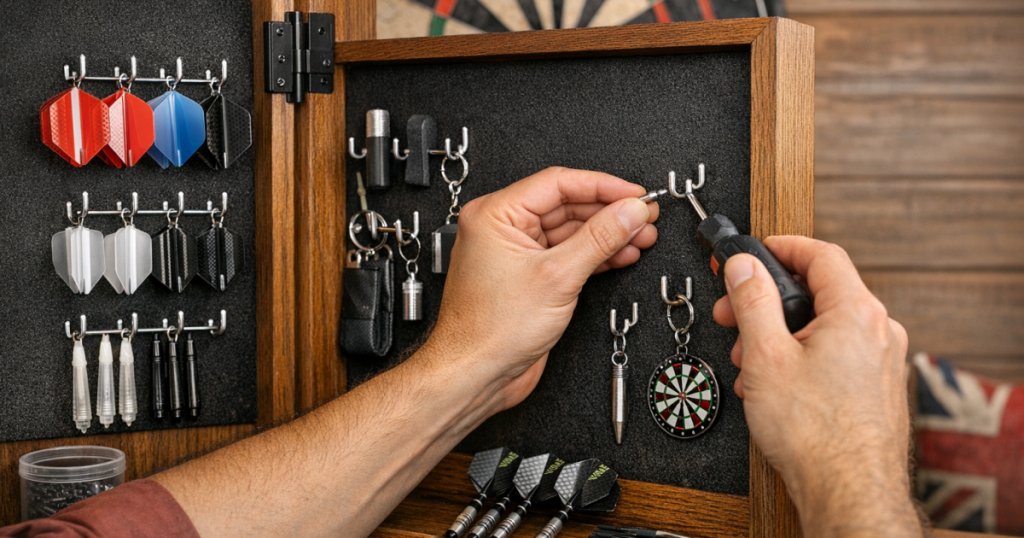
A good darts cabinet should do more than hide the board when you are not playing. Adding dart cabinet accessory hooks gives loose items a proper home, so spare stems, flights, checkout cards, tools and keys are easy to find before a practice session.
The aim is not to cram the inside of the cabinet with hardware. It is to place a few well-spaced hooks where they will not catch the dartboard, damage flights, rattle when the doors close or make the cabinet awkward to use.
The short version
Use small screw-in hooks for timber cabinets and good-quality adhesive hooks only on smooth, clean internal surfaces. Keep hooks away from the dartboard face, hinges and door-closing path, then test everything with the cabinet fully open and closed before loading it up.
- Best location: inside the cabinet doors or on the lower side panels, clear of the board.
- Best use: hanging flight rings, small tools, soft cases, keys, chalk holders or lightweight accessories.
- Avoid: hooks that protrude towards the board, hooks that sit behind the treble ring area, and heavy items that could pull on thin cabinet panels.
- Main check: close both doors slowly with accessories in place and listen for contact or rattling.
Decide what the hooks are actually for
Before fitting anything, lay out the items you want to store. A hook layout for a casual family board will look different from one used for structured daily practice. You might need space for spare flights, shafts, a checkout card, a small sharpening stone, a cloth, oche marker tape or a compact darts wallet.
Keep the heaviest and most frequently handled items lower down. If you hang a loaded case high on the inside of a door, it can make the door swing awkwardly and put extra strain on the hinges. Lighter items, such as flight protectors or spare stem rings, can sit higher without causing much movement.
If the cabinet is part of a wider practice corner rather than just a decorative board cover, it helps to plan the whole storage routine. For a broader layout approach, the ideas in organising a dart cabinet for daily practice pair well with a simple hook upgrade.
Choose the right type of hook
Most dart cabinets are made from timber, MDF or a similar board material. That means the hook needs to grip securely without splitting the panel or poking through the other side. Small cup hooks are useful because they are compact, cheap, easy to position and usually strong enough for lightweight darts accessories.
Adhesive hooks can work, but only for light items and only on clean, flat surfaces. They are less suitable on textured timber, dusty MDF, felt-lined panels or painted surfaces where the adhesive might lift. If a hook falls off inside the cabinet, it can mark the board, chip a point or bend a flight.
Screw-in hooks are more reliable, but they need a pilot hole. Do not force them into a thin panel without checking the depth first. The screw thread should have enough material to grip, but it should not be so long that it comes through the front of the cabinet door.
Check the cabinet before marking positions
Open the cabinet fully and study how the doors move. Look at the hinge side, the inner edge where the doors meet, and the space between the cabinet back and the dartboard. Accessory hooks should never sit where a door folds back against a wall or where the board surround, number ring or cabinet frame could catch them.
Measure the door thickness with a ruler or callipers if you have them. If the door is very thin, use short hooks and drill shallow pilot holes with care. On a deeper timber cabinet, you may have more freedom, but it is still worth keeping everything neat and symmetrical.
Also check whether the cabinet has a chalkboard or dry-wipe scoreboard panel on the inside of either door. If it does, avoid putting hooks where your hand naturally writes scores. If you are improving the scoring side of the setup as well, see how to set up a checkout column on a darts scoreboard before committing to hook positions.
Mark a simple hook layout
Start with fewer hooks than you think you need. Three or four well-placed hooks are usually better than a crowded row that catches everything. Use masking tape to mark positions first, then hold accessories against those marks to see how they hang.
A tidy layout might use one hook near the upper inside corner for a checkout card or tag, two mid-height hooks for spare flights and a lower hook for a cloth or small tool. Leave enough vertical space for items to hang naturally without overlapping the dartboard or touching the cabinet frame.
Keep hooks at least a few centimetres away from the inner closing edge of the doors. Accessories can swing slightly when the door moves, so a position that looks fine when empty may still catch once something is hanging from it.
Fit screw-in hooks neatly
Once you are happy with the layout, remove the accessories and keep the masking tape in place. Mark the centre of each hook position with a pencil. A small bradawl or sharp point can make a shallow starter mark so the drill bit does not wander.
Drill a pilot hole that is narrower than the hook thread and shorter than the screw section. Go slowly, especially on MDF or thin cabinet doors. If you are drilling into a door, support it gently with your other hand so it does not flex.
Turn each hook in by hand. If it becomes difficult, do not keep forcing it, as that can split the material or distort the thread hole. Back it out, slightly deepen the pilot hole if needed, then try again. Finish with the hook opening facing upwards or slightly inwards so items do not slide off when the door moves.
Using adhesive hooks instead
Adhesive hooks are useful when you do not want to drill into the cabinet, but they need a little patience. Clean the inside surface first and let it dry fully. Press the hook firmly into place and allow the adhesive to settle according to the maker’s instructions before hanging anything from it.
Use adhesive hooks only for lightweight accessories. A flight set, a checkout card or a small keyring-style tool is realistic; a loaded darts case is not. If the cabinet is in a room that gets cold, damp or very warm, keep an eye on the bond because adhesive can weaken over time.
Test the setup before daily use
Load the hooks with the actual items you plan to store, then open and close the cabinet slowly several times. Listen for tapping, scraping or rattling. If anything touches the board, number ring, cabinet frame or wall, move that item or reposition the hook.
Stand at the oche and look towards the board with the cabinet doors open. Nothing inside the cabinet should distract your eye line, hang into the throwing area or make the setup feel cluttered. Storage should make practice smoother, not busier.
If your cabinet is part of a compact bedroom or spare-room setup, it is worth checking that the door swing still works with the rest of the space. The room-planning advice in converting a spare bedroom into a practical darts room can help if storage, lighting and clearance are all competing for space.
What to store on hooks and what to keep elsewhere
Hooks are best for items that are light, flat or used regularly. They are not the answer for every accessory. Good cabinet storage often combines hooks, small boxes, flight trays and the original cases that came with your darts.
Good items for hooks
- Spare flight sets in small sleeves or punched packets.
- A compact checkout card or practice prompt card.
- A small cleaning cloth for the cabinet or board area.
- A lightweight dart tool or point protector.
- Keys for a lockable cabinet, if your cabinet has one.
Better stored flat or boxed
- Loose flights that can bend if they hang awkwardly.
- Spare shafts that may roll or scratch the cabinet surface.
- Steel-tip darts, unless they are inside a secure case.
- Heavy wallets, multiple sets of darts or bulky accessories.
- Chalk, pens or marker cloths that could leave dust or stains.
Keeping dart cabinet accessory hooks useful over time
The most common mistake is adding hooks, filling every one, then forgetting to remove old bits of kit. Every few weeks, clear the cabinet and keep only what you actually use. If an item never comes out during practice, it probably belongs in a drawer, kit bag or separate storage box.
Check screw-in hooks occasionally to make sure they have not loosened. If one starts to wobble, remove it and avoid loading it until the fixing is secure again. For adhesive hooks, look for peeling edges or movement when you lift an item off.
It is also worth keeping the area around the dartboard clear enough for board rotation and cleaning. A cabinet that is too crowded can make routine maintenance awkward, which usually means it gets skipped.
Helpful questions
Can I fit hooks on both cabinet doors?
Yes, provided both doors still close cleanly and the added weight is modest. Try to balance storage across the two doors rather than loading one side heavily.
Will hooks damage the inside of the cabinet?
Screw-in hooks leave small holes, so measure and mark carefully before fitting them. Adhesive hooks avoid drilling, but they can still lift paint or veneer if removed roughly.
Should I hang darts themselves from hooks?
It is usually better to keep darts in a case or holder. Loose steel tips can mark the cabinet, and exposed flights can bend when the door opens or closes.
How many hooks should a cabinet have?
For most home setups, three to six hooks is enough. If you need more than that, add a small storage tray or separate accessories box instead of overcrowding the doors.
Main points
Accessory hooks work best when they solve a specific storage problem rather than simply filling empty cabinet space. Plan what you want to hang, test the door movement, choose fixings that suit the cabinet material and keep heavy or delicate items stored elsewhere.
A neat hook layout makes a home darts cabinet easier to live with: less rummaging, fewer bent flights, and a cleaner setup when you step up for practice.