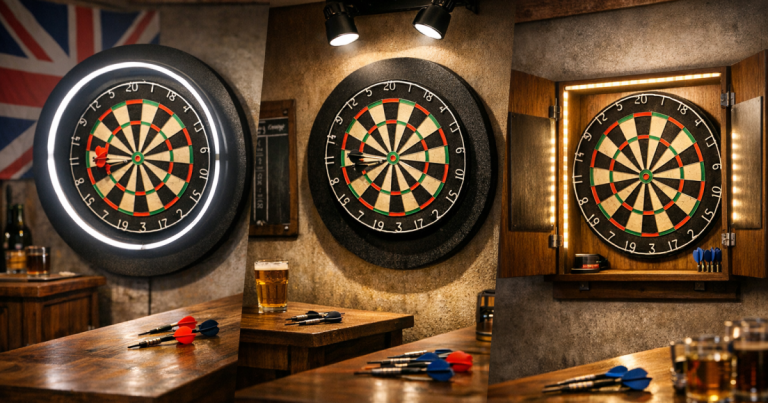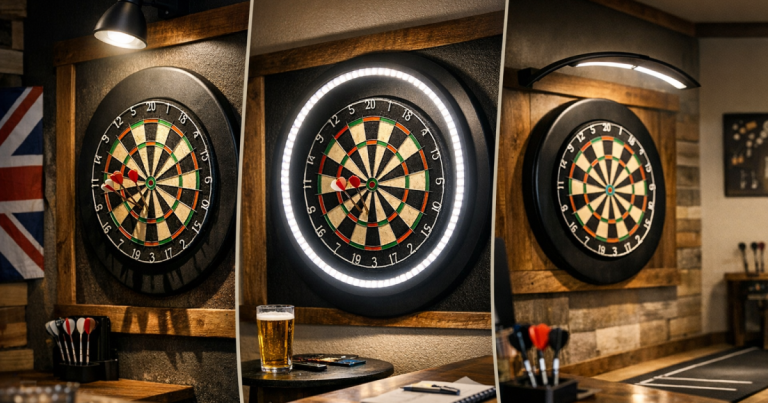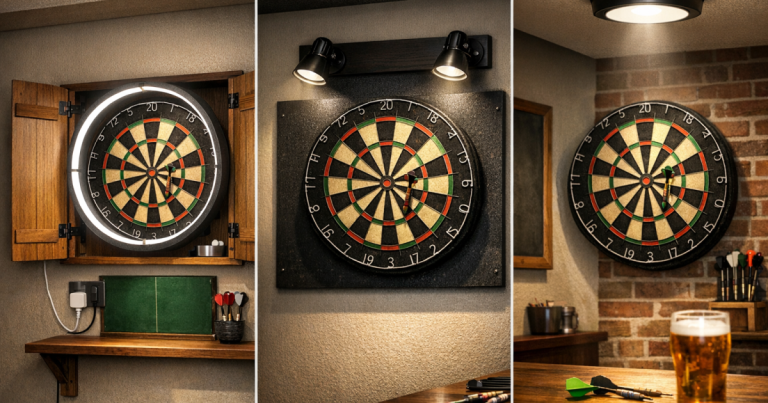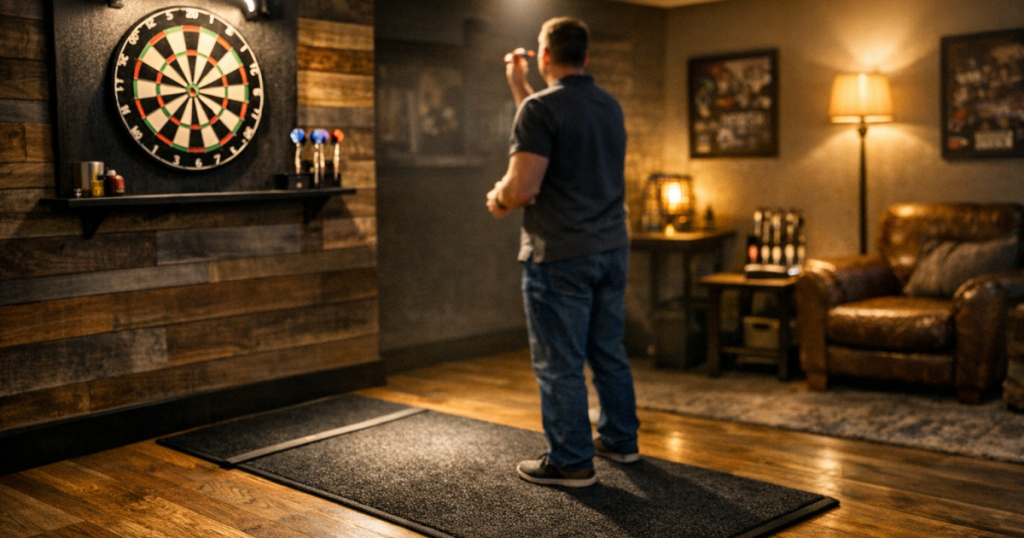
A good home oche is not lit by one bright bulb alone. Thinking in darts lighting zones helps you control what the player sees: the board face, the throw line and the room around them. Get those three areas balanced and you reduce shadows, glare and awkward distractions without making the room feel like a sports hall.
Fixed mains wiring, ceiling alterations and permanent light fitting installation should be carried out by a qualified electrician to ensure compliance with UK electrical safety requirements and the relevant Building Regulations.
The big picture
Darts lighting is easiest to plan when you stop treating the room as one single space. The board needs clean, even illumination. The oche needs enough light for stance, foot placement and scoring checks. The wider room needs a comfortable background level so the board does not feel like a bright island in a dark corner.
Most home problems come from imbalance. A ceiling pendant behind the player can throw a body shadow across the treble bed. A bright lamp placed too close to the board can create glare on the wire or cabinet. A dark room around a well-lit board can make the eyes work harder between throws, especially during longer practice sessions.
For a typical UK spare room, garage, shed conversion or living-room setup, the goal is not maximum brightness. It is controlled, repeatable visibility from the throw line to the board.
Zone 1: the board face
The board zone is the most important area because it controls target visibility. The sisal surface, number ring, wires and segments should be clear without hard shadows across the doubles, trebles or bull. If you can see one side of the board clearly but the other side looks dull or shaded, the lighting is doing too much from one direction.
Good board lighting normally comes from a position that spreads light around the face rather than from a single side. Ring-style dartboard lights, overhead spot arrangements and carefully placed wall or ceiling lights can all work, but each needs checking from the actual throwing position. Stand at the oche, not beside the board, when judging the result.
Pay attention to these board-zone checks:
- The treble 20, treble 19 and bull should all be visible without squinting.
- The number ring should be readable from the oche, not just close up.
- There should be no strong crescent-shaped shadow from the cabinet, surround or light fitting.
- The wire should not reflect light directly back towards the player’s eyes.
- The light should not make the top of the board much brighter than the lower half.
Glare is just as frustrating as darkness. A bright fitting can make the board look clear from the side but uncomfortable from the throw line. For more detail on reducing reflections and harsh light, use this guide to safe, glare-free darts lighting as a next step.
Zone 2: the oche and player position
The oche zone is where the player stands, lines up and repeats their throw. It does not need to be as bright as the board, but it should be clear enough for confident foot placement and safe movement. This matters more in shared rooms where furniture, rugs, doorways or stored items sit close to the throwing lane.
At the throw line, the main thing to avoid is a light source directly behind the player that casts a moving shadow onto the board. Ceiling pendants in older UK homes can be awkward here because they often sit in the centre of the room, which may be behind or above the thrower rather than over the board. If the player’s arm or head creates a visible shadow during the throw, the oche zone and board zone are fighting each other.
The oche area should also make the floor easy to read. A mat edge, raised oche, floor marker or change in flooring should be obvious under normal playing conditions. If players step back into a dim corner after collecting darts, trips become more likely. For setups using a mat or raised line, the notes on mat safety and oche stability are worth reading alongside your lighting plan.
Useful oche-zone checks include:
- Can the player see the throw line clearly without looking down for too long?
- Does the player’s body create a shadow across the board during the throw?
- Is the route from oche to board clear when collecting darts?
- Can guests spot the edge of a mat or raised oche in evening lighting?
- Does any lamp shine directly into the player’s eyes when they aim?
Zone 3: the surrounding room
The surrounding room zone sets the comfort level. It includes the walls, ceiling, furniture, seating area and any space behind the player. This background light should support the board rather than compete with it.
A common mistake is switching off the main room light and relying only on a bright board light. That can look dramatic, but it often creates high contrast: the board is bright, the room is dark, and the eyes keep adjusting. For quick games this may not matter. For practice, league-style scoring at home or long sessions with friends, a softer background level usually feels better.
The room zone is also where atmosphere matters. Warm ambient light can make a living-room setup feel less clinical, while neutral light around the board can keep the target crisp. The trick is to separate mood from visibility. Let the board lighting do the accuracy work; let the room lighting keep the space pleasant and usable.
If you are working out whether your main ceiling light is doing too much or too little, the difference between task lighting versus room lighting for darts explains the balance in more detail.
How the zones interact
The three zones are connected. Changing one can improve or spoil another. Adding a stronger board light may make the target clearer but expose glare on a glossy cabinet door. Moving a floor lamp may improve room ambience but cast a shadow into the oche. Fitting a surround can protect the wall but slightly change how light falls around the board edge.
It helps to test the setup from three positions: standing at the oche, sitting or standing where other players wait, and standing near the board to retrieve darts. A good setup should feel comfortable from all three. The player gets a clear target, waiting players are not staring into a harsh fitting, and the board area remains safe to approach.
Small changes often make a noticeable difference. Tilting a lamp away from the player, changing a shade, moving a standing lamp further from the throw line or using a softer room light can solve problems without rebuilding the setup. In rented homes, plug-in and non-permanent adjustments are often the most realistic route, provided cables are kept away from the walking path.
Typical home setup scenarios
Living room dartboard
A living room usually needs the most compromise. The board might sit in a cabinet or surround, while the room still has to feel normal when darts are not being played. Here, the board zone should be focused and tidy, with ambient room lighting left on at a comfortable level. Avoid placing a freestanding lamp where a player can knock it or where its cable crosses the route to the board.
Garage or shed oche
Garages and sheds often start with poor general lighting: one bare fitting, hard shadows and dark corners. The board zone may need dedicated attention, but the surrounding room matters too because players are often moving around stored tools, bikes, shelving or uneven flooring. A bright board with a gloomy floor is not a complete solution.
Spare room practice setup
A spare room gives you more control. You can position the board, oche and lighting together rather than adapting around a busy living space. This is where zoning really pays off: keep the board evenly lit, stop the player casting a shadow, and use softer background light so longer practice sessions feel natural rather than tiring.
Common mistakes to avoid
- Using brightness as the only measure: A very bright light can still be badly positioned. Evenness matters more than sheer intensity.
- Testing from the wrong place: Always judge the board from the oche, because that is where visibility matters.
- Ignoring the floor: The oche zone should make mats, markers and walking routes easy to see.
- Letting decor create glare: Glossy cabinet finishes, mirrors, glass frames and shiny paint can reflect light back towards the throw line.
- Creating a dark room around a bright board: Strong contrast can feel tiring and make the setup less sociable.
A simple zone-by-zone check
Once your board is mounted and the oche is marked at the correct distance, run through the setup in normal playing conditions. Do it in the evening as well as during daylight if the room changes throughout the day.
- Board: Look for shadows, glare, readable numbers and even coverage across the whole face.
- Oche: Check foot placement, body shadows, mat edges and whether the player is facing any direct light.
- Room: Make sure waiting players are comfortable, the walking route is visible and the atmosphere still suits the space.
- During play: Throw a few visits, retrieve darts, score, reset and repeat. Some problems only appear once people are moving.
If a lighting change improves one zone but makes another worse, step back and rebalance rather than adding more brightness. The best home darts rooms feel effortless because the lighting supports the routine without drawing attention to itself.
FAQ
Should the dartboard be brighter than the rest of the room?
Yes, slightly. The board should be the clearest point in the room, but the surrounding space should not be so dark that your eyes keep adjusting between throws.
Why does my arm cast a shadow on the board?
The main light is probably behind or above you in a position that lets your body interrupt the beam. Move the light source, add more even board lighting, or reduce reliance on a single ceiling fitting.
Are ring lights always the answer for dartboards?
Not always. They can give even board coverage, but room layout, cabinet depth, glare and cable routing still matter. Check the result from the oche before assuming any one fitting solves everything.
Do darts lighting zones matter in a small room?
They matter more in many small rooms because the board, player and background lighting are close together. A small change in lamp position can affect shadows and glare quickly.
Can I use normal room lighting for casual darts?
You can if the board is clear, shadows are minimal and the oche is safe. If you struggle to read numbers or see segment edges, the board zone needs more controlled light.
Key takeaways
Good darts lighting is about balance. The board zone gives you target clarity, the oche zone supports stance and safe movement, and the surrounding room keeps the setup comfortable for real home use. Treat those areas separately, then test them together from the throw line. That approach gives you a clearer board, fewer distractions and a home oche that feels better to use night after night.