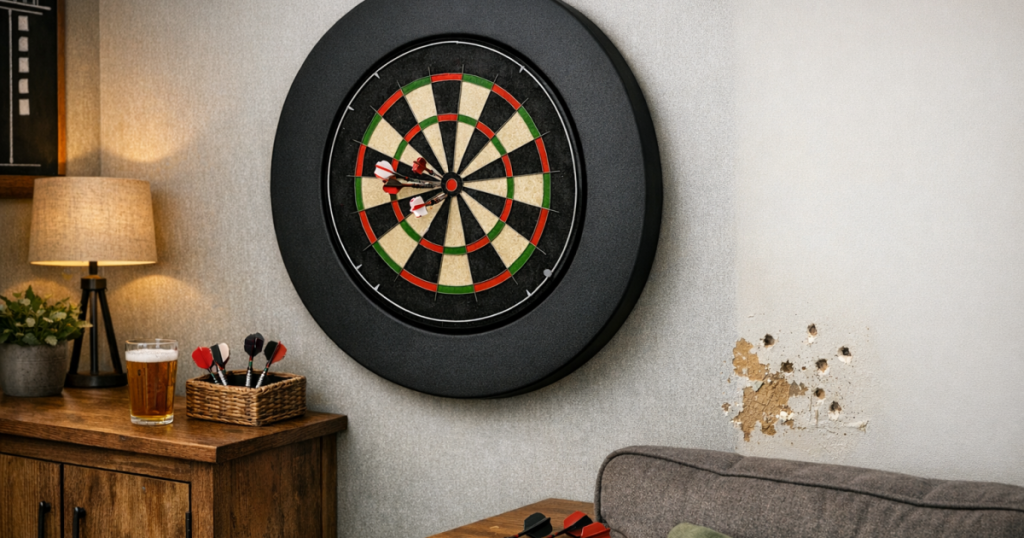
Missed doubles do not just mark the wall; in a rented flat or shared spare room, they can become an awkward deposit conversation. This Unicorn Dartboard Surround review focuses on the question that matters for home players with limited freedom to drill, paint or build a permanent darts area: can it protect the usual danger zone without turning the setup into a DIY project?
Product overview
Quick verdict: the Unicorn Dartboard Surround is a sensible, low-commitment wall protection option for a standard home board, provided you check the fit against your dartboard and accept that it protects the immediate missed-dart zone rather than the whole wall.
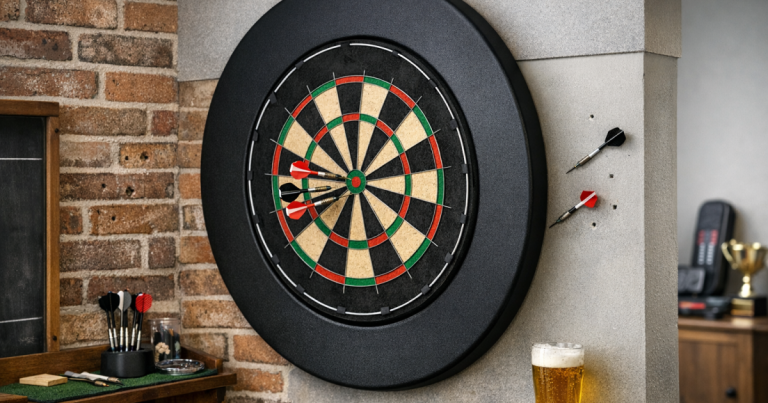
Its main appeal is simplicity. A surround is designed to sit around the dartboard and cover the area most often hit by stray darts, especially around the doubles. For renters, that matters because it can reduce small punctures and scuffs without needing a permanent backing board, a cabinet, or a full wall panel.
The rental-friendly case is strongest where your dartboard is already mounted securely and you want an extra layer of protection that can be removed when the board comes down. It is less convincing if your misses regularly land well outside the board area, if your wall surface is very delicate, or if your dartboard sits inside a tight cabinet recess with little spare space around it.
If you are setting up in a spare bedroom, garage conversion, student house, or shared living room, shortlist it as a neat first line of defence. Before ordering, check your dartboard type, available clearance, and whether your landlord or tenancy agreement limits what can be fixed to the wall.
Key specs
- Product type: Dartboard surround for protecting the wall immediately around a bristle dartboard.
- Best use: Home practice areas where missed doubles and trebles are the main source of wall marks.
- Fit: Intended for standard-style bristle dartboards, but buyers should verify compatibility with their exact board before purchase.
- Fixing style: Surrounds of this type usually fit around the board rather than being independently screwed into the wall; check the current product listing and supplied instructions.
- Wall coverage: Protects the ring around the board, not the full wall, skirting, floor, door frame, or nearby furniture.
- Finish: Choose a colour and surface finish that works with your room, as a surround is visually prominent once installed.
- Portability: Better suited to removable home setups than fixed wall panelling, subject to fit and storage space.
Pros and cons
Pros
- No major DIY commitment: A surround is far less invasive than building a timber backboard or fixing large panels to the wall.
- Useful protection where most misses happen: The area just outside the scoring segments is exactly where casual home players tend to punish the wall.
- Cleaner look than improvised padding: It looks more deliberate than cardboard, carpet offcuts, or loose foam panels.
- Easy to remove for shared spaces: If the board comes down between sessions, the surround can usually come down with it.
- Good match for simple home setups: It suits bedrooms, garden rooms, garages and compact practice corners where space is limited.
Cons
- Coverage is limited: Wild misses outside the surround can still mark plaster, wallpaper or painted surfaces.
- Fit needs checking: Not every board, cabinet or tight wall layout leaves enough clearance for a surround.
- It will not solve poor board mounting: If the board moves, twists or sits unevenly, the surround cannot make the setup feel properly stable.
- Can look bulky in small rooms: The extra ring around the board is practical, but it does make the board area more visually dominant.
- Not a substitute for a full darts zone: Floors, windows, radiators and nearby furniture may still need separate protection or repositioning.
Performance in real use
The most important test is whether it catches the misses you actually throw. Around the twenties, threes, fives, elevens and sixes, a surround earns its keep quickly. These are common damage areas because players aiming at doubles often drift just outside the wire. For routine home practice, that immediate ring of protection is far more useful than it looks in product photos.
Rental-friendliness is the strongest part of the case. Unlike a permanent backboard, a surround does not normally require you to decorate around it, cut timber to size, or turn a small darts corner into a workshop. That makes it a practical option for tenants who want a tidy setup that can be packed away with minimal fuss. If the rest of your setup also needs to be temporary, pair the idea with a removable throw line rather than tape on the floor; the advice in removable darts oche setups for renters and shared spaces is a useful next step.
Fit is where buyers need to slow down. The surround needs to sit neatly around the board without forcing the board out of position or interfering with the way it hangs. Check your dartboard diameter, cabinet clearance if you use one, and how much room you have between the board edge and any shelves, lights, door frames or sloping ceilings. A surround that looks perfect on an open wall can become awkward in a narrow alcove.
It also depends on the wall behind it. Painted plaster is usually the obvious use case, but wallpaper, textured surfaces and freshly decorated walls need more care because any contact, pressure or trapped dust can show when the setup is moved. The surround’s job is to stop dart points reaching the wall; it is not a guarantee that the wall will remain completely untouched in every room.
Durability is mostly about how it handles repeated dart impacts and removal. A good surround should absorb typical missed darts without looking shredded after a few sessions, but sharp points, heavy-handed removal and poor storage can all shorten its life. Keep it flat when not in use, avoid leaning heavy items on it, and clean off dust gently rather than scrubbing the surface.
For board stability, remember that the surround is only part of the system. If the dartboard is mounted on a cabinet, a bracket or a backing plate, the fixing still needs to be secure and appropriate for the wall. For more permanent arrangements, especially where a cabinet is involved, the guidance on dartboard cabinets on different wall types will help you think through the wall itself before blaming the surround.
As value goes, the main benefit is prevention. Filling small holes, repainting a patch, or negotiating damage in a rented property is more frustrating than adding a purpose-made surround at the start. It is not exciting in the way a new board or set of darts is, but it is one of those accessories that quietly makes a home setup easier to live with.
Who it’s best for / who should skip it
It is best for renters, students, shared households and anyone using a room that still needs to look like a room when the darts are packed away. It also suits newer players who are accurate enough to keep most darts near the board but not consistent enough to trust the wall around the doubles.
It is also a strong fit for neat, minimal setups. If you have a standard bristle board on a plain wall and want protection without adding a cabinet, a surround is one of the simplest upgrades available. It keeps the board area looking intentional, which matters when the darts setup is in a bedroom, dining area or garden room rather than a dedicated games room.
Skip it if your misses are regularly much wider than the board area. In that case, a larger backing panel or a rethink of the room layout will be more effective. You should also skip it if your dartboard sits in a cabinet with doors that cannot close around the surround, or if your setup is so tight that adding extra width around the board creates a nuisance.
It is not the right answer for every rental. If the board itself is fixed in a way that breaches the tenancy agreement, adding a surround does not make the overall setup rental-safe. The surround reduces dart damage; it does not remove responsibility for how the board is mounted.
Common questions
Will a Unicorn Dartboard Surround stop all wall damage?
No. It protects the area immediately around the dartboard, which is where many missed darts land. It will not protect the wider wall, floor, ceiling, furniture or anything beside the board.
Is it suitable for a rented flat?
It can be, because it is a removable accessory rather than a permanent wall covering. The bigger rental issue is how the dartboard itself is mounted, so check that before relying on the surround.
Can it be used with a dartboard cabinet?
Sometimes, but not always. Measure the clearance inside and around the cabinet, and check whether the doors can still open and close properly with a surround fitted.
Does it affect play?
It should not affect scoring or normal throwing if it fits correctly and does not push the board out of position. If the board feels uneven afterwards, remove it and check the mounting.
How should it be stored when not in use?
Keep it flat and away from heavy items that could bend or mark it. Avoid damp storage areas where dust, mildew or surface grime could build up over time.
Alternatives
The first alternative is a larger backing board. This gives broader wall protection and can look excellent when cut and finished neatly, but it is less rental-friendly because it usually involves more fixing, more weight and a more permanent visual presence.
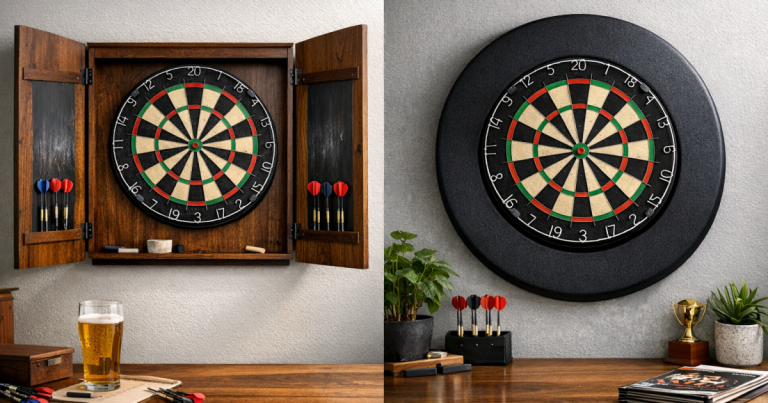
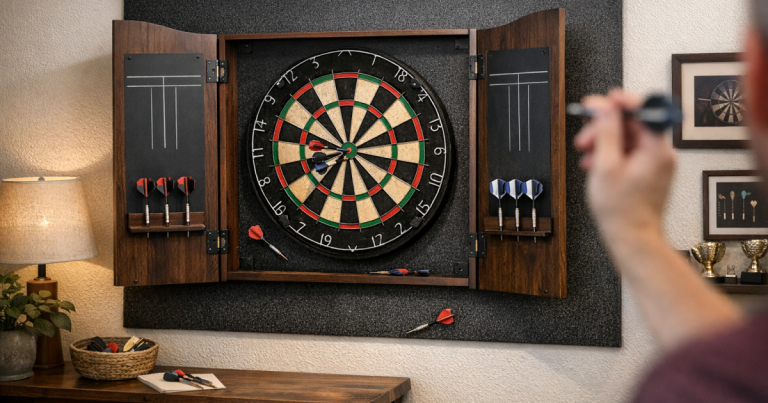
The second alternative is a dartboard cabinet. A cabinet can frame the board, hide marks and add space for scoring, but it still needs proper wall fixing and does not always offer as much missed-dart coverage as a surround. For renters, it is usually a bigger commitment than a simple surround.
If you want the cleanest removable arrangement, the best approach is often a surround plus careful room layout rather than a single heavy-duty solution. Put the board where stray darts have space to land safely, keep breakables away from the throwing lane, and avoid squeezing the setup into a corner where misses are more likely to hit furniture or trim.
Verdict + score
The Unicorn Dartboard Surround is a strong choice for renters and home players who want straightforward wall protection without making the darts area feel permanent. Its limits are clear: it only protects the immediate area around the board, and the fit must be checked carefully before buying. Used in the right setup, though, it is tidy, practical and much easier to live with than improvised wall padding. Score: 8.4/10.
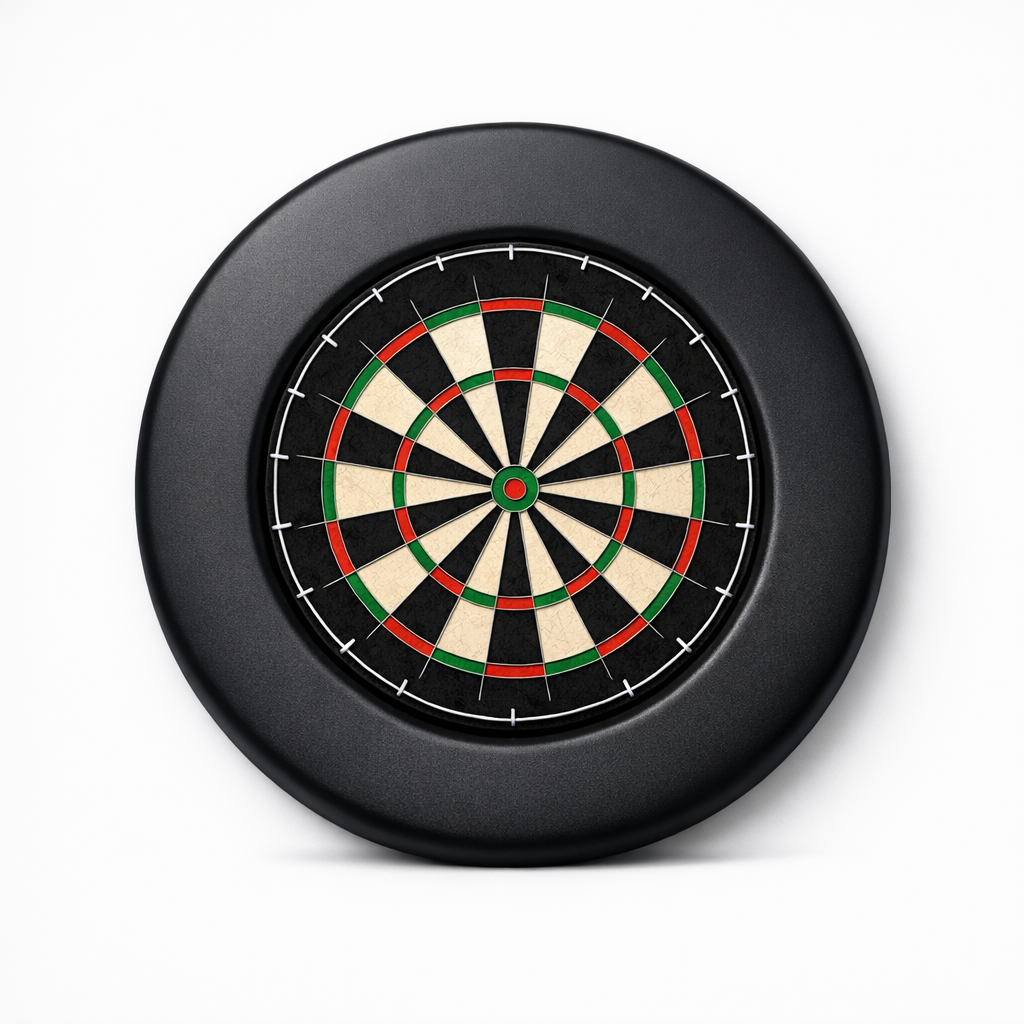
Unicorn Dartboard Surround
Used in the right setup, though, it is tidy, practical and much easier to live with than improvised wall padding.
You might also like: How to Stop Darts Rusting in a Damp Garage.