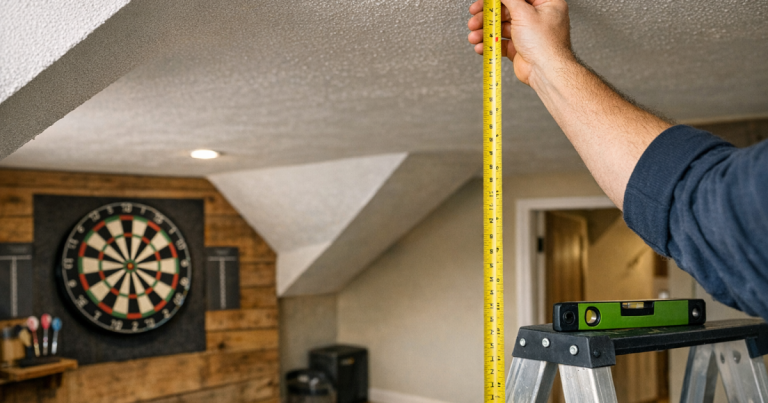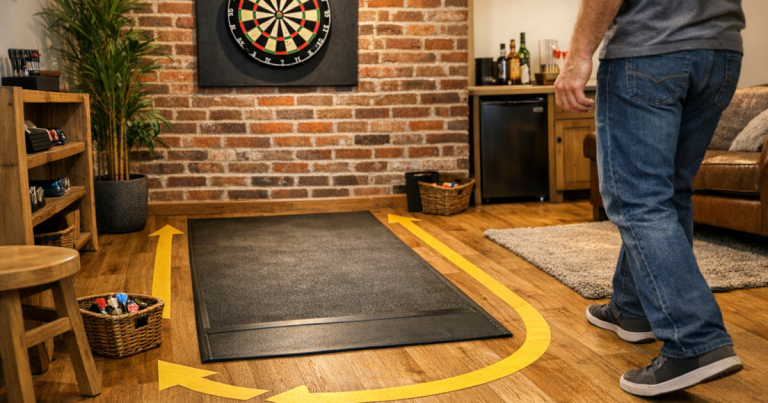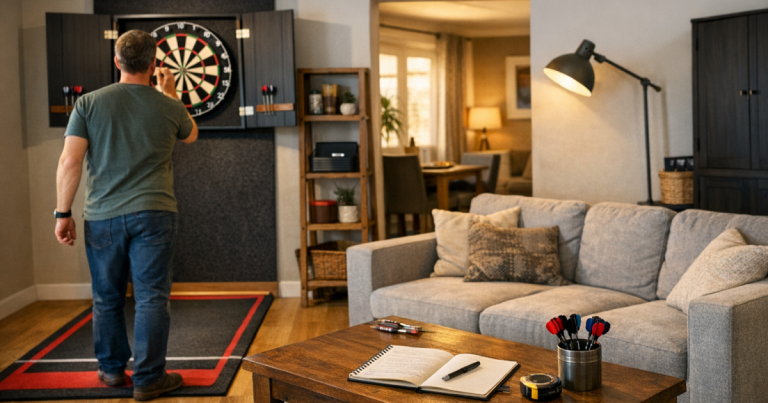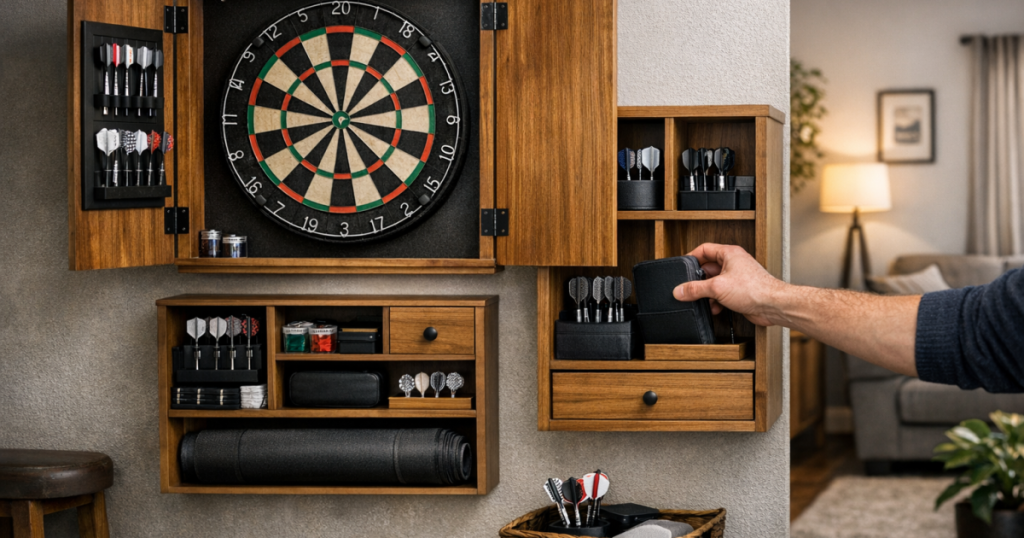
A tidy darts area makes throwing feel easier, keeps the room usable for everyone else and stops small accessories spreading across shelves and windowsills. Good dartboard storage is less about hiding everything away and more about giving each item a reliable home. The aim is to keep the board area quick to set up, quick to clear, and tidy enough that it does not dominate a shared living space.
Most home setups only need a simple plan: separate the items you use every session from the items you use occasionally, keep fragile parts protected, and avoid storing gear in the throw line. Once that is sorted, even a compact room can feel organised rather than crowded.
The short version
Store your regular darts and essentials within arm’s reach of the board, but keep bulkier items away from the oche and walking routes. Use a case for darts, a small drawer or lidded box for spares, vertical space for neat storage, and a clear rule for where mats, scoreboards and cleaning bits live after play.
- Keep match darts, chalk or marker, flights and shafts together.
- Store spare accessories in one labelled container rather than several loose piles.
- Do not let cases, mats or boxes creep into the throwing lane.
- Use wall space carefully so the room still feels like a room, not a stock cupboard.
- Choose storage that suits how often you actually play.
Step 1: List what actually needs a home
Before adding shelves, boxes or hooks, make a quick inventory. Most clutter comes from accessories that do not have a defined place, not from the dartboard itself. Lay everything out once and group it by use.
Every-session items
- Your main darts.
- Spare flights and shafts.
- Point protectors or a small checkout card if you use one.
- Scoreboard marker, chalk or eraser.
- A cloth for wiping the board surround, cabinet or nearby surface.
Occasional items
- Backup darts.
- Extra stems, rings, flight protectors and points.
- Spare chalk or markers.
- Mounting template, spare screws or fixings from the original setup.
- Seasonal or guest-use accessories.
Once the list is clear, dartboard storage becomes much easier because you are no longer trying to store everything in the same prime spot. The gear used every session deserves the most convenient place. The backup items can live slightly further away.
Step 2: Keep the board zone clear
The area around the board should be simple: board, surround or cabinet if you use one, lighting if fitted, scoreboard if needed, and enough open wall space for comfortable play. Storage should support the setup, not crowd it.
A common mistake is adding too many shelves immediately beside the board. It looks efficient at first, but it can make the wall feel busy and can create awkward surfaces near the playing area. Loose items beside the board also tend to attract more loose items, especially in a shared dining room, spare room or garage conversion.
Keep anything that sticks out from the wall away from the board face and the natural movement around it. If you use a surround, make sure nearby storage does not interfere with access to the doubles or make it awkward to remove the surround later. If you are still refining the area around the board, the guide on fitting a dartboard surround without blocking doubles is a useful next check before you commit to nearby storage.
Step 3: Give darts and fragile parts proper protection
Darts, flights and shafts are small, but they are usually the items that make a room look untidy. They are also the easiest to damage if they are left loose in a drawer, cup or open tray. A dedicated case is the simplest fix for most players.
For everyday home throwing, you do not need to overcomplicate it. A compact case that holds one set of darts and a few spares is often enough. The important thing is that the darts go back into the same place every time, rather than being left on a sideboard or balanced on top of the cabinet. For a simple example of this kind of solution, see the Red Dragon Darts Standard Dart Case review.
Flights need a little extra thought because they are easy to bend out of shape. If you store them loose under stems, points or tools, you will soon end up with warped corners and inconsistent fit. Use a small compartment box, flight holder or separate section in your case, and keep a few ready-to-use sets away from the bulk spares. For more detail, the guide on how to stop flights getting crushed in storage covers the small habits that make the biggest difference.
Step 4: Decide what stays on show
Not every darts setup has to be hidden. A neat cabinet, tidy scoreboard and well-placed case can look intentional, especially in a games room, garage bar or spare room. The trick is deciding what earns visible space.
A good rule is to leave out only the items that either look tidy or are used every session. Everything else should be behind a door, in a drawer or inside a box. This keeps the room calmer and makes cleaning easier.
Items that can sensibly stay visible
- A closed dartboard cabinet.
- A neatly mounted scoreboard.
- One compact dart case on a shelf.
- A small chalk tray or marker holder.
- A rolled mat stored upright in a corner if it does not block access.
Items better kept hidden
- Bulk flights and stems.
- Backup darts that are rarely used.
- Loose packaging, spare fixings and old accessories.
- Cleaning cloths and dusters.
- Damaged flights you have not yet thrown away.
This one decision can change how the room feels. A visible setup with five tidy items often looks better than a hidden setup where accessories spill out every time you open a cupboard.
Step 5: Use vertical space without making the wall feel crowded
Wall space is useful, but it needs restraint. A narrow shelf, small cabinet or peg rail can work well if it sits outside the main board area and does not interrupt the throw line. In smaller UK homes, this often means using the side wall, the inside of a cupboard door, or a nearby alcove rather than the wall directly around the board.
If you use shelves, choose shallow storage so items do not project too far into the room. Deep shelving near a darts area tends to collect unrelated clutter: keys, mugs, tape measures, post and anything else that needs a temporary home. Shallow storage sends a clearer message that the space is for darts gear only.
Hooks can help with mats and small bags, but avoid hanging anything where it can swing, fall or get in the way when players step back from the oche. A rolled mat standing in a narrow basket or tucked beside a cabinet can be neater than a wall hook if the room is already busy.
Step 6: Plan storage around the room’s main job
A darts area in a garage can be more practical and visible. A darts area in a lounge needs to disappear more gracefully. Before choosing where things live, decide what the room has to do when nobody is playing.
- Living room: use closed storage, a cabinet, or a drawer in existing furniture. Keep visible accessories to a minimum.
- Spare bedroom: use a small storage box under a bed or inside a wardrobe, with only the main case near the board.
- Garage or utility space: use labelled boxes or a wall-mounted organiser, but keep darts gear away from dusty tools and damp corners.
- Hallway or shared route: keep the oche area completely clear after play and avoid floor-standing storage.
- Rented home: favour freestanding storage and removable organisation where possible.
If you rent, storage choices matter because you may not want extra fixings, shelves or permanent fittings. Keep the setup easy to reverse and avoid turning a simple board area into a wall full of holes. The advice on planning a darts setup in a rented home is worth reading before adding storage to the wall.
Step 7: Build a simple reset routine
Even the best storage plan fails if packing away feels annoying. The easier the reset, the more likely you are to do it after every session. Aim for a one-minute routine, not a full tidy-up operation.
A good reset might look like this: darts back in the case, used flights checked and flattened, marker capped, scoreboard wiped, mat rolled or moved, and spare accessories returned to the same box. If that takes longer than a minute or two, the storage layout is probably too fussy.
Keep a small “current spares” section separate from your bulk spares. For example, store two or three sets of flights and stems near the board, then keep the rest in a lidded container elsewhere. That way you are not opening a large box every time someone breaks a shaft.
Step 8: Stop storage becoming general household clutter
Darts storage often starts tidy, then slowly turns into a general dumping spot. The fix is to make the storage specific. A box labelled for darts accessories is less likely to collect batteries, receipts and random Allen keys than an unlabelled drawer.
Use small containers within larger drawers if the room is shared. One compartment for flights, one for shafts, one for chalk or markers, and one for spare parts is usually enough. Avoid over-sorting every tiny accessory unless you genuinely enjoy that level of organisation. The goal is practical order, not a museum display.
It also helps to set a limit. If the spares box is full, do not add more until you remove bent flights, worn shafts or bits you no longer use. Darts accessories are cheap enough that many players keep far more than they need, and that is when clutter returns.
A simple layout that works in most homes
For a neat home setup, think in three zones. Zone one is the board wall: keep it clean and focused. Zone two is the nearby access point: store the main dart case, marker and a few spares here. Zone three is deeper storage: keep bulk accessories, backup darts and spare setup items in a cupboard, drawer or labelled box.
This layout keeps the playing area ready without making the whole room feel like a darts shop. It also works whether you have a proper games room or a board in a multipurpose space. The closer an item is to the board, the more often it should be used.
FAQ
Where should I store darts when the board is not being used?
Keep darts in a closed case, ideally near the board but not on the floor or in the throwing lane. This protects the points, flights and surrounding furniture.
Is it better to use a cabinet or a separate storage box?
A cabinet is useful for keeping the board area neat, but a separate box is better for bulk spares. Many tidy setups use both: visible cabinet, hidden accessories.
How do I store a darts mat without cluttering the room?
Roll it neatly and store it upright beside existing furniture, in a cupboard, or in a narrow basket. Avoid leaving it half-rolled near the oche where people can trip over it.
What should I keep near the board?
Keep only the essentials nearby: main darts, a few flights and shafts, scoring marker or chalk, and a cloth. Store bulk spares elsewhere.
How often should I clear out darts accessories?
Check them every few months, or whenever the storage box becomes hard to close. Remove bent flights, cracked shafts and packaging you no longer need.
What to remember
The best dartboard storage plan is the one that makes playing easier and tidying up automatic. Keep everyday items close, protect delicate accessories, move bulk spares out of sight, and leave the board area clear enough for comfortable throwing. When every item has a sensible home, the room feels less cluttered and the setup gets used more often.