A well-packed darts accessories grab bag stops a good home match being interrupted by a missing flight, loose shaft or blunt point. It is not about carrying everything you own; it is about keeping the small parts and tools that solve the most common match-night problems in one reliable place. For a home setup, that usually means a compact pouch, case or cabinet insert you can reach before the first throw.
At a glance
- Pack spares for the parts most likely to fail: flights, shafts, points, rings and small fittings.
- Keep tools minimal but useful: a point sharpener, small multi-tool, flight punch if you use rings, and a short measuring tape.
- Separate sharp, fragile and loose items so the bag does not become a rattly mess.
- Build the kit around your own darts, not someone else’s setup.
- Check and restock the bag after every proper match night, not five minutes before the next one.
Step 1: Choose a bag that suits where you play
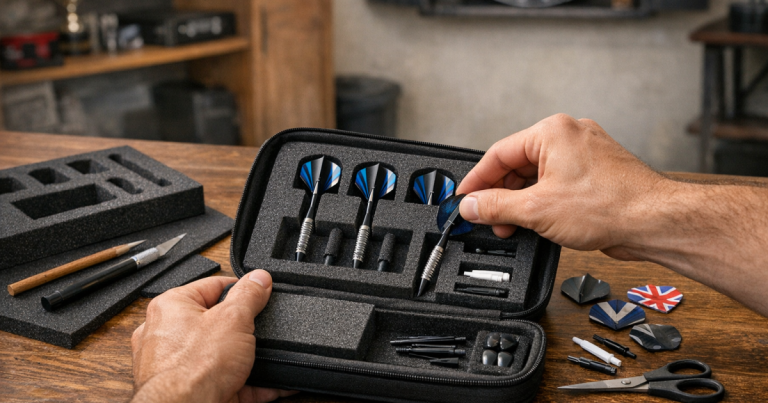
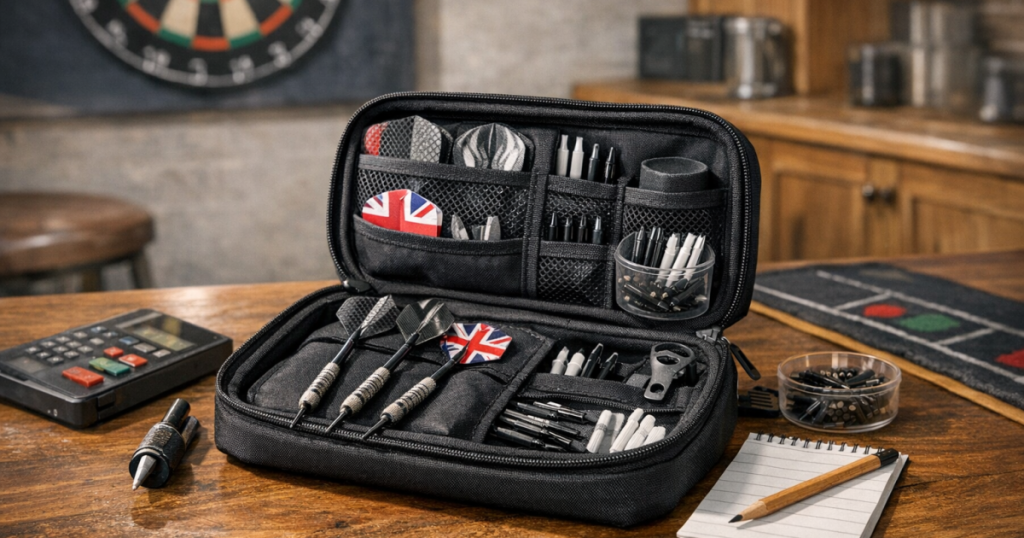
The best bag is the one you will actually keep near the board. For most home players, a small zipped pouch, compact darts case, organiser insert or shallow box inside a cabinet is enough. It should open wide enough to see everything at once, because rummaging through a deep bag is exactly what you are trying to avoid.
If your darts area is in a spare room or garage, a slightly larger pouch can hold setup extras such as chalk, a dry-wipe marker and a small cloth. If your board is in a shared lounge, keep the kit slimmer and tidier so it can be put away quickly. A case with small compartments is useful, but individual mini bags or tins can work just as well if they stop flights, shafts and tools mixing together.
Avoid packing the main playing darts loose in the same pouch as tools. Finished darts should have their own case so points do not scratch accessories or pierce fabric. The grab bag is your match support kit, not a dumping ground.
Step 2: Add the setup checks that prevent delays
Before thinking about spare parts, include a few simple items that help you confirm the board area is ready. A short measuring tape is useful for checking the throw line, cabinet position or mat placement after furniture has been moved. If you use a roll-out mat, it is worth refreshing your setup against a reliable guide to oche position and mat length, then keeping a note of your room’s usual layout in the bag.
A small spirit level can help if your cabinet or board gets knocked and looks slightly out. You do not need to adjust everything during a friendly leg, but it is handy to know whether the problem is real or just the angle of the room. A pencil, masking tape and a folded note card can also help you mark temporary positions without leaving permanent marks on skirting boards or floors.
- Short measuring tape: useful for confirming throw distance and quick room checks.
- Small spirit level: handy for checking whether the board or cabinet has shifted.
- Pencil and low-tack tape: useful for temporary marks during setup changes.
- Microfibre cloth: good for wiping chalk dust, fingerprints and cabinet shelves.
Step 3: Pack flight and shaft spares by type, not by guesswork
Flights and shafts are the parts most likely to get damaged mid-session. The aim is not to carry every shape and length you have ever tried; it is to keep replacements that match your normal match darts closely enough that your throw does not suddenly feel unfamiliar.
Pack at least one full spare set of your usual flights and one full spare set of your usual shafts. If you rotate between two flight shapes, such as standard and slim, pack both but label them clearly. Mixing shapes at random can change the way the dart sits in the board, which is frustrating when you are trying to settle into a rhythm. For a deeper look at why shape and material choice matter, see the guide to choosing dart flights for consistent throws.
If you use common nylon or polycarbonate shafts, keeping a familiar set such as Harrows Supergrip Shafts in the right length can be sensible, provided they match your darts and preferences. If you use aluminium shafts, check whether you also need spare rubber rings or washers to help keep them tight. Do not assume every shaft works with every setup exactly as you like it; threads are usually standard, but length, grip feel and balance still affect the throw.
- Main match flights: one or two full sets in your usual shape.
- Backup flights: a second style only if you genuinely use it.
- Main shafts: one full spare set in your normal length.
- Small rings or stem accessories: only if your current setup uses them.
Step 4: Include the tools that solve real match-night problems
A match-ready darts accessories grab bag should have tools that fix common issues quickly. Keep this section compact. Too many gadgets make the bag heavier and harder to use, while the right few tools keep the evening moving.
A point sharpener is useful for steel-tip darts when the point starts to feel too smooth against the board. Use it lightly; the goal is to refresh the grip, not grind the point aggressively. A small darts multi-tool can help tighten loose shafts, adjust metal stem slots or remove stubborn fittings, depending on the tool and your darts. If your darts use a specialist point system, only pack the correct tool for that system and verify compatibility with your exact darts before relying on it.
Players using compatible Target Swiss Point darts may keep a Target Swiss Point Tool in the kit, but it is only relevant to that system. For standard fixed-point darts, it is unnecessary. If you use punched flights and rings, a compact punch such as the Mission F-Lock Flight Punch can be useful at home, though you may prefer to prepare flights before match night rather than during play.
- Point sharpener: for light point maintenance during steel-tip play.
- Darts multi-tool: useful for tightening and small adjustments.
- Flight punch: only if you use punched flights and rings.
- Specialist point tool: only for darts that are designed for it.
Step 5: Add scoring and match admin items
Good home matches are easier when the scoring kit is always ready. If you use a chalkboard, keep chalk and a small eraser or cloth in the bag. If you use a whiteboard, pack the correct marker type and a spare. Keep one marker only for the board if possible, because household pens have a habit of wandering away.
A small notepad is useful for recording practice targets, doubles routines, highest finishes or informal league results. You can also keep a folded checkout chart in the bag if you or your guests like a quick reference. Laminated cards last longer in a busy games room, but a simple printed sheet works fine if it is kept flat.
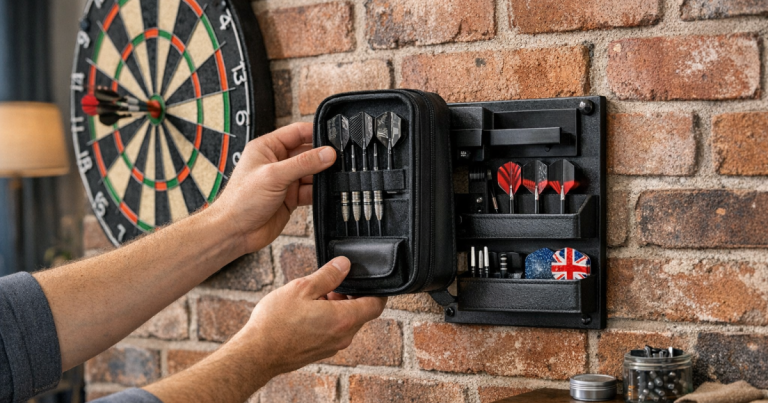
If your board sits inside a cabinet, the bag can live on a shelf or hook, but avoid overcrowding the cabinet doors. A tidy scoring area helps the whole setup feel more permanent and less like a temporary corner of the room.
- Chalk or dry-wipe marker: matched to your scoreboard surface.
- Small cloth or eraser: kept only for the darts area.
- Notepad: for scores, practice notes and running match records.
- Checkout card: useful for guests and casual games.
Step 6: Keep sharp and delicate items separate
The inside of the bag matters as much as the contents. Points, sharpeners and small metal tools should not sit loose with flights. Flights bend, crease and split more easily when they are crushed by heavier items, while loose points or tools can damage the lining of a soft case.
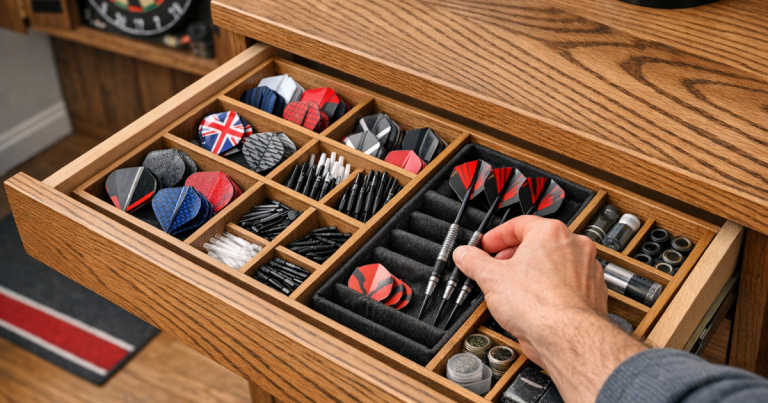
Use small tins, clear pouches or divided inserts. One section can hold flights, one can hold shafts, and one can hold tools. If children or pets are ever near the darts area, keep the full bag closed and out of easy reach. Darts accessories are small, fiddly and sometimes sharp, so a tidy storage habit is part of keeping the room sensible.
At home, it can also help to give overflow accessories a fixed place away from the grab bag. Magnetic strips, shallow trays and cabinet shelves all work well when used neatly. If you want tools visible but controlled, the guide to using magnetic strips for darts tool storage is a useful next step.
Step 7: Restock it after play, not before play
The biggest mistake is building a good kit once and then slowly emptying it. After a match night, take two minutes to reset it. Replace used flights, put the sharpener back, cap the marker, and remove any broken shafts or battered flights. That tiny routine saves the next session from starting with a search through drawers.
A simple restock note inside the bag works well. Write down your usual flight shape, shaft length and any special fittings you rely on. When something runs low, you know exactly what needs replacing. This is particularly helpful in shared households, where accessories can get borrowed, moved or mixed with other hobby bits.
- Throw away cracked shafts rather than keeping them as emergency spares.
- Flatten usable flights and store them away from tools.
- Check markers before they dry out completely.
- Keep one full spare setup untouched for match-night emergencies.
- Review the bag whenever you change your main darts setup.
A simple match-night packing list
Use this as a starting point and trim it to suit your board area. A lean, familiar kit is better than a heavy bag full of parts you never use.
- One full set of your usual flights.
- One backup set of flights, if you regularly use an alternative shape.
- One full set of shafts in your normal length.
- Any rings, washers or small fittings your setup requires.
- Point sharpener for steel-tip darts.
- Small darts multi-tool.
- Flight punch, if you use punched flights.
- Short measuring tape.
- Chalk or dry-wipe marker.
- Small cloth, eraser or board wipe.
- Checkout card or practice note card.
- Small pouch, tin or divider for sharp items.
Helpful questions
How big should the grab bag be?
Small enough to live near the board, but large enough to separate flights, shafts, tools and scoring bits. If you need two hands to dig through it, it is too cluttered.
Should I keep spare darts in the bag?
Keep a spare set nearby if you like, but store darts in their own case. Loose darts can damage flights, fabric and smaller accessories.
Do I need different spares for guests?
Only if guests regularly use your board. A couple of general spare flights and shafts can help, but your main emergency spares should match your own darts.
How often should I check the bag?
Check it after every proper match night and before any planned longer session. The quick post-match reset is the habit that keeps it reliable.
Where should it live in a small home setup?
Inside a cabinet, on a nearby shelf or in a labelled drawer works well. The key is keeping it close to the board without cluttering the throw area.
What to remember
A good grab bag is not a collection of random darts bits. It is a compact, organised support kit that protects the flow of a home match. Start with the parts you actually use, add only the tools that fix likely problems, and keep scoring items ready in the same place.
Once it is built, the habit matters more than the bag itself: reset it after play, remove broken parts, and restock the spares that match your current setup. Do that, and your next leg is far less likely to pause because one tiny accessory has gone missing.