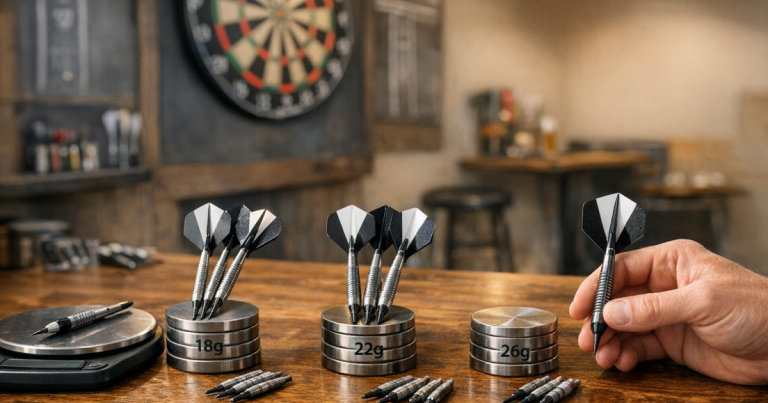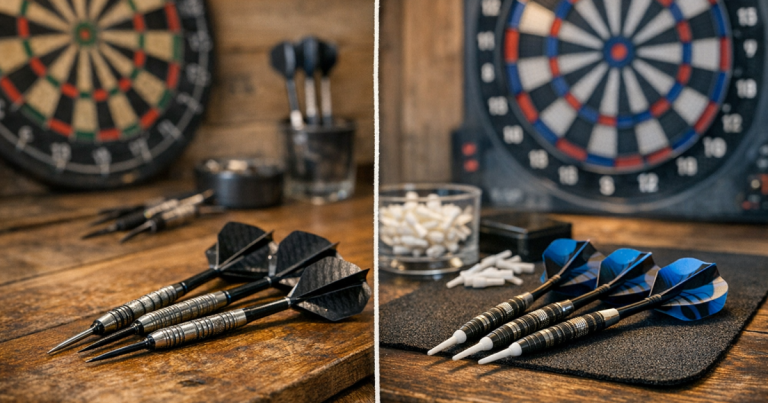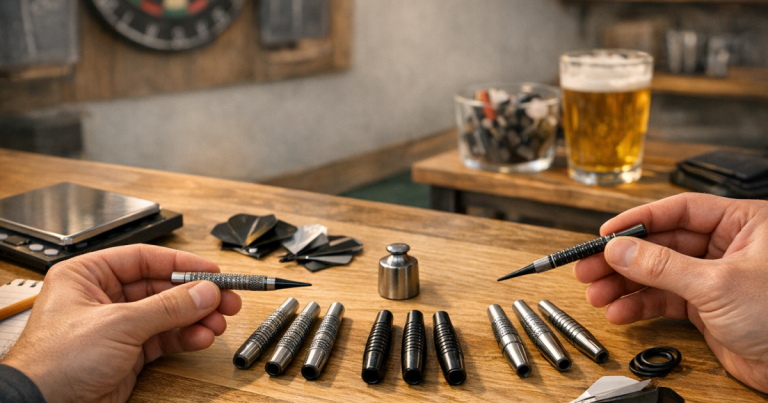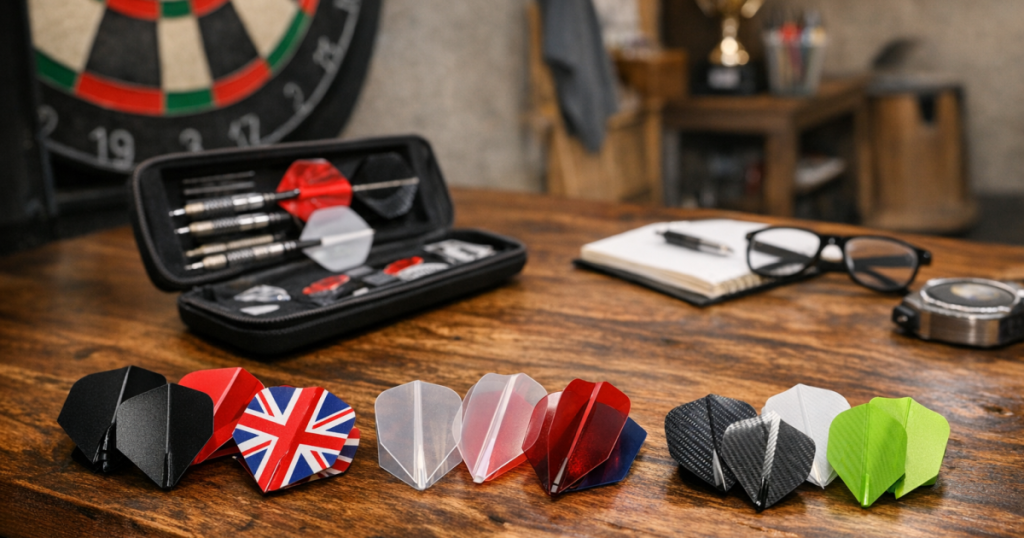
A consistent throw is not only about grip and release; the small plastic shape at the back of the dart changes how it flies, lands and groups. Choosing dart flights well helps you control angle, reduce wobble and match the setup to your natural throw rather than fighting it.
The right option is not automatically the largest, stiffest or most expensive one. It is the one that gives you repeatable entry into the board with the least adjustment from your normal action.
The short version
Start with a standard-shaped flight if you are unsure, then adjust from there based on what the dart is doing in the air and how it sits in the board. Larger shapes tend to add more stabilising surface area, which can help a slower or arcing throw. Smaller shapes can suit a faster, flatter throw, but they are less forgiving if your release varies.
- Use standard shapes as your baseline: they are easy to find, simple to compare and sensible for most home players.
- Change one thing at a time: keep the same barrel, shaft and point while testing a new flight shape.
- Watch the board angle: consistent grouping matters more than whether the dart lands perfectly flat.
- Keep spares matched: mixing worn and fresh flights makes testing almost useless.
What flights actually change
Dart flights affect drag and stability. In plain terms, they help the back of the dart follow the front cleanly instead of fishtailing, dipping or kicking sideways. The bigger the surface area, the more influence the flight usually has over the dart’s path.
This is why the same barrel can feel completely different after a small change at the back end. A player with a smooth, looping throw may find a larger standard flight settles the dart nicely. A player with a firmer, direct throw may prefer a slimmer shape because it does not feel as though it is holding the dart back.
Before blaming your flights for every loose dart, make sure the board and throw line are set correctly. If your setup is slightly out, it becomes harder to judge whether the flight is helping or not. The measurements in dartboard sizes, measurements and regulations are a useful baseline before you start comparing accessories.
Step 1: choose a sensible starting shape
The easiest way to begin is with a standard flight shape. It gives enough stability for most throws, works with a wide range of barrel weights and is widely available in multipacks. If your current grouping is unpredictable, standard flights give you a reliable reference point.
From there, change shape only when you can describe the problem clearly. For example, if your darts are dropping steeply and landing tail-up, a different flight or shaft combination may help. If they are floating and landing tail-down, a smaller shape may be worth testing. If the dart already enters at a repeatable angle, changing flights for the sake of it may simply introduce another variable.
Common shapes and when to try them
- Standard: a strong all-round choice for most home players, especially if you want stability and easy replacement.
- Slim: worth trying if you throw hard and flat, or if larger flights feel as though they slow the dart too much.
- Kite: a middle-ground option that can feel tidier for players who want less surface area without going very small.
- Pear or teardrop: often used by players who want a softer, more compact feel at the back of the dart.
- Integrated systems: combine shaft and flight in one unit, which can help remove loose-flight problems but changes how the rear of the dart feels.
Step 2: match the flight to your throw speed
Your throw speed is one of the most useful clues. You do not need a speed measurement; just look at your natural action. Do you push the dart smoothly with a gentle arc, or do you drive it firmly towards the treble?
A slower throw often benefits from more stabilising area because the dart has more time to move in the air. That does not mean you must use the biggest shape available, but it does suggest starting with standard or similarly broad options. A faster throw may stay straighter with a smaller shape, particularly if larger flights make the dart lift, float or drift.
Test from your normal oche position, not from a casual step closer to the board. If your toe line shifts during testing, the results are muddied. For a tidier home setup, a fixed throw line or suitable mat can help; the comparison in darts mat vs oche explains the practical trade-offs.
Step 3: consider your barrel and shaft combination
Flights do not work in isolation. Barrel weight, shaft length and grip position all affect how the dart balances. If you use a front-weighted barrel and hold it near the nose, the rear setup may need more help to stay settled. If you use a centre-balanced barrel and release cleanly, you may get away with a smaller or lower-drag shape.
Shaft length also matters. A longer shaft places the flight farther back, which can increase the stabilising effect. A shorter shaft can make the dart feel more direct, but it may also expose release errors. If you change both shaft and flight together, you will not know which change caused the improvement.
For a fair test, keep three darts identical. Do not use two fresh flights and one creased spare from the bottom of a case. Small differences at the rear can make one dart behave differently, and that can lead you to blame your throw when the kit is actually inconsistent.
Step 4: test for consistency, not just one good visit
A good testing session is short, repeatable and boring in the best possible way. Throw too many darts while constantly changing parts and fatigue will hide the result. A simple routine works better.
- Warm up with your usual setup for five to ten minutes.
- Fit a full matching set of the new flights.
- Throw several visits at the same target, such as treble 20, treble 19 or bull.
- Note the average landing angle and whether the darts group tighter or scatter more.
- Switch back to your original setup and repeat the same target.
You are looking for a pattern, not a miracle. If the new flights give you one excellent visit but more random misses overall, they are probably not improving consistency. If the grouping feels calmer and the darts enter at a more repeatable angle, they deserve more time.
Step 5: check durability and fit
Consistency also depends on condition. Creased, split or heavily scuffed flights can behave differently from fresh ones. If you play regularly at home, keep spare sets of the same model so a damaged flight does not force you into an unmatched replacement.
Fit matters too. Some flights sit tightly in standard shafts, while others may loosen after repeated impacts. Flight protectors and punched flights can help some players keep the rear end secure, but they also add another small variable. If you use accessories, test them as part of the setup rather than adding them halfway through.
Storage helps here. Loose flights thrown into a drawer soon get bent or marked. If your darts area is short on space, the ideas in using magnetic strips for darts tool storage can help keep small accessories organised without cluttering the room.
Real product examples to compare
You do not need a huge collection, but it is useful to compare a few recognisable options from different styles. Target Pro Ultra Flights are a common example of a conventional replaceable flight range, so they suit players who want easy swaps and shape choice.
Harrows Retina Flights are another familiar option for players comparing standard accessory-style flights across different shapes and designs. The important point is not the print or colour; it is whether the shape and feel produce a repeatable board entry.
If you are curious about a more integrated rear setup, Condor Axe Dart Flights are worth comparing with a normal shaft-and-flight arrangement. Because they combine parts, judge them as a whole setup rather than as a direct like-for-like swap with a loose flight.
Quick buying checks before you stock up
- Buy small quantities first: test one or two sets before ordering a large batch.
- Match all three darts: shape, condition and fit should be the same across the set.
- Ignore colour until last: visibility is useful, but flight behaviour matters more.
- Check compatibility: make sure the flights suit the shafts or system you already use.
- Keep a reference setup: always know what your “normal” combination is so you can compare properly.
Things readers ask
Do bigger flights make darts more accurate?
Not automatically. Bigger flights can make the dart more stable, which may help some throws, but accuracy still depends on release, rhythm and a setup that suits your action.
Should beginners use standard flights?
Usually, yes. Standard flights give a forgiving baseline and make it easier to spot whether later changes genuinely improve consistency.
How often should I replace flights?
Replace them when they are split, badly creased, loose in the shaft or visibly different from the others in the set. Matching condition is more important than a fixed timetable.
Can flight colour affect consistency?
Colour does not change flight behaviour, but high-contrast designs can make it easier to see grouping and board entry under home lighting.
Is it worth trying integrated flight-and-shaft systems?
It can be, especially if loose flights annoy you. Treat the change as a full rear-end setup test, because the feel may differ from separate shafts and flights.
In brief
The best route to steadier throwing is to test dart flights methodically rather than buying by appearance. Start with a standard shape, watch how the dart lands, then adjust size and style only when you have a clear reason. Keep the rest of the setup unchanged, use matching spares and judge results over repeated visits. When the flight suits your throw, the dart should feel calmer in the air and easier to group without forcing a different action.