A shared wall can turn a normal practice session into a dull thud for the next room, even when the board is fitted correctly. The aim of a quieter darts setup is not silence; it is reducing vibration through the wall, softening missed-dart impacts and keeping footfall under control.
The biggest gains usually come from how the board is mounted, what sits between the board and the wall, and how the room absorbs sound around the oche. Start with the structure, then tidy up the smaller noises.
The short version
- Do not mount the dartboard directly to a shared wall if another wall is available.
- If the shared wall is unavoidable, add a rigid backboard with small isolation points behind it rather than relying on thin foam alone.
- Use a mat or rug at the oche to reduce footfall, dropped-dart noise and floor reflections.
- Check for rattles from cabinets, loose brackets, picture hooks and nearby shelves.
- Keep practice sessions sociable in timing and volume, because repeated impact noise is often more noticeable than loudness alone.
Why darts sound louder through a shared wall
Dartboard noise is mostly impact noise. The dart hits the sisal, the board transfers that energy into the bracket, and the bracket sends vibration into the wall. If that wall is shared with a neighbour, bedroom, home office or adjoining room, the thud can travel more clearly than conversation.
There is also airborne noise: the click of darts landing, voices during a match, doors closing and footsteps back and forth to the board. Soft furnishings help with airborne echo, but they do much less for vibration travelling through plasterboard, masonry or studs. That is why sticking a few foam tiles around the board rarely solves the main problem.
The most effective approach is layered: choose the least sensitive wall, isolate the board from the structure, control missed throws, and dampen the room so the whole corner feels calmer.
Step 1: choose the quietest wall you can use
If the setup is still flexible, wall choice matters more than any accessory. A solid internal wall away from bedrooms or sitting areas is usually easier to live with than a party wall. In flats, terraced houses and semi-detached homes, the wall that feels most convenient is not always the kindest one for noise.
Stand in the space and think about what is behind the wall. A hallway, cupboard, utility area or spare room is generally more forgiving than a neighbour’s lounge or your own child’s bedroom. If you must use a shared wall, avoid placing the board where repeated thuds line up with a bedhead, desk or television on the other side.
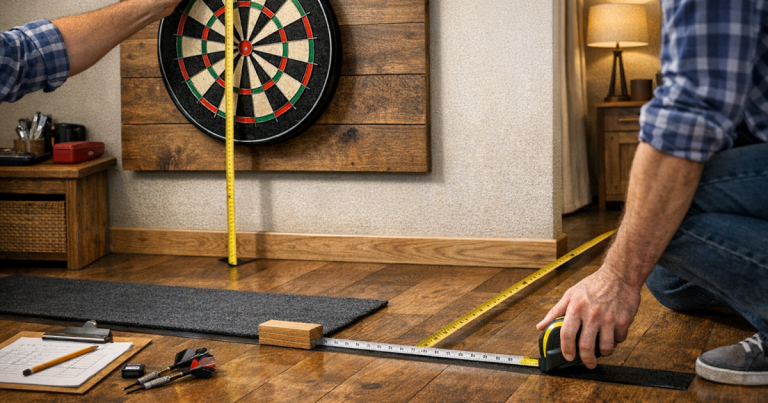
Do not compromise the playing position to chase silence, though. A cramped oche causes awkward throws, more missed darts and more wall hits. If you are moving the board, re-check the official bull height and throwing distance using this guide to measuring dartboard height and throwing distance correctly.
Step 2: stop the board acting like a drum
A dartboard fixed hard against a wall is efficient at transmitting vibration. The aim is to create a secure mount that has a small amount of damping between the board, bracket and wall-facing surface. It should feel stable, not wobbly.
Check these areas first:
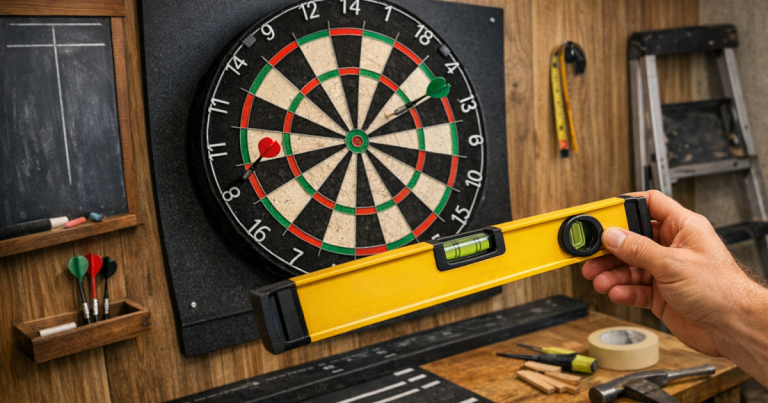
- Board bracket: make sure the wall bracket is tight and level. A loose bracket adds a sharper rattle on top of the normal thud.
- Board contact points: the small feet or pads on the rear of the board should touch evenly. If one corner is floating, the board can knock back against the wall.
- Backing surface: a rigid backboard spreads impact better than a thin decorative panel. The backing should not flex like a drum skin.
- Isolation layer: cork, rubber or dense felt pads can help reduce direct vibration, provided the board remains properly supported.
A common mistake is to add very soft padding directly behind the board. That can make the board feel springy and may affect how securely darts land. Go for controlled damping rather than a cushion.
Step 3: use a backboard that protects and dampens
A good backboard has two jobs: protecting the wall from missed darts and reducing how much impact reaches the wall. For shared walls, the backboard should be more than a thin sheet of foam. A rigid panel with a slightly separated or padded contact point usually works better because it spreads the force of impact before it reaches the wall.
For rented homes, avoid improvising with heavy fixings unless you are allowed to make those changes. A freestanding or removable approach can be cleaner, safer for the deposit, and easier to adjust if noise is still travelling. The method in this guide to building a removable dartboard backboard for rental walls is a useful next step if you need protection without turning the wall into a permanent project.
When planning the board size, allow enough margin for realistic misses. Newer players, guests and tired league-night throwers often miss wider than they expect. A small surround helps with neat trebles practice; a larger backboard is better for real-world home use.
Step 4: cut floor noise at the oche
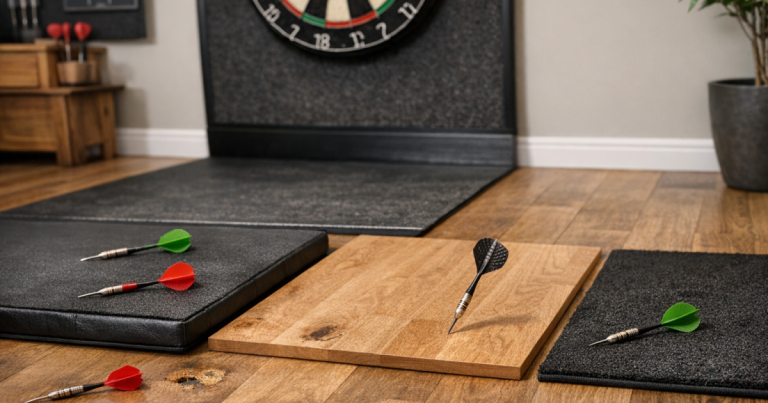
Shared-wall complaints are not always about the board. Walking to retrieve darts, dropped points on laminate, and shoes on hard flooring can make the setup feel busier than it is. A darts mat, dense rug or low-profile carpet runner can soften the movement between throws.
The mat should sit flat and should not bunch at the throw line. Avoid anything so thick and spongy that your stance changes from throw to throw. If the room has hard flooring, a mat under the oche and a small rug near the retrieval area can make a noticeable difference during longer practice sessions.
Also think about what is under the room. In an upstairs flat or a converted loft, impact travels through the floor as well as the wall. Keeping the oche area cushioned and using softer footwear indoors can reduce the repetitive tap-thud rhythm that carries through the building.
Step 5: remove rattles from the surrounding area
Once the main thud is under control, hunt for secondary noise. These little sounds are easy to miss from the throwing line but obvious in the next room.
- Open and close any dartboard cabinet doors to check for loose hinges or magnetic catches that buzz on impact.
- Move glass frames, lightweight shelves and ornaments away from the board wall.
- Tighten scoreboard fixings and avoid hanging boards from a single loose nail.
- Keep spare darts, stems and points in a case or organiser rather than loose on a shelf.
- Check whether the door to the room rattles when darts hit the board.
If the setup sits in a narrow hallway or multipurpose room, the layout may be creating more knocks than the board itself. A clearer route to the oche reduces bumps, scraping chairs and awkward retrievals, so it is worth revisiting how you plan a darts corner without blocking walkways.
Step 6: soften the room, not just the board
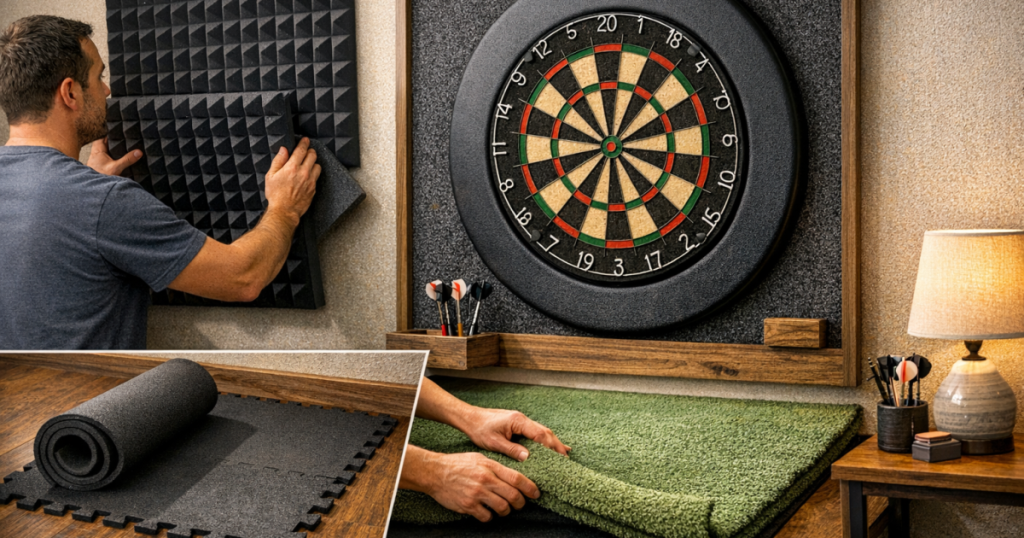
Soft furnishings help make the room feel less sharp. Curtains, a fabric blind, rugs, cushions and upholstered furniture can reduce echo, which makes the dartboard sound less exposed. This is more noticeable in spare rooms with bare walls and hard floors.
Acoustic foam can reduce reflections in the room, but it should not be treated as the main cure for shared-wall impact. Foam on the visible wall around the board may make the room sound less lively, yet the board bracket can still send vibration directly into the structure behind it.
Think of room treatment as the finishing layer. It improves comfort for the player and makes voices, claps and score calls less harsh, but the board mounting and backboard do the heavier work.
Step 7: change the habits that create repeat noise
Even a well-damped setup can become annoying if it is used hard at the wrong time. A few habits make home practice easier to live with:
- Practise doubles or scoring routines in shorter blocks rather than throwing for hours against a shared wall.
- Retrieve darts calmly instead of pulling all three out with a snap that rocks the board.
- Keep match chat at normal room volume, particularly late in the evening.
- Use a chalkboard or marker board gently; the scoring area can be noisier than expected if it is mounted loosely.
- Set a sensible cut-off time for heavier practice if the wall adjoins someone else’s living space.
For league-night practice at home, it is tempting to recreate the pub atmosphere. That is fine in a suitable room, but shared-wall setups reward quieter routines: steady throws, tidy scoring and fewer hard knocks around the board.
Quick checks before you move the whole setup
Before taking the board down and starting again, test the simple fixes in order. First, tighten the bracket and check the board sits evenly. Second, add controlled damping at contact points. Third, place a mat or rug where you stand and retrieve. Fourth, remove nearby rattles. Finally, ask someone to listen from the adjoining room while you throw a normal visit.
Do the test with real throwing, not one careful dart. Throw a few scoring visits, retrieve the darts normally and mark a score. That gives a much better picture of the noise your setup creates during actual play.
Things readers ask
Will a dartboard surround make the setup quieter?
A surround helps with missed darts and can soften some wall hits, but it does little for vibration from darts landing in the board. Use it for protection, not as the main noise fix.
Is a cabinet quieter than a bare dartboard?
Sometimes, but not automatically. A solid, well-fitted cabinet can add mass around the board, while a loose cabinet can rattle and make the impact sound sharper.
Can I use acoustic foam behind the dartboard?
Thin foam directly behind the board is usually not ideal because it can make the mount feel less stable. Dense pads at contact points and a rigid backboard are normally more effective.
Are dart stands better for shared walls?
A stand can reduce direct wall vibration because the board is not fixed to the wall. It still needs a stable base, enough space and floor damping, as the impact can travel through the floor instead.
How do I know whether the noise is acceptable?
Listen from the adjoining room during normal throwing, not just from inside the darts room. If the thud is repetitive and clearly audible, improve isolation or change the practice time.
The big picture
Making a darts setup quieter for shared walls is mostly about breaking the path of vibration. A better wall position, a rigid backboard, small isolation points, a stable mount and a softer floor will do more than decorative soundproofing alone.
Work through the changes in layers and test after each one. You should end up with a setup that still feels proper to throw on, protects the room, and is much easier for the rest of the house or neighbouring space to live with.