A garage can be a brilliant darts space, but it takes a little planning to keep darts gear dry when the air is cold, still or damp. The main aim is simple: stop moisture reaching your board, darts, flights, shafts, case, mat and scoreboard, then make sure anything slightly damp has a chance to dry before it is packed away.
For most home setups, the answer is not one magic accessory. It is a combination of better placement, sensible storage, airflow, and a quick post-game routine that becomes part of closing down the board.
The short version
- Keep darts, flights and small accessories in a sealed box or proper darts case, not loose on a garage shelf.
- Do not store gear directly on bare concrete, against an external wall, or near a draughty garage door.
- Use moisture absorbers or a dehumidifier where the garage regularly feels damp.
- Let the board area air after a session instead of shutting damp gear inside a cabinet straight away.
- Bring steel-tip darts indoors if the garage gets cold and humid overnight.
- Check for early signs of damp: rust on points, musty smells, warped packaging, soft board fibres or mould marks.
Start by finding where the moisture comes from
Garages in Britain often swing between cold, damp mornings and warmer afternoons. That change can create condensation on metal tools, concrete floors, windows, garage doors and sometimes even on storage boxes. Before changing your darts setup, spend a few minutes working out where the damp is actually coming from.
Common culprits include a poorly sealed garage door, wet bikes or garden gear stored nearby, a tumble dryer venting into the space, a small roof or gutter leak, and boxes sitting on a cold concrete floor. If the air smells musty or cardboard feels soft, your darts gear will not be immune just because it is tucked inside a cabinet.
A small digital hygrometer can be useful because it turns guesswork into a number. You do not need to obsess over readings, but if the garage is regularly sitting in a damp range, treat the darts area as a stored sports kit zone rather than a normal indoor room.
Choose the driest wall and avoid cold traps
The best spot for a garage dartboard is rarely the most convenient empty wall. External walls, single-skin brick, metal doors and corners with poor airflow tend to be colder, which makes condensation more likely. A board mounted there can feel fine during a match but still be exposed to damp air overnight.
If you are still planning the layout, prioritise a wall that is dry, stable, away from the main door opening and not directly behind wet storage. The extra planning is worth it, and our guide to choosing the right wall for your dartboard covers the placement side in more detail.
Once the board is up, leave a little breathing room around cabinets, surrounds and shelving. A sealed-looking setup can trap stale air if everything is pressed tightly into a cold corner. If your cabinet doors feel clammy when opened, they are protecting the board from dust but not necessarily from moisture.
Store small darts gear in layers
Darts accessories are small, easy to scatter and easy to damage when damp. Flights can curl, paper packaging can go soft, spare shafts can get lost in tool drawers, and steel points can start to mark or corrode if they sit in a moist case for long periods.
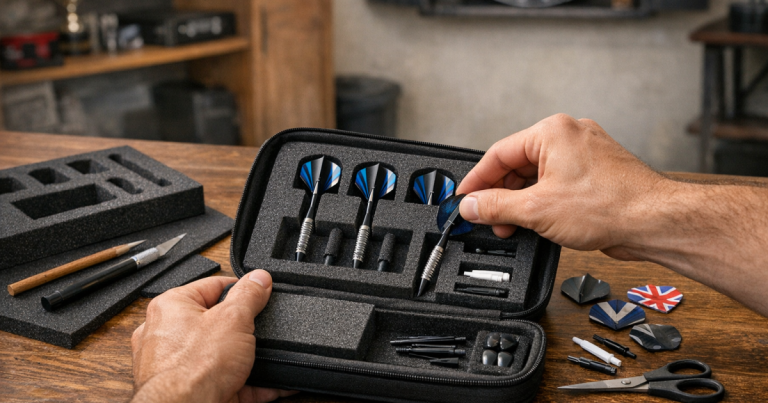
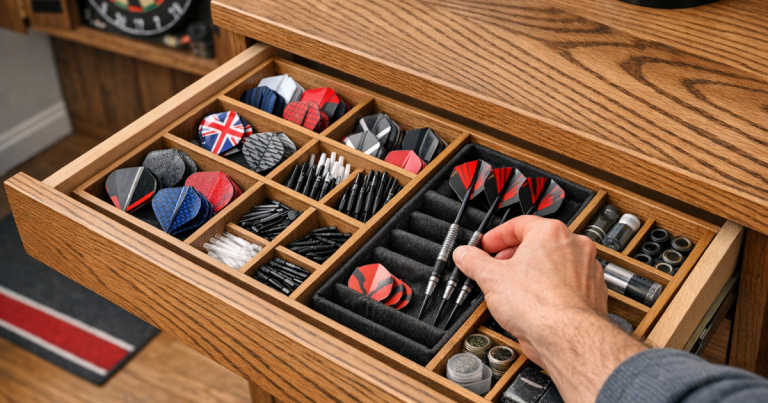
A good garage storage system uses layers. Keep the darts themselves in a darts case, then place that case inside a sealed plastic storage box with flights, shafts, points, flight protectors, chalk, spare stems and a soft cloth. This gives your kit protection from damp air, dust and accidental knocks.
A sturdy plastic box such as a Really Useful Box 9 Litre is a simple option for accessories because it keeps items together and is easy to lift indoors if the garage gets too cold. Do not rely on cardboard boxes for long-term darts storage in a garage; they absorb moisture and can pass that musty smell into cases and packaging.
Add a few silica gel sachets or a small moisture absorber to the storage box, then check it monthly. If a sachet is saturated or the box smells stale, dry the contents indoors before putting them back. Moisture control only works if you replace or refresh the absorbent material when it has done its job.
Look after steel tips before they rust
Steel-tip darts need a little more care in a garage than they do in a spare room. The barrels are handled often, the points can pick up moisture from the air, and the case can trap that moisture if the darts are put away immediately after play.
After a session, wipe each dart with a dry microfibre cloth before it goes back in the case. Pay attention to the points and the join between point and barrel, as moisture can sit there. If your hands were sweaty, or the garage was cold enough for condensation to form on metal, give the darts a few minutes indoors before sealing the case.
Rust prevention is mostly about routine rather than heavy maintenance. Keep darts away from wet floors, avoid leaving them on a windowsill or metal workbench overnight, and do not store them in a case that already feels damp. For a more detailed routine, see our guide to storing steel-tip darts to prevent rust.
Give the dartboard a better chance
A bristle dartboard does not like damp conditions. Moisture can make the surface feel tired, encourage musty smells and shorten the useful life of the board. The fix is not to wrap the board in plastic, because that can trap moisture against the surface. Instead, keep the area dry and allow air to move around it.
If you use a cabinet, leave the doors open for a while after playing, particularly on cold evenings. If you use a surround, check behind it occasionally for trapped dust, condensation marks or musty smells. A surround is excellent for wall protection, but it should not hide a damp wall problem.
If your garage is only occasionally used for darts, consider taking down accessories that do not need to live there all week. Flights, shafts, scoreboards, chalk and spare darts are easy to store indoors, while the board itself stays in place. That reduces the amount of kit exposed to garage air and keeps match essentials fresher.
Use airflow and moisture control sensibly
Still air is a problem in many garage setups. You do not need a draught blowing across the board while you play, but the space should be able to dry out after wet weather or after the door has been open. A short airing session can make a big difference, especially if the garage is used for bikes, tools, laundry or garden storage as well as darts.
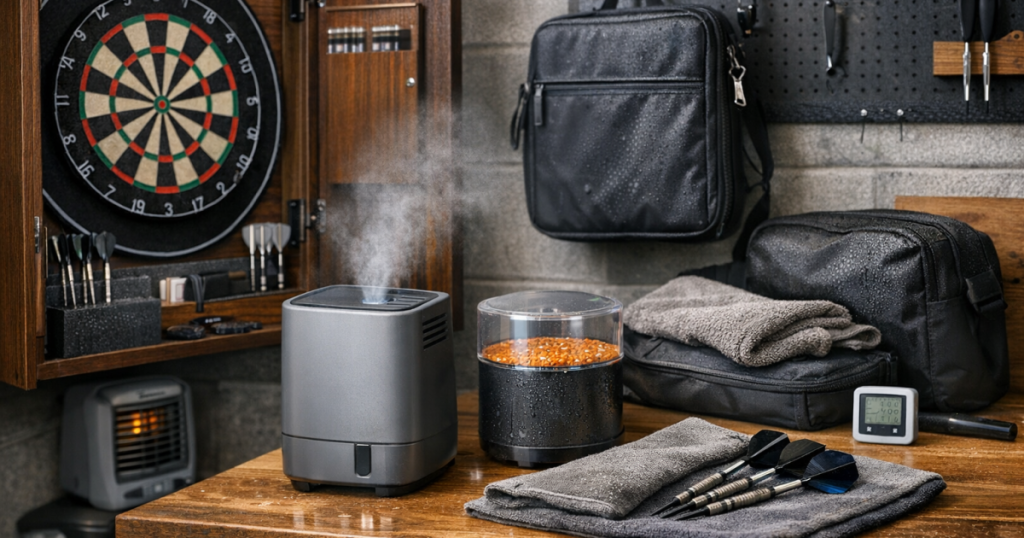
For small enclosed areas, a non-electric moisture absorber such as a UniBond Aero 360 Moisture Absorber can help manage damp in cupboards or storage corners. For a generally damp garage, a dehumidifier may be more effective, but choose and run it according to the manufacturer’s instructions and avoid trailing leads through the throwing lane.
Keep wet items away from the board zone. A dripping bike, damp football boots or a bag of garden waste can raise local moisture levels far more than you might expect. If the darts area shares the garage with everyday storage, give the oche area its own dry boundary rather than letting everything creep into the same corner.
Build a simple post-game routine
The easiest way to protect darts gear is to make drying down part of finishing the match. It should take less than five minutes and saves far more time than trying to rescue rusty points or a musty board later.
- Remove darts from the board and wipe the barrels and points with a dry cloth.
- Check flights for moisture or bending before putting them into the case.
- Leave cabinet doors open briefly so air can move around the board.
- Put small accessories back into a sealed storage box rather than leaving them on a shelf.
- Lift mats or floor markers if the concrete underneath feels damp.
- Bring the darts case indoors when frost, heavy rain or high humidity is forecast.
This routine is especially useful if your garage doubles as a workshop or utility area. Darts equipment does not need showroom conditions, but it does need separation from damp, dust and cold surfaces.
Keep the throwing area dry underfoot
Moisture control is not only about the board and darts. A damp mat can curl, smell musty or mark the floor, while tape oches can lift if they are stuck to dusty or cold concrete. If your setup uses a mat, roll it loosely and store it off the floor when the garage is not in use.
Before marking anything permanently, check that the floor stays dry across a few normal weather changes. If one side of the garage gets damp after rain, avoid putting the oche there. You will get a better setup by combining accurate measurements with a dry, repeatable playing area, and our guide to setting out your throwing area and oche will help with the layout details.
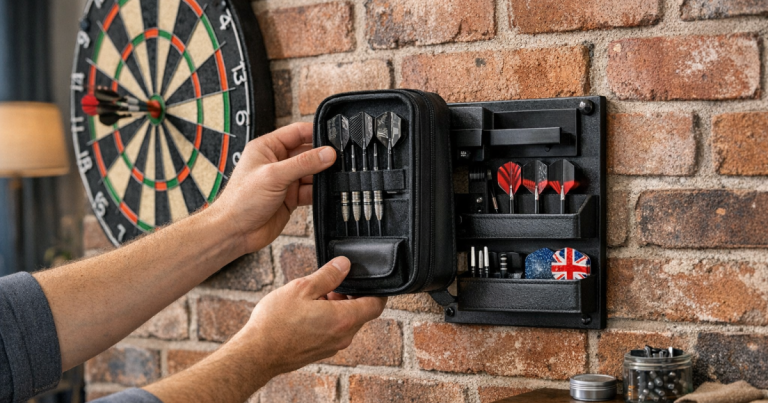
Shelving also matters. Keep cases, spare flights and scorekeeping accessories at least a little above floor level. A basic shelf, wall-mounted organiser or sealed box on a rack is far better than a sports bag left directly on concrete.
Warning signs that your setup is too damp
A garage can look tidy while still being too damp for long-term darts storage. Watch for small clues rather than waiting for obvious damage.
- Rust marks or rough patches on steel points.
- A musty smell inside the cabinet, case or storage box.
- Flights that feel soft, curled or slightly tacky.
- Score sheets, packaging or cardboard accessories going wavy.
- Dark spots behind a surround or cabinet.
- A board surface that feels unusually soft or smells stale.
If you spot any of these, move removable gear indoors and dry it properly. Then deal with the garage conditions before putting everything back. Simply wiping the visible moisture away will not solve the problem if the same damp air is still present every night.
Helpful questions
Should I leave my darts in the garage all year?
You can if the garage stays dry and well ventilated, but steel-tip darts are usually better kept indoors during cold, wet periods. The case is small, so bringing it inside is an easy win.
Is a dartboard cabinet enough to stop damp?
No. A cabinet helps with dust, looks tidy and can protect the wall area, but it will not fix damp air. If the garage is humid, moisture can still sit inside the cabinet.
Can I cover the dartboard with plastic?
It is better not to wrap a bristle board tightly in plastic. A tight cover can trap moisture against the board. Improve the room conditions and airflow instead.
What should I do if my darts case smells musty?
Empty it, dry the darts and accessories indoors, wipe the case, and leave it open until fully aired. Replace any damp cardboard packaging or old silica gel sachets.
Do I need a dehumidifier for a garage darts setup?
Not always. If damp is mild, sealed storage, better placement and moisture absorbers may be enough. If condensation is frequent, a dehumidifier is worth considering.
Final thoughts
A dry garage darts setup is mostly about habits. Keep gear off cold floors, store small accessories in sealed containers, let the board area breathe, and bring valuable steel-tip darts indoors when the weather turns damp. Once the routine is in place, your garage can stay game-ready without your darts kit slowly absorbing the worst of the British weather.