A damp kit bag, wet flights or a case left in a cold shed can make your darts smell stale fast. The easiest way to stop a dart case smelling musty is to dry it fully, clean the lining gently, remove trapped odours, then change how you store it between throws. You do not usually need a new case unless the foam, fabric or zip area has gone mouldy or started breaking down.
Musty smells are common in UK homes because darts gear often lives near exterior walls, under stairs, in garages or in cold cupboards. The fix is mostly about moisture control, not masking the smell with fragrance.
The short version
- Empty the case completely and check every pocket, divider and foam insert.
- Dry the case open in a warm, ventilated room before cleaning it.
- Use mild cleaning only; avoid soaking foam or leather-look finishes.
- Air out darts, flights, stems, point protectors and spare accessories separately.
- Store the case somewhere dry, not in a shed, car boot or damp cupboard.
- Add a small moisture absorber only after the case is clean and dry.
Step 1: Empty the case and find the source
Do not start by spraying the inside. First, empty the case onto a clean towel and separate the contents into groups: darts, flights, shafts, tools, point protectors, spare tips, chalk, oche accessories and anything paper-based such as score notes or packaging.
Open every compartment and smell the parts separately. The case lining may be fine while one damp flight protector, towel or piece of cardboard is causing the whole problem. Foam inserts can also hold stale odours if they have been compressed around slightly damp darts or left in a cold bag for weeks.
Look for visible mould, dark spotting, sticky residue, rust marks, crumbling foam or a zip that smells strongly when opened. If the case has removable foam, take it out. If you use a compact setup for pub matches, it is worth checking whether the layout encourages damp items to sit tightly together. Our guide to choosing a dart case for league nights covers pocket layout and everyday carry points that also affect airflow.
Step 2: Dry everything before you clean it
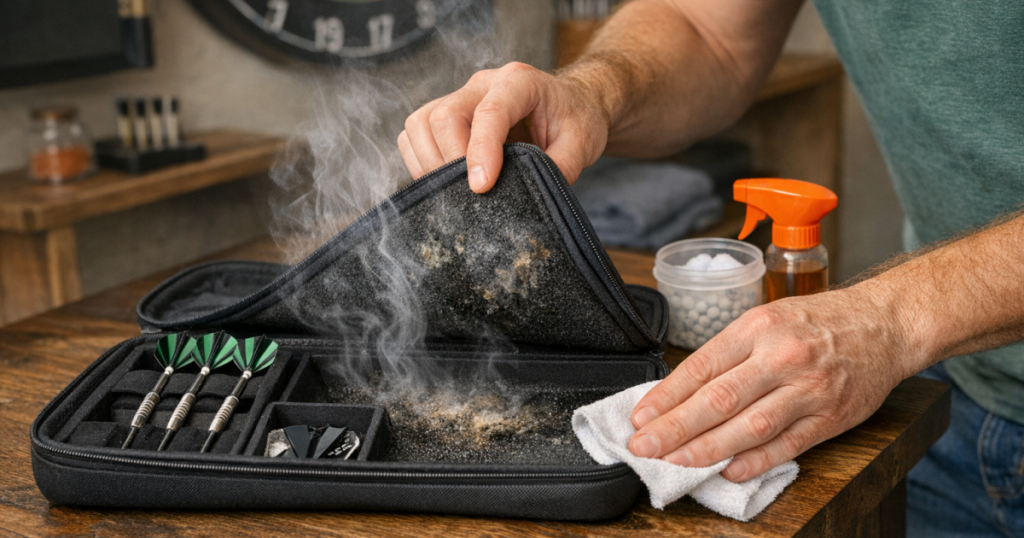
Cleaning a damp case too early can push moisture deeper into the lining. Leave the empty case fully open in a warm, dry room with good airflow. A windowsill is fine if it is dry and not in harsh direct sun for long periods. Avoid radiators, tumble dryers, hairdryers and airing cupboards that become humid, as heat can warp plastic trays, loosen glued linings or make synthetic materials crack.
Lay flights and shafts separately so trapped moisture can evaporate. Steel-tip darts should be wiped dry with a soft cloth, especially around the barrel grooves and point area. If a point protector has moisture inside it, leave it off until both the point and protector are dry.
For a mildly stale case, a full day of airing may be enough. For a case that has lived in a garage, shed or sports bag, give it longer. The smell should reduce before you use any cleaner; if it gets worse as the case warms up, the lining or foam is probably holding moisture.
Step 3: Clean the lining gently
Most dart cases use fabric, imitation leather, plastic trays, elastic loops, foam or a mix of these. The safest approach is to use the least moisture possible.
For fabric lining
- Brush out grit and dust with a clean, dry, soft brush.
- Wipe the lining with a barely damp microfibre cloth and a small amount of mild soap.
- Do not scrub hard around stitched seams or elastic loops.
- Wipe again with a cloth dampened with clean water only.
- Leave the case open until fully dry before putting anything back.
For plastic trays and hard dividers
- Remove loose dirt first so you do not grind it into the surface.
- Wipe with mild soapy water on a cloth, not by pouring liquid into the case.
- Use a cotton bud for corners where dust and chalk can collect.
- Dry with a towel, then leave open for airflow.
For leather-look or coated cases
Use a damp cloth only unless the care label says otherwise. Strong cleaners can mark coated finishes, and too much water can creep under edges or into stitching. If the outer shell smells musty, wipe the outside too, paying attention to folds, handle areas and the zip line.
Step 4: Deal with foam inserts properly
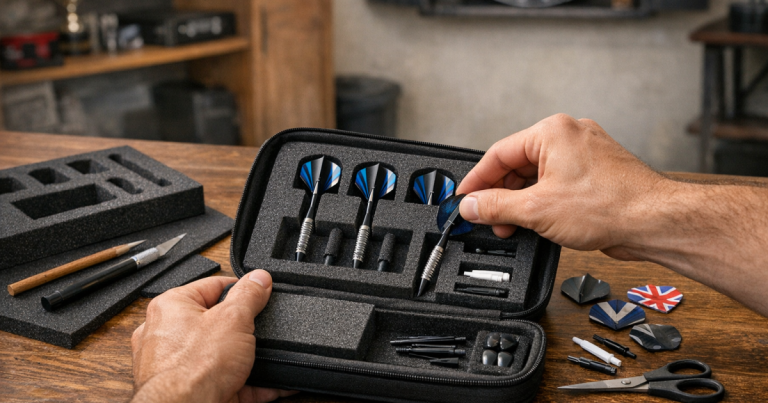
Foam is often the hidden culprit. It traps moisture, chalk dust and hand oils, then sits pressed against barrels and flights. If the foam is removable, take it out and air it separately. Press it lightly with a dry towel; do not wring it, soak it or put it on direct heat.
If the insert still smells after drying, sprinkle a light layer of bicarbonate of soda over the surface, leave it for several hours, then remove it carefully with a vacuum on low suction or a soft brush. Keep powder away from dart barrels, points, moving case parts and zip teeth.
Foam that has become crumbly, stained or persistently damp is better replaced than endlessly cleaned. If you want a neater internal layout at the same time, our walkthrough on making foam inserts for a dart case explains how to shape inserts around your own darts and accessories.
Step 5: Remove odour without masking it
Once the case is dry and clean, use odour removal rather than perfume. Heavy sprays can leave a sticky film, soften some materials, or make your flights and stems smell strongly every time you play. That is not ideal when the case is opened on a league night or stored near your board at home.
Try one of these low-risk methods:
- Bicarbonate of soda in a small open pot: place it inside the open case while the case sits flat, then remove it before use. Do not tip loose powder into pockets unless you are prepared to clean it out thoroughly.
- Activated charcoal pouch: place it in the case when stored, making sure it cannot mark light-coloured lining.
- Silica gel sachet: useful for reducing moisture after cleaning, but it will not clean dirt or remove mould by itself.
- Fresh airflow: leaving the case open in a dry room often does more than any scented product.
If you use moisture absorbers, keep them away from children and pets, and replace or refresh them according to the packaging. They are a storage aid, not a substitute for drying wet kit.
Step 6: Clean the darts and accessories before they go back
A fresh case will not stay fresh if the contents are still dirty. Wipe barrels with a dry cloth and use a soft brush to remove chalk, skin oils and dust from grip cuts. Check shafts and flights for trapped grime, especially if they have been carried loose in a coat pocket or sports bag.
Point protectors deserve a quick check too. If they are damp inside, they can keep the end of the dart wet even when the case looks dry. Steel points should not be stored wet, and any sign of looseness should be dealt with before the darts go back into regular use. If you notice movement at the point, see our guide on how to fix loose dart points without replacing your darts.
Paper scorecards, old packaging, receipts and fabric wipes are worth removing unless you genuinely need them. Paper absorbs moisture quickly and can make a small case smell stale again.
Step 7: Store the case where moisture cannot build up
Most musty case problems come back because the storage spot has not changed. A dart case kept in a car boot, shed, garage, porch or cold cupboard is exposed to temperature swings and condensation. Even if the case feels dry when you put it away, the air around it can cool overnight and leave moisture inside pockets and foam.
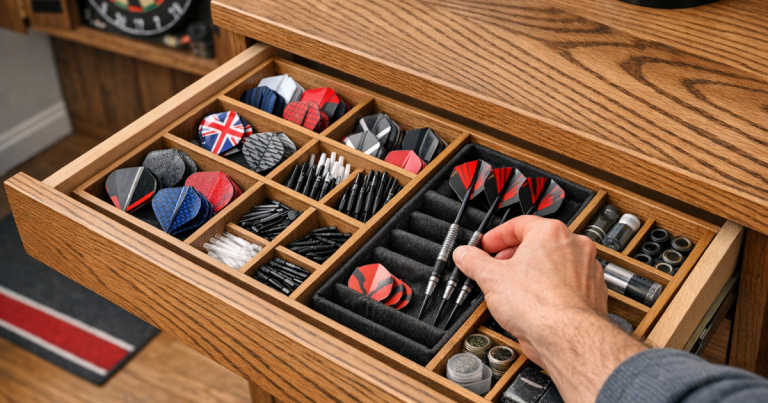
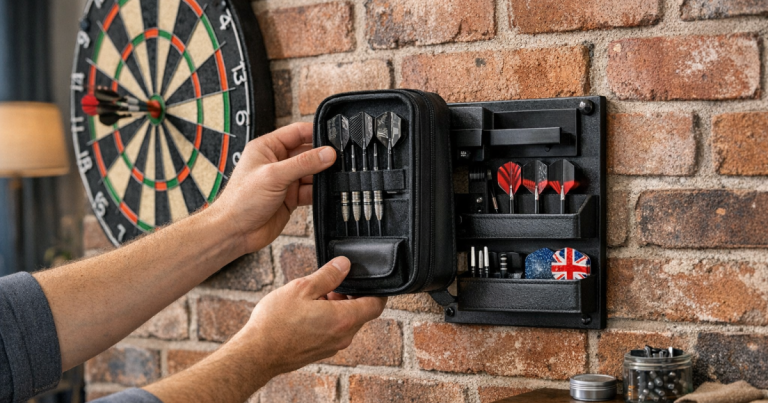
For a home darts setup, store the case in the same general environment you would choose for spare flights and shafts: dry, steady and away from exterior damp. A drawer in the room where you play is usually better than a toolbox in the garage. If your darts area is in a multi-use living room, keep the case closed when not in use but give it occasional open-air time after longer sessions.
After playing outside the home, do a quick reset: open the case for a short while when you get back, wipe any cold barrels, remove damp accessories, then repack it once everything is dry. This small habit prevents most stale smells from returning.
When to replace the case instead of cleaning it
Cleaning is worthwhile if the case is structurally sound and the smell is mild to moderate. Replacement makes more sense when the foam is breaking down, the lining has visible mould spotting, the case remains damp after drying, or the zip and seams smell strongly even after cleaning.
A case that has been soaked, stored long-term in a damp shed or contaminated with mould may never feel properly fresh again. At that point, keeping your darts dry and organised matters more than saving the old case. If only the insert is the issue, replacing the foam may be enough; if the shell and lining smell as well, a new case is usually the cleaner fix.
Common mistakes that make the smell worse
- Spraying fragrance into a closed case: this masks the smell and can leave residue.
- Using too much water: wet linings and foam take longer to dry and may smell worse afterwards.
- Drying on direct heat: high heat can damage glue, foam, elastic and coated finishes.
- Putting darts back too soon: even slightly damp accessories can restart the problem.
- Keeping the case in a damp storage spot: the smell will return if the environment stays the same.
Common questions
Can I use disinfectant wipes inside a dart case?
Use caution. Some wipes are too wet or too strong for fabric, foam, coated finishes and printed linings. A barely damp cloth with mild soap is usually safer for routine cleaning.
Will silica gel remove a musty smell?
Silica gel helps control moisture, but it will not clean dirt, oils or mouldy material. Dry and clean the case first, then use silica gel to help keep it dry.
Why does my case smell worse after being closed?
Closing the case traps odour and moisture in a small space. If the smell returns quickly after airing, check the foam, paper items, point protectors and storage location.
Can I wash a dart case under the tap?
Usually, no. Many cases contain foam, cardboard stiffeners, glue, fabric layers or coated panels that do not respond well to soaking. Spot-clean instead.
How often should I air out my dart case?
Air it after any session where the case has been in a cold car, damp bag or busy pub environment. For home-only use, a short airing every few weeks is normally enough.
Main points
A musty dart case is usually a moisture and storage problem rather than a sign that your whole setup needs replacing. Empty it, dry it properly, clean gently, treat foam separately and only repack clean, dry accessories. Once the case smells fresh again, store it in a dry indoor spot and give it airflow after travel or longer sessions.
That routine keeps your darts kit ready to grab, whether it lives beside a home board or travels with you on league nights.