Bounce-outs are frustrating because they interrupt rhythm, spoil scoring chances and can damage floors if they keep happening. If you want to reduce dart bounce-outs on a bristle board, start by checking the board face, the dart points and the way the dart is entering the sisal. Most fixes are small, but they add up quickly in a home setup.
A few bounce-outs are normal in darts, particularly when a dart hits a wire, deflects off another dart or lands at an awkward angle. The aim is not to eliminate every unlucky rebound, but to remove the avoidable causes that make them happen too often.
The quick version
- Rotate the dartboard regularly so worn scoring areas recover more evenly.
- Inspect dart points for blunt tips, burrs, heavy polishing or dirt build-up.
- Check that the board is mounted flat, level and secure against the wall or cabinet.
- Look at your flight and shaft setup if darts are landing tail-up, tail-down or sideways.
- Avoid soaking or spraying a bristle board; moisture can damage the sisal and shorten its life.
- Replace the board when the sisal no longer closes up and darts struggle to hold cleanly.
Step 1: Work out what kind of bounce-out you are getting
Before changing anything, watch three or four visits closely. A dart that hits the wire and springs out has a different cause from one that lands cleanly in the bed and then drops. Treating both as the same problem usually leads to the wrong fix.
Wire bounce-outs
If the point clips a wire, the dart may rebound immediately. This is partly part of the game, but it can feel worse on boards with thicker, rounder wires or on badly worn sections where the sisal has compressed around the segment dividers.
Loose hold after entry
If the dart enters the sisal, hangs for a moment and falls out, look at board wear, point condition and the angle of entry. This is more fixable than a clean wire strike.
Deflections from other darts
If the dart hits a previous dart, shaft or flight before reaching the board, the issue may be grouping, flight shape or how steeply your darts sit in the board. These are not really board problems, even though the result looks the same.
Step 2: Check the bristle surface before blaming your throw
A bristle dartboard works because compressed sisal fibres part as the point enters, then close back up afterwards. When one area gets hammered repeatedly, the fibres stop recovering as well. The treble 20, treble 19 and bull area are usually the first places to show it.
Look for shiny, flattened, bulging or heavily pitted patches. Also check whether darts hold better in quieter parts of the board. If a dart grips well in the outer singles but drops from the treble 20, wear is probably part of the problem.
Rotate the board by removing the number ring and turning the board so a fresh section sits at the top. Keep the 20 bed aligned correctly after rotation. For a fuller routine, including cleaning and replacement signs, use the dartboard maintenance guide as your reference point.
Do not soak the board, steam it, spray it with water or use household cleaners on the face. Modern bristle boards are designed to be used dry. Adding moisture can distort the surface, affect the glue and make the board age unevenly.
Step 3: Inspect your dart points carefully
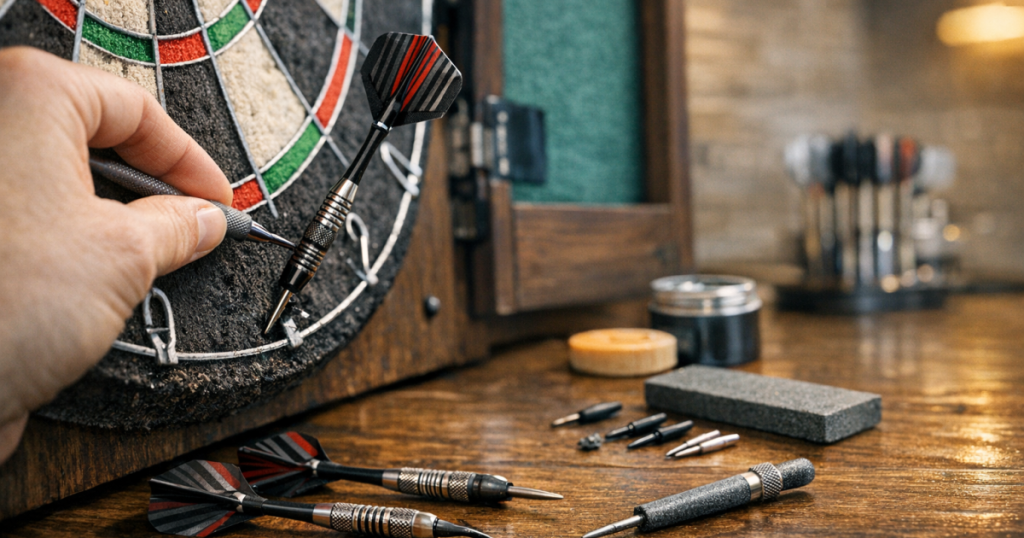
Steel-tip points do not need to be razor sharp, but they do need to be clean and capable of gripping the sisal. A point that is too blunt may push fibres aside poorly. A point that is highly polished may slide rather than bite. A point with a nasty burr can damage the board and still fail to enter cleanly.
Run a fingertip carefully near the point, not into it, and look under good light. You are checking for dirt, bent tips, rough damage or a glassy-smooth finish. A light touch with a proper point sharpener or fine abrasive tool can restore grip, but avoid grinding the point aggressively. Over-sharpened points can cut sisal fibres rather than part them, which is not good for the board.
If one dart bounces out more than the others, swap its position in your throwing order for a few turns. If the same physical dart keeps misbehaving, the point or barrel alignment deserves closer attention.
Step 4: Look at how the dart is landing
The angle of entry matters. A dart landing very tail-down may drag against the board and work loose. A dart landing very tail-up may expose the flight and shaft to more incoming deflections. A dart that kicks sideways can also be easier to knock out on the next visit.
Small setup changes can alter this angle. Shaft length, flight shape, flight stiffness and grip position all affect how the dart travels and stabilises. Standard flights often add more stability, while smaller flights may reduce drag for some throwers. Neither is automatically better; the useful question is whether the dart enters the board cleanly and repeatably.
If your darts wobble in the air or land inconsistently, it is worth reading the guide on choosing dart flights for more consistent throws. Flight changes are cheap compared with replacing a board, but they should be tested one change at a time.
Step 5: Make sure the board is secure and square
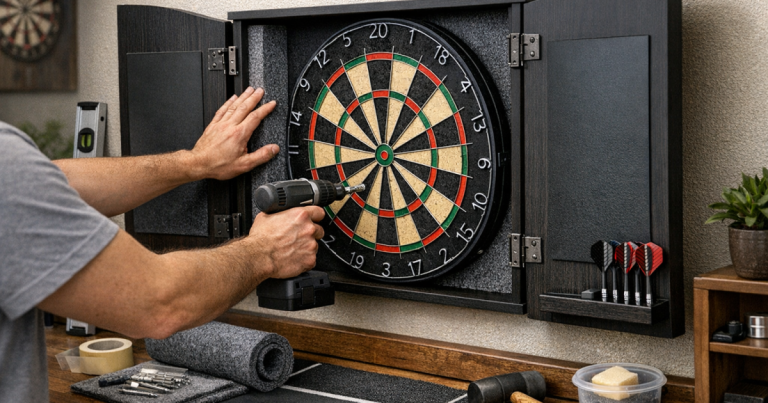
A dartboard that moves, rattles or sits unevenly can make impact less reliable. The board should sit flat against its bracket or cabinet backing, with no rocking when a dart hits. If the board leans forward, twists slightly or has a gap behind one side, it can encourage poor entry and awkward rebounds.
Check the centre screw or mounting plate, depending on your board and bracket. Make sure the board is not hanging from a loose fixing and that any cabinet backing is solid enough to resist movement. If you use wedges or stabilisers behind the board, they should support it evenly rather than forcing it out of shape.
Also confirm that the board is visually upright. A slightly tilted board will not usually be the only cause of bounce-outs, but it can affect confidence and segment alignment. If yours never looks quite right, follow the steps in fixing a dartboard that sits slightly crooked.
Step 6: Reduce hard deflections in your setup
Not every falling dart has come directly from the board. In tight home setups, darts may hit cabinet doors, thick surrounds, shelves or nearby furniture after bouncing back. That turns a simple rebound into a greater nuisance and can mark walls or floors.
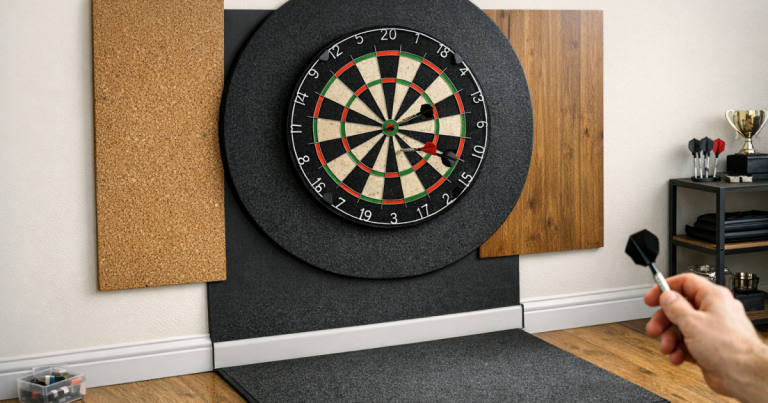
Keep the area below and around the board clear. If you use a cabinet, open the doors fully and make sure they do not sit close to the scoring area. A surround should fit snugly without pressing against the outer edge of the board face. If darts regularly strike the same hard object after coming out, move or pad that object where practical.
A darts mat or floor protection will not stop bounce-outs, but it can reduce damage when they happen. That matters in many UK homes where the board is set up over laminate, engineered wood, tiles or a shared living space rather than a dedicated games room.
Step 7: Know when the board is simply tired
There comes a point where maintenance will not recover the playing surface. If the board has deep holes, swollen sections, loose wires, dead sisal patches or frequent drop-outs across multiple areas, replacement is the honest answer. A well-kept board lasts longer, but it is still a consumable part of a regular darts setup.
Before replacing it, confirm that the problem is not just one set of darts. Try a different set with clean, sensible points if you have access to one. If several darts behave the same way across the same worn zones, the board is the likely culprit.
A simple troubleshooting order
- Throw a few visits and note whether the dart hits wire, sisal or another dart first.
- Test different sections of the board to spot localised wear.
- Rotate the board if the top scoring beds are overused.
- Clean and lightly refresh dart points without making them needle-sharp.
- Check shaft and flight behaviour if the dart enters at an extreme angle.
- Tighten and level the board so it does not move on impact.
- Replace the board if the sisal is no longer holding darts reliably.
Helpful questions
Are bounce-outs always caused by a bad dartboard?
No. Worn sisal can cause them, but wire hits, blunt points, polished points, loose mounting, steep entry angles and deflections from other darts are all common causes.
Should I sharpen my darts every time they bounce out?
No. Check the point first. A lightly grippy point is useful, but over-sharpening can damage the board and may not solve the real issue.
Can I wet a bristle board to help it heal?
No. Bristle boards should be kept dry. Water, sprays and steam can distort the sisal and reduce the life of the board.
Why do my darts fall out of the treble 20 more than anywhere else?
That area gets the most use in normal play, so it wears faster. Rotate the board regularly and compare dart hold in less-used beds.
Do heavier darts stop bounce-outs?
Not automatically. Weight can change feel and entry, but point condition, board wear and angle of impact are usually more important than simply throwing a heavier dart.
What to remember
To reduce dart bounce-outs reliably, treat the problem as a setup check rather than a single mystery fault. Start with the board face, then inspect the points, watch the flight path and make sure the board is mounted securely. Once those basics are right, the remaining bounce-outs are more likely to be normal wire hits and unlucky deflections rather than something you can easily fix.