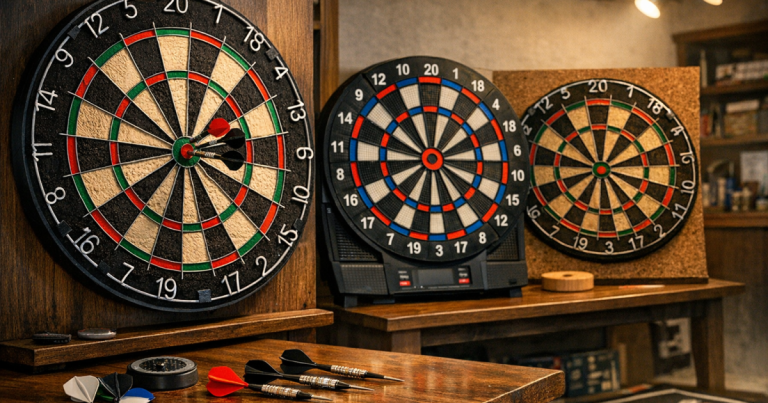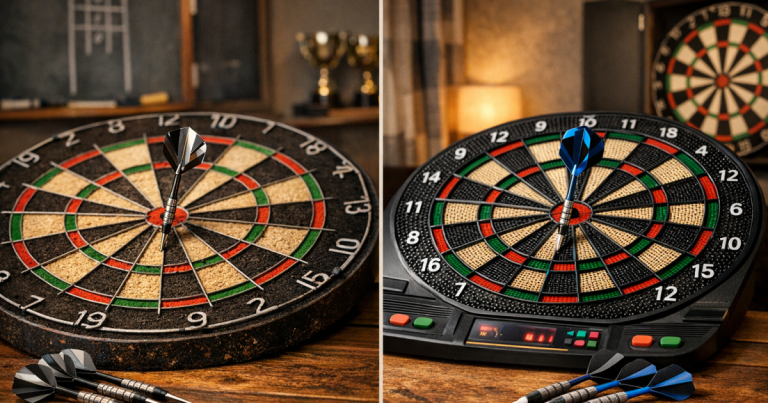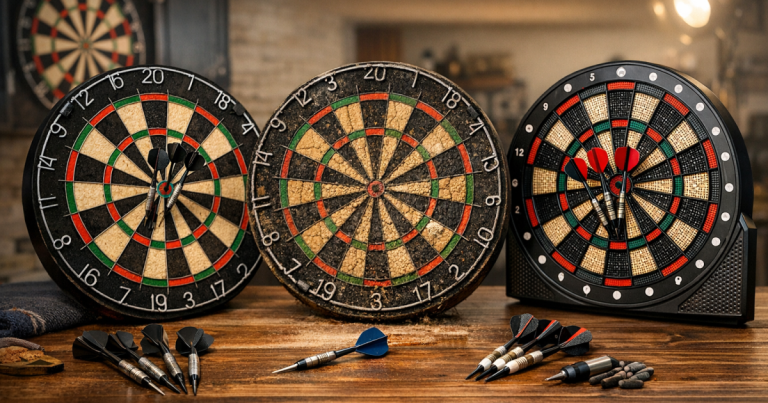
A dartboard usually wears out gradually, not suddenly: trebles become furry, darts stop gripping cleanly, and the board starts to look tired around the 20. That is where simple dartboard care makes a real difference. With regular rotation, gentle cleaning and a bit of room awareness, a home board can stay fairer and more enjoyable without turning maintenance into a chore.
Main points
- Rotate a bristle dartboard before the 20 segment becomes heavily worn, not after it is already chewed up.
- Clean the surface dry; water, sprays and aggressive scrubbing can damage sisal fibres.
- Keep the board away from damp, direct heat and strong sunlight where possible.
- Check the mounting if the board feels loose, angled or uneven when rotated.
- Replace the board when darts stop holding, the surface bulges or important scoring areas are no longer reliable.
Why dartboards wear unevenly
Most home steel-tip boards are bristle boards made from compressed sisal fibres. The surface is designed to close around dart points, which is why a decent board can cope with repeated throwing. It is not magic, though. The most targeted areas, usually the treble 20, treble 19, bull and favourite checkout segments, take more punishment than the rest of the board.
Uneven wear is not just cosmetic. A battered treble bed can reject darts, make points sit at awkward angles and create bounce-outs that would not happen on a fresher part of the board. Over time, that changes the feel of practice. You might start compensating for the board instead of judging your throw properly.
Before blaming the board, make sure the basic setup is correct. Bull height, throwing distance and board level all affect how a board plays and how consistently it wears. If you are checking a home setup from scratch, the measurements in dartboard sizes, measurements and regulations are a useful reference point.
How often to rotate a bristle dartboard
Rotation is the single most useful habit for a bristle board. It spreads impact across different wedges, keeps the popular scoring areas playable for longer and stops one segment becoming a dead patch too early.
For casual home play, rotating the board every few weeks is usually sensible. If you practise most evenings or play regular legs at home, weekly or fortnightly rotation is a better habit. The exact timing matters less than consistency: rotate before heavy wear becomes obvious.
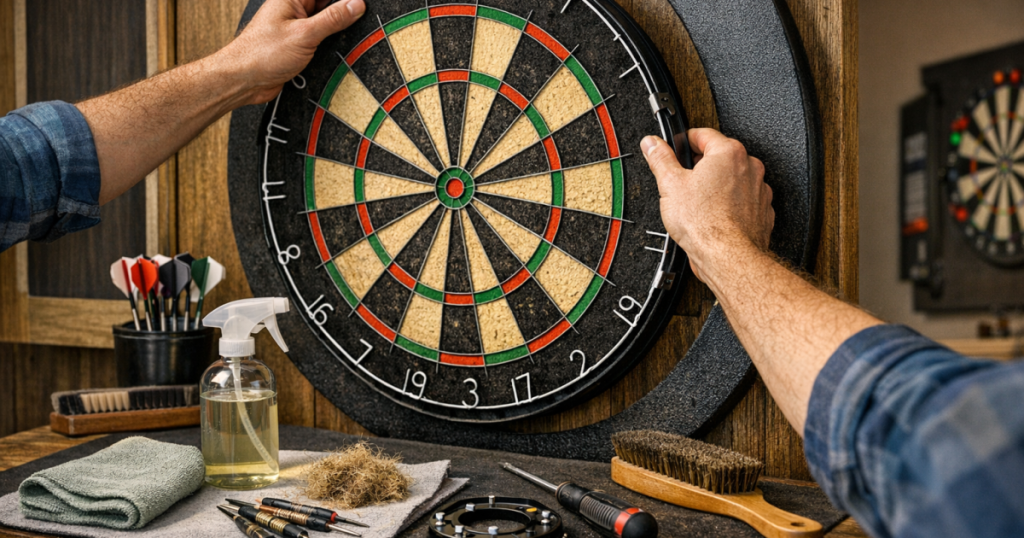
A simple rotation routine
- Take the darts out and remove the number ring clips or fasteners.
- Turn the board so a less-used black or white wedge moves into the top position.
- Refit the number ring so 20 is back at the top.
- Check the bull is still centred and the board is sitting flat against its backing.
- Give the surface a quick dry dust before play resumes.
Avoid tiny rotations that leave the same damaged area near the top. Move the board enough that the former 20 bed is no longer carrying the same workload. Some players like to follow a regular pattern; others simply move the worst-worn area away from the top. Either approach is fine if the wear is being shared.
Cleaning without damaging the board
A dartboard does not need much cleaning, and over-cleaning can do more harm than good. The aim is to remove surface dust, loose fibres and chalky residue without wetting or pulling at the sisal.
Use a soft dry brush, a dry microfibre cloth or a vacuum cleaner on a gentle setting with a brush attachment held lightly over the surface. Work with the board face-on rather than digging into the fibres. Pay attention to the outer edge, wire channels and the lower part of the board where dust tends to gather.
Do not soak the board, spray it with water, use furniture polish or apply household cleaners. Moisture can swell fibres, soften compressed sisal and encourage mould in cooler rooms. Old advice about dampening a board is best ignored for modern bristle boards.
If the number ring is dusty, remove it and wipe it separately with a dry cloth. If your board has visible metal wiring, clean around it gently rather than trying to lever dirt out with a sharp object. Scratching or lifting the spider can make bounce-outs worse.
Room conditions matter more than people think
Many UK home dartboards live in spare rooms, garages, sheds or converted corners of multi-use spaces. That makes the room environment part of the maintenance routine.
Damp is the big one. A board in a cold garage or outbuilding can absorb moisture, especially if the room has poor ventilation. The symptoms are often subtle at first: a musty smell, soft patches, surface swelling or darts sinking in too deeply. Once that happens, rotation will not fix the underlying problem.
Strong heat is not ideal either. Avoid mounting a board directly above a radiator, next to a heater or in a patch of direct sunlight. Repeated drying and heating can make fibres brittle and speed up cracking or crumbling. A steady indoor environment is better than extremes.
Protection around the board also helps. A cabinet, surround or backing panel will not repair wear, but it can reduce wall damage and keep the setup tidier. If you are deciding what belongs around the board, the comparison of dartboard cabinets and surrounds explains how storage, style and protection differ in a home room.
Keep the board level and secure
Maintenance is not only about the playing surface. A board that moves, tilts or sits slightly off-centre can make every throw feel less trustworthy. It can also make rotation awkward because the board may not settle back into the same position after you turn it.
When you rotate the board, check three things: the centre screw or bracket is holding properly, the board is not rocking against the wall, and the number ring is aligned cleanly with 20 at the top. If the board shifts when darts land, tighten the fit or adjust the rear stabilisers if your board uses them.
A slightly crooked board is more common than it looks, especially on plasterboard walls, cabinet mounts or older backing panels. If the board looks off even after you have refitted the ring, the fix is usually in the mounting rather than the sisal. For a step-by-step approach, use the guide on fixing a dartboard that sits slightly crooked.
When cleaning and rotation are no longer enough
No board lasts forever. Good maintenance slows wear; it does not reset the fibres. The right time to replace a board is when wear starts affecting play more than appearance.
Look for these signs:
- Darts fall out regularly: if sharp points bounce or drop from multiple scoring areas, the fibres may no longer be gripping properly.
- The treble beds are badly opened up: deep channels, loose fibres and ragged holes can make scoring inconsistent.
- The surface bulges or sinks: raised, soft or uneven areas suggest the board structure has deteriorated.
- The spider is loose, lifted or distorted: damaged wiring can increase bounce-outs and make segment boundaries unreliable.
- The bull area is dead: heavy bull practice can wear the centre even if the rest of the board looks acceptable.
- There is mould or a persistent damp smell: this is a storage or environment problem as much as a board problem.
There is no universal replacement calendar because use varies so much. A board used for a few legs at weekends will age very differently from one used for structured practice every night. Judge it by grip, surface condition and whether it still feels fair to play on.
What about electronic and soft-tip boards?
Electronic and soft-tip boards need a different approach. Many have fixed segment layouts, so you cannot rotate them in the same way as a bristle board. Instead, keep the face dry, remove broken soft tips promptly and wipe dust from the surface with a soft cloth.
Do not spray cleaner into the segments or force stuck tips out with excessive pressure. If a segment stops registering reliably, check the manufacturer’s care guidance for that specific board. The issue may be debris, a trapped tip or wear in the scoring area, but the correct fix depends on the board design.
A maintenance rhythm that actually sticks
The easiest routine is tied to normal play. Once a week, or after a longer practice session, remove stray fibres, check the mounting and look at the busiest scoring areas. Once wear starts to show around the top of the board, rotate it rather than waiting until the treble 20 is a crater.
For shared home setups, make the routine visible. A small note inside a cabinet or near the scoreboard saying when the board was last rotated is enough. It stops maintenance becoming one person’s job and helps everyone notice when the board is starting to change.
Good dartboard care is mostly about small, regular habits: rotate early, clean dry, protect the wall area and keep the room suitable. Those habits preserve the feel of the board and make home practice more consistent.
Common questions
Can you rotate any dartboard?
You can rotate most bristle steel-tip boards because the number ring is separate from the playing surface. Many electronic boards and some soft-tip boards cannot be rotated in the same way, so follow the design of the board.
Should a dartboard be cleaned with water?
No. Modern bristle boards should be cleaned dry. Water can swell, soften or distort the sisal, especially in cooler rooms where the board dries slowly.
Is it normal for the 20 segment to look worn first?
Yes. The 20 and treble 20 take the most impact in typical practice and match play. Regular rotation is the best way to stop that section wearing out far ahead of the rest of the board.
Can blunt darts damage a board?
Very blunt or burred points can tear fibres instead of entering cleanly. Keep points smooth and reasonably sharp, but avoid needle-like points that can over-penetrate or catch aggressively in the sisal.
Should I replace the board or just rotate it again?
Rotate it if only one area is showing early wear and the board still grips darts well. Replace it if several segments are dead, the surface is uneven or bounce-outs have become a regular part of play.
What stands out
A well-kept board does not need complicated treatment. The biggest wins are rotating before damage becomes severe, keeping moisture away and treating the mounting as part of the setup. When the board no longer grips evenly or the scoring beds stop feeling reliable, replacement is not wasteful; it is what keeps practice honest.