A clear view of the board matters more than simply making the room brighter. Good dartboard lighting should show the whole scoring area evenly, keep dart shadows off the numbers and avoid a shiny reflection across the sisal or wiring. The aim is a calm, consistent view from the oche, whether you are practising doubles for ten minutes or playing a full evening at home.
Any new mains electrical lighting, hard-wired switches or ceiling alterations should be carried out by a qualified electrician to comply with UK electrical safety requirements and current wiring regulations.
What to know first
The best home setup usually combines direct light on the board with enough surrounding room light to stop the board becoming a bright island in a dark corner. Shadows tend to appear when light comes from one side, from behind the thrower, or from a ceiling fitting that sits between the player and the board. Glare tends to happen when the light is too harsh, too close, or aimed straight back towards the throwing line.
- Light the board from the front and slightly around the sides, not from behind the player.
- Avoid a single exposed bulb above or beside the board if it creates hard shadows.
- Check the view from the actual oche, not just from close to the board.
- Use softer, diffused light where possible to reduce glare on wires and cabinet finishes.
- Balance the board light with gentle ambient room lighting.
If you are planning a full darts room rather than making one quick fix, the broader principles in this darts room lighting guide will help you think about ambient, task and accent lighting together.
Start by checking where the shadows come from
Before moving lamps or adding fittings, stand at the oche and look at the board exactly as you would while throwing. Hold a dart at eye level and move it through your normal throwing line. If the dart casts a moving shadow across the twenty, treble ring or doubles, the main light is probably behind or above you.
Next, stand close to the board and look at the shadows around the wires. Hard shadows under the spider, especially across the numbers, usually mean the light is coming from one direction only. If one side of the board is bright and the opposite side looks dull, the fitting is too directional or off-centre.
It is worth doing this check in the evening as well as during daylight. A setup that looks fine at lunchtime can become uneven once curtains are closed and the room relies fully on artificial light.
Put the main board light in the right place
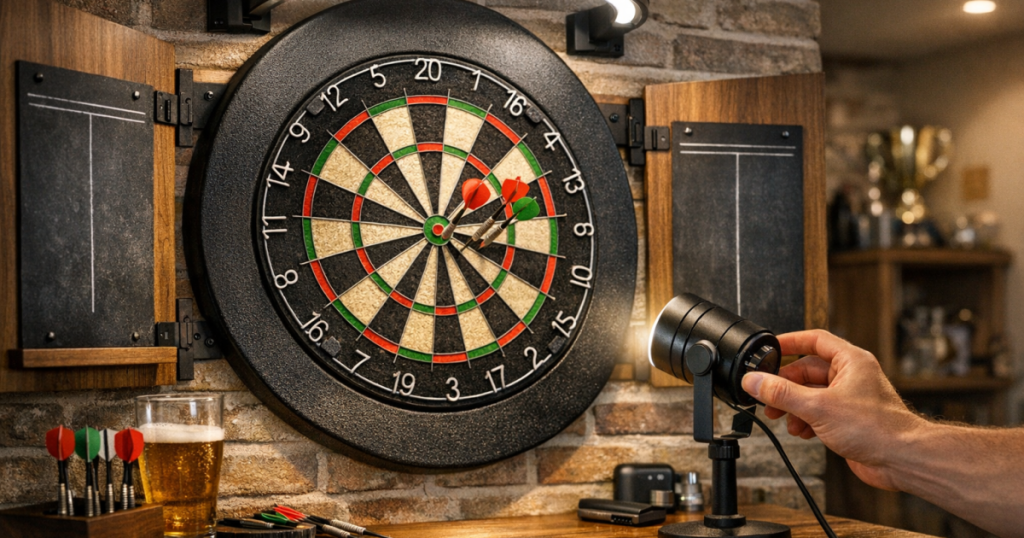
The most reliable approach is to place the strongest light source around the board itself or just in front of it, aimed evenly across the face. Purpose-made circular or surround-style dartboard lights are popular because they spread light from several directions, which helps cancel out the shadow cast by the dart and the wire frame.
If you are using room lighting rather than a board-mounted system, position the fitting so it shines onto the board from the front without sitting directly in the player’s line of sight. A ceiling light directly over the thrower often creates the worst dart shadow. A light directly above the board can work better, but only if it is diffused and does not produce a harsh reflection on the upper scoring segments.
Wall-mounted lamps beside the board can be useful, but they need care. A lamp on only one side will normally throw shadows across the opposite half of the board. If you use side lighting, keep it balanced on both sides and make sure neither light shines into the player’s eyes.
Reduce glare without making the board too dim
Glare is not always obvious until you start playing. It may show as a bright patch on the wiring, a reflection from a cabinet finish, or a washed-out area that makes the segment boundaries harder to read. With modern blade-style wiring, glare can be less intrusive than on older round-wire boards, but it can still affect concentration.
Use these checks to calm the view:
- Diffuse the light: shaded, frosted or purpose-made board lights usually create a softer view than an exposed bulb.
- Avoid aiming straight at the oche: angle the light towards the board face, not towards the player.
- Watch glossy surfaces: varnished cabinets, shiny surrounds and framed posters near the board can bounce light back.
- Keep the board area even: a very bright centre with dark outer numbers can feel just as awkward as a dim board.
- Use ambient support: a low background light in the room helps your eyes adjust and reduces the harsh contrast around the board.
Once the board is positioned correctly, dartboard lighting becomes less about raw brightness and more about control. A slightly softer, evenly spread light is normally easier to play under than a very powerful lamp that creates glare.
Check the view from the oche, not the wall
Many lighting mistakes happen because the board is judged from a metre away. The only view that really matters is from the throwing position. Mark or confirm your oche, stand square to the board, and look at the twenty, nineteen, three and double ring. These areas quickly reveal whether the light is balanced.
If your throw line is still temporary, sort that before making final lighting decisions. A mat, raised oche or floor marker can subtly change where you stand and what your eyes catch. For spacing and safety around the throw, use this guide on how to plan a safe throwing area around your dartboard.
Ask a second player to stand at the oche as well. Taller and shorter players may see glare from different angles, especially where the board sits inside a cabinet or under a ceiling pendant.
Match the lighting to the type of darts area
Spare room or garage setup
Garages and spare rooms often have one central ceiling light, which can leave the board in a shadowy corner. Add board-focused light rather than simply increasing the room brightness. Pale walls can help reflect light, while dark painted walls may need a little more ambient support.
Board inside a cabinet
Cabinets can create side shadows, especially if the doors are deep or the light sits above the frame. Open the doors fully and check whether they block light from either side. A darker wood finish may also make the board area feel gloomier, so a soft light above or around the board can help.
Board with a surround
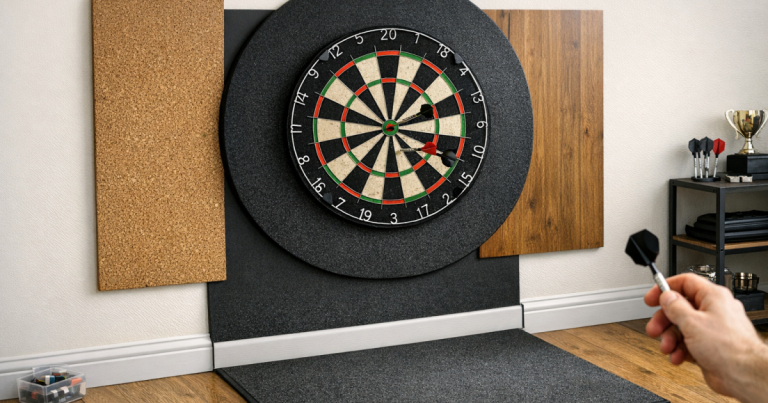
Foam surrounds are usually less reflective than glossy cabinet finishes, which is helpful for glare. However, a thick surround can cast a small shadow if the light sits very close above the board. Check the double ring at the top and sides.
Outdoor covered setup
Outdoor darts areas need more care because light direction, damp conditions and reflections from walls or fences all come into play. Use lighting and fittings suitable for the environment, and keep electrical safety at the centre of the plan. If your board lives outside or in a semi-covered space, read the advice on how to weatherproof an outdoor dartboard setup before deciding where to place lights.
A simple step-by-step setup check
- Step 1: Confirm the board height and throwing position first, so you are testing from the real playing angle.
- Step 2: Turn on only the current room light and note where shadows fall across the scoring area.
- Step 3: Add or reposition the board-focused light so it covers the full face evenly.
- Step 4: Stand at the oche and check for glare on the wires, numbers, cabinet and surround.
- Step 5: Throw a few darts at the twenty, nineteen and bull. Watch whether the dart blocks your view mid-throw.
- Step 6: Adjust the angle, height or diffusion of the light in small changes rather than making the whole area brighter at once.
- Step 7: Recheck at night, when the room has no daylight support.
Take your time with small adjustments. Moving a lamp a few centimetres, angling a shade down slightly, or adding low background light can make a bigger difference than replacing everything.
Common mistakes that cause shadows and glare
- Relying on one ceiling pendant: this often puts the player between the light and the board.
- Using an exposed bright bulb: it can make the board look bright while still producing hard shadows.
- Mounting the light too close: close light can create hot spots and uneven edges.
- Ignoring the cabinet finish: glossy wood or glass nearby can reflect light into your eyes.
- Testing without throwing: a static view may look fine until your dart and hand enter the line of light.
Common questions
Is a ring-style dartboard light the easiest way to remove shadows?
For many home setups, yes. A circular or surround-style light spreads illumination from several angles, which reduces the strong single-direction shadow you get from a normal room lamp.
Should the room be dark apart from the board?
No. A very bright board in a dark room can strain your eyes and make glare feel worse. Keep some gentle ambient light in the room so the contrast is not too severe.
Can I use a normal lamp for a dartboard?
You can, provided it lights the board evenly and does not shine into the thrower’s eyes. Test it from the oche and avoid placing it behind your throwing position.
Why does my board glare more inside a cabinet?
The cabinet finish, door angle or top frame may be reflecting light back towards you. Try opening the doors fully, softening the light source, or changing the angle of the fitting.
Do I need very bright light to play well?
No. Evenness matters more than maximum brightness. A controlled, diffused light that clearly shows the segments is usually better than a harsh light that creates reflections.
Main lessons
The cleanest dartboard view comes from balanced, front-focused light with enough softness to avoid glare. Fix the throw position first, check the board from the oche, then adjust the light angle and diffusion until the whole scoring area is clear. When the board, room and throwing line work together, you can focus on the target rather than fighting shadows.