A garden darts area can work brilliantly, but only if you treat rain, damp and wind as part of the design. A good outdoor dartboard setup protects the board from direct weather, keeps the throw safe underfoot and makes it easy to pack away when conditions turn.
The goal is not to make a sisal board live outside like garden furniture. It is to build enough shelter, drainage and routine care around it that the board stays playable for longer.
Fixed outdoor electrical work, including permanent lighting, sockets or wiring near the darts area, should be carried out by a qualified electrician to comply with UK electrical safety requirements and local regulations.
The short version
- Keep the dartboard under a roof, canopy, shed opening or deep overhang so rain cannot hit it directly.
- Use a cabinet or protective backing, but do not assume a cabinet alone makes the board waterproof.
- Bring the board indoors when it is not being used if the area is exposed, damp or unheated.
- Choose a dry, level standing area with drainage, grip and a clear throw line.
- Store darts indoors and dry the points before putting them away.
- Check the area after heavy rain before throwing, especially the mat, paving, wall and cabinet fixings.
Step 1: Pick a position that avoids the worst weather
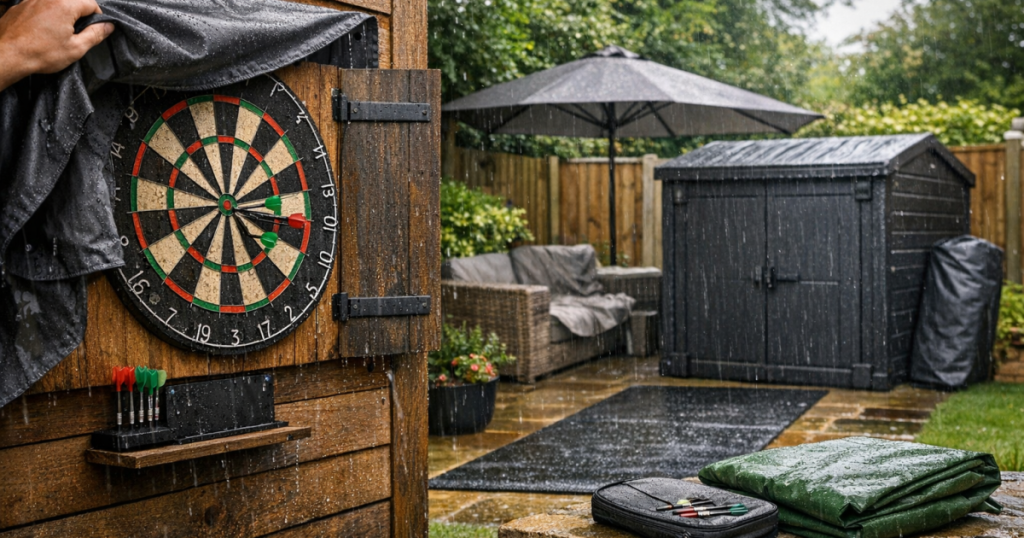
The most important decision is where the board lives. A permanent outdoor dartboard setup should not face open rain, strong prevailing wind or a wall that stays damp for days. In GB gardens, the most reliable spots are usually inside a shed doorway, under a covered patio, beneath a lean-to, in a garage opening, or on a sheltered outbuilding wall.
Aim for shelter above, behind and slightly to the sides. Rain rarely falls perfectly straight, so a shallow overhang may not be enough if the wind drives water onto the board. Stand where the thrower will stand during poor weather and look at the board position from that angle. If rain can blow across your shoulder into the board face, the spot needs more cover.
Also check the playing space, not just the wall. You still need a safe throw line, clearance around the thrower and a clear route behind anyone retrieving darts. If you are still planning the layout, use this guide to plan a safe throwing area around your dartboard before fixing anything outdoors.
Step 2: Protect the dartboard from moisture on every side
A bristle dartboard is vulnerable to moisture because the fibres can absorb damp. Once a board has swollen, softened or dried unevenly, it may not recover properly. Weatherproofing therefore means keeping water away from the face, the edges and the back.
Do not rely on a thin plastic cover over the front if the board is mounted on a wet wall. Damp can creep in from behind, especially on brick, blockwork or timber that takes a long time to dry. Use a dry backing board, leave a small air gap where practical, and avoid trapping the dartboard against a cold, damp surface.
If the board is under a roof but still outdoors, remove it after play when conditions are wet or frosty. A simple lift-off bracket can make this easier. Mark the wall bracket position carefully so the board returns to the correct height each time, with the bull at 1.73m from the finished standing surface.
Step 3: Use a cabinet, backing board or surround sensibly
A cabinet helps protect the board from light rain splash, wind-blown dust and accidental knocks. It also gives you a neat place to close the board away between games. For outdoor use, the cabinet itself needs to cope with damp air, so unfinished indoor-style timber is a poor choice unless it is properly sealed.
If you build or adapt a cabinet, pay close attention to exposed edges. Seal cut timber, screw holes and joins with exterior-grade finish, because these are the first places water tends to enter. A small drip edge above the doors helps stop water running down the face. Stainless or galvanised fixings are preferable outdoors because ordinary screws can stain, rust or loosen over time.
Foam surrounds can be useful for stray darts, but many are not intended to live outside permanently. If yours gets wet, remove it and let it dry naturally before storing it. Avoid leaving damp foam pressed against the wall or cabinet, as that can trap moisture exactly where you do not want it.
Step 4: Sort the floor before you worry about the finishing touches
The standing area matters as much as the board. Wet decking, smooth paving and muddy grass can all make throwing uncomfortable and inconsistent. The best surface is level, stable, well drained and grippy under normal garden conditions.
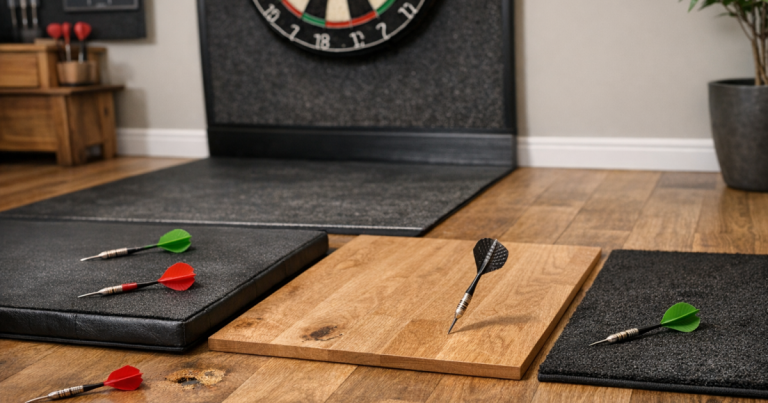
A heavy rubber darts mat can define the throw line and add protection, but it should sit flat without curling at the edges. On patios, lift the mat after rain so the surface underneath can dry. On grass, a mat may sink or become uneven unless there is a firm base below it. If you are setting up a more permanent garden oche, read this advice on planning floor protection for a darts area so the area protects both darts and flooring.
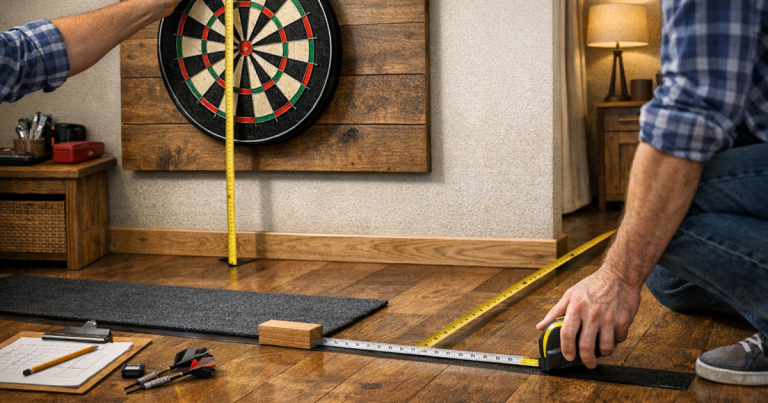
Check the throw distance after the final surface is in place. For standard steel tip darts, the oche is normally 2.37m from the face of the board, not from the wall. If you add a thick backing board, cabinet or mat, re-measure rather than assuming the old marks are still right.
Step 5: Plan for wind, sun and temperature swings
Rain is the obvious problem, but it is not the only one. Wind can push lightweight cabinet doors, move loose score sheets and affect the flight of the dart. If your board is in a breezy gap between buildings, consider a side screen, fence panel or heavier door catch, while keeping the throwing area open and safe.
Direct sun can also cause issues. A board that sits in strong afternoon sun and then cools quickly in damp evening air is being put through repeated changes. A shaded position is usually kinder to the board and more comfortable for the thrower. It also reduces glare, which can make doubles and trebles harder to pick out.
Cold weather brings another practical point: avoid throwing at a board that feels damp, stiff or icy. Let the setup dry and settle before use. If the board has been stored indoors, avoid leaving it outside for long periods before a game on very cold days.
Step 6: Add lighting without creating a weather problem
Outdoor darts often turns into evening darts, especially in summer. The board needs even light across the scoring area, with as little glare and shadow as possible. However, lighting should not introduce exposed cables, unprotected plugs or fittings that are not suitable for outdoor conditions.
Temporary lighting can work for occasional play if it is positioned safely away from the throw line and dart path. For a more permanent area, choose outdoor-rated fittings and have any fixed power work handled properly. The same lighting principles still apply outside: separate general light for the space from focused light on the board. For more detail on the lighting balance, see the darts room lighting guide and adapt the ideas to a sheltered outdoor setting.
Step 7: Build a simple pack-away routine
Weatherproofing works best when it becomes a habit. At the end of a session, remove the darts, close the cabinet, check the board face and make sure the floor is clear. If the forecast is wet, windy or frosty, take the board indoors rather than hoping the cover will cope.
Store darts separately from the board. Dry the points with a cloth before putting them away, especially if they have bounced out onto damp paving or grass. Leaving wet steel tips in a case can encourage corrosion and may mark flights or stems.
If you use chalk, a scoreboard or paper sheets outside, store them indoors too. Damp chalkboards become messy, and paper absorbs moisture quickly. A small indoor storage box near the back door or garage is often enough to keep accessories together.
Quick checks after bad weather
Before playing after heavy rain, spend two minutes checking the whole area. It is far easier to pause than to damage a board or slip during a throw.
- Touch the board edge and cabinet interior to check for damp patches.
- Look behind the board if it is easy to remove from the bracket.
- Check that cabinet doors still open and close without swelling or rubbing.
- Lift or roll back any mat to see whether water is trapped underneath.
- Inspect the oche area for moss, mud, puddles or loose stones.
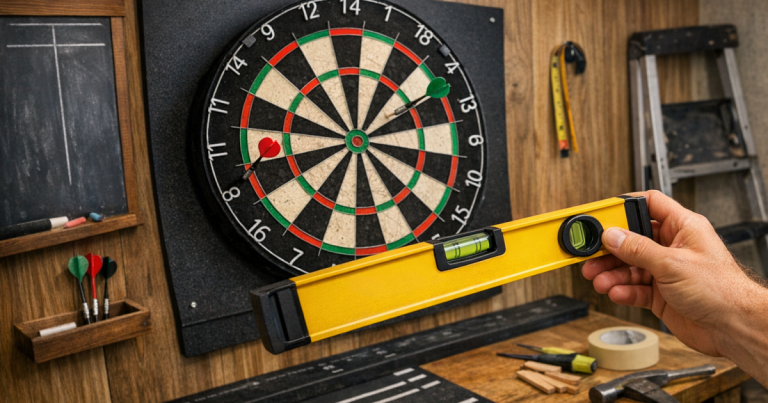
- Confirm that the board is still level and secure before throwing.
Common mistakes to avoid
- Leaving a bristle dartboard outside all year and expecting a cover to do all the work.
- Mounting the board directly onto a damp external wall without a dry backing layer.
- Using indoor timber outdoors without sealing the edges and screw holes.
- Letting a rubber mat sit on wet paving for days at a time.
- Putting the setup where wind regularly blows rain into the board face.
- Forgetting to re-measure the throw line after adding a cabinet, backing board or thicker mat.
Helpful questions
Can you leave a dartboard outside overnight?
You can leave it out overnight only if it is genuinely sheltered and dry. If there is damp air, rain, frost or wind-driven spray, bring the board indoors after play.
Does a dartboard cabinet make the board waterproof?
No. A cabinet adds protection, but it is not a guarantee against damp. The wall, roof cover, door seals, airflow and storage routine all matter.
What is the best cover for an outdoor dartboard?
The best protection is a roof or solid shelter, not just a front cover. A cover can help with dust and splash, but it should not trap moisture against the board.
Can I use a normal darts mat outside?
Yes, for temporary use, provided it lies flat and has enough grip. Lift it after play so water does not sit underneath and make the surface slippery.
Is a shed better than an open garden wall?
Usually, yes. A shed, garage or covered outbuilding gives better protection from rain and wind, as long as there is enough safe throwing space.
What to remember
A weatherproof darts area is really a controlled outdoor environment: dry board, sheltered wall, safe floor, sensible lighting and a pack-away routine. The more exposed the garden, the more important it becomes to remove the board between sessions.
If you keep water away from the sisal, stop damp building up behind the board and make the throwing surface safe underfoot, outdoor darts becomes far more enjoyable and far less stressful when the GB weather turns.