A dartboard cabinet should do more than frame the board. It has to protect the wall, keep darts tidy, open cleanly in the room you actually have, and suit the way you play at home. The dartboard cabinet features that matter most are not the flashiest ones; they are the details that make the setup easier to live with after the novelty has worn off.
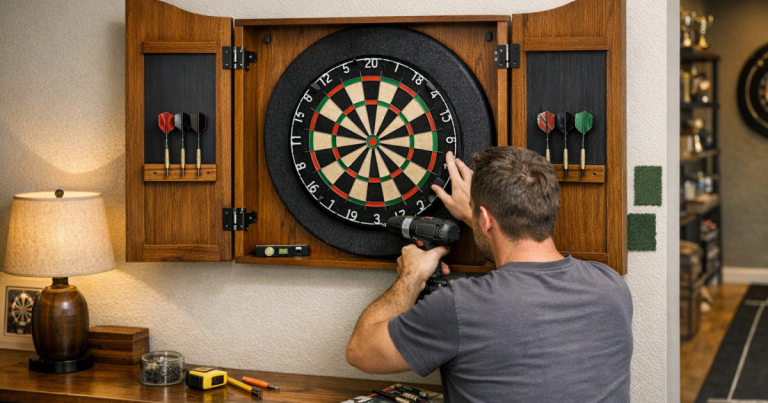
Drilling or fixing into walls where hidden cables, pipework or weak plasterboard may be present should be handled by a qualified professional, using appropriate fixings and working in line with UK building and electrical safety requirements.
In brief
- Check cabinet size against your board, wall space and door swing before thinking about style.
- Prioritise solid wall protection, sensible dart storage and a clear scoring area over decorative extras.
- Make sure the cabinet works with your chosen lighting, surround, mat and oche position.
- A cabinet can look smart, but it is not always enough protection on its own if newer players are throwing regularly.
- Good mounting matters: a heavy cabinet on poor fixings is a nuisance and a safety concern.
Start with the role the cabinet needs to play
Most home players buy a cabinet for one of three reasons: to make the board look tidier, to store darts and chalk, or to protect the wall around the board. A good cabinet can do all three, but not every design balances them equally.
If the board is in a lounge, dining room or spare bedroom, appearance may matter more than in a garage oche. If it is in a shared family space, closing the doors between sessions can make the setup feel less intrusive. In a dedicated darts corner, storage and durability may matter more than the cabinet looking like furniture.
It is also worth deciding whether you really want a cabinet, a surround, or both. A cabinet protects the wall behind and to the sides of the board when the doors are open, but it does not cover as much area as a full foam surround. If wall marks are your main concern, read the wider breakdown of whether you need a dartboard cabinet, surround or both before settling on the neatest-looking option.
Size, fit and door clearance
The first practical check is simple: will the cabinet physically work where you want it? Many cabinets are designed for standard bristle dartboards, but you still need to verify the internal opening, depth and fixing layout against your actual board and wall.
Door clearance is easy to overlook. Cabinet doors need space to open fully without hitting a side wall, shelf, curtain pole, radiator or light fitting. If the doors only open halfway, the score panels become awkward to use and the cabinet can feel more annoying than useful.
Depth matters too. Some cabinets sit quite flat, while others project further from the wall. A deeper cabinet can look substantial and may offer better storage, but it can also make the board area feel bulky in a narrow hallway or box room. In a compact UK home, a slimmer cabinet may be easier to live with than a larger one that constantly catches shoulders as people walk past.
Mounting and board alignment
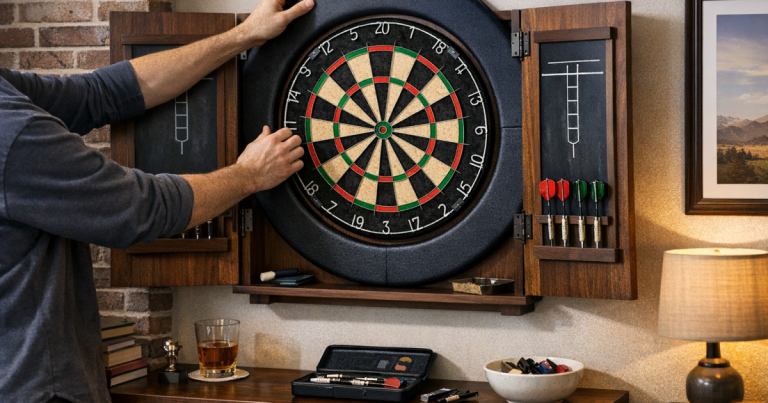
A cabinet should make the board feel more settled, not introduce alignment problems. Before buying, check how the board mounts inside the cabinet. Some cabinets allow the dartboard bracket to sit independently on the wall, while others rely on a backing panel. Either way, the bullseye must still land at the correct height and the cabinet should sit level.
Do not assume the cabinet itself determines the correct playing position. The board height and throwing distance still need to be measured properly from the bullseye and oche line. If you are setting up a new space from scratch, it is worth checking the standard measurements in the guide to dartboard height and throwing distance before drilling any holes.
Wall type is another important factor. Masonry, plasterboard, timber stud walls and garage walls all need different fixing approaches. The heavier the cabinet and board combination, the more important this becomes. A neat cabinet that shifts, rattles or pulls away from the wall is not a good upgrade.
Wall protection: cabinet only, or extra coverage?
Cabinet doors do offer useful protection when open, especially to the left and right of the board. That helps with the common stray darts that land just outside the scoring area. However, cabinets usually leave areas above, below and outside the doors exposed.
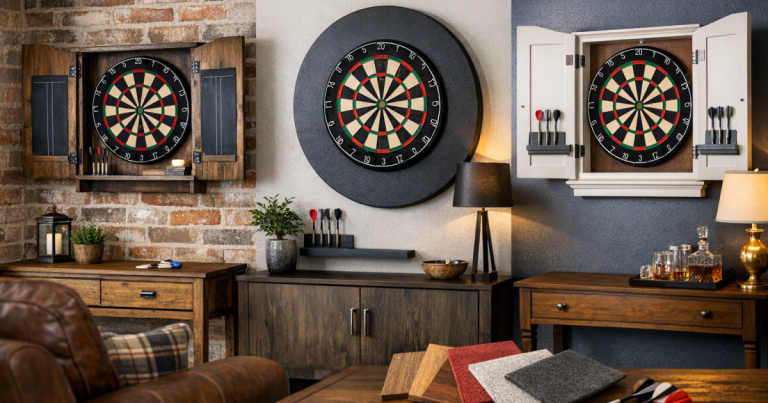
For confident players, that may be enough. For beginners, children, guests or party use, a cabinet alone may leave too much wall at risk. A separate surround can fill the gap, although not every cabinet and surround combination sits neatly together. Before combining them, check whether the cabinet doors can still open properly and whether the surround fits cleanly around the board.
Think about the surface behind the board as well. Painted plaster can mark easily. Wallpaper is less forgiving. Exposed brick may be durable but can damage dart points if they hit it. A cabinet can hide minor marks when closed, but it will not prevent every bounce-out or wayward throw from reaching the wall.
Storage that is actually useful
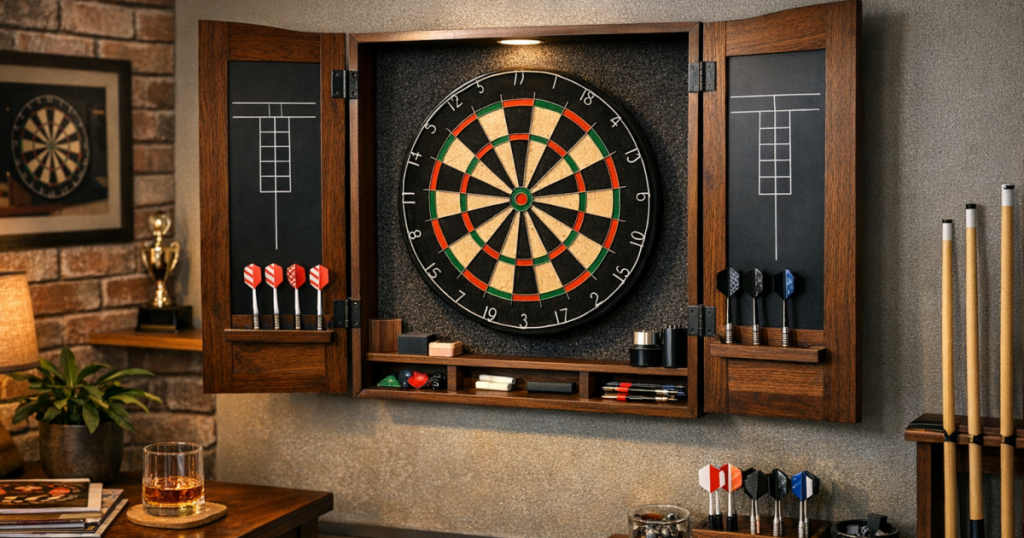
Cabinet storage sounds straightforward, but the layout makes a big difference. The most useful setups keep darts secure, easy to reach and away from the board face. Look for enough space for the number of players in the house rather than just a single set.
Useful storage details include:
- Slots or holders that keep darts upright without bending flights.
- Space for spare flights, shafts, chalk or a dry-wipe marker.
- A layout that does not interfere with the scoreboard area.
- Door storage that remains stable when the cabinet is opened and closed.
- Enough separation so sharp points are not rubbing against the cabinet finish.
If you regularly swap darts or practise with different setups, storage becomes more than a tidy-up feature. It keeps the oche ready to use, which matters when you only have 20 minutes for a quick practice session.
Scoring surfaces and door interiors
Many dartboard cabinets include scoring areas on the inside of the doors. These are usually chalkboard-style or dry-wipe-style surfaces. Neither is automatically better; the right choice depends on how you prefer to score.
Chalkboards have a traditional feel and can look smart in a pub-style setup, but chalk dust can build up. Dry-wipe panels are quick to clean, but you need to keep a suitable pen nearby and avoid using the wrong marker. With either type, check that the surface is large enough for leg scores, player names and quick notes during practice games.
Door stability also matters. If the doors flex or swing too freely, writing scores becomes awkward. In a busy room, doors that will not stay open can be frustrating. Hinges, catches and general build quality are not exciting features, but they affect the cabinet every single time you play.
Materials, finish and room style
Cabinets are usually chosen partly because they make a darts setup look more intentional. That is especially useful when the board shares space with everyday furniture. A dark wood-effect cabinet can suit a traditional games-room feel, while a plain black or clean-lined finish may sit better in a modern spare room or converted garage.
Material quality matters because cabinets take knocks from doors, darts, chalk, pens and general use. Look for neat joins, secure hinges, a backing that does not feel flimsy and a finish that can be wiped clean. If you are viewing online, read product photos carefully and check customer images where available rather than relying only on staged shots.
Recognisable cabinet examples include the Winmau Professional Dartboard Cabinet and the Unicorn Striker Home Darts Centre. Treat named examples as reference points rather than automatic answers: verify the current dimensions, included items, board compatibility and fixing requirements before buying.
Lighting, shadows and cabinet doors
A cabinet can change how light falls on the board. Open doors may cast shadows, reflect glare or block light coming from the side. This is more noticeable in rooms with a single ceiling pendant or a lamp positioned off to one side.
If you already use a ring-style dartboard light or plan to add one, check whether the light will clear the cabinet doors and sit comfortably around the board. Some players prefer a cleaner wall with lighting mounted independently; others like the framed look of a cabinet. The important point is to plan both together, not treat lighting as an afterthought.
Glare-free visibility matters for comfort as much as scoring accuracy. For more detail on balancing the board light with the rest of the room, see the guide to task lighting versus room lighting for darts setups.
When a cabinet is not the best answer
A cabinet is not automatically right for every home oche. If your main issue is a wide scatter of missed darts, a surround or larger wall panel may protect more area. If you have very limited side clearance, cabinet doors may be impractical. If the board is in a garage or utility space, function may matter more than hiding the board away.
There is also a maintenance angle. Cabinets can reduce visible clutter, but they can also hide dust, chalk and loose accessories if they become a dumping ground. The board still needs rotating and checking, and the cabinet should not make that harder. Make sure you can remove or turn the board without dismantling the whole setup.
Main lessons
The best cabinet for a home darts setup is the one that fits the room, supports the way you play and does not create new annoyances. Prioritise accurate mounting, sensible door clearance, useful storage, readable scoring panels and enough wall protection for the people who will actually be throwing.
Style still matters, and a good cabinet can make a darts wall look finished rather than temporary. But the practical details decide whether it remains a smart upgrade after the first few weeks. Before buying, measure the space, think about lighting, check the wall type and decide whether a surround should be part of the plan too. Those checks will tell you more than the product photo ever can.
Common questions
Can any dartboard fit inside a cabinet?
No. Many cabinets are made for standard bristle dartboards, but you should still check the internal size, depth and mounting method against your board before buying.
Does a cabinet replace a dartboard surround?
Not always. A cabinet protects some side areas when open, but a surround usually covers more wall around the board. New players often benefit from the extra coverage.
Are cabinet scoreboards better with chalk or dry-wipe marker?
Chalk feels traditional and is easy to replace, while dry-wipe panels are cleaner day to day. The better choice is the one you will actually keep nearby and use consistently.
Should I mount the cabinet first or measure the oche first?
Measure the board height, throwing distance and available wall space first. Then position the cabinet so the bullseye, doors and throwing line all work together.
Will a cabinet help with bounce-outs?
It can protect nearby surfaces from some stray darts, but it will not fix the cause of bounce-outs. Board condition, wire profile, dart angle and maintenance all matter too.