A well-mounted cabinet should make your darts area neater, not noisier. If you want to fit a dartboard cabinet without rattles, the key is to remove movement at three points: the wall fixing, the cabinet body and the board mount inside it.
Most rattles come from small gaps, loose hinges, hard contact points or a board bracket that is not sitting snugly. Work through the checks below before you blame the wall, the cabinet or the board.
Locating hidden services and drilling near electrical cables or pipework should be handled by a qualified tradesperson to comply with UK safety requirements and avoid property damage.
The short version
- Use fixings that suit the wall type, not just the screws supplied in the box.
- Make sure the cabinet sits flat before fully tightening it.
- Add thin rubber, felt or neoprene pads only where they support the cabinet evenly.
- Check the dartboard bracket, rotation clips and door catches separately.
- Test with gentle taps before throwing darts, then tighten or pad the exact noisy point.
Work out where the rattle is coming from
Before you start drilling or adding padding, identify the noise. A cabinet can rattle in several places, and each one needs a slightly different fix.
- Wall rattle: the whole cabinet moves when you tap the side or close a door.
- Door chatter: one or both doors vibrate against the cabinet frame.
- Board wobble: the dartboard moves inside the cabinet after impact.
- Back-panel buzz: the cabinet is fixed tightly in one area but not sitting flat across the wall.
- Accessory noise: chalk, pens, score panels or spare flights are vibrating on shelves or inside holders.
A simple test helps: hold the cabinet firmly with one hand and tap the frame, then the doors, then the board. If the noise stops when you hold a specific part, that is the area to deal with first.
Prepare the cabinet and wall before fixing
Take a few minutes to inspect the cabinet before it goes on the wall. Open and close the doors, check the hinges, and make sure the back panel is not bowed or loose. If a hinge screw turns without gripping, tighten it carefully or repair the screw hole before mounting the cabinet.
Now check the wall. Solid masonry, plasterboard, dot-and-dab walls and timber studs all behave differently. A cabinet and dartboard put repeated vibration through the fixing points, so the fixings need to be suitable for the wall construction and the combined weight of the cabinet, board and accessories. Do not rely on thin plaster alone to hold the setup.
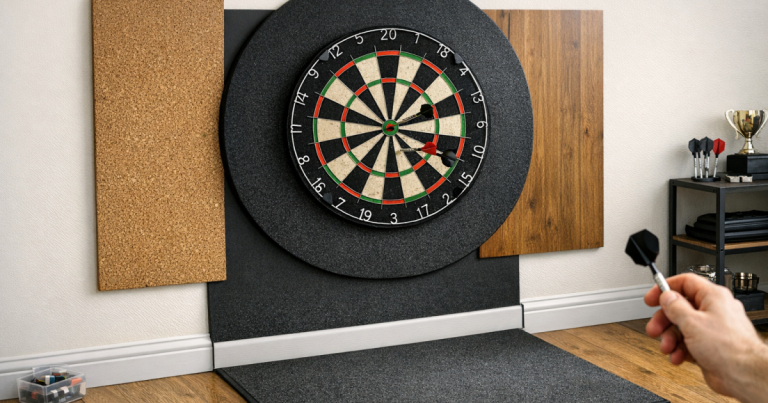
If you are still deciding whether a cabinet is the right form of wall protection, it is worth reading the cabinet-versus-surround wall protection comparison before you commit to drilling.
Set the height before you mark the holes
Rattle-free fitting is not just about tight screws. The cabinet also needs to be positioned so the dartboard can sit at the correct height inside it, with enough clearance for the doors to open and with the oche measured accurately from the board face.
Dry-fit the board in the cabinet if possible, then hold the cabinet against the wall and mark a light centre line. Do not mark screw holes until you have confirmed the bullseye height and the throw line. If you need the official setup dimensions, use the guide to dartboard height and oche distance before making permanent marks.
Mount the cabinet so it sits flat
The most common cause of cabinet rattle is uneven contact with the wall. If one corner is pulled tight and another corner floats slightly, the cabinet can buzz every time a dart lands.
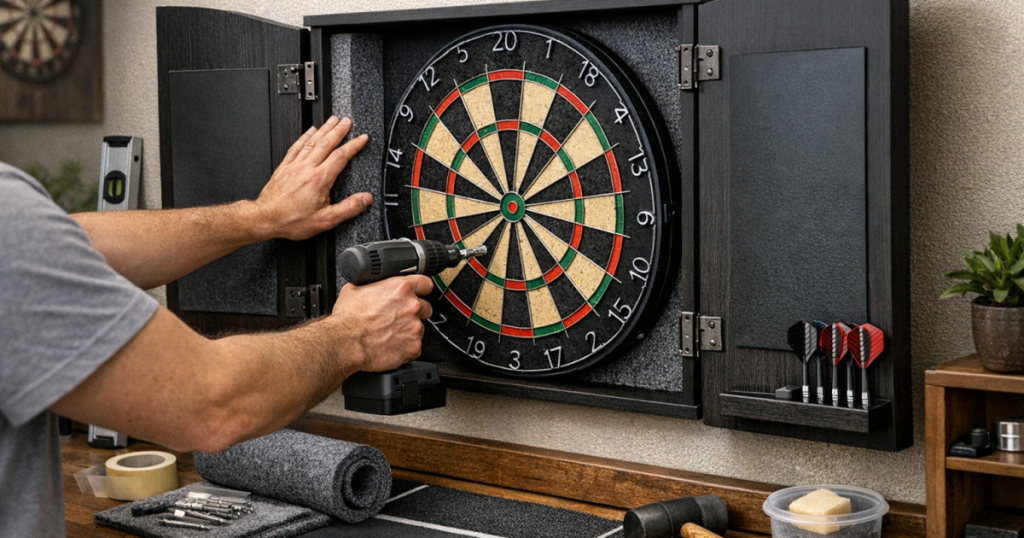
Use a spirit level and mark the fixing holes carefully. Drill cleanly, insert suitable wall plugs or anchors, and start all screws before tightening any of them fully. This gives you a chance to square the cabinet and stop it twisting.
A quiet fixing sequence
- Hold the cabinet in place and start the top fixings first.
- Check the cabinet is level before adding the lower fixings.
- Tighten each screw gradually rather than fully tightening one corner at a time.
- Open and close both doors while the screws are still slightly adjustable.
- Stop tightening as soon as the cabinet is secure and flat; overtightening can distort the back panel.
If the wall is slightly uneven, add thin rubber, felt or neoprene pads behind the cabinet at the contact points. The aim is not to create a soft, bouncy mount. It is to remove tiny gaps so the cabinet cannot chatter against the wall. Use matching pads on both sides where needed so the cabinet remains level.
Stop the dartboard moving inside the cabinet
Once the cabinet is firm, check the board itself. A cabinet can be perfectly fixed and still sound rattly if the board bracket is loose or the board is rocking inside the recess.
Make sure the centre screw or hanging point is seated properly in the bracket. If the cabinet uses a bracket plate, it should be flat and secure. Many bristle boards also use small rotation clips or wedges around the edge to reduce movement. These should touch the board evenly without forcing it out of shape.
- If the board tilts forward, check that the hanging screw is not too proud or too loose.
- If the board rotates too easily, adjust the edge clips or wedges so they support it evenly.
- If impact noise is sharp and hollow, check whether the cabinet back panel is vibrating behind the board.
- If the board is difficult to rotate for wear management, do not jam it permanently with thick packing.
Small cork or rubber shims can help behind the board, but use them sparingly. Too much packing can push the board out of alignment, affect the face position and make your oche measurement less accurate.
Quiet the doors, catches and score panels
Cabinet doors often cause the annoying high-pitched chatter people notice first. The usual fix is simple: remove hard contact between the door and the frame.
Stick-on felt bumpers can work well on the inside corners where the doors close against the cabinet. Use thin pads rather than bulky ones so the doors still shut cleanly. If the cabinet has magnetic catches, make sure each catch lines up properly with its plate. A misaligned catch can leave the door half-secured, which is exactly when it starts to vibrate.
Also check any scoreboards, chalk holders and pen clips. A loose chalkboard panel can make more noise than the cabinet itself. Tighten small screws by hand and avoid overdriving them, especially in softer cabinet materials.
Test it properly before calling it done
Once everything is mounted, test the setup in stages. Close the doors and tap each side of the cabinet. Open the doors and tap the frame again. Then hang the board, check the bullseye height, and throw a few darts from the oche.
Listen for the type of sound. A dull thud is normal. A metallic buzz, sharp slap or repeated chatter means something is still moving. Work from the outside in: wall fixings first, then cabinet body, then doors, then board mount.
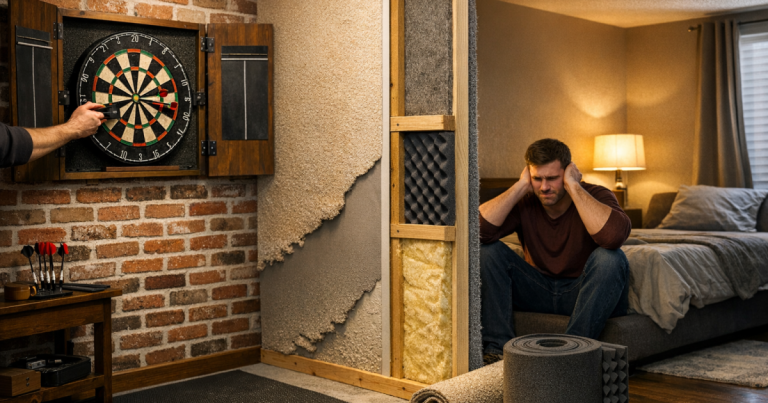
If the cabinet is on a party wall or shared wall, rattles may be only part of the issue. Impact vibration can travel through the structure even when the cabinet feels secure. The separate guide on how to reduce dartboard noise through a shared wall covers practical ways to limit that transfer.
Common fitting mistakes that cause rattles
- Using the wrong fixings: screws that are fine for timber may not be right for plasterboard or masonry.
- Skipping the dry fit: marking holes before checking the board position can lead to awkward adjustments later.
- Over-padding the back: thick foam can make the cabinet feel springy and increase movement.
- Ignoring the doors: a secure cabinet can still rattle if the catches and hinges are loose.
- Overtightening one corner: this can twist the cabinet and create a gap elsewhere.
- Forgetting loose accessories: chalk, markers and spare stems can vibrate inside the cabinet.
Things readers ask
Should I put foam behind a dartboard cabinet?
Thin foam or neoprene can help if it fills small gaps between the cabinet and wall. Avoid thick, soft foam because it can let the cabinet bounce and make the board feel less solid.
Why does my cabinet rattle only when darts hit the board?
That usually points to the board mount, edge clips or cabinet back panel rather than the wall screws. Check that the board is seated firmly and supported evenly around the edge.
Can I fit a cabinet to plasterboard?
Yes, but the fixing method matters. Use fixings suitable for the wall construction and the loaded weight, and do not rely on a skim coat or weak plaster alone.
Do cabinet doors need bumpers?
They are not always essential, but thin felt or rubber bumpers often stop door chatter and make the cabinet feel more finished when closing.
Will a cabinet make darts quieter?
It can tidy the setup and protect the wall, but it will not automatically reduce impact noise. Secure fixing, board support and wall type make the biggest difference.
Key takeaways
A quiet cabinet comes from even support, suitable fixings and controlled contact points. Start with the wall, make the cabinet sit flat, then deal with the board, hinges and doors one by one.
When you fit a dartboard cabinet carefully, you get a cleaner-looking darts area, better wall protection and fewer distracting noises during practice. Take your time with the dry fit and the final test; most rattles are easy to solve once you know exactly which part is moving.