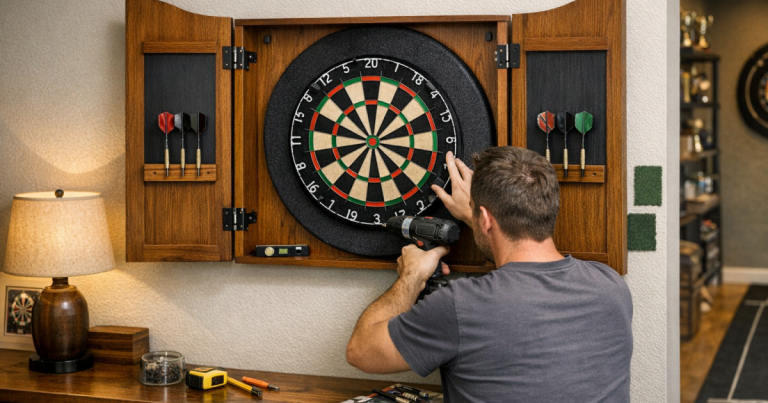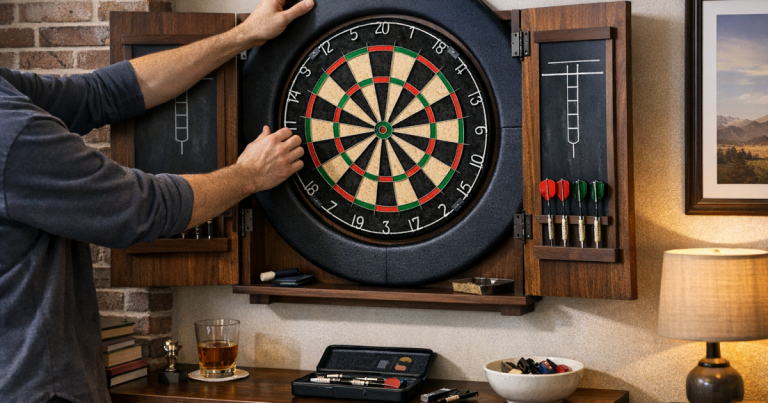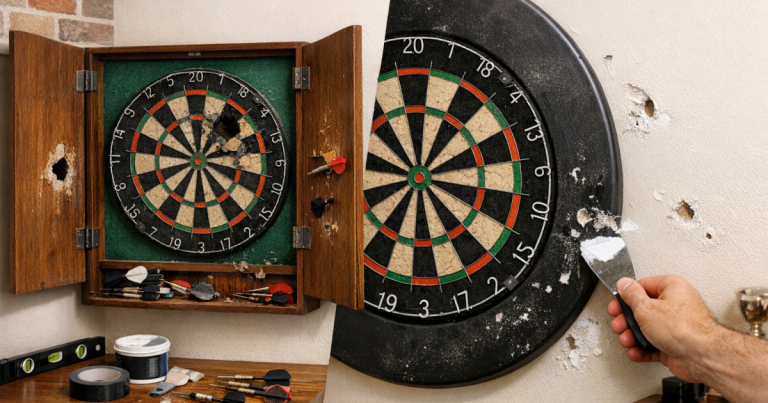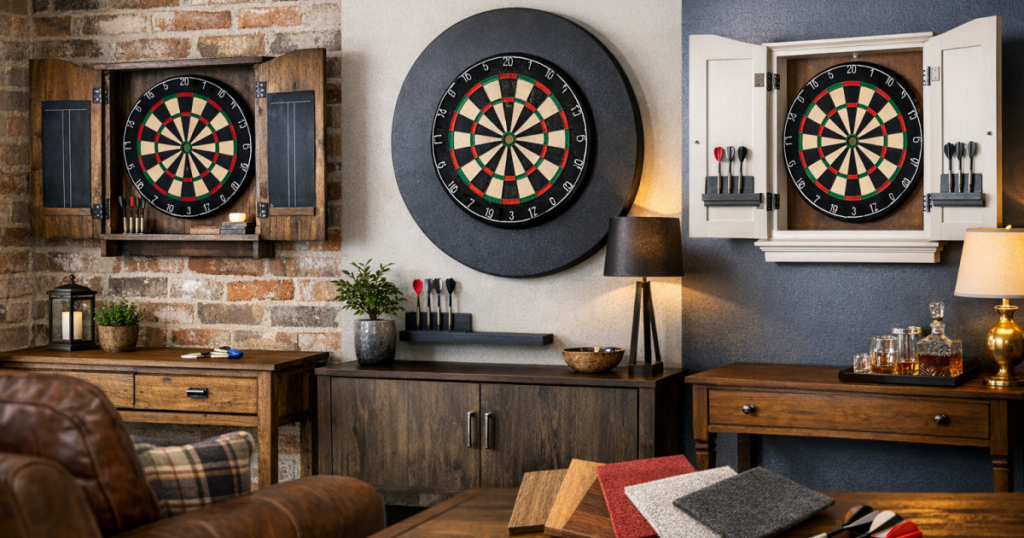
A home darts area has to do two jobs: feel inviting when you are throwing, and sit comfortably in the room when the darts are packed away. Good dartboard decor is less about making the board disappear and more about giving the cabinet, surround, lighting and storage a deliberate place in the room.
The right finish can make a board look at home in a living room, garage, spare room, home bar or garden room. The trick is to match the level of formality, the wall colour, the furniture nearby and the amount of protection the room actually needs.
The short version
- Cabinets feel more furnished: they suit lounges, home bars and multi-use rooms where you want the board hidden between games.
- Surrounds feel more sporting: they keep the board visible and work well in games rooms, garages and practice spaces.
- Colour matters more than you think: black, grey, walnut, oak-effect and white finishes all change how prominent the board looks.
- Wall protection should guide the look: a beautiful setup still needs to cope with missed darts, scuffs and regular use.
- Storage completes the style: darts, chalk, flights and spares look far better when they have a proper home.
Start with the room, not the dartboard
A darts setup rarely looks right when it has been treated as a separate object bolted onto the wall. Look at the room first: is it cosy, modern, industrial, traditional, minimal or pub-inspired? A cabinet or surround should echo what is already there rather than fight it.
In a lounge or dining space, a timber cabinet often feels more natural than a bold tournament-style surround. In a garage, utility room or dedicated practice corner, a plain black or dark grey surround can look sharper and more purposeful. In a home bar, either can work, but the surrounding details matter: shelves, stools, signage, lighting and flooring will all influence whether the darts wall feels polished or cluttered.
Also think about how much you want the board to stand out. Some players like a proper focal point, with the board framed by lighting and a strong wall colour. Others want the setup to recede when not in use. That one decision makes the rest of the styling much easier.
Cabinet or surround: the style difference
A cabinet gives the board a framed, furniture-like look. Closed doors can soften the setup, which is useful in shared rooms where the darts area needs to look tidy between sessions. Many cabinets also provide a convenient place for scoreboards or small accessories, although you should always check the exact layout and storage space before relying on it.
A surround is more direct. It frames the board closely, protects the nearby wall and keeps the dartboard visible all the time. It suits rooms where the board is part of the character rather than something to hide. A surround also tends to keep the wall visually cleaner than improvised protection, because the protective area is neat, circular and clearly intentional.
If wall marks are your main worry, it helps to understand the practical difference before settling on a style. The detailed breakdown of cabinet versus surround wall protection explains how each option behaves around missed darts and everyday use.
Match finishes to the furniture nearby
The easiest way to make a darts wall look planned is to repeat an existing finish from the room. If the room has dark picture frames, black metal shelving or charcoal furniture, a black surround or dark cabinet will usually make sense. If the space has oak-effect flooring, pine shelving or warm timber furniture, a wood-effect cabinet can tie the board into the room.
Try not to mix too many wood tones in a small area. A cabinet with a strong red-brown finish can look out of place next to pale oak furniture, while a very light cabinet can feel weak against dark panelling. You do not need a perfect match, but the undertone should feel related: warm with warm, cool with cool, rustic with rustic.
For modern rooms, simple finishes usually work best. A clean black surround against a white, grey or deep green wall can look crisp without adding visual fuss. In traditional rooms, a cabinet with a calmer timber finish often looks more settled, especially if the wall already has framed prints or shelving.
Use wall colour to control attention
Wall colour decides whether the board blends in or becomes the centrepiece. A black surround on a pale wall creates strong contrast and makes the board feel bold. The same surround on a dark feature wall looks more integrated and less visually loud.
Deep colours can work particularly well behind a darts setup. Navy, forest green, charcoal and warm burgundy all create a club-room feel without needing lots of extra decoration. Lighter neutrals can be effective too, but they show scuffs and stray marks more easily, so protection becomes more important.
If the room is rented or you do not want to repaint, use removable styling around the board: framed prints, a tidy shelf, a mat, or a cabinet that introduces the finish you want. The key is to avoid a lonely board on a blank wall unless you deliberately want a practice-room look.
Make protection part of the design
Wall protection should not feel like an afterthought. A neat surround, a well-sized backing panel or a cabinet with a clean outer frame can all contribute to the look of the room while doing a practical job.
In family spaces, shared homes and narrow rooms, missed darts and shoulder bags brushing past the wall are realistic concerns. A protective setup looks more refined when it is symmetrical, centred and aligned with nearby furniture. If a cabinet sits too high visually, or a surround appears squeezed between shelves, the whole wall can feel awkward even if the board itself is mounted correctly.
A good rule is to design the full rectangle of the darts wall, not just the circle of the board. Think about the space above, below and either side. The most settled setups usually have a clear centre line, some breathing room around the board and no random accessories creeping into the throw area.
Bring storage into the same visual language
Flights, shafts, spare points, chalk, markers and small tools can make a smart darts wall look messy very quickly. Storage does not need to be elaborate, but it should match the tone of the setup.
For a cabinet-based arrangement, keep accessories inside the cabinet where possible, or use a small drawer nearby. For a surround-based wall, a shelf or compact organiser can work well if it lines up with the rest of the room. A black metal shelf suits an industrial or garage-style space; a timber shelf suits a warmer home bar or lounge corner.
If you are building the whole wall rather than just adding one accessory, the guide to a tidy dartboard wall with cabinets and surrounds is a useful next step for planning the surrounding pieces as one coherent area.
Lighting should flatter the setup, not just the board
Good lighting makes the board easier to read, but it also changes how the wall feels. A harsh bare ceiling light can make even a smart cabinet look flat, while softer directional lighting can make the whole setup feel more finished.
In a living room, you may want lighting that does not dominate when the board is not being used. In a dedicated games room, a more visible lighting ring or focused fitting may look completely natural. The right answer depends on the room’s purpose, nearby sockets, wall space and how permanent you want the setup to be.
If you are adding dedicated lighting, it is worth checking the different plug-in, wall and ceiling approaches before committing to the layout. The dartboard lighting installation guide covers the main routes and the practical trade-offs for a home setup.
Style ideas for common UK home setups
Living room corner
Choose a cabinet that relates to your TV unit, shelving or picture frames. Keep colours calm, avoid oversized surrounding decor, and make sure the cabinet doors can open without clashing with furniture. A small mat can define the playing area without making the room feel like a sports bar.
Garage or utility space
A dark surround, simple wall-mounted storage and a durable mat usually look right here. The finish can be more practical and less decorative, but keeping everything aligned and clutter-free still makes a big difference.
Home bar or garden room
This is where stronger choices can work: dark walls, timber cabinets, pub-style scoreboards and warm lighting. The main risk is overfilling the wall. Let the board remain the centre and keep signs, shelves and accessories balanced around it.
Spare bedroom or office
A cabinet is often the neatest option because it helps the area switch back to being a normal room. Choose a finish that matches desks, wardrobes or shelving, and keep spare accessories hidden so the setup does not creep across the room.
Small details that make the wall look intentional
- Centre the board visually: align it with the cabinet, surround, mat and nearby furniture rather than judging by the board alone.
- Repeat one accent colour: use black, brass, grey or timber tones in more than one place so the setup feels connected.
- Keep scoreboards tidy: a messy writing area can make the whole wall look less polished.
- Avoid overcrowding: leave plain wall space around the board so the cabinet or surround can do its job visually.
- Think about the floor: a mat or oche line can either blend with the flooring or deliberately define the playing lane.
Common questions
Do cabinets or surrounds look better in a living room?
Cabinets usually look more natural in a living room because they feel closer to furniture and can hide the board when it is not in use. A surround can still work if the room has a more casual or games-led style.
Should a dartboard surround match the wall or contrast with it?
Match it to the wall if you want a subtle setup. Choose contrast if you want the board to become a focal point. Dark surrounds are the most flexible because they work with both pale and deep wall colours.
Can a cabinet and surround be used together?
Some setups combine both, but space and compatibility matter. Check that the surround fits cleanly around the board and that the cabinet doors, hinges and inner depth do not interfere with it.
How do I stop a darts area looking cluttered?
Limit the wall to a few purposeful elements: board, protection, lighting, score area and storage. Keep spare darts accessories in a drawer, cabinet compartment or small organiser rather than on open surfaces.
What colours are safest if I change the room later?
Black, dark grey and simple timber finishes are the easiest to reuse in different rooms. Very bold colours can look excellent, but they are more dependent on the current wall colour and furniture.
Main lessons
The best-looking darts walls are not always the most expensive or elaborate. They are the ones where the cabinet or surround matches the room’s materials, the wall protection looks deliberate, and the accessories have somewhere tidy to live.
Start with the mood of the room, then choose whether the setup should blend in or stand out. Once the finish, wall colour, storage and lighting are working together, the board feels like part of the home rather than a last-minute addition.