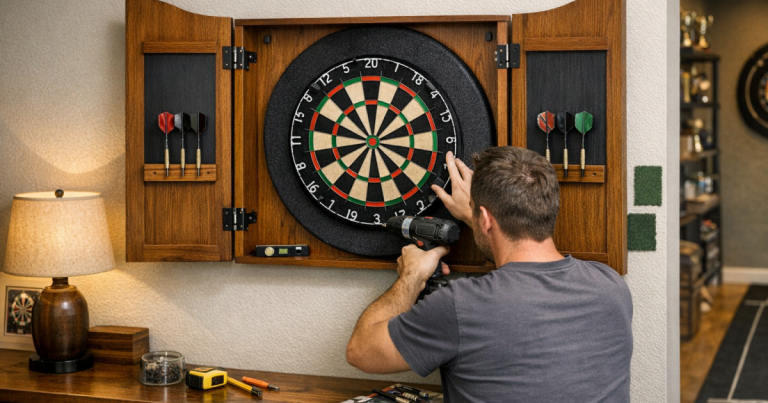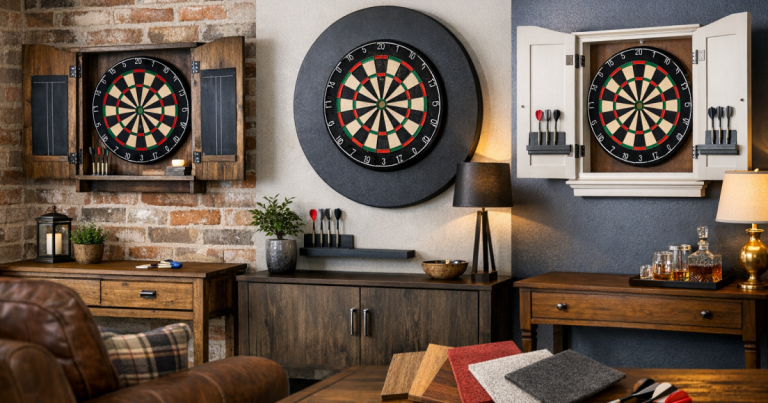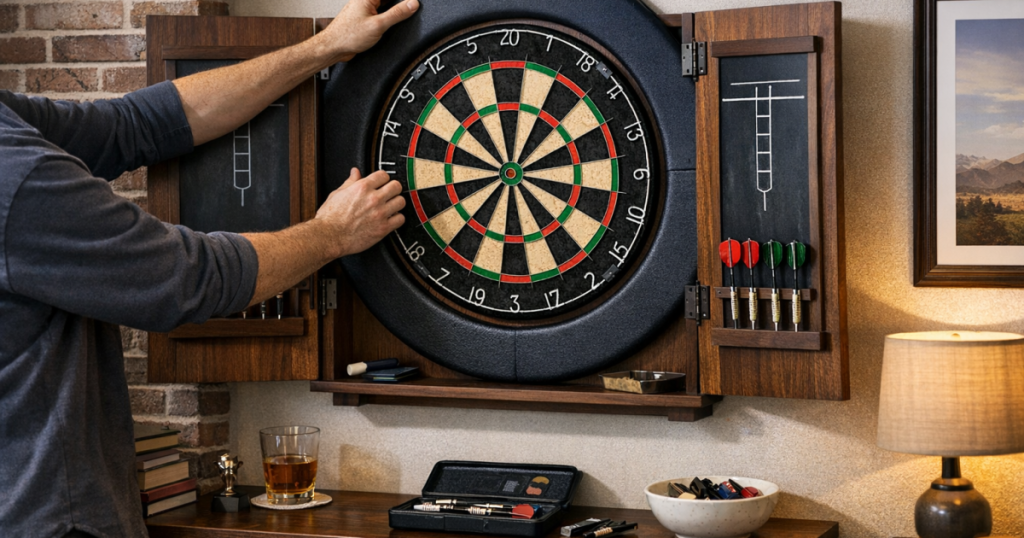
A tidy dartboard wall is less about making the room look like a pub and more about giving every part of the setup a job. The cabinet hides visual clutter, the surround absorbs stray darts, and the storage keeps flights, shafts and chalk from drifting across the room. Done well, it feels intentional rather than squeezed into a spare bit of wall.
Mains electrical work for hard-wired lighting or concealed cabling should be carried out by a qualified electrician to meet UK safety standards and local building requirements.
What to know first
- Start with the throw line, board height and clear space before thinking about style.
- A cabinet gives a cleaner look and useful storage, but it needs enough side clearance for open doors.
- A surround is the quickest way to soften the look and protect plaster around the board.
- Storage should sit close enough to use, but not so close that it crowds the throwing area.
- Lighting, floor protection and cable control are what make the setup feel finished rather than temporary.
Start with the playing space, not the accessories
The neatest setups begin with the fixed dimensions: board position, oche distance and safe surrounding space. For a standard steel-tip setup, the bullseye is normally set at 1.73 m from the floor, with the throwing line 2.37 m from the face of the board. If you use a mat or raised oche, check that it lines up with the board face rather than the wall behind it.
Before fitting anything, stand in the room and look at how people move through it. A narrow hallway, a dining room corner and a garage wall all have different problems. Doors, radiators, curtain rails, picture frames and low pendant lights can all make an otherwise neat setup awkward in daily use.
If the board is going into a lounge or multipurpose space, the visual footprint matters as much as the playing footprint. A dark cabinet on a pale wall can look smart, but it will draw the eye even when the board is closed. A surround in a similar tone to the wall can feel calmer, while a contrasting surround makes the board more of a feature. For more room-planning detail, especially where the board shares space with sofas or family furniture, see our guide to planning a darts setup in a shared living room.
Cabinet, surround or both?
A cabinet and a surround solve different problems. A cabinet frames the board, covers it when not in use and usually gives you somewhere to keep darts and small accessories. A surround sits around the board and takes the impact from missed darts. Many tidy home setups use both, but you need to check the fit carefully.
When a cabinet makes sense
- The setup is in a visible room and you want the board covered between games.
- You need somewhere for spare flights, stems, chalk or a small scoreboard.
- You prefer a more traditional darts-room look.
- The wall has enough width for the doors to open properly.
When a surround is the priority
- The wall surface is newly decorated, rented or prone to visible marks.
- Beginners, guests or children will be throwing under supervision.
- You want a softer, cleaner frame without cabinet doors.
- The board is mounted on a stand or in a tight alcove where cabinet doors would get in the way.
The potential clash is depth and clearance. Some surrounds fit neatly inside cabinet-style arrangements; others sit proud and may stop doors closing cleanly. Measure the board, surround and cabinet opening before drilling, and do a loose test fit on the floor if the parts are already with you.
Make the wall protection look deliberate
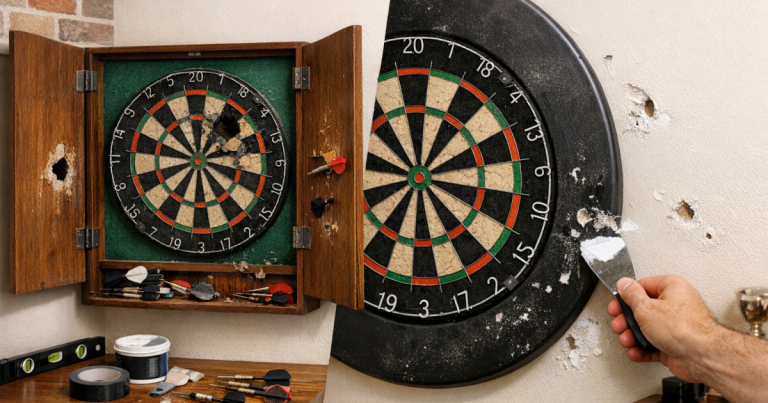
Wall protection should not feel like an afterthought. A surround protects the immediate area around the board, but stray darts can still mark paintwork below, to the sides or near skirting boards. This is more likely in casual home games where players are standing at different distances or using unfamiliar darts.
For a cleaner finish, think in zones. The first zone is the board itself: a good-quality bristle board, firmly mounted and sitting flat. The second is the impact zone: surround, backing panel or cabinet frame. The third is the lower wall and skirting, where bounce-outs and dropped darts cause scuffs. If you are trying to protect fresh paint, wallpaper or a rented room, our guide to protecting walls and skirting boards around a dartboard goes deeper into those problem areas.
A backing panel can make a setup look more built-in. It might be painted timber, a felt-covered panel or a simple board fixed behind the cabinet and surround. Keep it proportional: too small and it looks accidental; too large and it can dominate the room. In most homes, the goal is a controlled feature area, not an entire feature wall unless the room is dedicated to darts.
Keep storage close, but controlled
A tidy darts area usually fails because small items have nowhere obvious to go. Flights, points, spare shafts, wax, chalk, checkout cards and score pens are all tiny enough to become clutter. The solution is not more storage everywhere; it is one clear storage point near the board.
- Use the inside of a cabinet for the items used during a game.
- Keep spare sets and less-used tools in a small case or drawer nearby.
- Avoid balancing darts on cabinet shelves where they can fall when doors close.
- Keep anything sharp out of casual reach when the board is not in use.
- Use one container for broken stems and damaged flights so they do not end up on the floor.
If you prefer a minimal wall, a separate case holder beside the board can work better than trying to cram everything into the cabinet. The main rule is that storage should not interrupt the throw or sit where a missed dart can hit it.
Lighting is what makes it feel finished
Even a neat board area can look untidy if the lighting creates heavy shadows or exposes trailing cables. The board face should be evenly lit, with the number ring and treble segments easy to read from the oche. In a cabinet setup, shadows from open doors can be more noticeable than people expect, especially if the room has a single ceiling light behind the thrower.
Purpose-made dartboard lights, clip-on arrangements and carefully placed room lighting can all work, but the layout needs to suit the way the board is mounted. A cabinet may restrict where a ring-style light can sit. A surround may need a light that clears its outer edge. A stand-based setup may need a freestanding lighting solution rather than anything fixed to the wall.
For layout examples across cabinet, stand and wall-mounted arrangements, use our guide to dartboard lighting layouts for cabinets, stands and wall setups.
Small details that reduce visual clutter
Once the main pieces are in place, the tidy feeling comes from small decisions. Align the cabinet, surround and board vertically so the bullseye sits visually centred. If the cabinet has a scoreboard, make sure it is usable without stretching across the board. Keep the throwing line clean and removable if the room changes use during the week.
Cable control matters if you use lighting or an electronic scoreboard. Surface cable trunking in a matching colour is usually neater than loose leads, and routing cables down one side of the setup keeps the area calmer. If the board is in a shared room, avoid creating a permanent trip point across the floor. A portable mat can be lifted after a session, while a fixed oche suits a dedicated space better.
Floor protection also contributes to the overall look. A mat, rug-style protector or dedicated darts mat gives the throw line a visual boundary and helps protect hard flooring from bounce-outs. Choose something that sits flat, does not curl at the edges and can be stored without becoming another piece of clutter.
Common layout mistakes
- Fitting the cabinet first, then discovering the oche line lands in a doorway or walkway.
- Choosing a deep surround that stops cabinet doors closing properly.
- Mounting storage too close to the board, where missed darts can damage it.
- Using a dark backing board in a small room where it makes the area feel heavy.
- Forgetting about skirting boards, which often take damage from bounce-outs and dropped darts.
- Leaving cables visible after spending time making the cabinet and surround look smart.
Helpful questions
Can I use a cabinet and surround together?
Yes, but check the depth and opening clearance before fixing anything. Some combinations fit neatly, while others stop the cabinet doors closing or leave the board sitting too far forward.
Do I need a backing board behind the cabinet?
Not always. A backing board is useful if you want extra protection, a cleaner feature area or a way to hide uneven wall marks. In a small room, keep it modest so it does not overpower the space.
What is the neatest option for a rented home?
A surround, removable floor protection and minimal visible storage are usually easiest to live with. Check your tenancy terms before drilling, and avoid fixes that could damage plaster or decorated surfaces.
How do I stop the setup looking cluttered?
Limit the wall to the board, protection, lighting and one storage point. Keep spare accessories in a case, tidy cables to one side and remove anything that does not serve the game.
Final thoughts
A tidy dartboard wall works because the parts support each other: the cabinet gives structure, the surround protects the immediate area, storage keeps accessories contained and lighting makes the board usable without adding mess. Start with the room and throwing space, then add only what improves protection, playability or day-to-day living. That approach creates a setup that looks settled, plays properly and does not take over the rest of the home.