Spare points and small dart tools are easy to forget until you need them, and by then a damp case or garage drawer can leave them rough, stained or awkward to fit. Keeping rust-free dart points is mostly about dry storage, clean handling and checking your kit before it sits unused for weeks. A few simple habits will protect replacement points, point tools, flight punches, small spanners and the little accessories that keep a home darts area running smoothly.
The short version
Store spare dart points and tools somewhere dry, sealed and away from sudden temperature changes. Wipe metal parts after handling, keep them off bare concrete or damp timber, and use a small desiccant sachet in any storage case that is likely to live in a garage, shed or utility room.
- Clean points and tools before storage, not just before use.
- Keep loose metal parts separated so coatings and tips do not rub constantly.
- Avoid leaving spare points in paper envelopes, open trays or unlined drawers.
- Check storage boxes monthly if your darts area is in a cold or humid room.
- Use a very light protective film only where appropriate, then wipe before play or fitting.
Why spare points and tools rust in the first place
Most steel tip dart points and many small darts tools are vulnerable to moisture because they are made from steel or contain steel components. Rust forms when metal is exposed to oxygen and moisture, and the process is quicker when there are salts from fingers, condensation from cold rooms or damp from unheated storage spaces.
A home darts setup in a spare room is usually less troublesome than one in a garage, conservatory, shed or covered outdoor area. The risk is not just rain; it is the repeated cycle of cold nights, warmer days and moisture settling on metal surfaces. A sealed box left on a concrete floor can still become damp inside if it is opened in a cold room and then taken somewhere warmer.
There is also a practical playing issue. Rusty or pitted points can feel rough, mark storage compartments and become harder to fit cleanly. If the point surface is damaged, it may also behave differently in the board. For broader checks before fitting new steel tip points, the notes in what to check before buying replacement steel tip points are a useful companion to this maintenance routine.
Step 1: Start with a clean, dry sorting session
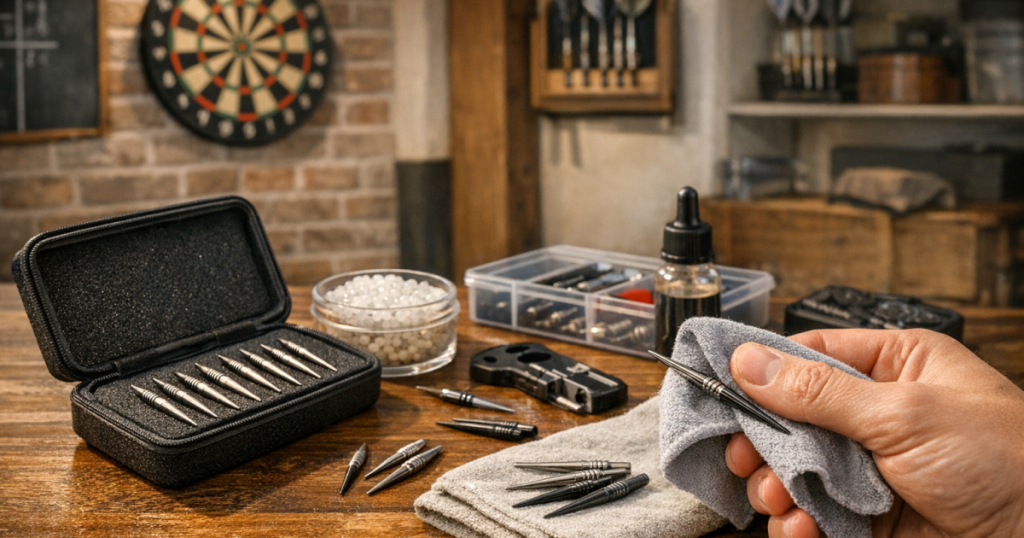
Before improving storage, empty the case, drawer or tool pouch and separate everything on a clean cloth. Group spare points, point-removal parts, mini spanners, flight punches, spare screws, sharpeners and other metal accessories. This makes it easier to spot early staining before it spreads or transfers to other items.
- Wipe visible moisture first: use a dry microfibre cloth or soft cotton cloth, not kitchen roll that sheds fibres into small threads or grooves.
- Remove finger marks: oils and salts from hands can encourage staining, so wipe points even if they look clean.
- Inspect the surface: light orange dust can often be cleaned away, but deep pitting, flaking or rough patches are a sign to replace rather than rescue.
- Check threads and moving parts: point tools and small spanners can trap grime in corners, so open or move them gently while cleaning.
If a point is heavily corroded, bent or no longer grips properly in the barrel, do not store it with good spares “just in case”. It is better to keep your spares box small and reliable than full of questionable parts you will not trust on match night.
Step 2: Choose storage that blocks damp rather than just hiding clutter
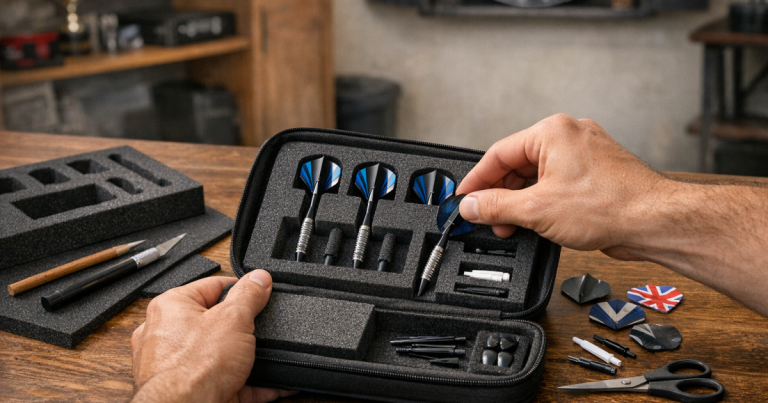
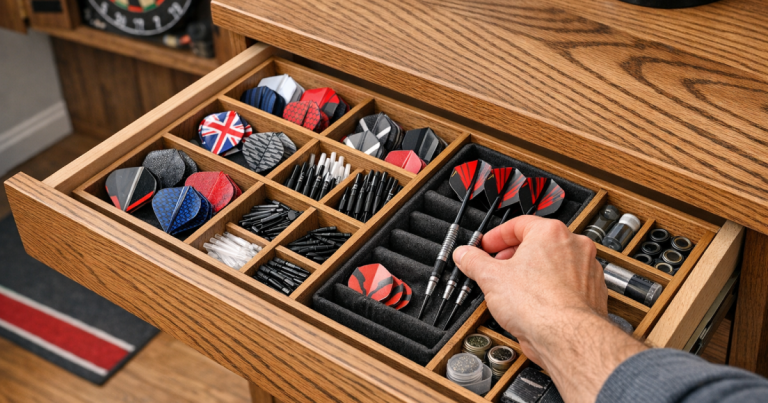
A tidy case is not automatically a dry case. For rust prevention, the best storage is clean, close-fitting and easy to inspect. A small compartment box, sealable accessories tin or darts case with a dedicated tools section is usually better than an open tray or a mixed drawer.
Good storage habits
- Use a box with individual compartments for points, tools and small accessories.
- Add a silica gel sachet to the storage box, especially in garages and outbuildings.
- Keep the box on a shelf or in a cabinet rather than on the floor.
- Store spare points in small labelled bags, tubes or compartments so they do not scrape against tools.
- Close the box properly after every session instead of leaving it open near drinks, windows or exterior doors.
Storage habits to avoid
- Leaving spare points loose in a cardboard envelope once it has been opened.
- Keeping metal tools in a damp darts mat roll, boot bag or sports holdall.
- Storing accessories directly above a radiator, then moving them back to a cold garage.
- Mixing wet outdoor items, cleaning cloths or drink bottles with darts accessories.
If your whole board area is in a sheltered garden room or semi-outdoor space, storage matters even more. The board, surround and cabinet need protection too, so it is worth pairing this routine with advice on weatherproofing an outdoor dartboard setup.
Step 3: Control moisture with simple environmental checks
You do not need a workshop setup to protect spare darts gear, but you do need to think about where the accessories live between games. The best location is usually indoors, away from exterior walls, uninsulated floors and places where damp coats, shoes or tools are kept.
- Check for condensation: if the box lid, metal tools or cabinet hinges feel clammy, move the kit to a drier spot.
- Keep it off concrete: concrete floors can feel dry but still hold cold and moisture. Use a shelf, cupboard or drawer.
- Avoid rapid temperature swings: taking cold metal into a warm room can cause condensation. Let the box warm gradually before opening where possible.
- Refresh desiccant: replace or dry silica gel sachets according to their instructions when they stop absorbing moisture effectively.
- Ventilate the room: a closed-up garage or shed can trap damp air, particularly during colder months in the UK.
For players who keep a compact setup in a spare room, the risk is lower, but it is still worth checking after winter or after any period where the room has been unused. A quick monthly look is enough for most indoor setups.
Step 4: Use a protective film carefully
A very light protective film can help on tools and unused metal points, but more is not better. The aim is to reduce moisture contact during storage, not to leave accessories greasy. Too much oil attracts dust, marks cases and can transfer to barrels, flights, mats or the board face.
For tools, apply a tiny amount of light machine oil to a cloth and wipe the metal surface, then wipe again with a clean dry cloth so only a faint film remains. For spare points, be more cautious. If you use any protective film, clean the point thoroughly before fitting it to a dart and before throwing. Points that enter a sisal board should not be oily.
- Do not soak points in oil.
- Do not oil plastic, foam, rubber or painted storage sections unless the product instructions say it is suitable.
- Keep oily cloths separate from flights, stems and grip surfaces.
- Wipe point-removal tools after use, particularly where metal dust or old residue collects.
If you use a point tool only occasionally, open the storage box every few weeks and move the tool gently. This stops small moving sections being left with trapped grime or moisture for months at a time.
Step 5: Keep your maintenance area tidy and dry
Rust prevention is easier when the place where you maintain darts is as organised as the storage box itself. A small tray, cloth or bench mat stops points and screws rolling away and makes it obvious if something is wet or dirty before it goes back into storage.
Avoid doing point changes directly over carpet, dusty garage flooring or a damp workbench. If the darts area doubles as a utility space, clear away wet shoes, laundry and garden tools before opening your accessories box. It sounds fussy, but it prevents the most common cause of surface rust: putting clean metal back into a contaminated or damp container.
Flooring can also affect how comfortably you maintain and store kit around the oche. If you are organising the wider area, including where tools and spare points are handled, planning floor protection for a darts area can help you create a cleaner, safer and easier-to-maintain setup.
Common storage scenarios
Spare room setup
This is usually the easiest environment. Keep a small accessories box in a drawer or cabinet, add a silica gel sachet and check it monthly. The main thing is avoiding drink spills and keeping tools away from open windows during wet weather.
Garage or shed setup
This needs more care. Store spare points and tools indoors if possible, even if the board stays in the garage. If they must stay near the board, keep them in a sealed box on a shelf and inspect them more often during colder, wetter months.
Travel or league-night case
A darts case that travels between warm rooms, cold cars and busy venues can collect moisture quickly. Empty it after a session, wipe metal parts and leave the case open indoors until fully dry before closing it again.
Cabinet-based storage
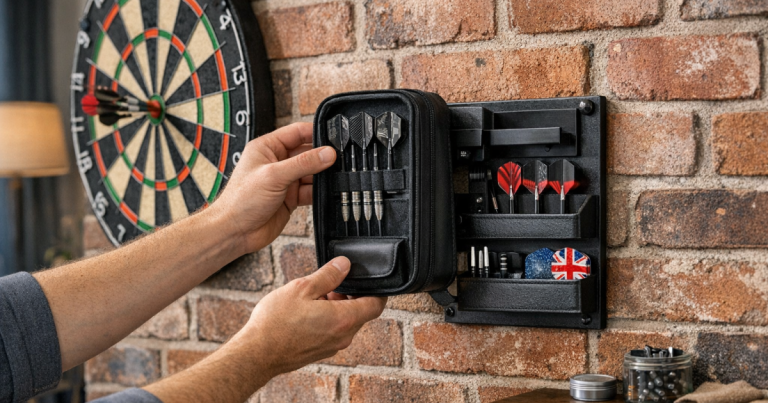
A dartboard cabinet is handy for flights, chalk, stems and scorekeeping items, but it is not always the best place for steel spares if the wall is cold or external. If you notice musty smells, swollen wood or condensation, move the metal accessories to a drier box elsewhere.
A simple monthly rust-prevention routine
Once your storage is sorted, the routine only takes a few minutes. Tie it to something you already do, such as rotating flights, checking stems or cleaning the surround after a busy week of throwing.
- Open the storage box and check for moisture, smell or staining.
- Wipe spare points and tools with a clean dry cloth.
- Remove any damaged, bent or questionable points from the usable spares.
- Check desiccant sachets and replace or recharge them as needed.
- Make sure compartments are not overfilled or rubbing metal against metal.
- Close the box fully and return it to a dry shelf, drawer or cabinet.
The goal is not showroom perfection. It is simply to make sure every spare point or tool you reach for is clean, dry and ready to use without hesitation.
FAQ
Can I still use spare dart points with light surface rust?
Light surface staining may clean off, but inspect the point closely afterwards. If it is pitted, rough, bent or difficult to fit securely, replace it rather than risking poor grip or inconsistent board entry.
Should spare points be stored in their original packet?
Only if the packet keeps them clean, dry and separated. Once opened, paper or thin plastic packaging is often less reliable than a small sealed compartment box with a desiccant sachet.
Is oil safe to use on dart points?
Use it sparingly, if at all, and only for storage protection. Wipe points thoroughly before fitting or throwing so oily residue does not transfer to the barrel, your hands or the dartboard.
How often should I check tools kept in a garage darts setup?
Check them at least monthly, and more often during cold or damp spells. Garages and sheds are more prone to condensation than indoor rooms, even when everything looks dry.
What is the best way to store darts when not playing?
Keep assembled darts dry, separated and protected from knocks, with the points covered where practical. Spare points and tools should sit in their own clean compartment rather than loose beside flights and stems.
The big picture
Rust prevention for darts accessories is mainly about routine. Dry the parts, store them in the right place, separate loose metal items and check the box before damp has time to become a problem. For a home setup, that means less rummaging, fewer spoiled spares and a much calmer job when it is time to change points or tune up your darts.