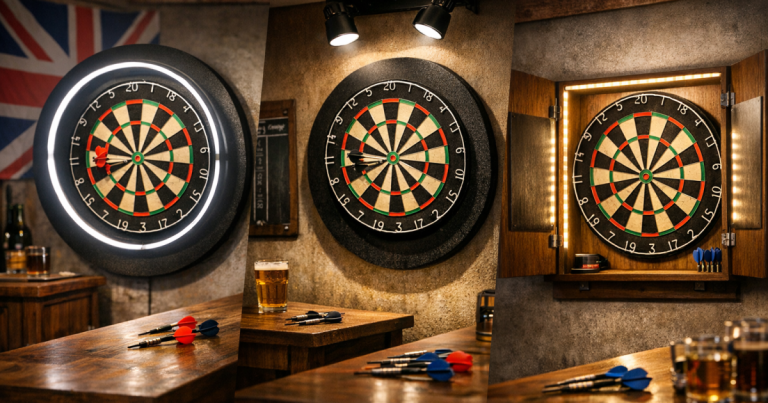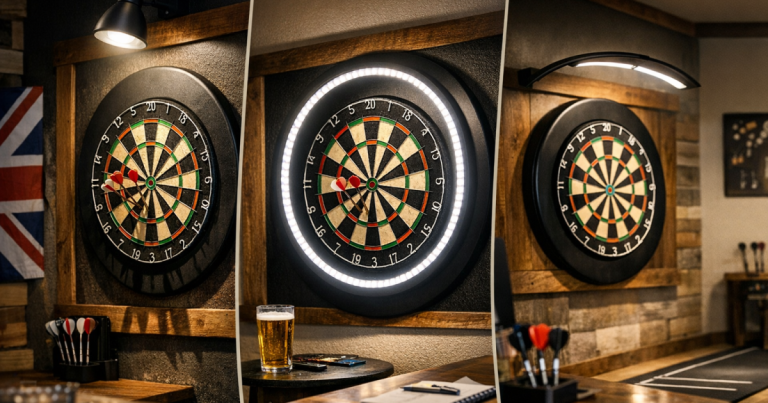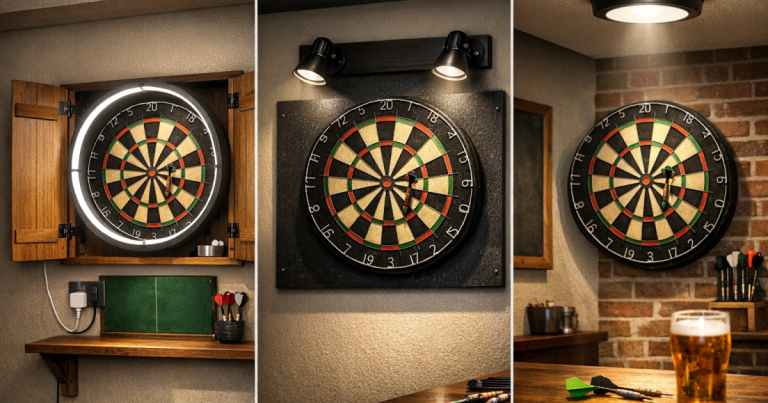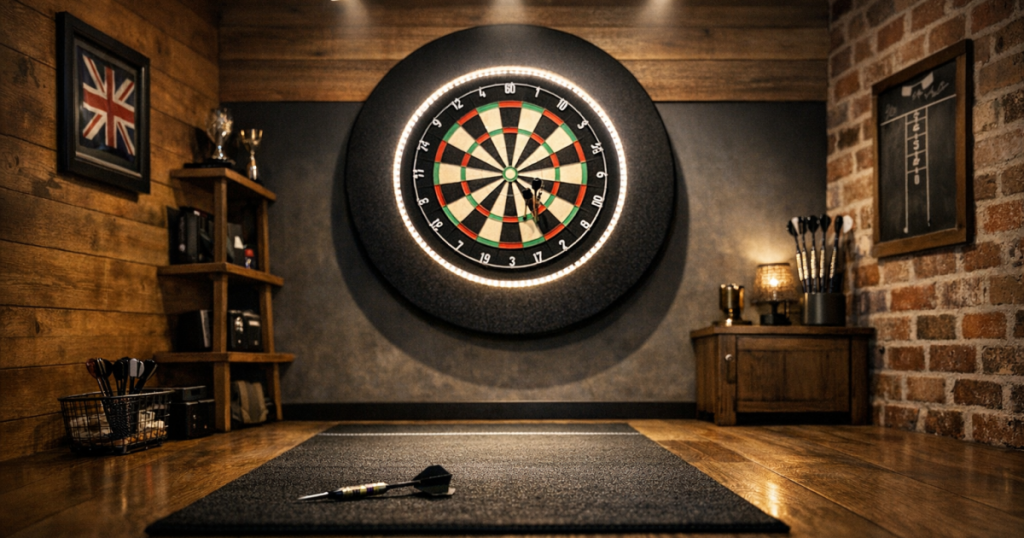
A board can be mounted perfectly and still feel awkward if the light is wrong. Too much brightness in one place creates glare, while a dark throwing area makes your stance feel detached from the target. Thinking in dartboard lighting zones helps you split the setup into three jobs: seeing the board clearly, standing comfortably at the oche, and keeping the wall, surround and score area easy to use. That is often the difference between a tidy home setup and one that feels harsh, patchy or distracting.
Fixed wiring, new socket installation and permanent changes to lighting circuits should be carried out by a qualified electrician to ensure compliance with UK electrical safety requirements and relevant standards.
For plug-in lights, extension leads and mounted fittings, treat heat, cable routing and secure attachment as part of the setup rather than an afterthought. The site’s dartboard lighting safety guide goes deeper into those checks.
At a glance
- Board zone: the scoring face needs the most even light, with minimal shadow from darts, hands or cabinet edges.
- Oche zone: the throw line should be bright enough for safe footing and relaxed alignment, but not so bright that it competes with the board.
- Surround zone: the wall, surround, scoreboard and nearby storage need soft visibility so the setup feels balanced.
- Best result: a clear target, a comfortable stance and no distracting pools of glare around the board.
The board zone: where accuracy starts
The board zone is the circular area that includes the dartboard face, the immediate rim and any cabinet or light fitting around it. This is the most important lighting area because it affects how cleanly you can read trebles, doubles, wire shadows and dart entry points.
A good board zone does not simply mean “very bright”. It means even. A single ceiling pendant behind the thrower can cast a body shadow onto the board. A wall light above the board can brighten the top numbers while leaving the lower bed dull. A lamp placed too far to one side can make one half of the board easier to read than the other.
Dedicated ring-style board lights are popular because they are designed to push light across the scoring face from several angles. Examples include Target Corona Vision and Mission Torus 270, both of which are common reference points for home players looking at board-centred lighting. Before fitting any dedicated light, check how it works with your board bracket, cabinet, surround and wall space rather than assuming every setup will accept the same arrangement.
What to check in the board zone
- Shadow direction: stand at the oche with darts in hand and check whether your arm, head or darts throw a shadow across the scoring face.
- Number ring visibility: make sure the outer numbers are readable without squinting, particularly if your room lighting is otherwise low.
- Glare on wires: bright reflections on the spider can be just as distracting as darkness.
- Cabinet edges: doors, shelves and side panels can block light if the source is placed too close to the wall.
- Surround clearance: a thick foam surround can sit close to certain light fittings, so check fit before relying on the final position.
One useful test is to view the board from three places: the oche, half a step left and half a step right. If doubles or trebles become harder to read from either side, the board zone is not balanced enough for comfortable practice.
The oche zone: lighting the place you actually throw from
The oche zone covers the standing area at the throw line, including the mat, toe line and the space where your feet settle before each visit. It does not need to be lit like a workbench, but it should feel secure and consistent.
In a UK home setup, this zone is often compromised by normal room lighting. A spare bedroom may have one central ceiling fitting. A garage may have fluorescent or LED battens running across the room. A shed or outbuilding may have a single utility light placed for storage rather than play. The result is that the board looks fine, but the thrower stands in a darker strip or directly under a glare point.
Good oche lighting helps you place your feet without looking down for too long. It also lets you see the edge of a darts mat, raised oche strip or temporary marker. If you regularly set up and pack away, the oche zone matters even more because your reference point may change from session to session. For measuring the throw area accurately before sorting the lighting, use the guide on measuring oche space before setting up a dartboard.
How bright should the oche feel?
The oche should feel calm rather than spotlighted. If the floor is too dark, your stance can feel uncertain. If it is too bright, your eyes may keep adjusting between the throw line and the board. The aim is a gentle transition: the board remains the visual priority, while the floor and mat stay clear enough for safe movement.
- Use existing room light to create a soft base level across the throwing lane.
- Avoid placing a strong lamp directly behind your head at throwing height.
- Check whether glossy flooring, laminate or polished tiles bounce light towards your eyes.
- Keep cables away from the walking path between the oche and the board.
- Recheck the view when the room is used at night, not just in daytime.
For many home throwers, the oche zone is not fixed by adding a dramatic new fitting. It is improved by moving a floor lamp, changing the angle of an existing light, reducing glare from a bare bulb, or using a mat that clearly defines the throwing lane.
The surround zone: the part you notice when it is wrong
The surround zone includes the foam surround, wall area, cabinet, scoreboard, shelf and anything else close to the board. It is easy to treat this as secondary, but poor lighting here can make a setup feel messy even when the board itself is well lit.
A very bright board against a dark wall creates high contrast. Some players like the theatrical feel, but others find it tiring because the eye repeatedly jumps between a bright target and a dim room. On the other hand, lighting the whole wall too strongly can flatten the board and make the doubles less visually distinct.
The surround zone works best with softer, background light. You want enough visibility to retrieve darts, read a dry-wipe scoreboard and see where spare stems or flights are kept. You do not want a second focal point competing with the scoring face.
Wall protection also matters here. A surround that sits neatly around the board reduces visual clutter and helps catch stray darts, but it can change how shadows fall near the outer numbers. If you are still adjusting the fit, the guide on fitting a dartboard surround for better wall protection is a useful next step.
Scoreboards, shelves and side light
Scoreboards are a common weak spot. If a dry-wipe board sits outside the main pool of light, players end up leaning in or using a phone torch between visits. If it catches too much direct light, marker lines can reflect back and become harder to read.
Accessory shelves can create similar issues. A shelf close to the board may cast a small but annoying shadow if the light comes from one side. Keep storage practical, but avoid building a busy wall where every object competes for attention. The cleanest setups tend to keep the brightest light on the board, gentle light across the wall, and small accessories just outside the main sightline.
How the three zones work together
Once the three areas are separated, dartboard lighting zones become easier to diagnose. Instead of saying “the room is too dark”, you can identify whether the problem sits on the board, at the oche or around the surround.
A good sequence is to start with the board, then stand at the oche, then review the wall and scoring area. If you begin by brightening the whole room, you may solve one issue while creating another. More light is not always better; better placement usually is.
- If the board is clear but your stance feels uncertain, work on the oche zone rather than adding another board light.
- If the board looks harsh and the room feels gloomy, add or redirect soft ambient light around the surround zone.
- If darts cast strong shadows, change the board light angle or use a more even board-focused source.
- If the scoreboard is hard to read, treat it as part of the surround zone, not as a reason to overpower the board.
Different rooms create different lighting problems
A living room setup usually has softer general lighting, but it may suffer from reflections on picture frames, televisions or pale painted walls. A garage setup often has brighter utility lighting, but it may create hard shadows if battens run behind the thrower. A shed or garden room can be cosy, but low ceilings and exposed cables make placement more important.
Cabinets also change the picture. They frame the board nicely and hide accessories, but open doors can block side light or cast vertical shadows. If you prefer a cabinet, test the lighting with the doors open and closed. If you use a simple board-and-surround setup, pay closer attention to the wall finish because the surrounding colour can affect perceived contrast.
Temporary setups have their own challenge: repeatability. If your board is fixed but your oche marker, mat or lamp moves, the zones may feel different every session. Marking the floor position, keeping the mat aligned and using the same room-lighting arrangement can make casual practice feel much more consistent.
Common mistakes that make a setup feel worse
- Relying on one ceiling light: it may light the room, but it often puts the thrower between the light and the board.
- Over-brightening the board: excessive contrast can make the rest of the setup feel dull and uncomfortable.
- Ignoring the throw line: a dim oche can affect confidence even when the scoring face is visible.
- Letting cables trail across the route: lighting should not introduce a trip point between visits.
- Forgetting the scoreboard: if scoring is awkward, the whole session feels less smooth.
- Testing only in daylight: many home setups behave differently once curtains are closed and room lights take over.
Helpful questions
Does a dartboard need a dedicated light?
Not always. A dedicated board light can help with even coverage, but some rooms work well with careful placement of existing lights. The test is whether the board face is clear from the oche without strong shadows or glare.
Should the oche be as bright as the board?
No. The board should remain the main visual focus. The oche needs enough light for safe footing, mat alignment and a relaxed stance, but it should not pull your eye away from the target.
Can a surround block dartboard lighting?
It can affect the edges if the light sits very close to the board or if the surround is bulky. Check the doubles and number ring after fitting the surround, not before.
What colour light works best for darts?
Choose a comfortable, neutral-looking light that makes the board colours easy to distinguish. Avoid anything so warm, cold or coloured that it changes how the segments appear.
Is garage lighting suitable for a darts setup?
It can be, but garage lights are often placed for storage or workbenches rather than throwing. Stand at the oche and check for body shadows, harsh reflections and dark patches around the mat.
Key takeaways
The strongest home darts lighting setups do not just make the board brighter. They balance the board, oche and surround so the whole throwing routine feels clear and natural. Start with even light on the scoring face, keep the throw line comfortably visible, then soften the wall and scoring area so nothing feels gloomy or distracting.
If something feels off, diagnose the zone before changing the whole room. A small adjustment to light angle, mat position, surround fit or ambient wall light can be enough to make a familiar setup feel far more settled.