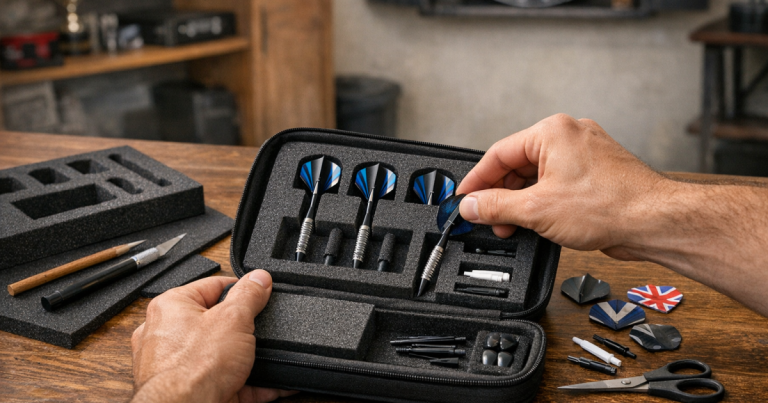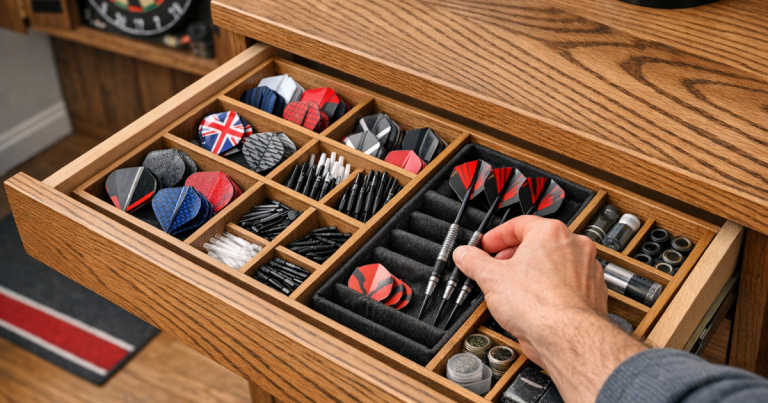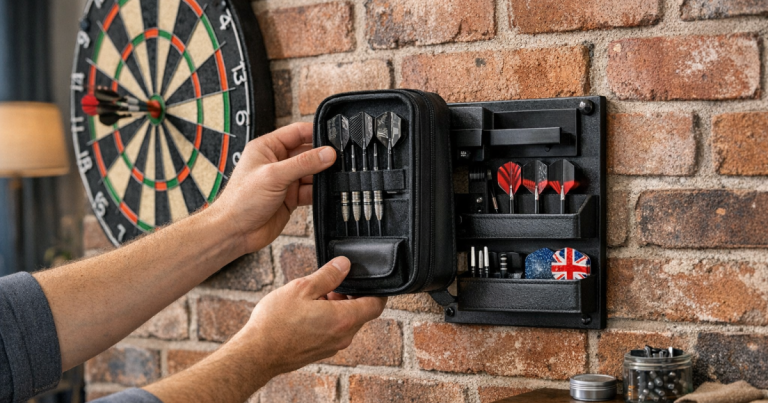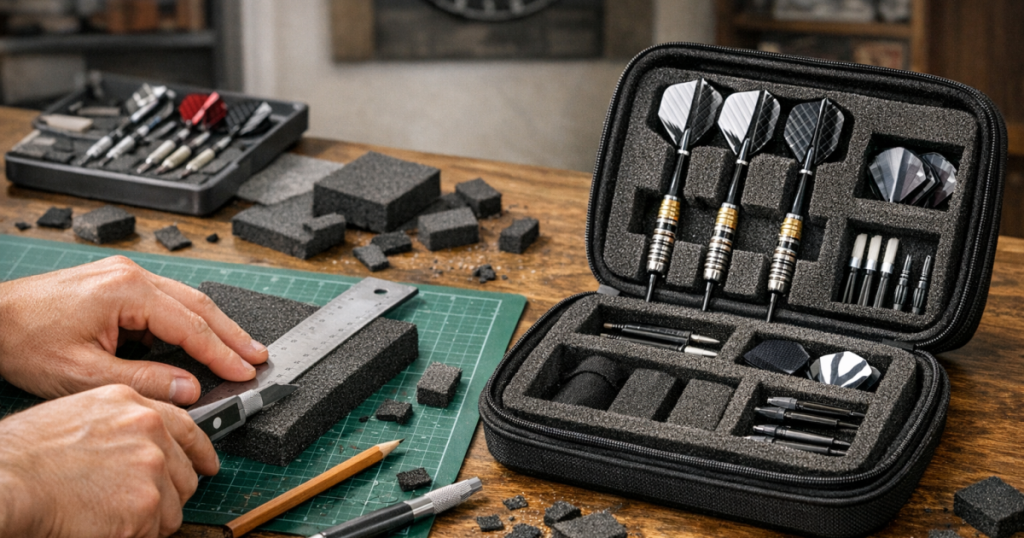
Loose barrels, spare stems and points quickly turn a tidy case into a rattle box. Making foam inserts for a dart case gives every part a dedicated place, so your kit is easier to find and less likely to rub, chip or bend in storage. You do not need a workshop; careful measuring, a sharp blade and patient test-fitting matter more than fancy tools.
Take your time with any cutting work. Use a stable surface, keep fingers clear of the blade path, and make several light passes rather than forcing one deep cut.
What to know first
- Use closed-cell foam for a cleaner insert: it tends to cut more neatly and resists absorbing moisture better than soft open-cell packing foam.
- Measure the actual items you carry: barrels, assembled darts, spare stems, flights, points, flight protectors and small tools all need different recesses.
- Make the fit snug, not tight: the foam should hold the darts in place without gripping so hard that you bend stems or crush flights.
- Plan before cutting: a paper template helps you avoid wasting foam and keeps the layout balanced inside the case.
Step 1: Empty the case and decide what the insert needs to hold
Start by tipping everything out of the case and grouping your kit by type. Put your main match darts together, then separate spare barrels, stems, flights, points, O-rings, point protectors and any small dart tool you carry. The aim is not to copy the old case layout; it is to build a layout that matches how you actually use your darts.
If you normally travel with fully assembled darts, allow space for the full length from point to flight. If you prefer to break darts down, the insert can be shallower and more compact, with separate channels for barrels and stems. For a home darts setup, a case insert works best when it complements your wider storage routine rather than becoming a cramped junk drawer.
Step 2: Choose the right foam
Good foam inserts for a dart case start with foam that is firm enough to hold its shape but soft enough to cut cleanly. Closed-cell polyethylene foam, EVA craft foam and dense packaging foam can all work. Avoid crumbly foam that tears when pinched, as it will shed bits into the case and leave rough edges around the slots.
Thickness matters. For barrels and loose accessories, a thinner layer may be enough. For assembled darts, use foam deep enough to cradle the point and barrel without the lid pressing hard on the flights. If the case is shallow, consider a two-layer insert: a base layer for structure and a top layer with cut-outs.
Check the case closes without pressure before committing to the final design. Place a rough piece of foam inside, add your darts on top, close the lid gently and look for bulging, resistance or flight compression.
Step 3: Make a paper template
Cut a piece of plain paper or card to the exact internal shape of the case. Press it into the corners, mark the edges, then trim until it sits flat without curling. This becomes your layout template.
Place your darts and accessories on the template and move them around until the arrangement feels natural. Keep sharp points facing away from soft flights where possible. Leave enough foam between cut-outs so the insert does not split. As a simple rule, avoid placing two deep cuts so close together that only a thin strip of foam remains between them.
Think about retrieval as well as storage. A perfectly tight recess looks neat, but you need enough finger room to lift items out. Small half-moon notches at one end of a barrel slot can make the insert much easier to use.
Step 4: Mark the foam cleanly
Put the paper template on the foam and trace the outer shape first. Use a fine marker, pencil or chalk pencil depending on the foam colour. Then mark the positions of each item. For barrels, trace around the widest part rather than the narrowest grip section. For stems, mark a straight channel that leaves room for the end shape. For flights, avoid over-compressing them; a shallow pocket is usually better than a tight slot.
If you are making a two-layer insert, mark the top layer only for the cut-outs and keep the base layer uncut unless you need extra depth for points or barrels. This gives the insert a cleaner bottom and stops points from contacting the case shell.
Step 5: Cut slowly and test often
Use a sharp craft knife, scalpel-style hobby knife or foam cutter. A dull blade drags through foam and leaves torn edges. Cut on a sacrificial cutting mat or thick cardboard so you do not damage the table underneath.
For straight channels, use a ruler as a guide and make light passes. For rounded recesses, rotate the foam rather than twisting your wrist awkwardly. Do not try to cut the full depth in one go; shallow passes give you more control and a neater result.
After each recess is cut, test the actual dart part in the slot. If it is too tight, shave away a tiny amount and test again. It is much easier to enlarge a recess than to fix one that has been cut too wide.
Step 6: Add finger notches and accessory pockets
Once the main items fit, add small practical details. A shallow notch at the side of each barrel channel lets you lift the barrel without digging your nail into the foam. A small square or oval pocket can hold O-rings, spare points or a compact dart tool. If the case has a lid pocket, use that for flat items such as spare flights rather than cutting oversized foam recesses.
Do not overfill the insert. The more tiny pockets you cut, the weaker the foam becomes. Keep the layout simple: main darts, key spares and the accessories you actually use during a match or practice session.
Step 7: Fit the insert into the case
Place the finished insert into the case and check whether it moves when the case is tilted. If it slides, you can use a very small amount of removable adhesive tape underneath, or cut the foam slightly larger so it compresses gently against the sides. Avoid strong permanent glue unless you are certain you will not want to change the layout later.
Close the case with everything loaded. Shake it gently. You should hear little or no movement. Open it again and check for pressure marks on flights, bent stems or points pushing through the foam. If anything looks compressed, reduce the height of the foam or change the layout so taller items sit in a deeper area of the case.
Keeping the insert clean and dry
Foam helps organise your kit, but it can also trap dust and moisture if the case is stored badly. Wipe barrels before putting them away, especially after long practice sessions, and let damp flights or shafts dry before sealing the case. If your darts live in a garage, shed or utility room, moisture control matters just as much as tidy storage; the advice on stopping darts rusting in a damp garage is a useful next step.
Every few weeks, remove the insert and tap out loose dust. If the foam smells musty or feels damp, let it air dry fully before reloading the case. Replace foam that has become soft, crumbly or permanently compressed, as it will no longer hold darts securely.
Where the case fits into your wider darts area
A custom insert is most useful when it has a clear role in your overall setup. Keep match darts and the most-used spares in the case, then store less-used accessories elsewhere so the case stays quick to use. If your dartboard area doubles as a living room, spare room or rented-home setup, a cabinet or surround can help keep the wall area tidy too; see the guide to dartboard cabinets and surrounds for rented homes for storage ideas around the board itself.
It is also worth separating soft accessories from sharp or heavy items. Flights, stems and paper score sheets do better away from loose points and tools. Barrels can sit snugly in foam, while mats, lighting parts and larger accessories usually need their own storage plan. For example, if your mat is part of the same home setup, the guide on storing a dart mat without curling will help keep that side of the room organised as well.
Common mistakes to avoid
- Cutting before testing the case depth: the insert may look right until the lid presses on the darts.
- Using foam that is too soft: very spongy foam can let barrels roll or points work loose in transit.
- Making every slot too tight: tight pockets can damage stems, flatten flights or make the case annoying to use.
- Ignoring finger access: a clean-looking recess is frustrating if you cannot lift the dart out easily.
- Overloading the case: a good insert should organise essentials, not turn the case into the only storage space for every spare you own.
Questions people ask
Can I use the foam that came in product packaging?
Yes, if it is dense, clean and cuts without crumbling. Avoid flaky packing foam, as it can shed pieces into the case and lose its shape quickly.
Should I store darts assembled or taken apart?
Either works. Assembled storage is quicker for regular practice, while broken-down storage saves space and gives better protection for flights and stems in a shallow case.
How tight should the dart slots be?
They should stop the dart moving when the case is carried, but you should still be able to lift the dart out without pulling hard or flexing the stem.
Can I glue layers of foam together?
Yes, but use glue sparingly and test it on an offcut first. Some adhesives can soak into foam, stiffen it or leave a smell inside a closed case.
How often should I replace a foam insert?
Replace it when the slots become loose, the foam stays compressed, or it starts to crumble. A well-used case insert is a working accessory, not a permanent fixture.
What to remember
The best insert is the one that matches your darts, your spares and the way you use your case. Measure first, cut slowly, test the fit often and leave enough room to remove each item comfortably. Done well, a simple foam insert turns a basic dart case into a tidy, protective storage system that keeps your gear ready for the next throw.