A dart that looks ideal in a case can feel completely wrong once it leaves your hand. The quickest way to choose well is to match the barrel shape, grip texture, weight and setup to how you actually hold and release the dart, because darts for grip are not one-size-fits-all.
Start with your natural hold rather than copying a professional player’s exact setup. Once you know where your fingers sit, the rest of the buying decision becomes much easier.
The short version
- Front grippers usually need reliable texture and shaping near the point end of the barrel.
- Middle grippers often suit straight or lightly contoured barrels with a consistent centre section.
- Rear grippers should check that the back of the barrel gives enough purchase without catching on release.
- Faster throwers may prefer a dart that leaves the hand cleanly, while slower throwers may like a steadier feel.
- Weight, shaft length and flight shape can change the entry angle, so judge the whole setup rather than the barrel alone.
Step 1: identify where your fingers actually sit
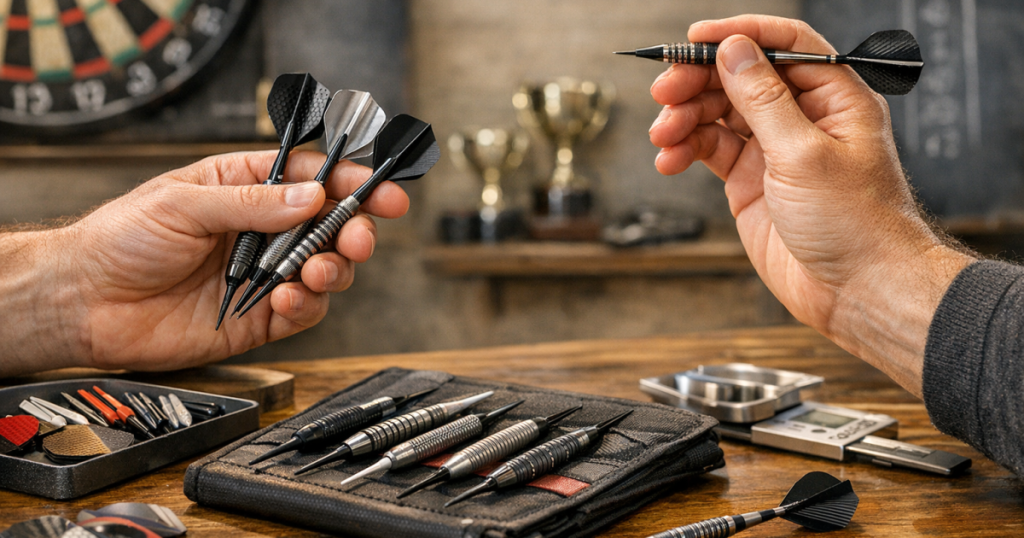
Before comparing brands or barrel designs, pick up your current darts and hold them without thinking about technique. Look at where your thumb, index finger and middle finger naturally land. Many players think they grip in the middle, then realise their thumb is much closer to the nose or the rear once they check properly.
A simple way to test this is to put a tiny removable mark on the barrel where your thumb rests, then throw a few relaxed visits. If your thumb returns to the same area each time, that is your true grip point. If it moves around, you may benefit from a barrel with clearer grip reference points, such as rings, grooves or a shallow scallop.
Do this from a properly set oche so you are judging your normal throw, not compensating for the room. If your home setup is still being adjusted, check how to measure dartboard height and throwing distance correctly before making expensive changes to your darts.
Step 2: match barrel shape to your grip position
Barrel shape matters because it decides where the dart feels balanced in your hand and how easily your fingers repeat the same placement.
Front grip
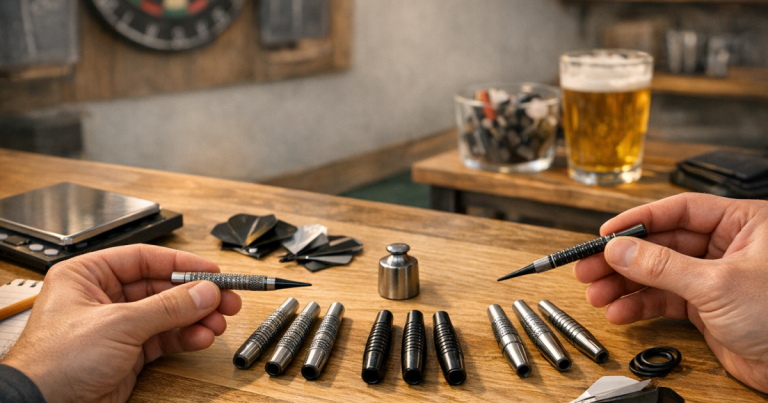
If your fingers sit near the point, look for barrels with usable texture at the front. Front-weighted or torpedo-style shapes can feel natural because there is more presence near the nose, but they are not automatically better for everyone. Check that the front section gives enough room for your fingers and does not force you too close to the point.
Middle grip
Middle grippers often get on well with straight barrels because the hold area is predictable and easy to repeat. A gentle scallop can help if you like a clear finger stop, but it can also lock you into one position. That is useful when it fits your hand and frustrating when it does not.
Rear grip
Rear grippers should pay close attention to the back third of the barrel. Some darts look grippy at the front but become plain near the stem, which gives little feedback for a rear hold. You may want rings or cuts close to the shaft, but avoid anything so aggressive that it drags against your fingers as the dart leaves.
Step 3: choose a weight that supports your throw
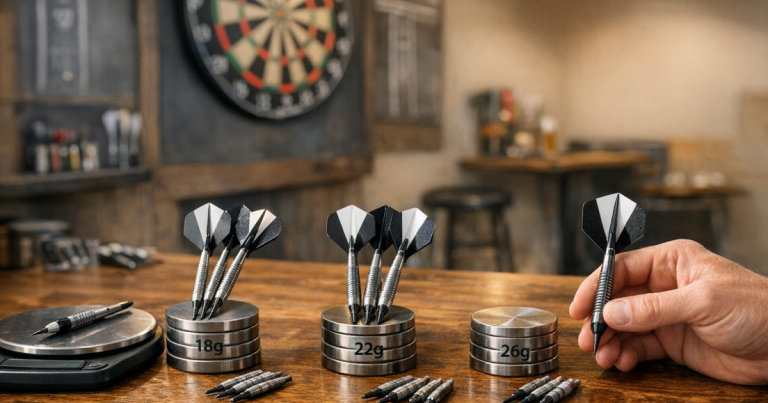
Weight changes how much work your hand has to do. Many adult steel-tip players use darts somewhere in the low-to-mid 20 g range, but the right answer is personal. Try small changes rather than jumping dramatically heavier or lighter.
A lighter dart can suit a quicker, cleaner throw because it responds immediately to the hand. The downside is that it may feel twitchy if your release is inconsistent. A heavier dart can feel calmer through the throw, but it can also dip if you do not follow through or if your grip tightens late.
When testing, throw several visits at the same target rather than judging from one good treble. Watch the flight path, landing angle and grouping. If the dart keeps dropping below your aim point, do not assume you need more power; the weight, shaft and flight combination may simply be wrong for your throw.
Step 4: pick grip texture for release, not just control
Grip is not about choosing the roughest barrel on the shelf. It is about having enough feedback to repeat your hold while still letting the dart leave cleanly.
- Smooth or low-grip barrels can suit players with a relaxed hold and a very clean release, but they may feel vague with dry hands.
- Ring grip is a familiar all-round choice because it gives finger reference without usually feeling too sharp.
- Knurled sections can add strong traction, though some players find they cling too much at release.
- Shark cuts and aggressive grooves can suit players who need a definite pull point, but they can punish a late or tight release.
- Mixed grip barrels are useful when your thumb and fingers need different levels of contact.
The key test is whether the dart leaves your hand without a snag. If you get good control during the pull-back but the dart kicks sideways on release, the texture may be too much for your throw.
Step 5: consider barrel length and diameter
Length and diameter affect comfort as much as grouping. A slim barrel can help darts sit close together in the treble bed, but it may not give enough surface area if you have a broad grip. A thicker barrel can feel more secure, though it may take up more space in the board.
Longer barrels give more room for three or four fingers and can feel stable in the hand. Shorter barrels can feel compact and direct, but they demand more precise finger placement. Neither is automatically better; the right choice is the one that lets you repeat your grip without hunting for the same position every visit.
Step 6: tune shafts and flights after the barrel feels right
Do not judge a barrel using only the supplied shafts and flights. They are a starting point, not a final verdict. A longer shaft or larger flight often adds stability and can help the dart stand up more in the board. A shorter shaft or smaller flight may make the dart travel flatter or feel quicker, depending on your throw.
Change one part at a time. If you swap weight, shaft length and flight shape all at once, you will not know what fixed the problem. Keeping a small parts box makes testing far easier, and the guide to organising spare flights, shafts and points at home is useful if your setup is already turning into a drawer full of loose bits.
Real product examples to use as reference points
Named darts can be helpful reference points, but they should not replace a proper fit check. A premium steel-tip set such as Target Darts Phil Taylor Power 9Five and a popular value-focused range such as Red Dragon Amberjack Darts can show how different barrel profiles, finishes and grip layouts feel in the hand. Before buying any set, verify the current weight options, included accessories, point type and whether the version is steel-tip or soft-tip.
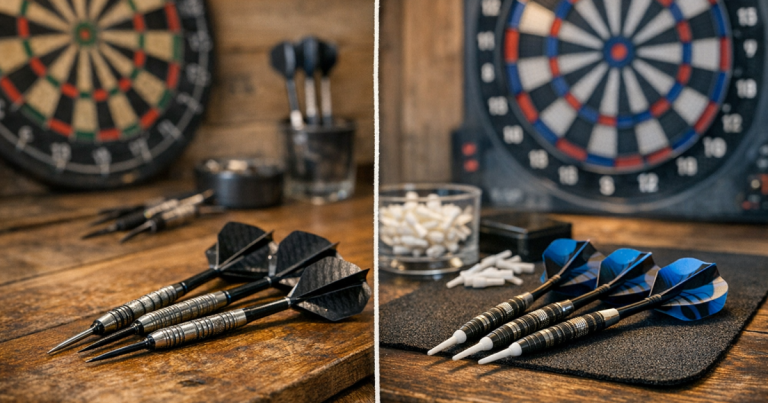
If you play on a bristle dartboard at home, buy steel-tip darts. If you use an electronic soft-tip board, buy soft-tip darts and check the board manufacturer’s guidance on suitable dart weights and tips. Mixing the wrong dart type with the wrong board is not a useful shortcut and can damage equipment.
A simple testing routine before you commit
Try to test darts in a repeatable way rather than relying on the first few throws. Use this quick routine:
- Throw three relaxed visits at the 20 bed, focusing on release rather than score.
- Throw three visits at 19s to see whether the dart still lines up when you change angle.
- Throw at bull to check whether the weight feels controllable on a smaller target.
- Notice where the dart lands in the board: tail up, tail down, flat or sideways.
- Write down what changed: grip comfort, release, grouping, fatigue or confidence.
If a dart groups well but feels uncomfortable, be cautious. Comfort matters over a long evening at home, especially if you play legs with friends rather than just throwing a quick practice routine.
Common buying mistakes
- Buying only by player name: Professional signature darts are built around that player’s preferences, not yours.
- Choosing the sharpest grip available: More texture can mean more control, but it can also cause sticking and deflections.
- Ignoring balance: Two darts of similar weight can feel very different if the mass is distributed differently.
- Changing too much too soon: Make one adjustment, test it properly, then decide what to alter next.
- Blaming the dart for every bounce-out: If your board is worn or has a prominent spider, the board may be part of the issue. It is worth understanding dartboard wiring and spider designs before replacing a set that otherwise suits your throw.
FAQ
Should beginners choose heavier or lighter darts?
Most beginners are better off starting around a moderate steel-tip weight and adjusting in small steps. Very light darts can feel lively, while very heavy darts can mask release issues until they start dropping low.
How much grip should a dart have?
Enough to place your fingers consistently, but not so much that the barrel catches as you release. If the dart twists or kicks sideways, try a less aggressive texture.
Do I need different darts for practice and matches?
Usually no. It is better to build confidence with one main setup. Keep spare flights, shafts and points handy, but avoid switching darts constantly unless you are deliberately testing.
Can changing flights fix a dart that feels wrong?
Flights can improve stability and landing angle, but they will not fix a barrel that is uncomfortable or a grip position that does not suit your hand. Get the barrel close first, then fine-tune.
Are expensive darts always better?
No. Higher-priced darts may offer premium materials, machining or finish, but fit matters more than cost. A simpler set that matches your grip can outperform a premium set that feels awkward.
Key takeaways
The best dart for your throw is the one that makes your grip repeatable and your release clean. Start with finger position, then work through barrel shape, weight, texture, length, shafts and flights in that order. Test patiently, change one variable at a time, and judge the dart by comfort and grouping rather than looks alone.