The thin dividers between scoring segments do more than make a board look tidy. Dartboard wiring affects bounce-outs, visibility, scoring confidence and how cleanly the sisal can recover after regular throwing. For home players, the important point is not simply whether the board looks professional; it is how the spider shape, wire thickness and bullseye construction influence day-to-day practice.
Here, wiring means the metal scoring frame on a dartboard, not electrical wiring. Lighting, cabinets and electronic boards have their own setup considerations, but the spider itself is a mechanical part of the board.
What to know first
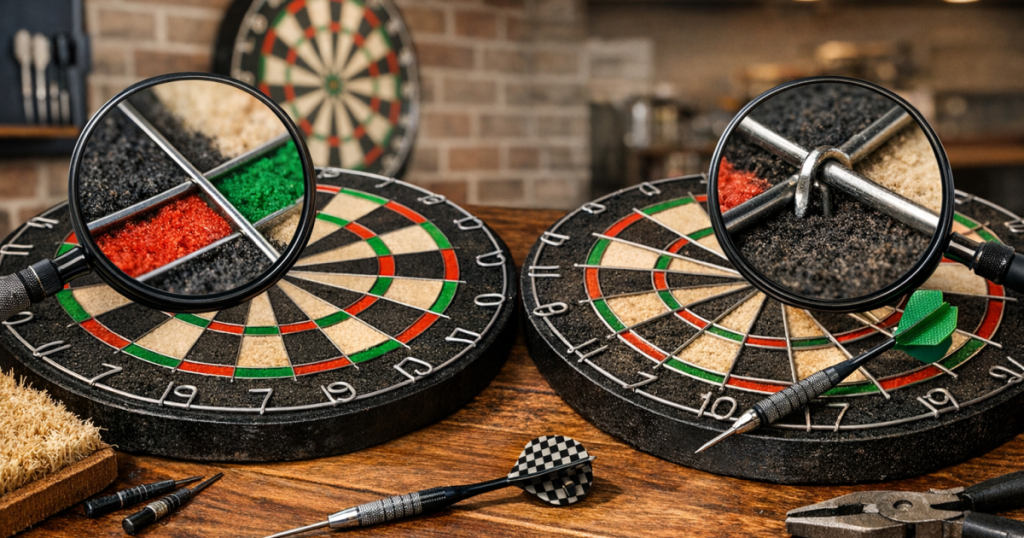
On a traditional bristle board, the spider is the metal framework that separates singles, doubles, trebles, the outer bull and the inner bull. It gives the scoring areas their sharp boundaries, but it also creates hard edges that a dart can hit instead of entering the sisal.
- Thicker round wire is more likely to deflect a dart because it presents a wider, rounded surface.
- Angled or blade-style wire is designed to guide a dart towards the bed rather than straight back out.
- Staples can add extra obstruction points where the spider is fixed to the board face.
- Bullseye construction matters because the bull is small, crowded and heavily targeted in practice routines.
The design also changes what you notice under real throw conditions. A cleaner spider can make trebles easier to read from the oche, while a heavy, shiny wire can catch glare under poor lighting. That does not mean every casual player needs the most advanced board available, but it does explain why two boards with the same printed layout can feel noticeably different.
How the main spider styles differ
Most dartboard wiring falls into a few broad styles. The exact construction varies by manufacturer, but the playing effects are easy to understand once you know what to look for.
Round wire spiders
Round wire is the older, more basic style. The metal dividers sit visibly on the board face and have a curved surface. When a steel-tip dart strikes that curve, it can glance away from the target bed. This is why round-wire boards are commonly associated with more bounce-outs, especially around the treble ring and bull.
Round wire can still be perfectly usable for light home play, warm-ups or casual games. Its main limitation is consistency. If a good dart hits a prominent wire, the throw is lost even though the aim was close enough. That becomes more frustrating as your grouping improves.
Triangular and blade-style wire
Triangular or blade-style dividers use a thinner, angled profile. Rather than presenting a rounded obstruction, the wire is shaped so that an incoming dart has a better chance of sliding into the scoring bed. The result is not magic, and bounce-outs can still happen, but the board feels more forgiving when darts land close to segment borders.
This style is common on better bristle boards and is one of the reasons many regular players move away from entry-level boards once they start practising more often. If you are trying to build repeatable scoring around 20s, 19s and doubles, fewer deflections can make practice feel fairer.
Stapled spiders
Staples are used on some boards to hold the wire frame in place. They create extra metal points on the board face, usually at segment intersections. A staple is small, but it is still another place a dart can strike and rebound.
Stapled boards are not automatically poor, and plenty of casual players get good use from them. The trade-off is that the playing surface is more interrupted. If you are already seeing regular deflections around trebles or the bull, the spider and staple layout is one of the first things to inspect. For more detail on this specific trade-off, the explanation of whether staple-free dartboards are worth it for regular players is a useful next read.
Staple-free and embedded designs
Staple-free boards use construction methods that secure the spider without visible staples on the playing face. Many also combine this with thinner, angled wire. In practice, that means fewer obvious obstruction points and a cleaner route into the sisal.
The biggest benefit is not that every dart suddenly stays in. It is that good throws near a divider are less likely to be punished by the hardware. For home players who practise doubles, trebles or checkout routes, that can make sessions feel more representative of actual scoring ability.
Why the bullseye area deserves special attention
The bullseye is where spider design becomes especially noticeable. The target is small, the wirework is tight, and many practice games involve repeated bull attempts. If the inner and outer bull are surrounded by thick or heavily raised metal, deflections are more common.
A cleaner bull construction helps in two ways. First, it reduces the amount of metal a dart can hit. Second, it can make the scoring boundary easier to see, particularly in a home room where lighting is not as even as a venue setup. Players who practise 25 and bull finishes often notice this area before they notice subtle differences elsewhere on the board.
It is also worth rotating a bristle board regularly if the model allows it. Rotation spreads wear across different number segments, but the bull remains fixed and cannot be rotated out of heavy use. That makes the quality of the bull assembly more important over the long term.
How spider design changes home practice
For a casual game with family or friends, a bounce-out is annoying but rarely important. In structured practice, it matters more. If you are tracking averages, doubles hit rate or checkout progress, repeated deflections can make your numbers feel inconsistent.
Spider design also affects confidence. A player working on tighter grouping wants feedback from the throw, not from a chunky divider. When the dart lands cleanly, you can judge aim, release and line more honestly. When it bounces out from a wire, you are left guessing whether the throw was poor or simply unlucky.
This is one of the differences between a board that is fine for occasional use and one that supports regular practice. It is not only about durability; it is about how accurately the board reflects the quality of the dart. The broader comparison of how competition and practice dartboards differ gives more context if you are setting up a more serious home oche.
What to check on the board face
You can learn a lot about a dartboard by looking closely at the spider before you play. The checks are simple and do not require tools.
- Wire profile: look at whether the dividers are round and raised, or thin and angled.
- Staples: check whether there are visible fixing points on the playing surface, especially around trebles and the bull.
- Alignment: the spider should sit neatly over the printed beds, with no obvious twisting or uneven segment widths.
- Raised areas: any lifted wire can create extra bounce-outs and may indicate damage or wear.
- Bull construction: inspect how much metal surrounds the inner and outer bull, and whether the area looks cleanly finished.
- Glare: stand at the oche and check whether the metal reflects light into your sightline.
That last point is often overlooked. Even a well-designed spider can be harder to read if the board is lit from one side or by a harsh overhead fitting. If your trebles look shadowed or the wire shines from the throw line, the issue may be the room setup rather than the board itself. The guide to common dartboard lighting mistakes covers the practical fixes.
Bristle boards, soft-tip boards and electronic segments
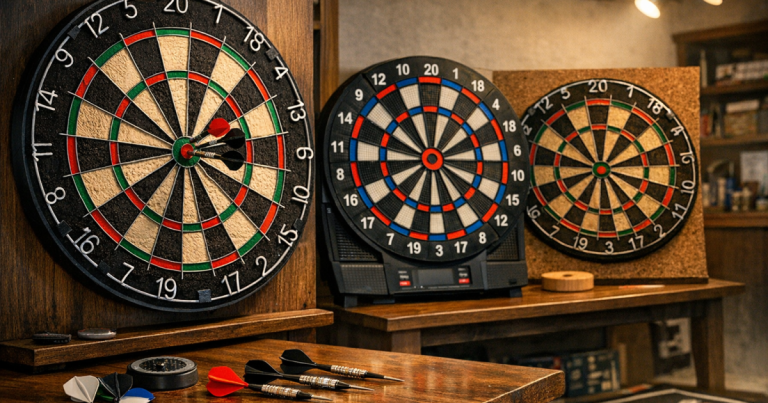
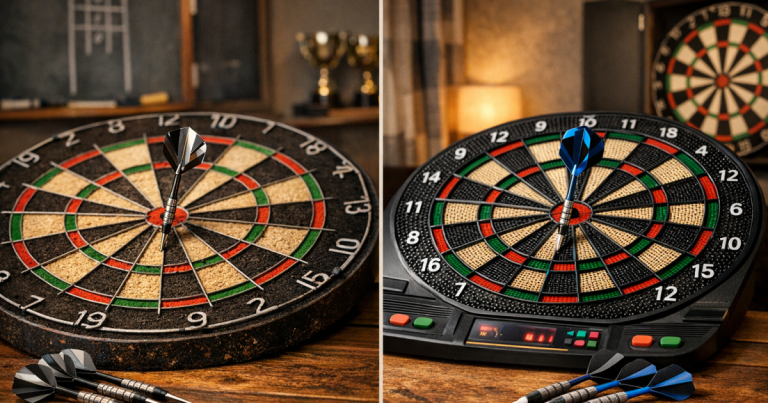
Steel-tip bristle boards use sisal and a metal spider. Soft-tip and electronic boards work differently. Instead of steel points entering sisal, plastic soft tips enter small holes or segmented plastic beds. The dividing structure is part of the moulded playing surface rather than a traditional metal spider.
That changes the feel of the game. Soft-tip boards can be excellent for certain home setups, particularly where steel tips are not suitable, but their segment design, hole pattern and scoring sensors are a different subject from bristle-board wirework. If you switch between steel-tip and soft-tip play, expect the board face to feel and sound different, even when the scoring numbers are familiar.
Maintenance and wear around the spider
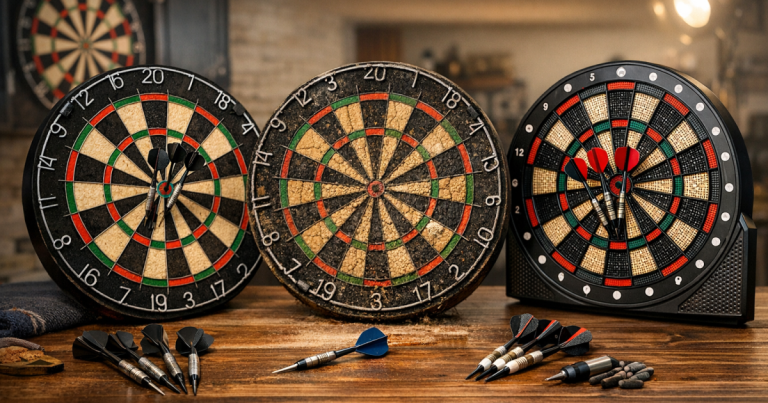
A good spider still needs a sensible setup and regular care. Avoid soaking or aggressively cleaning the board face, as moisture and rough handling can damage the sisal and disturb the surface. Use normal board rotation where applicable, keep darts in reasonable condition, and remove darts by pulling straight out rather than levering against the wire.
Watch for persistent problem areas. If one treble bed starts rejecting darts more often, check whether the wire has lifted, the sisal has hardened, or the board has taken concentrated wear. A single bounce-out is normal; a repeated pattern from the same spot tells you something useful.
Why it matters
The spider is easy to ignore because it is part of the board you are trying not to hit. Yet it has a real effect on how fair, readable and satisfying a home setup feels. Thinner angled wire, fewer exposed fixing points and a clean bull area all help the board reward accurate darts more often.
For occasional games, a basic spider may be enough. For regular practice, the design becomes more important because small deflections add up over hundreds of throws. Understanding the difference helps you judge a board by how it plays, not just how it looks when it is new.
FAQ
Is a staple-free board always better?
Not always, but it usually reduces obstruction points on the board face. The overall quality of the sisal, wire profile and bull construction still matters.
Do thinner wires stop bounce-outs completely?
No. They reduce the chance of a dart striking a large metal surface, but bounce-outs can still happen because of angle, dart condition, board wear or grouping.
Can a damaged spider be repaired at home?
Minor lifted areas are usually a sign that the board is wearing or has been damaged. Bending wire back can make the surface uneven, so replacement is often the cleaner solution for regular play.
Does spider design matter for beginners?
Yes, but it is not the only priority. Beginners benefit from a clear, consistent board, while more advanced players tend to notice wire deflections more because their grouping is tighter.
Why does my board look hard to read from the oche?
The cause may be glare, shadows, faded print, thick wire or poor contrast between segments. Check the lighting position as well as the board surface.