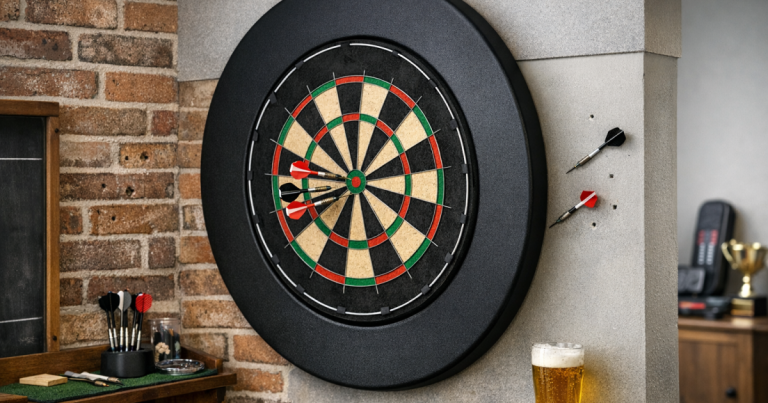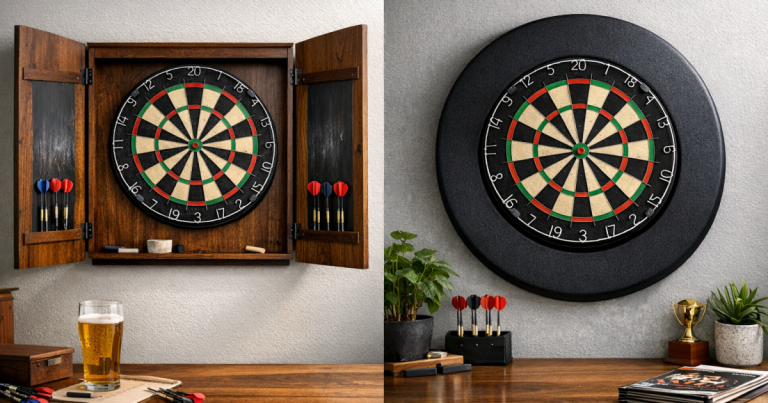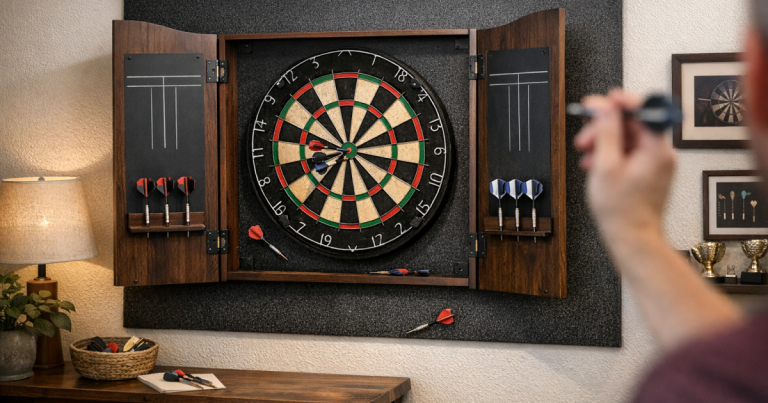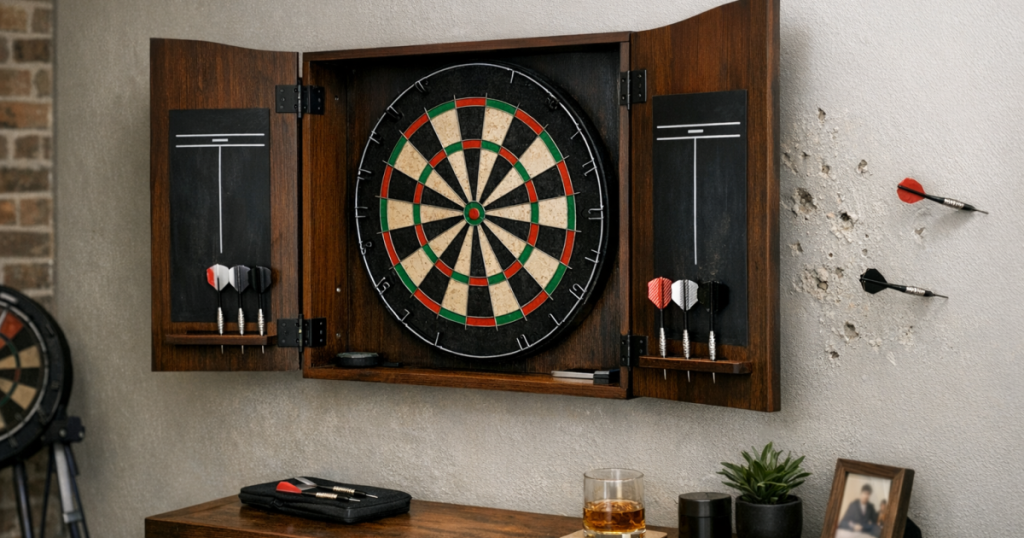
A cabinet can make a home darts setup feel instantly neater, but it is not the same thing as a full protective wall system. This Winmau Deluxe Dartboard Cabinet review looks at the product as most UK home players will use it: around a standard bristle board, in a spare room, garage, hallway end or garden room where errant darts can leave obvious marks.
The short version: Winmau Deluxe Dartboard Cabinet is a smart, practical enclosure for keeping the board area tidy and giving some protection either side of the board. It is not enough on its own if beginners, children, guests or very wayward practice sessions are part of the picture. For that, you will still want a surround, a wider backboard, or a more deliberate wall-protection plan.
Product overview
The Winmau Deluxe Dartboard Cabinet is a traditional wall-mounted cabinet designed to sit around a bristle dartboard. Its main job is simple: hide the board when not in use, give the setup a more finished look, and provide a pair of side doors that can absorb or deflect some of the darts that miss close to the scoring area.
That makes it a good fit for the kind of home setup where appearance matters. If your board is in a dining area, converted office, family room or a shared garage wall, a cabinet usually looks more intentional than a bare board and bracket. It also keeps the visual clutter down between games, which is useful if your darts corner has to share space with normal household life.
Where it needs careful thought is protection. A cabinet protects a defined rectangle around the board, mostly to the left and right. It does not protect a wide area above, below or beyond the open doors. Before drilling, it is worth reading up on fitting a dartboard cabinet on plasterboard, because the fixings and wall type matter more than the cabinet itself if you want it to stay secure.
Key specs
- Brand: Winmau.
- Product type: wall-mounted dartboard cabinet for a home bristle-board setup.
- Primary purpose: tidier presentation, enclosed storage feel and limited side-wall protection around the board.
- Dartboard compatibility: intended for standard bristle dartboards, but check the retailer listing and your board depth before ordering.
- Board included: many listings are cabinet-only, while some retailers may bundle cabinets with boards; verify exactly what is included.
- Scoring area: cabinet doors are commonly shown with internal scoring panels, but check whether chalk, marker or accessories are supplied.
- Mounting: supplied fixings can vary by seller and may not suit every UK wall type; choose fixings appropriate to brick, block, stud or plasterboard.
- Finish: confirm the colour and surface finish from the current product listing, as photos can look different under room lighting.
Pros and cons
Pros
- Gives a bristle dartboard a cleaner, more furniture-like appearance.
- Offers useful protection for near misses that land close to the left or right of the board.
- Helps the setup feel less intrusive when the doors are closed.
- Works well in shared rooms where a bare dartboard would look too informal.
- Can pair neatly with a separate surround or backing panel for stronger wall protection.
Cons
- Not wide enough to protect the full miss zone for new or casual throwers.
- Does little for low misses below the board, which are common during relaxed home games.
- Open doors need side clearance, so it is less suitable for tight corners.
- Wall fixing quality depends on your wall type and the hardware used.
- Cabinet doors can show dart marks over time, especially with mixed-ability players.
Performance in real use
The best thing about the Winmau Deluxe Dartboard Cabinet is how quickly it makes a board area look deliberate. A plain bristle board screwed to a wall can feel temporary, even when it is measured correctly. Add a cabinet and the same area looks more like a planned home darts station.
For protection, it performs well within its limits. Close side misses are exactly where a cabinet helps most. If a dart drifts just outside the scoring segments, the open door area can take the hit instead of the plaster, paint or wallpaper. That is useful for competent home players who miss narrowly rather than wildly.
The limitation is the shape of real misses. Beginners do not only miss left and right. They miss high, low, and diagonally wide. Children and occasional guests may also stand inconsistently or throw with less control. In those situations, a cabinet is better viewed as one layer of protection rather than the whole answer.
If your setup is in a smartly decorated room, the safest approach is to map the likely miss area before deciding. Look at where darts have landed in previous sessions, or temporarily place a large piece of cardboard behind the board for a few games. If marks appear outside the cabinet footprint, that tells you exactly where a surround or larger backboard is needed.
There is also a usability trade-off. Cabinet doors give you score panels and visual framing, but they need space to open fully. A board tucked close to a side wall, shelving unit or door frame may make the cabinet awkward. Measure the open-door width against your room layout, not just the closed cabinet width shown in retailer photos.
Lighting is another overlooked detail. Cabinet doors can create shadowing depending on the lamp position and room light. If the board sits in a recess or under a shelf, plan the light at the same time as the cabinet. The guide to choosing dartboard lighting that avoids glare and shadows is a useful next step before you commit to the final wall position.
Durability should be judged realistically. A cabinet is there to be hit occasionally, so marks are part of ownership. The question is not whether it will stay pristine forever, but whether it keeps the surrounding wall looking better for longer. On that measure, it does a solid job for tidy, controlled home play. For busy family use, pub-style practice nights or mixed-ability groups, it needs help from wider protection.
Who it’s best for / who should skip it
The Winmau Deluxe Dartboard Cabinet is best for players who want a neat, traditional darts area without building a full wall panel. It suits a spare room, office wall, garage setup or garden room where the throwers are reasonably consistent and the board can stay mounted permanently.
It is also a sensible choice if your priority is presentation. Some home setups look too bare with only a board and surround. A cabinet softens the look and makes the area feel more finished, especially when paired with darker furniture, shelving or a dedicated scoring area.
You should skip it as your only protection if the wall finish is expensive, newly decorated, rented, or difficult to repair. In those cases, the cabinet footprint is too narrow to rely on by itself. A wide protective backboard, cork panel or purpose-made surround will give you more confidence.
It may also be the wrong fit for very compact spaces. Cabinet doors need room, and the open panels can interfere with shelves, cupboards, switches or nearby furniture. If every centimetre counts, a slim dartboard surround may be more practical than a cabinet.
Alternatives
The most obvious alternative is a full dartboard surround. A surround will not hide the board or provide the same cabinet look, but it normally protects a more useful ring around the dartboard. For many players, the best answer is actually cabinet plus surround, provided the fit works with your board and the cabinet depth.
A second option is a larger wall panel behind the board. This can be a purpose-made darts backboard, a cork-backed panel, timber sheet or other decorative protective surface that suits your room. It is less compact than a cabinet, but it gives better coverage for low and wide misses. If you have the space, a larger panel is the more protective choice.
For a more organised setup, a cabinet can also sit alongside separate storage rather than trying to do everything. Darts, stems, flights, chalk and small tools quickly make a room look messy, so wall storage away from the board can be a better solution than overloading the cabinet doors.
Helpful questions
Does the Winmau Deluxe Dartboard Cabinet protect the wall enough for beginners?
Usually not by itself. It helps with near side misses, but beginners often miss above, below and well outside the cabinet doors. Add a surround or wider backing board if new players will use the setup regularly.
Can I use it with any bristle dartboard?
It is intended for standard bristle-board setups, but you should verify the internal clearance, board depth and mounting arrangement against the current retailer listing and your exact board.
Is it suitable for a rented home?
Only if you are allowed to fix items securely to the wall and can make good any marks later. For rented rooms, wider removable protection behind the board may be safer for the wall finish.
Will the cabinet stop darts damaging skirting boards or the lower wall?
No. A cabinet sits around the board, so low misses can still hit the wall below. If low misses are common, extend your protection downwards with a larger panel or floor-to-board backing area.
Should I choose a cabinet or a surround first?
Choose based on the problem you are solving. If you want a tidier look, start with the cabinet. If the main issue is damage from stray darts, start with wider protection.
Verdict + score
The Winmau Deluxe Dartboard Cabinet is a good-looking and useful upgrade for a home darts setup, but it should not be mistaken for complete wall protection. It works best for players who already throw with reasonable control and want the board area to look smarter between games. If your wall is valuable, newly painted or likely to be tested by beginners, treat it as part of a wider protection plan rather than the whole solution. For tidy presentation, everyday practicality and limited side coverage, it earns 7.6/10.
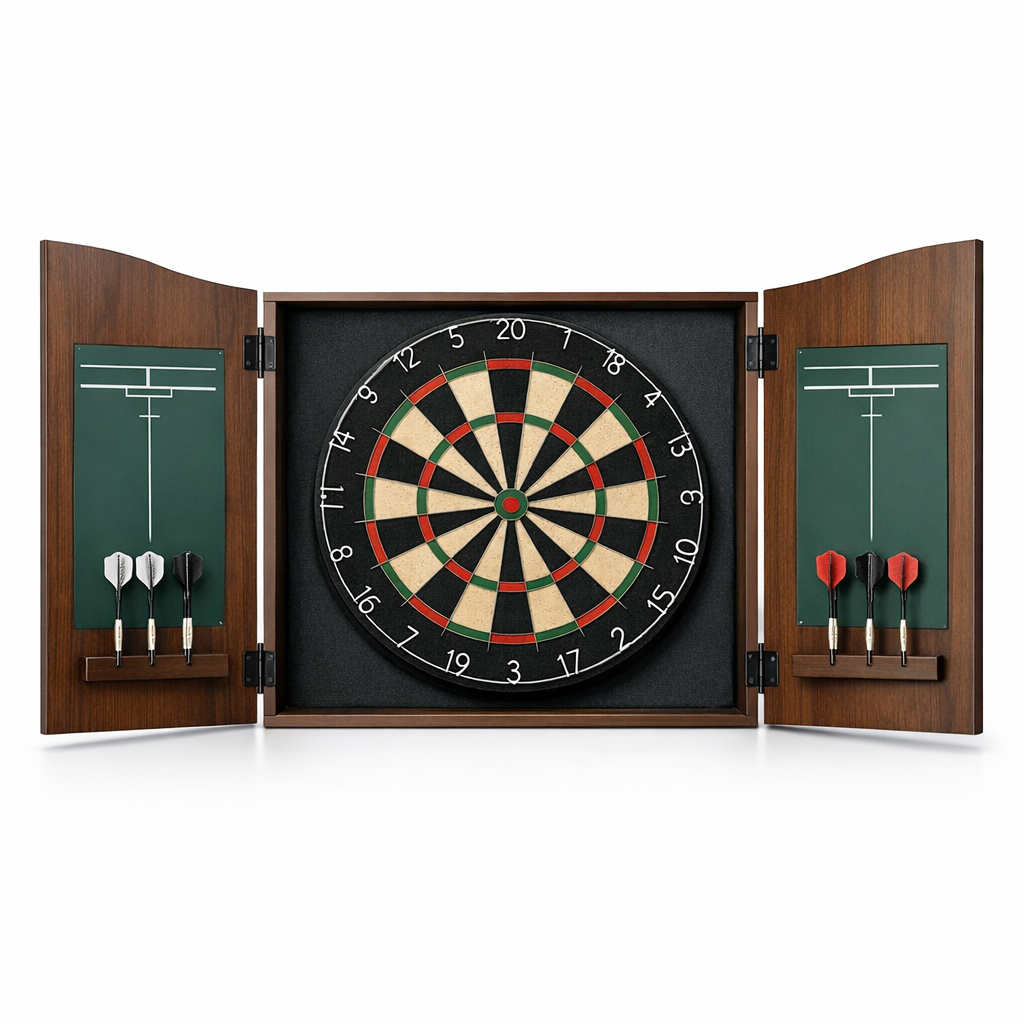
Winmau Deluxe Dartboard Cabinet
For tidy presentation, everyday practicality and limited side coverage, it earns 7.
You might also like: How to Measure Dartboard Height on Uneven Flooring.