Dartboards
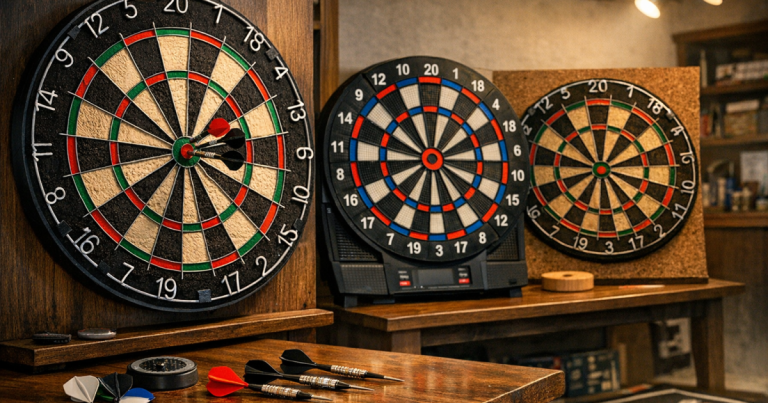
Tournament Dartboards Explained: Standards, Features and Home Suitability
Know which match-board features matter at home, from sisal quality and wire profile to room setup, lighting and long-term wear.
Read article →Topic archive
A UK-focused resource for building, upgrading, and optimising a home darts setup, blending practical room-planning advice with product comparisons, reviews, and buyer guides for casual players and serious…
Browse articles
Know which match-board features matter at home, from sisal quality and wire profile to room setup, lighting and long-term wear.
Read article →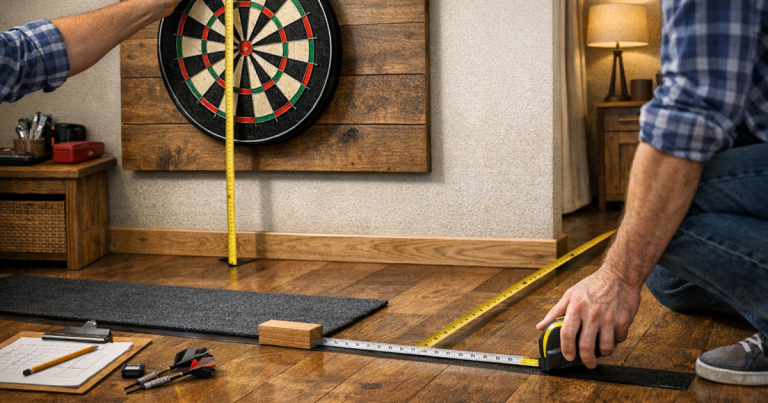
Small measuring errors can make a home darts area feel awkward. Get the bullseye, throw line and room layout working properly.
Read article →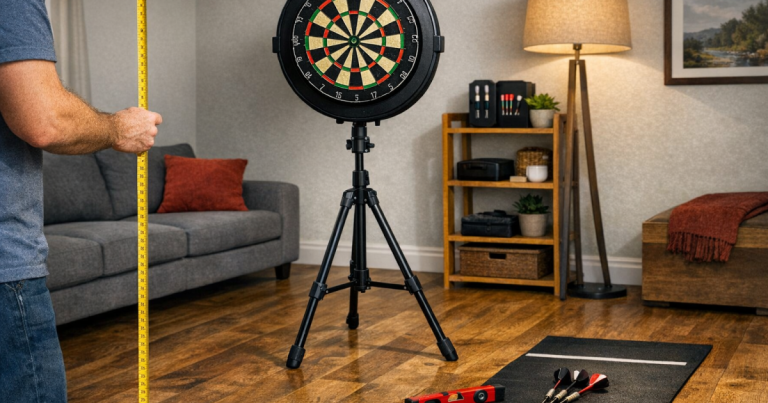
No fixed wall? Get a stable, renter-friendly darts setup with correct height, oche distance and fewer wobbles.
Read article →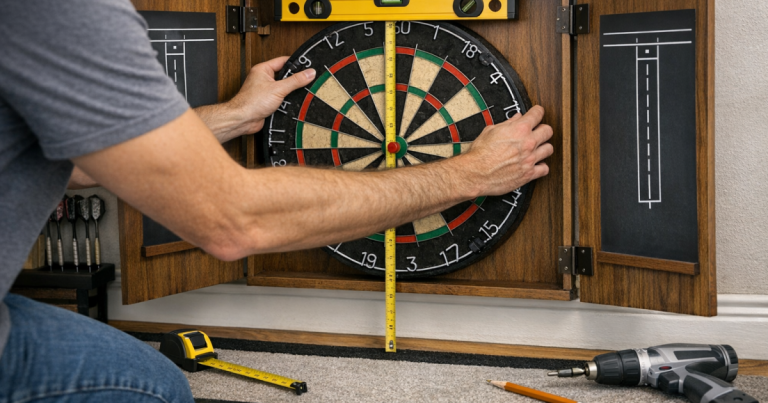
A neat cabinet can still ruin your setup if the bull shifts. Use board-first marking to keep the height, centre line and…
Read article →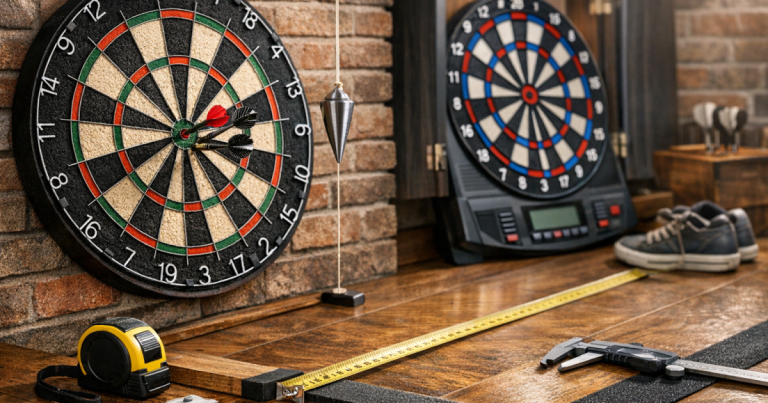
Set your board at the right height, mark the oche properly, and avoid the common measuring mistakes that spoil home practice.
Read article →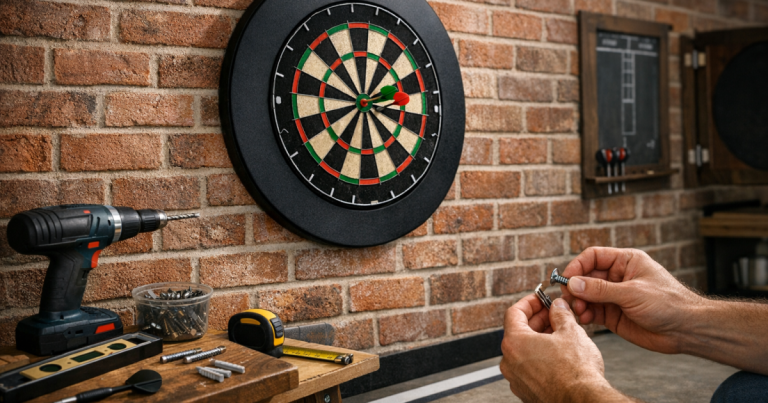
Brick gives you a sturdy base, but the board still needs accurate height, suitable fixings and a clean oche line.
Read article →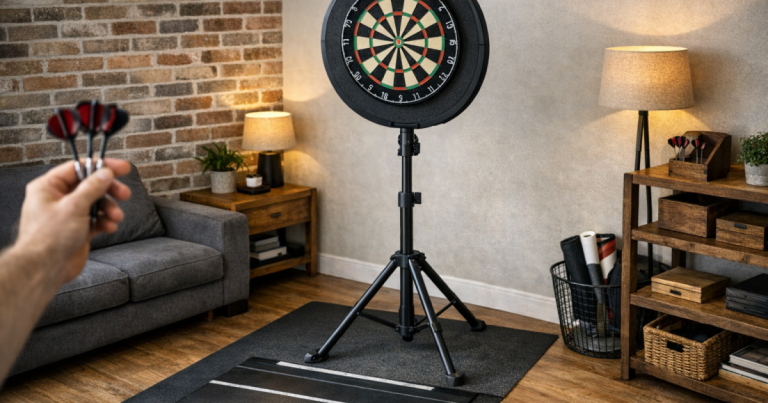
Ideal for renters, shared walls and flexible practice spaces where you want a proper throw without permanent wall fixings.
Read article →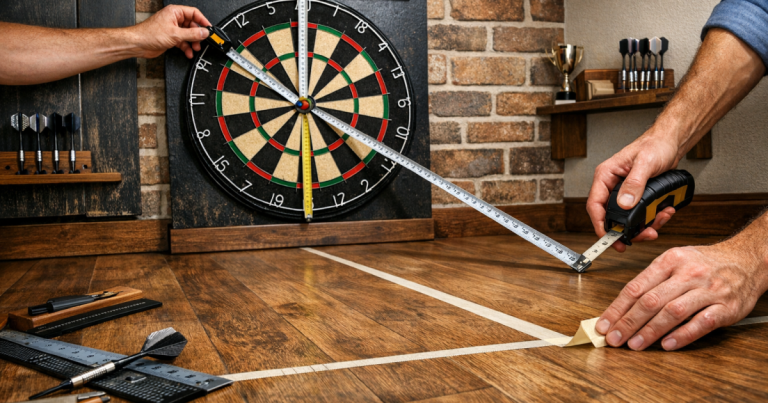
Small measuring errors can make a home board feel wrong. Get the bullseye, toe line and diagonal check lined up properly before…
Read article →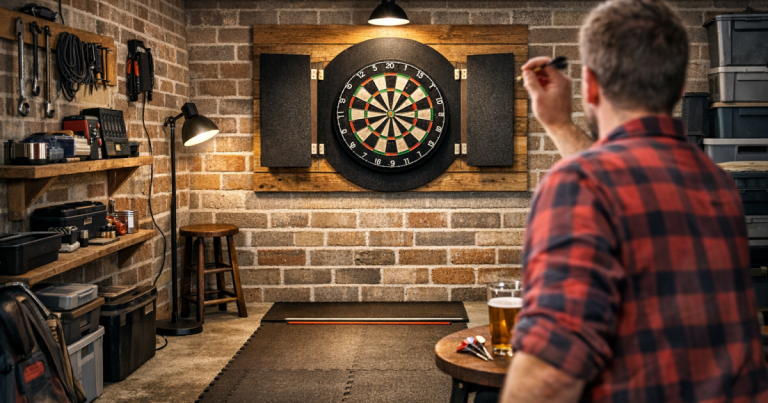
Turn a cold, cluttered garage into a throw-ready darts space without guessing at height, lighting, wall protection or clearance.
Read article →
Uneven garage or shed floors can throw off your bull height. Here’s how to mark a fair, repeatable board position.
Read article →