If you are dealing with soft-tip darts bouncing off an electronic board, the cause is usually one of four things: tired tips, a loose board, blocked segments or a throw that is landing too flat. Start with the simple checks before blaming the board. Most bounce-outs can be reduced with fresh points, steadier mounting and a cleaner, more consistent setup.
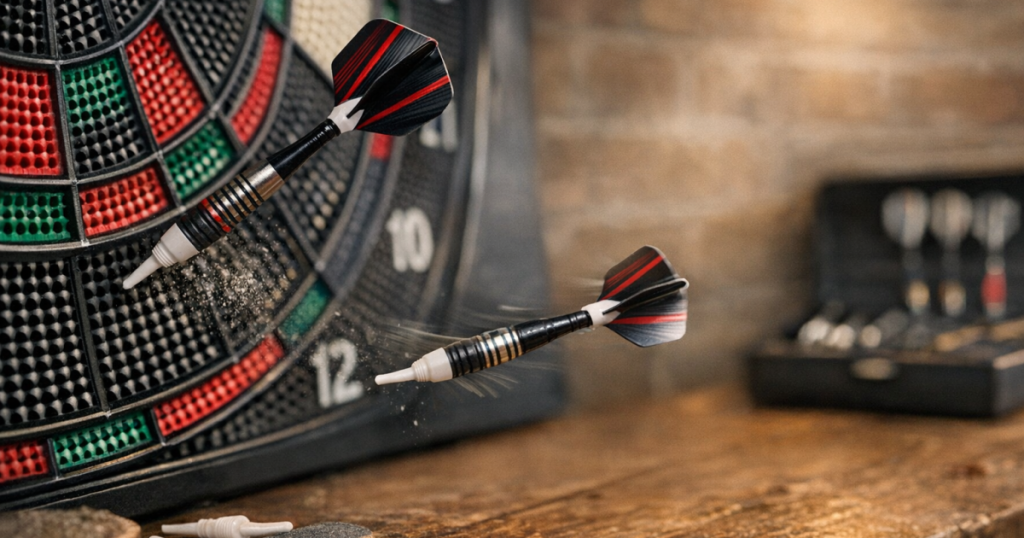
Electronic boards are less forgiving than bristle boards because the dart must enter a moulded scoring hole and trigger the segment cleanly. A dart that would stick in sisal can glance away from plastic if the point is blunt, bent, too short, at the wrong angle or hitting a worn section.
At a glance
- Replace bent, mushroomed or heavily worn soft tips before changing anything else.
- Tighten tips fully, but do not overtighten them until they deform.
- Check whether the board is flexing, rattling or moving on impact.
- Clean dust and broken tip fragments from the scoring holes.
- Use a relaxed throw that sends the dart in point-first rather than flat.
- Rotate practice around the board so one high-use segment does not take all the punishment.
Step 1: Inspect every soft tip properly
The tip is the first thing to check because it takes the direct impact. Remove each dart and look at the point from the side and from the front. A damaged soft tip may look only slightly bent, but that is enough to make it skim across the board face instead of entering a hole.
Replace the tip if you see any of these signs:
- The point bends away from the barrel centre line.
- The end has flattened, flared or developed a small mushroom shape.
- The thread is worn and the tip no longer sits firmly in the barrel.
- The point feels rough or ragged when you run it gently against a cloth.
- The tip has shortened noticeably compared with a fresh spare.
Keep a small pack of spare soft tips near the board. If one dart suddenly starts rebounding more than the others, swap the point and throw another few visits before making bigger changes. Branded examples such as Target Pixel Tips are useful reference points, but the important check is compatibility with your barrel thread and the board manufacturer’s guidance.
Step 2: Tighten the points without damaging them
A loose soft tip can wobble at the exact moment it hits the board. That tiny movement reduces penetration and can also stop the scoring segment registering cleanly. Finger-tight is usually enough: screw the point in until it seats firmly, then stop.
Avoid using pliers on plastic tips unless you are removing a broken or stuck point. Crushing the tip at the thread can make it sit slightly off-centre, which leads to more deflections. If a point works loose every few throws, check the barrel thread for debris and try a fresh tip rather than forcing the old one tighter.
Step 3: Match your throw to an electronic board
Soft-tip darts do not need to be hurled hard, but they do need to arrive cleanly. A common bounce-out pattern is a dart that travels slightly sideways or nose-up, then slaps the board face rather than entering point-first.
Use this quick throwing check:
- Stand on the same oche mark for every throw so your release distance stays consistent.
- Keep your wrist relaxed and let the dart leave smoothly rather than pushing it at the board.
- Watch the dart in flight: if the tail kicks sharply left, right or upwards, adjust your grip pressure.
- Try releasing a fraction earlier if the dart is landing flat.
- Do not compensate by simply throwing harder; that can increase board movement and broken tips.
For most home players, a clean, repeatable throw helps more than extra force. If you switch between steel-tip and soft-tip setups, give yourself a few legs to adapt. Soft-tip darts are often lighter and can react differently to the same release.
Step 4: Check board height, distance and alignment
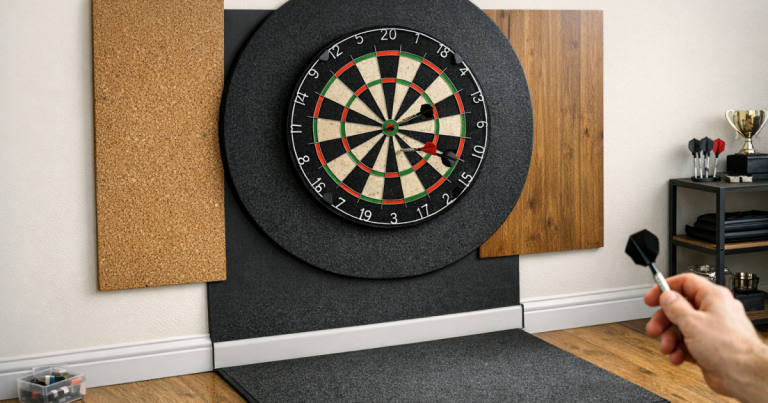
Electronic dartboards should be mounted square, stable and at the correct playing height for the rules or board instructions you follow. A board that leans forward, sits off-level or moves on impact can turn good darts into frustrating rebounds.
As a starting point, many home setups place the bullseye at 1.73 m from the floor, with the throw line set according to the electronic board’s instructions or the format being played. Soft-tip play commonly uses a longer oche than steel-tip, so do not assume your existing steel-tip mark is automatically correct.
Also check the board from the side. If the top is leaning away from the wall or the lower edge is not supported, the face can flex when hit. That flex absorbs energy and can flick the dart back out. Tighten the mounting points, fit any supplied spacers correctly and make sure the board is not hanging from a single loose screw.
Step 5: Clear blocked holes and dirty segments
Electronic boards have many small holes across each scoring segment. Dust, broken tip fragments and compacted plastic can build up over time, especially around trebles, twenties and bull areas. A blocked hole leaves the dart with nowhere to go, so it bounces even when the throw is good.
Turn the board off and remove it from power before cleaning. Use a soft brush or dry microfibre cloth to clear the face. For visible broken tip pieces, use the removal method recommended by the board maker; many players use a soft-tip removal tool for fragments sitting close to the surface. Avoid pushing sharp metal tools into the segment holes, as that can damage the plastic or the switch mechanism behind it.
If one segment is repeatedly rejecting darts while the rest of the board behaves normally, inspect that area closely. A cluster of broken points or a worn plastic web can be the issue rather than your throw.
Step 6: Improve the room setup around the board
Bounce-outs are not only about the board and the dart. The way the board sits in the room matters too. Poor light makes it easier to aim at a plastic divider instead of an open scoring hole, and uneven shadows can distort your view of trebles and doubles. If the board sits in a dim corner, improve the lighting before assuming the board is faulty; our guide to lighting the board without glare or shadows is a useful next step.
Use a dart mat or clearly marked oche so you do not drift forward and back during a session. A small distance change alters the angle of entry, especially with lighter soft-tip darts. On carpet, check that your stance mark has not crept over time; on hard floors, make sure the mat does not slide.
Step 7: Reduce board movement and wall vibration
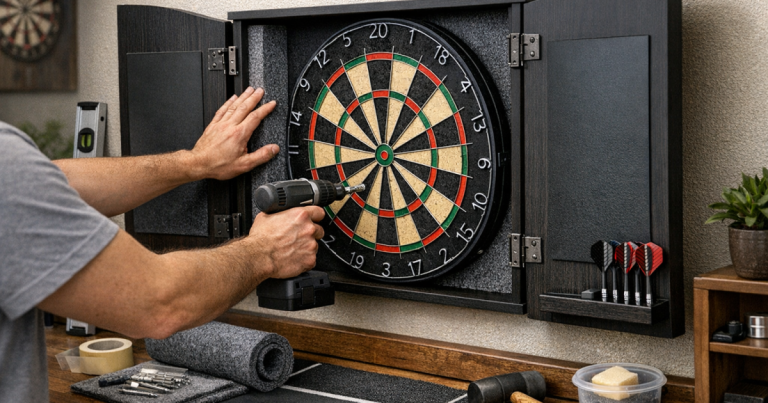
If the board thuds, rattles or shifts with every visit, it is harder for the dart to enter cleanly. Movement can come from a weak fixing, a hollow door, a thin partition wall or a cabinet that is not sitting flat. Soft-tip boards are lighter than many bristle setups, so they can feel lively if the mounting surface is poor.
Check the mounting bracket, screws and any rubber feet or rear supports supplied with the board. The face should feel firm when pressed lightly at the corners. If you live in a flat, terrace or semi-detached house, reducing vibration can also make practice more neighbour-friendly; see our advice on reducing dartboard noise through shared walls if impact sound is part of the problem.
Step 8: Replace worn parts at the right time
Even with careful use, soft-tip equipment wears. Tips are consumables, and electronic board segments take repeated impacts in a small area. If you practise cricket, 501 finishes or trebles for long periods, the same zones can become more prone to bounce-outs.
Replacement is sensible when:
- Fresh tips still rebound from several different segments.
- The board face has cracked or distorted plastic around busy scoring areas.
- The same segment fails to register clean hits.
- Broken tips are stuck deeper than you can safely remove using the board maker’s method.
- The board moves internally or sounds loose despite stable wall mounting.
Before replacing the whole board, test with a second set of darts if you can. That helps separate a board issue from a point, barrel or throwing issue.
What not to do
- Do not sharpen soft tips with a blade or file; reshaping plastic points can make them weaker and more likely to snap.
- Do not throw harder as a first fix. It may break more tips and increase rebounds from the plastic dividers.
- Do not oil, lubricate or wet the board face. Electronic boards need clean, dry segments.
- Do not open the board casing to investigate internal switches. Use the manufacturer’s support route for internal faults.
- Do not leave loose darts, spare tips or broken fragments on the floor after play, particularly in shared family rooms. For a safer routine, read our guide to childproofing the dartboard area between games.
FAQ
Why do my soft-tip darts bounce out more than my steel-tip darts?
Steel tips can bite into sisal fibres, while soft tips must enter a plastic hole on an electronic board. That makes tip condition, entry angle and board stability more noticeable.
Should I use longer soft tips to stop bounce-outs?
Longer tips can help some players, but only if they fit the barrel and suit the board. Check the board manufacturer’s advice and avoid tips that bend too easily during impact.
Can a heavier soft-tip dart reduce rebounds?
Sometimes, but weight is not the first fix. Fresh points, a stable board and a cleaner release usually make a bigger difference than changing dart weight straight away.
Why does one part of my electronic board reject darts?
That area may have blocked holes, broken tip fragments or worn plastic around the segment. Clean it carefully with the board turned off and compare it with less-used sections.
How often should I change soft tips?
Change them whenever they bend, flatten, loosen or start causing repeated rebounds. Regular home players often keep spares beside the board so a worn point does not spoil a session.
Key takeaways
Stopping soft-tip bounce-outs is usually a process of elimination. Begin with the cheapest and quickest checks: fresh tips, tight threads, clean segment holes and a stable board. Then look at throw angle, lighting, oche position and room vibration.
If bounce-outs continue after those checks, test another set of darts and inspect the high-use scoring areas. By working through the causes in order, you avoid unnecessary replacements and get a more reliable electronic darts setup at home.