acoustic felt panels can make a home darts wall look smarter and help soften room echo, but they should not be treated as full dartboard wall protection on their own. They may reduce light scuffs and cover a wider area than a standard surround, yet a steel-tip dart can still pierce, snag, tear or bounce awkwardly depending on the panel material, thickness and what sits behind it.
The simplest answer is this: felt panels are decorative acoustic treatment first and impact protection second. If your main concern is protecting plasterboard, paintwork or rented accommodation from missed darts, you need a proper protective layer around the board, not just a soft-looking wall finish.
The short version
- Felt panels can help with minor marks, visual coverage and reducing echo in a hard-surfaced darts room.
- They are not designed to stop repeated steel-tip dart impacts in the same way as a dartboard surround, cabinet or backboard.
- A dart can pass through thinner felt and still damage the wall behind it, especially if the panel is mounted directly onto plasterboard.
- For reliable protection, combine the panels with a proper backboard, surround or cabinet in the likely miss zone.
- If you want a neat room finish, use felt panels as the visible outer layer, not as the only defensive layer.
Why felt panels are tempting behind a dartboard
They suit modern home setups because they look clean, come in lots of colours, and can make a garage, spare room or garden room feel less echoey. Many are made from compressed polyester felt, often sold for offices, media walls and general sound treatment. That makes them more attractive than bare plywood or a large utilitarian backboard if your dartboard is in a living space.
The problem is that the material is normally chosen for sound absorption and interior styling, not for taking sharp impacts. A missed dart is a concentrated point load. Even if the felt slows the dart, the tip may still bury into the panel, punch through to the wall, leave visible holes or pull fibres when removed. Over time, the area around the treble and double line height can start to look messy.
If you are planning the whole wall rather than just patching damage after it happens, it is worth reviewing the broader wall protection options for dartboards before deciding where felt panels fit.
What actually happens when a dart hits felt?
A steel-tip dart does not behave like a soft object hitting a cushion. The point is narrow, the dart is weighted, and the angle of entry varies depending on the throw. On a standard bristle dartboard, the sisal grips the point and absorbs the impact. Felt wall panels do not usually have the same depth, density or self-healing behaviour.
When a dart lands in a felt panel, one of four things usually happens:
- It sticks lightly: the dart enters the surface but may hang loosely, leaving a visible puncture.
- It passes through: the tip reaches the wall, board or adhesive layer behind the panel.
- It deflects: the dart glances off and may drop towards the floor or skirting.
- It tears the surface: removing the dart can pull or fluff the fibres, particularly on softer decorative panels.
That does not mean felt is useless. It means you should be realistic about the job it is doing. Felt can hide a protective backing, reduce the stark look of a large board and catch some low-energy misses, but the backing and layout matter more than the felt itself.
When acoustic felt panels can work well
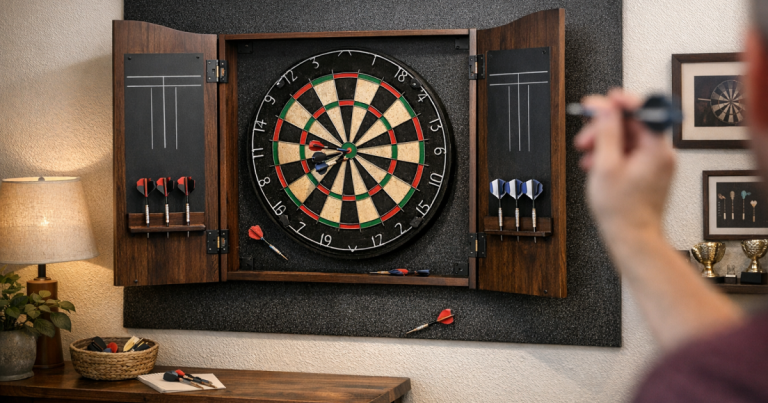
Acoustic felt panels make sense when they are part of a layered setup. For example, a solid backboard can take the real impact while felt provides the finished surface. In that arrangement, the dart may still mark the felt, but the wall behind it is much less exposed.
They also work well around the outer parts of a darts feature wall where direct hits are less common. If you already use a surround tight to the board, felt panels can extend the visual area beyond it so the whole setup looks planned rather than improvised. In a room with laminate flooring, painted walls and little soft furnishing, they may also make the space feel less harsh acoustically.
They are less convincing where the board is mounted straight onto plasterboard, where young or new players are likely to miss widely, or where several people play regularly. In those cases, the wall needs a more deliberate impact zone, not just a decorative panel surface.
How to use felt without relying on it too much
1. Mark the real miss zone first
Stand at the oche and look at where darts are most likely to land when they miss the scoring area. The highest-risk area is usually close around the board, especially outside the doubles and around the upper left and right sections for casual throwers. Wider misses can happen, but if you try to cover an entire wall with felt and no impact layer, you are solving the visual problem more than the protection problem.
Before measuring any panels, make sure the board itself is in the correct position. A small setup error can move the expected miss zone and make your protection feel oddly placed. If you are building the area from scratch, check how to set dartboard height and oche distance correctly before fixing anything permanent to the wall.
2. Put a protective layer behind the visible finish
For a wall you want to keep tidy, the most reliable approach is to use a firm sacrificial backing behind or beneath the felt in the area around the board. The backing takes the point impact; the felt softens the look. The exact material and fixing method should suit your wall type, the weight of the assembly and whether you are allowed to make permanent changes.
On plasterboard, do not assume adhesive-backed felt panels will spread the load or stop holes by themselves. A dart point can still travel through the face layer. If you are renting, or you want a reversible setup, a freestanding solution or a carefully mounted removable board may be a better route than sticking panels directly to painted plaster.
3. Use a surround where the misses are most concentrated
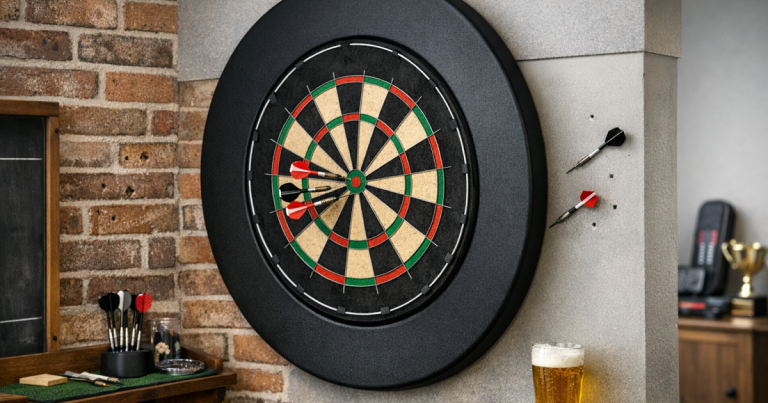
A dartboard surround remains one of the neatest ways to protect the wall immediately around the board. It covers the area where near-misses are most frequent and is made specifically for darts use. Felt panels can then sit outside that zone for appearance and sound control.
This matters particularly with plasterboard walls, where even a few missed darts can leave obvious holes. For a closer look at how much protection a purpose-made surround provides, see the Winmau Pro-Line Dartboard Surround review.
4. Avoid creating awkward edges
Panel seams, raised trim and uneven backing can create unpredictable deflections. If a dart clips an edge rather than a flat surface, it may ricochet or drop sharply. Keep the surface around the board as flat and consistent as possible, and avoid narrow strips directly beside the scoring area.
If you are using slatted acoustic panels, be extra careful. Slats and grooves can look excellent on a feature wall, but the gaps and hard edges are not ideal in a frequent dart impact zone. They are better placed outside the main throw area, with a smoother protective surface around the dartboard itself.
5. Think about removal and repair
Felt panels can mark, fluff and hold small holes. If they are glued directly to the wall, replacing one damaged panel may disturb paint or plaster. Modular layouts make repairs easier because you can swap a single panel or section instead of rebuilding the whole backdrop.
Dark colours tend to hide small punctures better than pale shades, but they can also show dust and chalky marks. Mid-tone greys, blues and greens are often forgiving in a home darts space. If the room is shared with family or guests, choose a finish you can live with after a few months of real use, not just one that looks sharp on installation day.
Good setups and weak setups
A tidy spare-room setup
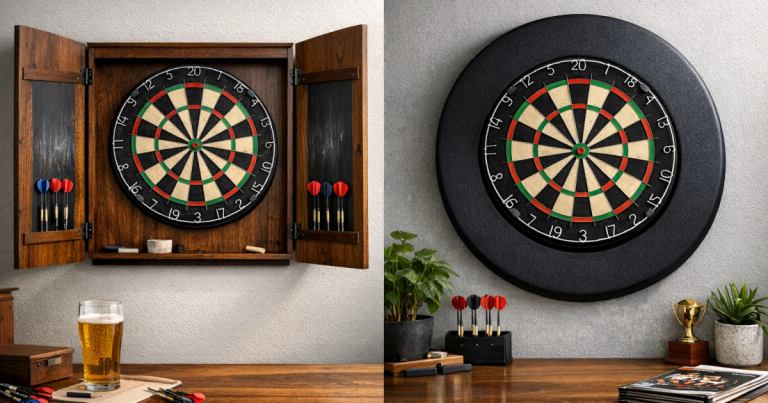
A strong arrangement would be a bristle dartboard mounted securely, a purpose-made surround tight to the board, and felt panels outside the surround to create a wider feature area. The surround handles the common near-misses, while the felt improves the look of the wall and reduces some room echo.
A garage or utility room setup
In a garage, aesthetics may matter less than durability. Felt can still help with sound, but a robust backing board is usually more practical where the room sees regular play. If the space has hard floors and bare walls, combining a protective wall area with a safe floor zone makes the setup more forgiving.
A rented flat setup
Directly sticking panels behind a board in a rented flat is risky because both missed darts and later removal can damage the wall. A freestanding dartboard stand, removable backboard arrangement or cabinet-style setup may be easier to justify than adhesive panels across a painted wall. Always consider what marks will remain when the setup comes down.
A decorative-only setup
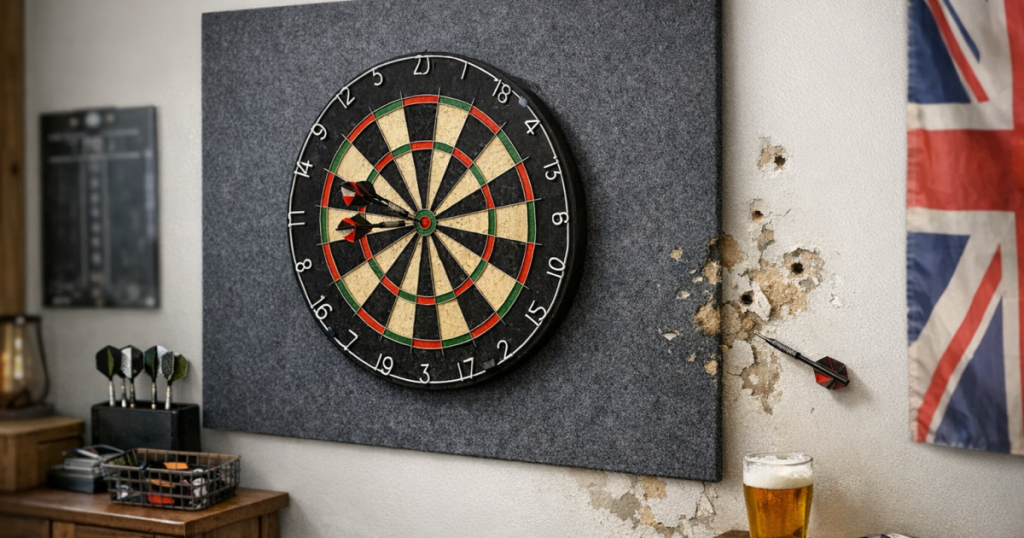
The weakest arrangement is a dartboard mounted directly onto a felt-panelled plasterboard wall with no surround or backing. It may look good on day one, but the area around the board is likely to show punctures quickly if people actually play on it.
Checks before you commit to the layout
- Wall type: plasterboard, masonry and timber-backed walls behave differently when hit or drilled.
- Panel depth: thin decorative felt is less protective than a deeper layered wall build-up.
- Backing material: the layer behind the felt matters more than the surface finish.
- Thrower level: beginners, children and guests usually need a wider protected area than experienced players.
- Fixing method: adhesive, screws, battens and removable systems all affect repairability.
- Lighting position: raised panels and side lighting can create shadows around the board if the layout is not planned carefully.
- Floor area: darts that bounce or drop still need a safe landing zone, particularly on hard flooring.
Straight answers
Will felt panels stop darts from damaging plasterboard?
Not reliably on their own. A steel-tip dart can pierce many decorative felt panels and still mark the plasterboard behind. Add a proper impact layer if wall damage is your main concern.
Can I mount a dartboard directly over felt panels?
It is usually better to mount the dartboard to a stable backing or wall fixing rather than relying on felt as part of the support. The board needs to stay flat, secure and correctly aligned during play.
Do felt panels reduce dart noise?
They can reduce room echo and make the space feel less sharp, especially in hard-surfaced rooms. They will not remove the sound of darts hitting the board, but they can improve the overall feel of the room.
Are felt panels better than a dartboard surround?
No, not for direct dart protection. A surround is purpose-made for near-misses. Felt panels are better viewed as a decorative and acoustic addition around a more protective core.
Final thoughts
Felt panels can be a smart addition to a home darts wall, but they are not a shortcut to proper protection. Use them for finish, colour and acoustic comfort; use a surround, cabinet, backboard or layered protective surface for the impacts. That combination gives you a setup that looks at home in a UK spare room or garage without leaving the wall to take the punishment.
If you are unsure how far to take the protection, start with the area most likely to be hit: the space immediately around the board. Once that is covered properly, felt panels can extend the design and make the whole setup feel intentional rather than patched together.