A mat and oche take more punishment than almost any other part of a home darts space: shoes, dropped darts, dust, furniture movement and the odd drink spill all leave their mark. Good darts mat care keeps the throw line consistent, protects the floor underneath and makes the whole setup feel more deliberate rather than temporary.
The aim is not to make a mat look showroom-new forever. It is to keep it flat, clean, safe underfoot and correctly aligned with the board, so every throw starts from the same place.
At a glance
- Vacuum or sweep the mat regularly so grit does not grind into the surface.
- Clean spills quickly with a lightly damp cloth rather than soaking the mat.
- Check the oche position after moving, rolling or lifting the mat.
- Keep the throwing area clear, with enough space for players to step back without tripping.
- Inspect raised oches, tape lines and mat edges for lifting, curling or adhesive residue.
Why mat care matters more than it first appears
A darts mat is not just a floor covering. In a home setup, it usually has three jobs: marking the throw line, giving players a repeatable stance area and protecting carpet, laminate, tiles or wooden flooring from foot traffic and dropped darts.
Once a mat starts to curl, creep sideways or gather grit underneath, it can change how the oche feels. Players may unconsciously stand a few centimetres forward or back, especially if the printed line no longer sits exactly where it should. Over time, that makes practice less reliable.
There is also a room-planning side to it. A mat that slides into a walkway, bunches near a doorway or catches under furniture becomes annoying very quickly. If you are still deciding whether your home setup should be permanent or pack-away, the differences between fixed and removable darts mat setups are worth understanding before you settle on a routine.
Cleaning different darts mat surfaces
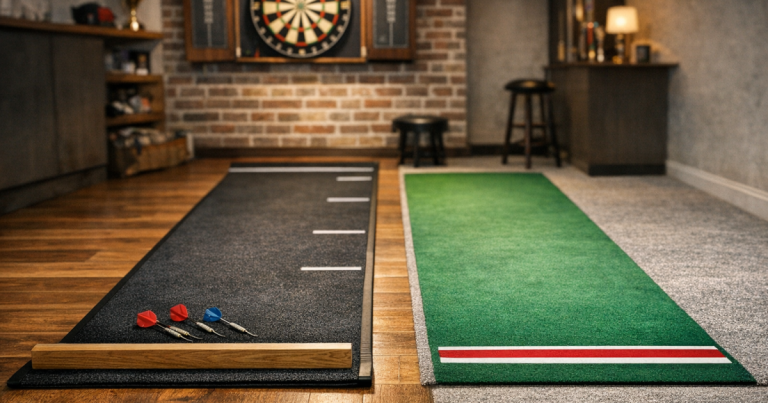
Most home darts mats fall into a few broad surface types: rubber, carpet-topped, vinyl-style or foam-backed. Always follow the care instructions supplied with the mat, but the basic approach is usually the same: remove dry dirt first, clean lightly, and let the mat dry fully before play.
Rubber mats
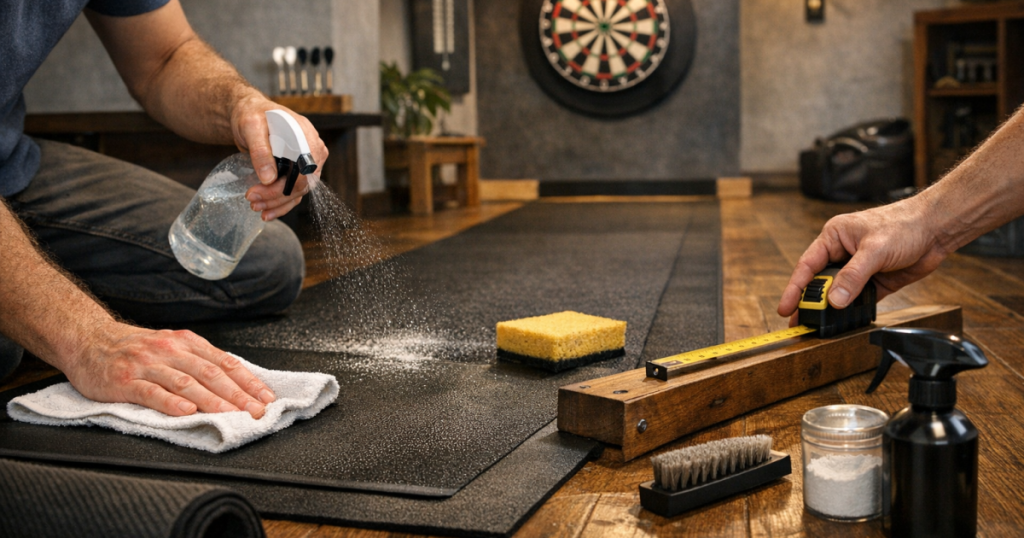
Rubber mats are usually straightforward to maintain. Sweep or vacuum them using a non-aggressive setting, then wipe with a cloth dampened in warm water. For sticky marks, a small amount of mild washing-up liquid can help, but avoid harsh solvents, bleach or heavy scrubbing pads that may mark the surface or fade printed oche lines.
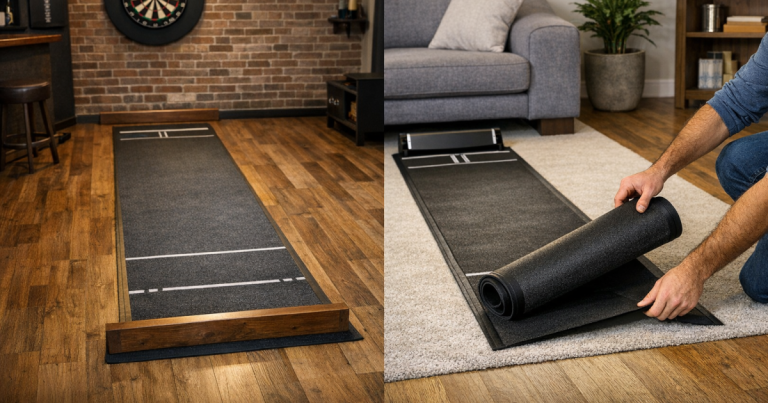
If a rubber mat smells strongly after being stored, unroll it in a well-ventilated room and let it relax flat. Do not force it flat with sharp-edged furniture, as that can leave pressure marks or creases.
Carpet-topped mats
Carpet-style darts mats can collect dust and pet hair, so regular vacuuming matters. Use slow passes along the length of the mat rather than dragging across the edges. If there is a stain, blot it rather than rubbing it deeper into the fibres. A lightly damp cloth is usually safer than soaking the area.
Let the mat dry completely before rolling it away. Storing a damp mat can encourage odours and may affect the backing.
Vinyl and printed mats
Printed surfaces need a gentle touch. Wipe them with a soft cloth and avoid abrasive cleaners, as the printed throw line and graphics are the parts you most need to preserve. If the mat has printed setup measurements, keeping those markings readable is part of good oche maintenance.
A sensible darts mat care rhythm
You do not need a complicated schedule. A simple rhythm keeps most problems under control:
- After casual play: pick up loose flights, stems and points, then check the mat is not folded at the edges.
- Weekly in regular use: vacuum or sweep both the top of the mat and the floor underneath.
- Monthly: check the oche line measurement, inspect for curling and clean any marks before they become permanent.
- Before storing: make sure the mat is dry, roll it loosely if the material allows, and avoid crushing it under heavy items.
The underside is easy to forget. Dust, grit and small bits of broken dart accessories underneath the mat can scratch hard floors and make the mat sit unevenly. A quick lift and sweep can prevent a surprising amount of wear.
Keeping the oche accurate
The oche is the reference point for every throw, so accuracy matters more than decoration. For a standard steel-tip setup, the front of the oche should be 2.37 m from the face of the dartboard, not from the wall behind it. The centre of the bullseye is normally 1.73 m from the floor. If you use an electronic or soft-tip board, check the board’s instructions or the format you play, as distances can vary.
Measure from the playing surface of the board to the front edge of the throw line. If the board sits inside a cabinet or on a bracket that holds it away from the wall, measuring from the wall will put the oche in the wrong place.
For a printed mat line, check that the mat has not shifted forward or sideways. For tape, inspect the leading edge for peeling or dirt build-up. For a raised oche, make sure it is straight, secure and not rocking under foot pressure.
Stopping mats from moving
A mat that creeps across the floor is irritating and can become a trip point. The right fix depends on the floor surface and whether the room is multi-use.
- On carpet: a heavier mat usually stays put better, but deep pile can still make it ripple. Lift and reset it rather than dragging it into place.
- On laminate or wood: use a non-slip underlay that is suitable for the floor finish, and check it does not leave residue.
- On tiles: dust underneath can make the mat slide, so clean the floor first and let it dry.
- In shared rooms: roll or store the mat consistently so it does not develop tight curls at the ends.
If you use a raised oche with a removable mat, mark the correct position discreetly so it can be returned to the same place. Small reference marks, furniture alignment or a fixed board-to-oche measurement check are all better than guessing by eye.
Edges, curling and trip points
Curling is most common after a mat has been stored tightly rolled or left in a cold space. Let it warm to room temperature and lie flat naturally. Avoid using direct heat, as it can distort rubber, foam or printed surfaces.
Pay particular attention to the area where players step on and off the mat. If the edge lifts there, people will catch it repeatedly, making the problem worse. A mat should not interfere with safe movement around the board, chairs or doorways. For room layout help, see the guide to planning safe walkways around your dartboard.
Oche tape, raised oches and floor protection
Not every home setup uses a full mat. Some players use oche tape, a floor marker or a compact raised oche. These still need maintenance.
Oche tape should be clean, straight and firmly stuck down. Replace it once the edge starts to fray or lift, because a ragged line is harder to judge and easier to trip over. When removing tape, lift it slowly and clean away residue with a floor-safe method suited to the surface.
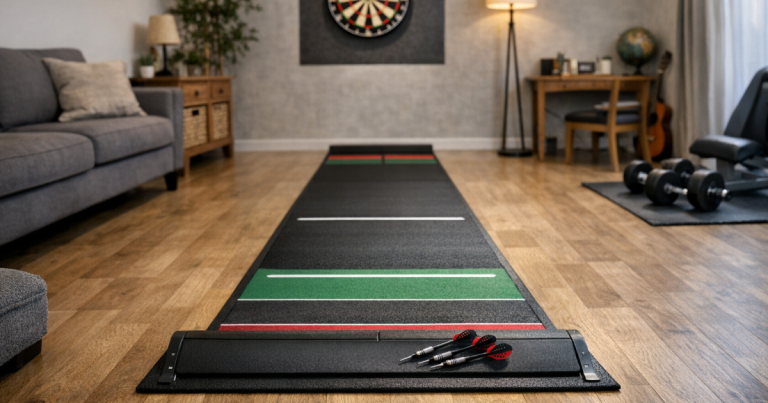
A raised oche should feel solid under the lead foot. If it moves during a throw, it is no longer doing its job. Check the underside for dirt, worn grip pads or uneven contact with the floor. If it is part of a mat system, inspect the join between the mat and the oche, as that is where lifting and wear often start.
Noise, vibration and downstairs neighbours
Darts mats do not silence a board, but they can help reduce foot noise, dropped dart noise and the hard tap of a raised oche on bare flooring. In flats, terraces or rooms above living spaces, the mat is only one part of the sound picture. Board mounting, wall type and surrounding furniture all affect what travels through the room.
If impact noise is a real issue, check the mat is not transmitting vibration through a loose raised oche or hard floor gap. You may also need to look at how the board is mounted; the advice on reducing dartboard noise through a shared wall covers that side of the setup in more detail.
Small checks before a proper practice session
Before a longer practice session or match night at home, take thirty seconds to reset the throwing area:
- Confirm the oche line has not moved.
- Flatten the corners and edges of the mat.
- Remove loose accessories from the stance area.
- Check the floor underneath is dry and clean.
- Make sure chairs, stools and bags are clear of the player’s step-back route.
These checks are small, but they protect the quality of the session. A clean, flat mat makes stance and rhythm feel more consistent, while a clear surrounding area helps players focus on the board rather than their footing.
FAQ
Can I wash a darts mat with lots of water?
It is usually better not to soak it. Use a vacuum or brush first, then a lightly damp cloth. Too much water can affect backing materials, printed markings and how the mat dries in storage.
How often should I check the oche distance?
Check it whenever the mat has been moved, rolled away or cleaned underneath. For a fixed setup, a monthly check is usually enough unless the board or cabinet has been adjusted.
What should I do if the mat edges keep curling?
Let the mat relax flat at room temperature and avoid tight rolling. If curling keeps returning, review how it is stored and whether furniture or door movement is pressing against the edge.
Is a raised oche better than a printed line?
It depends on the room. A raised oche gives a clearer physical stop for the foot, while a printed line is easier to live with in a shared space. Both need regular alignment checks.
Can I use a darts mat on carpet?
Yes, but it may move more on deep pile carpet. Keep the underside clean, reset the mat rather than dragging it, and check the oche measurement regularly.
Key takeaways
A darts mat lasts longer when it is kept clean, dry and flat, but the bigger benefit is consistency. The oche stays trustworthy, the stance area feels familiar and the floor is better protected from everyday play.
Treat the mat and oche as part of the setup rather than an afterthought: clean little and often, measure from the board face, deal with curling early and keep the walking area clear. Those habits make a home darts space feel sharper without making maintenance feel like a chore.