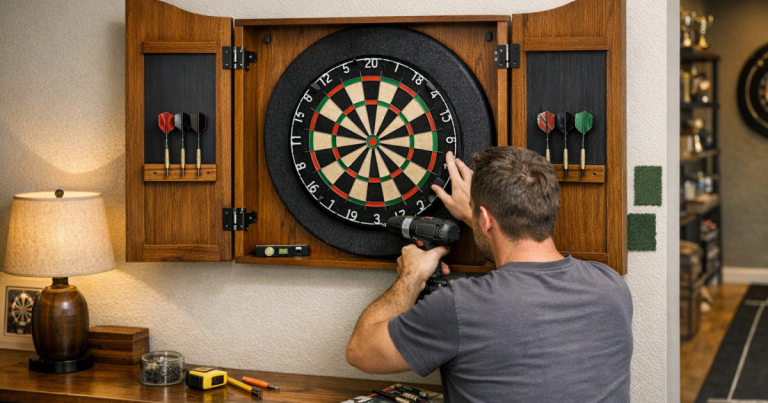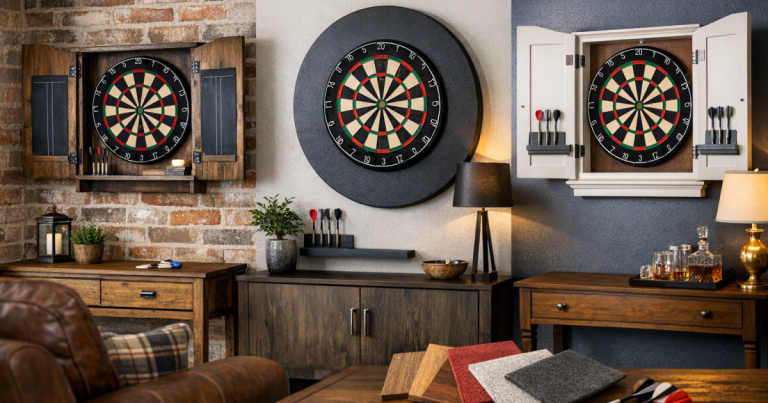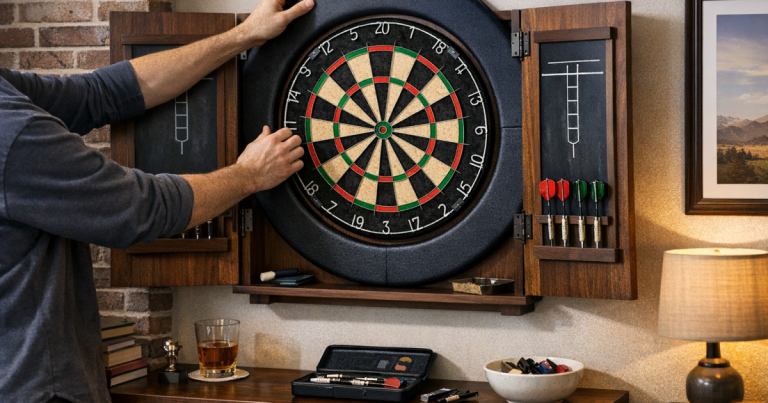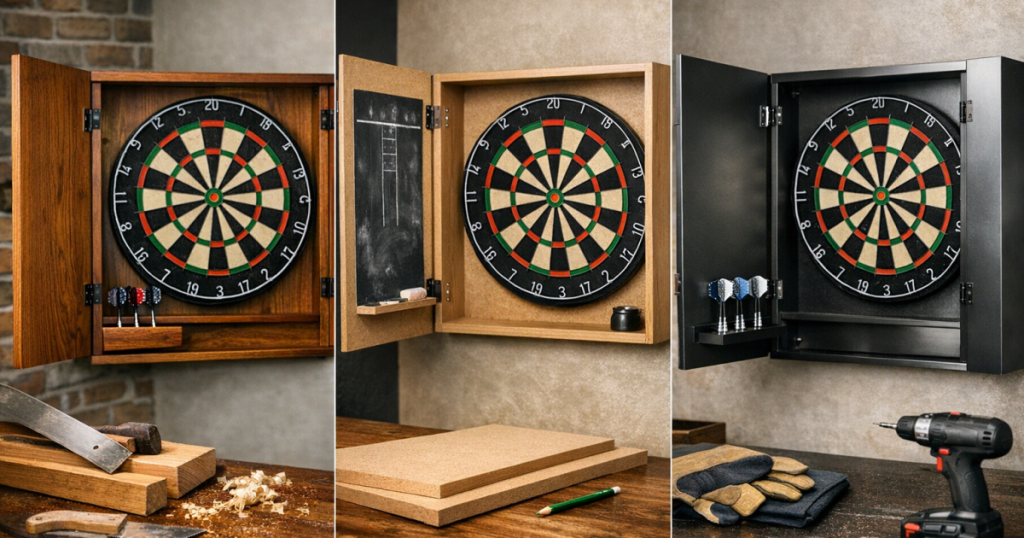
Choosing between wood, MDF and metal sounds simple until you factor in wall protection, room style, board clearance and how often the doors will be opened. The right dartboard cabinet materials can make a home oche feel neater, reduce visible scuffs around the board and help your setup blend into a living room, garage or spare room without looking temporary.
The material also affects weight, finish, moisture resistance, door feel and long-term maintenance. A cabinet that looks smart on day one can become annoying if it swells in a damp garage, rattles when the dartboard is hit, or leaves too little clearance for your lighting and surround.
At a glance
- Wood gives the warmest, most furniture-like finish and suits visible rooms, but it needs a stable environment and decent hinges.
- MDF is smooth, consistent and commonly used for painted or laminated cabinets, but exposed edges dislike damp conditions.
- Metal feels practical and tough in utility spaces, clubs and garages, but it can look colder and may show dents or scratches.
- The best choice depends on the room, not just the board. Consider humidity, wall type, lighting, door swing and how much storage you need.
- Check the whole construction. Doors, backing board, hinges, fixings and finish matter as much as the headline material.
How cabinet material changes the feel of a darts area
A dartboard cabinet is not just a decorative box around a bristle board. It frames the board, hides clutter, gives you somewhere to keep darts or chalk, and softens the look of a setup that might otherwise feel too pub-like for a shared room. In a UK home, that can be the difference between a board that stays up all year and one that gets taken down whenever guests are expected.
Material choice changes four practical things. First is appearance: wood and wood-effect finishes tend to sit better with furniture, while metal often suits a garage, games room or more industrial space. Second is weight: heavier cabinets need secure fixing into a suitable wall. Third is resilience: damp, knocks and regular door movement affect materials differently. Fourth is compatibility: cabinet depth and door shape must work with the dartboard, any surround, and your lighting arrangement.
If you are still deciding on the overall cabinet layout, it is worth reading more about cabinet styles, storage and finishes before narrowing the decision to the material alone.
Wood cabinets: warm, traditional and room-friendly
Wood is the classic choice for a dartboard cabinet because it looks at home in lounges, dining rooms and finished games rooms. A timber or timber-veneer cabinet can make a board feel like part of the room rather than a piece of sporting equipment bolted to the wall. It also tends to pair nicely with darker walls, framed memorabilia, pub-style scoring panels and traditional bristle boards.
The main strength of wood is character. Grain, colour variation and a deeper stained finish can make even a simple cabinet feel more substantial. It is also relatively forgiving visually: small surface marks may blend into the grain better than they would on a flat painted surface.
The trade-off is environmental sensitivity. Wood can move slightly with changes in temperature and humidity, so a cabinet in a cold, damp garage or conservatory-like space needs more thought than one in a dry spare room. Door alignment, hinge quality and the finish on edges all matter. If the doors start to twist or sag, the cabinet quickly looks tired and can interfere with neat opening and closing.
Where wood works best
- Living rooms, studies, finished loft rooms and dedicated darts rooms where appearance matters.
- Setups where the cabinet is visible even when not in use.
- Traditional décor, darker finishes, pub-inspired spaces and rooms with other wooden furniture.
- Players who want a cabinet to feel like furniture rather than a utility accessory.
What to check with wood
- Look for neatly finished edges, not just an attractive front face.
- Check that doors close squarely and do not rub against the cabinet frame.
- Make sure the backing and fixing points feel sturdy enough for regular use.
- Avoid placing untreated or poorly sealed wood in damp outbuildings or areas with big temperature swings.
MDF cabinets: neat, affordable and consistent
MDF is widely used in home furniture because it is flat, smooth and easy to finish. In dartboard cabinets, that makes it well suited to painted surfaces, printed finishes and clean modern designs. It can look tidy without the natural variation of wood, and it often gives a consistent surface around the board.
For many home setups, MDF is the sensible middle ground. It can feel more room-friendly than metal while avoiding some of the movement you may get with natural timber. It is particularly useful for white, black, grey or coloured cabinets where the finish is meant to be even rather than grain-led.
The weak point is moisture. MDF can swell if water reaches exposed edges or screw holes, so it is not ideal for a damp shed or garage unless the cabinet is properly finished and the room itself is reasonably dry. Corners and hinge areas deserve close attention because these are the places most likely to show wear first.
Where MDF works best
- Spare rooms, bedrooms, home offices and indoor games spaces with stable humidity.
- Modern rooms where a painted or smooth cabinet finish suits the décor.
- Setups where you want a tidy look without a heavy traditional timber style.
- Cabinets with printed score areas or simple internal storage.
What to check with MDF
- Inspect exposed edges, corners and hinge screw areas for proper sealing or finishing.
- Check the door weight and hinge support, as weak fixings can loosen with repeated use.
- Keep the cabinet away from persistent condensation, wet walls and unheated damp spaces.
- Use gentle cleaning only; soaking the surface or edges is a quick way to shorten its life.
Metal cabinets: tough, slim and utility-focused
Metal dartboard cabinets are less furniture-like, but they have clear advantages in hard-working spaces. They can suit garages, club practice rooms, shared games areas and minimalist interiors where a wood cabinet would feel too traditional. A metal finish can also be easy to wipe down and may cope better with everyday knocks than a delicate painted surface.
The feel is different, though. Metal doors can sound sharper when closed, and a thin cabinet may rattle more if it is not mounted securely. Scratches and dents can also be more obvious, particularly on darker or glossy finishes. In a cold space, metal can feel stark compared with wood or MDF, so it is worth thinking about whether the cabinet needs to soften the room or simply protect the wall and hold accessories.
Some metal cabinets include practical touches such as internal score areas, dart storage or magnetic-style features, but do not assume they are all built the same way. Check the actual design, door closure and fixing method rather than judging by the material alone.
Where metal works best
- Garages, utility rooms, club practice areas and more robust home games spaces.
- Modern setups where a clean, industrial or minimalist look is deliberate.
- Rooms where wipe-clean surfaces and knock resistance matter more than a furniture finish.
- Players who want a no-fuss cabinet around a frequently used board.
What to check with metal
- Listen for rattling or loose-feeling doors when the cabinet is opened and closed.
- Look at the finish quality around corners, edges and screw holes.
- Check whether the cabinet has sharp-feeling edges or poorly finished seams.
- Make sure the wall fixing is secure, as movement can make noise more noticeable.
Mixed materials are more common than they look
Many cabinets are not purely one material. A cabinet might have MDF panels with a wood-effect veneer, timber doors with an engineered backing, or metal hardware on a wooden frame. That is not automatically a problem. In fact, mixed construction can be sensible if the visible surfaces look good and the structural parts are stable.
The mistake is judging only by the product title or the outside finish. A wood-effect cabinet may not be solid timber, and a cabinet described as wooden may include engineered panels. What matters is whether the material is suitable for the room and whether the moving parts are strong enough for repeated play sessions.
For a neat home setup, pay particular attention to the back panel, hinge mounts and door stops. These areas take more strain than the decorative front. A smart-looking cabinet with weak hinges or a flimsy back can be more frustrating than a plainer cabinet built with better support.
Matching the cabinet to your board, surround and lighting
Material is only one part of the setup. A cabinet must also fit the dartboard cleanly, leave enough room for the doors to open, and sit correctly on the wall. Measure in metric, check the full cabinet width with the doors open, and allow for the space around the board rather than only the closed cabinet size.
Depth is especially important if you use a thicker board, a separate surround, or a lighting ring. A cabinet that looks ideal on the wall can become awkward if the doors clash with the light or if the board sits too far forward. Before fixing anything permanently, compare your plan with the basics of cabinet dimensions and clearance.
Lighting can change the material decision too. Glossy painted MDF and some metal finishes may reflect glare more than a matt wood finish. Dark internal doors can also make the board area feel dull if the light is poorly positioned. If shadows or glare are already a problem in your setup, check the common dartboard lighting mistakes before choosing a highly reflective cabinet finish.
Simple checks before committing to a material
- Room humidity: dry indoor rooms suit most materials; damp garages are tougher on MDF and some wood finishes.
- Wall type: heavier wood cabinets need secure fixings appropriate to the wall construction.
- Door swing: check that doors clear nearby shelves, curtains, radiators and lighting.
- Finish: matt finishes hide glare and fingerprints better than glossy ones in many home setups.
- Storage: make sure dart holders, chalk, markers or score panels do not crowd the board area.
- Noise: metal and thin panels can sound harsher in smaller rooms, especially on shared walls.
- Maintenance: choose a surface you can wipe clean without soaking edges or damaging the finish.
- Look when closed: the cabinet will spend plenty of time shut, so judge it as part of the room as well as part of the darts setup.
Helpful questions
Is wood always better than MDF for a dartboard cabinet?
No. Wood often looks more premium, but good MDF can be a better fit for a smooth painted finish and a modern indoor room. The right choice depends on humidity, finish quality and how the cabinet is built.
Can I use an MDF cabinet in a garage?
Only if the garage is dry and reasonably stable. MDF does not cope well with persistent damp, exposed edges or condensation, so a metal cabinet or well-sealed wood finish may be more sensible in a harsher space.
Do metal cabinets protect the wall better?
Not automatically. Wall protection depends on the cabinet size, door coverage and any surround around the board. Metal can be tough, but it still needs suitable dimensions and secure mounting.
Which material looks best in a living room?
Wood or a high-quality wood-effect finish usually blends best with furniture. Matt painted MDF can also work well in modern rooms, especially if you want the cabinet to look clean and understated.
Does cabinet material affect bounce-outs?
The cabinet material does not directly affect dartboard bounce-outs. Bounce-outs are more closely linked to the dartboard condition, wiring style, dart angle and how the board is mounted.
Final thoughts
Wood, MDF and metal can all work well around a home dartboard, but they suit different spaces. Wood brings warmth and a traditional feel, MDF gives a neat and consistent finish for dry indoor rooms, and metal makes sense where durability and easy cleaning matter most.
The safest approach is to start with the room rather than the material. Think about humidity, décor, wall strength, door clearance, lighting and how often the cabinet will be used. Once those details are clear, the material decision becomes much simpler: choose the cabinet that supports the way you actually play, protects the wall properly, and still looks right when the darts are packed away.