A bristle board can look tired long before it is actually worn out. The safest way to clean a bristle dartboard is to remove loose dust and debris gently, keep liquids away from the sisal, and deal with marks only when they are genuinely affecting play or appearance.
The aim is not to make the board look brand new. It is to keep the surface clear, dry and evenly used, so the sisal can continue closing around dart holes as well as possible.
What to know first
Bristle dartboards are made from tightly packed sisal fibres. Those fibres are designed to part when a dart enters and close up again when it is removed. That self-healing behaviour depends on the fibres staying firm, dry and properly compressed.
That is why aggressive cleaning causes more harm than good. Water can swell or soften the fibres. Scrubbing can roughen the surface. Household cleaners can stain the board, affect the print, or leave residue that changes how darts enter the bed.
For most home players, cleaning should be occasional and light. A board in a spare bedroom, garage conversion or living room cabinet usually needs dust removal, loose fibre tidying and sensible storage rather than deep cleaning. If the sisal is badly swollen, mouldy, cracked or crumbling, cleaning will not restore it properly.
The dry-cleaning method that is safest for sisal
Use this routine when the board looks dusty, has small fibres around the scoring bed, or has collected debris from the room. It is also a good habit before taking close-up photos of the board or checking wear patterns.
1. Take the darts out and inspect the face
Remove every dart, flight fragment and loose accessory from the area. Look closely at the trebles, doubles and bull, because those sections tend to collect the most loose material during regular practice.
Do not start by rubbing the board. First, check whether the problem is loose dust, a removable bit of debris, a raised sisal strand, or a permanent mark. Each one needs a different level of attention.
2. Brush lightly from the centre outwards
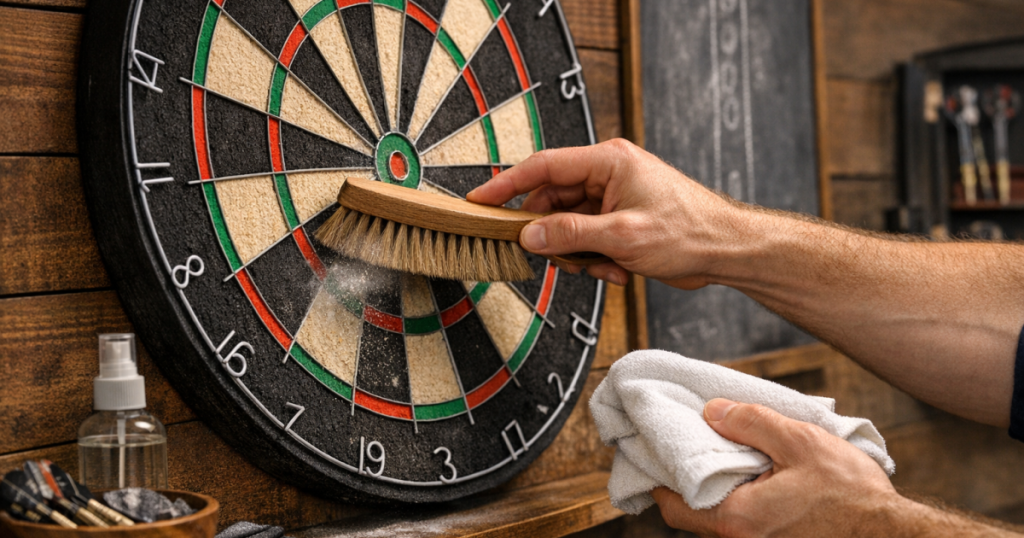
Use a clean, dry, soft brush. A soft paintbrush, clean detailing brush or very soft clothes brush is usually enough. Work gently from the bull towards the outer numbers so you are moving dust off the face rather than pushing it deeper into the fibres.
Keep the pressure light. You are lifting loose particles, not grooming a carpet. Avoid stiff brushes, wire brushes, nail brushes and anything that catches in the sisal.
3. Use a vacuum only with care
If dust is sitting on the surface, a vacuum can help, but only with a soft brush attachment and low suction. Hold the attachment just above the board or touch it very lightly. Do not drag a hard plastic nozzle across the playing surface.
This step is optional. If your board is in decent condition and the dust comes away with a soft brush, there is no need to vacuum it at all.
4. Remove embedded bits with tweezers, not fingers
Occasionally, a tiny piece of broken point coating, flight plastic, staple fragment from packaging, or other debris may sit in the board face. Use clean tweezers and pull it straight out carefully.
Avoid digging around the hole. Widening the sisal around a small obstruction can create a bigger problem than the original bit of debris.
5. Wipe the number ring separately
The metal number ring and outer edge can usually be wiped with a dry microfibre cloth. Keep the cloth away from the printed sisal if it has picked up any moisture, polish or cleaning residue from elsewhere in the room.
If your number ring lifts off, remove it carefully only if you are comfortable putting it back in the correct position. Otherwise, clean around it while it remains in place.
What not to use on a bristle dartboard
The most common cleaning mistakes come from treating a dartboard like a worktop, carpet or whiteboard. Sisal is far less forgiving.
- Do not use water sprays. Moisture can swell the fibres, blur printed areas and encourage odours in a poorly ventilated room.
- Do not soak a cloth and wipe the face. Even a quick wipe can push dampness into the bed.
- Do not use washing-up liquid, disinfectant, bleach or surface cleaner. These can leave residue and may stain the board.
- Do not sand the surface. Sanding damages the top layer and can make the board rougher, not cleaner.
- Do not use sticky lint rollers or adhesive putty. These can pull fibres or leave tacky residue behind.
- Do not scrub chalk or ink marks aggressively. A faint mark is usually less damaging than the cleaning needed to remove it.
How to deal with specific marks and problems
Dust from the room
Dust is the easiest issue. Brush it off dry and check the surrounding setup. A board near a sanding bench, tumble dryer, wood burner, open window or dusty garage shelf will need more frequent care than a board in a clean indoor room.
Chalk and score marks
Chalk dust can land on the board if your scoreboard is close by. Brush it away dry. If the chalk has rubbed into the sisal, leave it unless it is heavy enough to distract your throw. Trying to remove every pale mark often does more harm than leaving a small cosmetic blemish.
If chalk dust is a regular issue, think about board layout as well as cleaning. A neater scoring area can help, and a dedicated checkout section keeps hands and chalk away from the board face. There is a useful setup walkthrough here: how to set up a checkout column on a darts scoreboard.
Sticky spots
Sticky marks are awkward because the obvious solution is usually the wrong one. Do not add liquid cleaner to the sisal. If the mark is on the wire or number ring, clean that part carefully with a dry cloth first. If the sticky residue is on the playing surface, leave it unless it affects dart entry. A small sticky patch is annoying; a damp, softened patch is worse.
Raised fibres
A few raised fibres are normal as a board wears. Do not pull at them with your fingers. Brush the area lightly and let normal play settle the bed. If a strand is obviously loose and protruding, trim only the loose end with small scissors rather than tugging it out.
Musty smell or mould
A musty board is a sign of moisture, not dirt. Move it to a dry, ventilated indoor space and check the wall behind it. Do not try to rescue a mouldy playing surface with sprays. If mould is visible in the sisal, replacement is usually the sensible route, especially in a home practice room where people are standing close to the board regularly.
Cleaning works best alongside good board care
A clean board will still wear quickly if the same segments take all the punishment. Regular rotation is one of the most effective ways to protect the sisal, because it spreads dart impact around the board rather than concentrating it in the twenties and common finishing areas.
Rotate the board by moving the board itself, then refitting the number ring so the 20 is correctly positioned at the top. If you want a precise routine, follow this guide on rotating a bristle dartboard without misaligning the numbers.
Room conditions matter too. Keep the board away from radiators, damp external walls, direct sunlight and unheated spaces that swing between cold and warm. In many UK homes, a spare bedroom or box room is a better long-term choice than a shed unless the outbuilding is dry and stable.
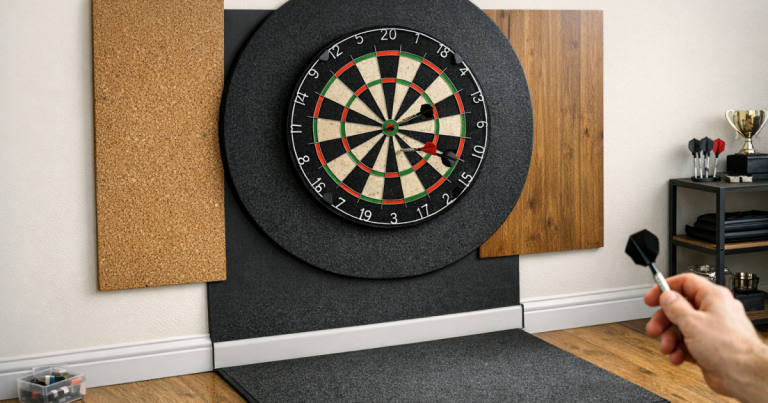
If you are still planning the room, board height, wall protection, mat position and lighting all affect how easy the setup is to maintain. A tidy, accessible setup makes cleaning and rotation much less of a chore.
When cleaning will not save the board
There is a point where a bristle board is worn rather than dirty. Cleaning will not fix deep sisal compression, severe bulging, loose wires, a badly damaged bull or sections that no longer grip darts properly.
Signs that the issue is wear include darts falling out despite sound points and normal throwing, heavy ridging around popular segments, large areas that feel soft or dead, and visible movement in the spider. At that stage, maintenance can buy a little time, but it cannot return the board to its original condition.
For context on what matters in a board before it reaches that stage, see our guide to what makes a quality dartboard for home practice. It explains the features and practical checks that influence how well a board stands up to regular use.
A simple cleaning routine for home players
You do not need to clean after every session. For most home setups, this rhythm is enough:
- After play: remove darts cleanly by twisting gently as you pull, rather than yanking them out.
- Weekly or fortnightly: brush off visible dust if the room needs it.
- Monthly: inspect the trebles, bull, number ring and surrounding wall area.
- During rotation: take the chance to brush the face and wipe the number ring dry.
- After any damp spell: check for musty smells, swelling or soft patches before continuing regular play.
If you use a cabinet, keep the inside clear of chalk dust, spare flights and loose points. Small accessories can scratch the board or fall against the face when the doors are closed. A few minutes spent keeping the cabinet tidy can prevent marks that cleaning cannot fully remove.
FAQ
Can I use a damp cloth on a bristle dartboard?
It is better not to. A damp cloth can push moisture into the sisal and soften the playing surface. Use dry brushing first and accept minor cosmetic marks if they are not affecting play.
Should I spray water on an old dry board?
No. Spraying water is a common old tip, but it can swell the fibres unevenly and may damage the print. If the board is too dry, hard or cracked, it is usually worn out rather than thirsty.
How often should I clean the board?
Clean only when there is visible dust, loose debris or a specific mark to deal with. For many indoor home setups, a light dry brush every few weeks is enough.
Can I remove dart holes by cleaning?
No. Dart holes close through the natural movement of the sisal fibres and through even board rotation. Cleaning removes loose dust; it does not repair compressed areas.
What if the board smells damp?
Move it to a dry, ventilated space and check the room conditions. If there is visible mould or the sisal feels soft and swollen, cleaning is not the right fix.
What to remember
The safest cleaning method is dry, light and occasional. Brush gently, avoid liquids, remove debris carefully, and do not chase every mark at the expense of the sisal. A bristle dartboard is a playing surface, not a display item, so a few signs of use are normal.
Good maintenance is mostly about prevention: keep the room dry, rotate the board regularly, avoid harsh cleaning products, and deal with dust before it builds up. Do that, and your board has the best chance of staying consistent for home practice.