A shared room can still feel like a proper darts space if the throw line is repeatable, the floor is protected and the kit packs away without fuss. A portable darts mat gives you a defined stance area and a consistent oche without committing the room to darts full time.
The key is not just picking something that rolls up. You need the mat, oche marker, board position and storage routine to work together, especially in living rooms, spare bedrooms, garages and dining spaces where furniture moves around.
The short version
For most multipurpose rooms, the best arrangement is a fixed dartboard position with a removable floor setup. Keep the board height and centreline unchanged, then use the mat to recreate the throwing position each time. The front of the oche should sit 2.37 m from the face of a standard steel-tip dartboard, not from the wall behind it.
A good temporary setup should do four things well:
- Mark the throw line clearly so everyone stands in the same place.
- Protect the floor from foot traffic, dropped darts and general wear around the oche.
- Stay flat enough that players are not fighting curled edges or trip points.
- Store cleanly without leaving the room looking like a permanent practice area.
If you are still deciding between a mat, a raised toe line and a fuller room layout, the wider guide to choosing a darts mat and oche setup for your floor is a useful next step.
How a portable setup should work in a shared room
The board should be the fixed reference point. Once the bull is at the correct height and the board is level, the floor system simply repeats the correct throwing distance. This matters because a mat that is slightly twisted, offset or pulled short can make the setup feel inconsistent even when the board itself is right.
Start by finding the centreline of the board. The mat should run straight out from that line, not from the edge of a cabinet, surround or nearby furniture. In narrow rooms, it is worth marking a discreet floor reference point with a small removable marker, so the mat can be placed in the same position every session.
For steel-tip darts, measure from the face of the board to the front edge of the oche. If the board is in a cabinet or mounted on a batten, remember that the wall is not the measuring point. For soft-tip or electronic boards, check the board maker’s stated setup distance, as these can differ from a standard bristle board arrangement.
Mat styles that suit temporary spaces
Not every roll-out mat behaves the same in a real home. Some are better for hard floors, some are easier to store, and some give a more obvious oche line for casual matches with guests. The right style depends on how the room is used when darts is not being played.
Printed throw-line mats
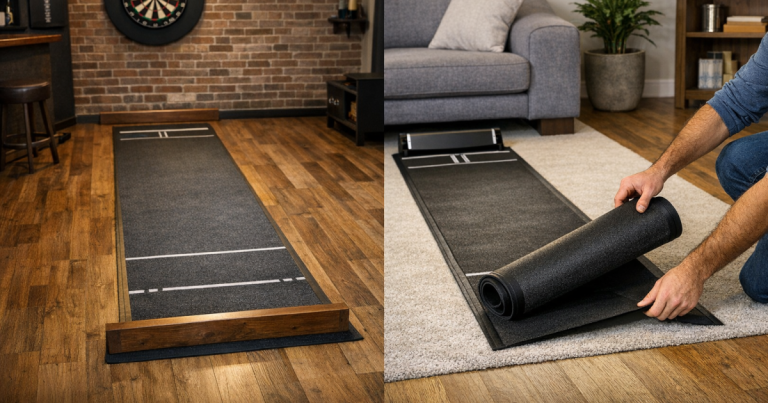
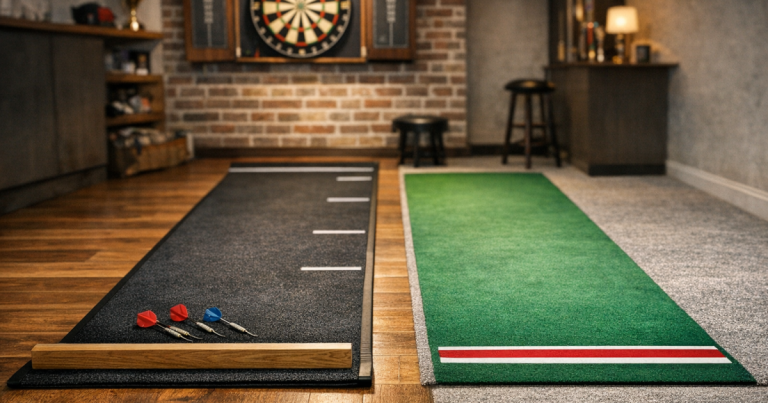
These are simple roll-out mats with marked distances or oche lines printed on the surface. They suit players who want a low-profile setup with nothing raised underfoot. They are easy to move, but the mat must be aligned carefully each time, as the printed line only helps if the whole mat is square to the board.
Raised oche mats
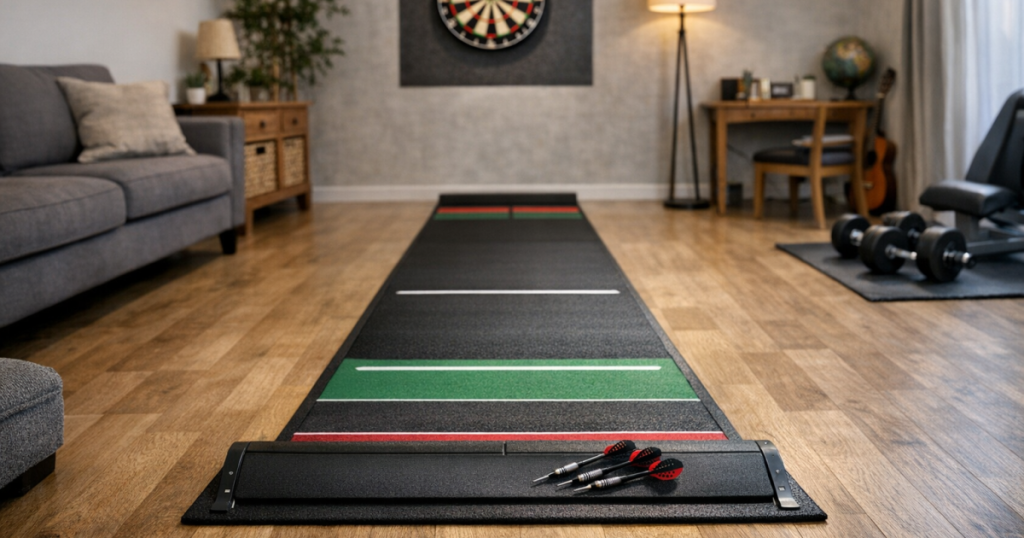
A raised oche gives your leading foot a physical stop, which feels closer to a pub or league setup. In a multipurpose room, the trade-off is storage and trip awareness. A raised edge can be excellent during play, but it should not be left across a walkway once the darts are packed away.
Separate removable oches
A separate oche block or strip can work well with a plain protective mat. This lets you protect a larger floor area while placing the actual toe line exactly where you need it. It is also handy if more than one player prefers a very clear front edge rather than a printed line.
Examples you may come across include the Winmau Xtreme Dart Mat and the Target Darts World Champions Dart Mat. Treat named examples as reference points rather than automatic answers: check the current dimensions, oche markings, backing material and storage needs against your room before deciding whether they suit your space.
Floor type changes the setup
A darts mat behaves differently on carpet, laminate, vinyl, tiles and garage flooring. The aim is to avoid movement underfoot while still being able to remove the setup without marks or residue.
- Carpet: a mat may sit securely, but thick pile can make a raised oche feel less crisp. Check that the mat does not ripple when players step into position.
- Laminate or wood-effect flooring: floor protection matters, but so does grip. Avoid anything that slides when weight shifts during the throw.
- Vinyl or lino: look for a setup that lies flat and does not leave pressure marks from storage or a heavy oche edge.
- Garage floors: a tougher surface may tolerate darts better, but dust and grit can make mats slip or wear faster. Sweep the area before rolling the mat out.
- Rugs: avoid placing the oche partly on a rug and partly on hard floor, as the height change can affect stance and stability.
If the room also needs to disappear back into normal family use, think beyond the mat. A wall-mounted board with removable floor kit is only one part of the picture; furniture clearance, lighting and storage all matter. The guide to creating a foldaway darts area in a shared room covers that broader room-planning side in more detail.
Getting the oche position right every time
The biggest mistake with temporary setups is re-measuring casually every session. A few centimetres of drift can change the feel of the throw and make practice less meaningful. Once you have measured carefully, create a repeatable placement routine.
A simple method is:
- Measure from the dartboard face to the front of the oche.
- Align the mat with the board’s vertical centreline.
- Use two small, removable reference points on the floor or skirting line to guide placement.
- Check that the mat lies flat before anyone throws.
- Keep the same board, surround and cabinet position each time so your measurement remains valid.
If the mat has multiple printed lines, make sure everyone knows which one is being used. Mixed markings can cause arguments in casual matches, especially when guests assume the boldest line is always the correct oche.
Room examples that actually work
Living room with a cabinet
A cabinet helps hide the board when the room returns to normal use, while the mat can be stored behind a sofa, in a cupboard or under a bed. Keep the throw lane clear of coffee tables and side tables before play starts. If the cabinet doors affect nearby lighting or shadows, plan the floor position only after the cabinet is fully open.
Spare bedroom or home office
This setup often works well because furniture tends to stay in predictable positions. The challenge is usually chair legs, desk corners and cable clutter near the throwing lane. A narrow mat can be enough, provided the oche is clear and the player has room behind the line to step in and out naturally.
Garage or utility space
Garages give useful length, but the floor can be cold, uneven or dusty. A mat adds comfort and makes the oche area feel more deliberate. Keep stored items, bikes and tools out of the side zones around the board, not just the direct line to the oche.
Dining room used after meals
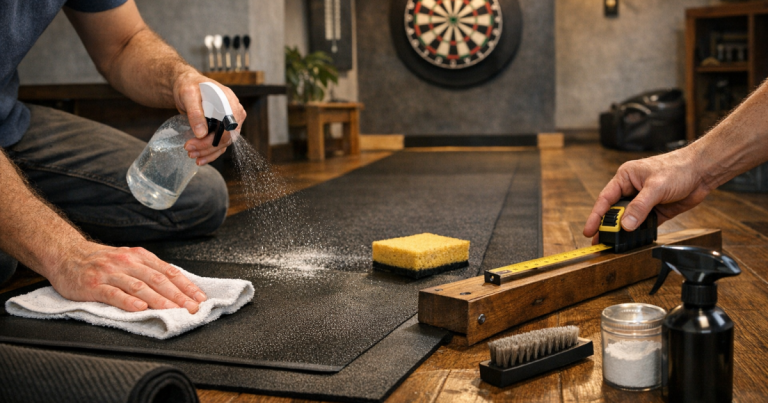
This is where quick pack-away matters most. A low-profile roll-out mat and removable oche marker are usually easier to live with than a bulky raised setup. Store the mat only when dry and clean, particularly if shoes are worn during play.
Lighting and visibility still matter
A neat floor setup will not fix a board that is poorly lit. In multipurpose rooms, ceiling lights are often positioned for seating or dining rather than darts, which can leave shadows across the treble bed. Before settling on a final oche position, check the view from the throw line and from slightly left or right of centre.
If you are using a cabinet, stand or wall-mounted setup, it is worth checking suitable dartboard lighting layouts for cabinets, stands and wall setups. Good lighting makes the whole temporary setup feel more permanent and reduces the temptation to shift the mat into a poor position just to see the board better.
Small details that make the setup easier to live with
The best multipurpose darts areas are the ones that people keep using because setup and pack-away take very little thought. These small habits help:
- Roll the mat consistently rather than folding it, unless the maker states otherwise.
- Keep the playing side clean so grit does not scratch hard flooring when the mat is moved.
- Store the oche marker with the mat so parts do not go missing.
- Check curled edges before guests play, as occasional players are more likely to catch a toe.
- Keep darts, flights and spare points in a separate case so the floor area is not used as a dumping spot.
It also helps to decide where players stand while waiting to throw. In a shared room, people naturally drift into doorways, beside furniture or close to the board. A clear waiting spot keeps the throw lane tidy and makes the room feel less chaotic during home matches.
Questions people ask
Can I use a darts mat on carpet?
Yes, but check that it lies flat and does not creep forward during play. Thick carpet can soften the feel of a raised oche, so test the stance before relying on it for regular practice.
Is a printed oche line enough?
For many home players, yes. A printed line is simple and easy to store. A raised oche is better if you want a physical stop for your front foot.
How do I stop the mat moving on hard floors?
Start with a clean, dry floor and make sure the mat backing suits the surface. If it still moves, use a different mat style rather than improvising with anything that could mark the floor.
Should the mat stay out all the time?
Only if the room is not used as a walkway. In multipurpose rooms, packing it away reduces trip hazards, protects the mat edges and keeps the space usable for normal family life.
Do I need a full-length mat?
Not always. A shorter protective area can work if the oche position is clear and the floor near the board is already protected by a surround or suitable room layout.
Main points
A temporary darts area works best when the board is fixed, the centreline is easy to repeat and the oche position is measured properly from the board face. Choose a mat and oche arrangement that suits the floor, storage space and how quickly the room needs to return to normal use.
For shared rooms, convenience matters as much as match feel. If the mat rolls out straight, marks the throw clearly, protects the floor and packs away neatly, you are far more likely to use the setup regularly rather than treating darts as a hassle to assemble.