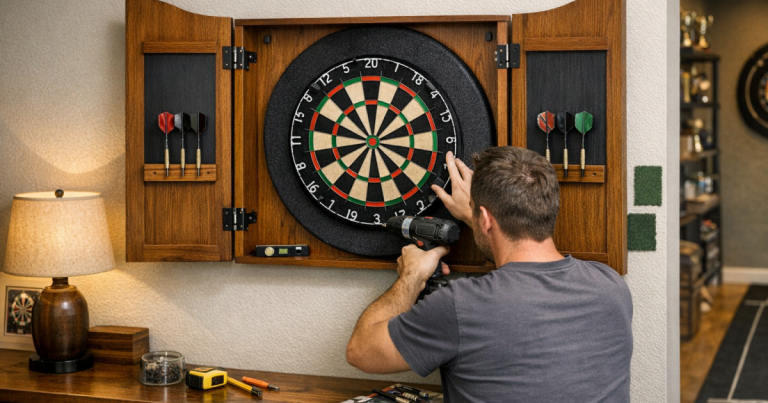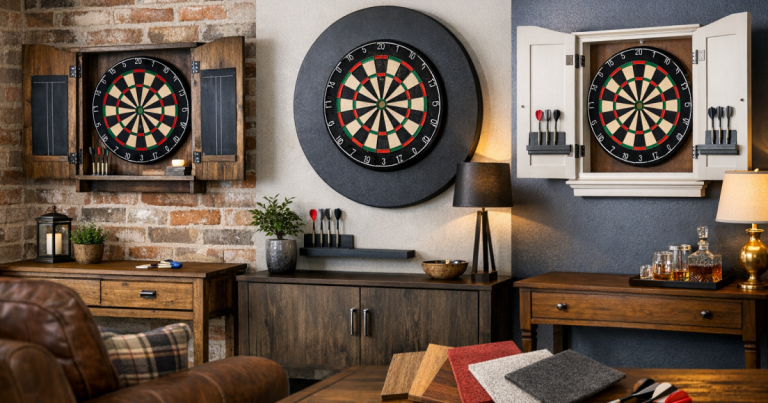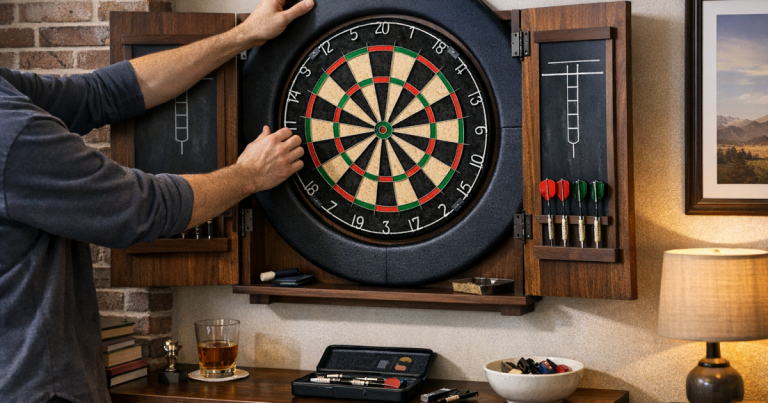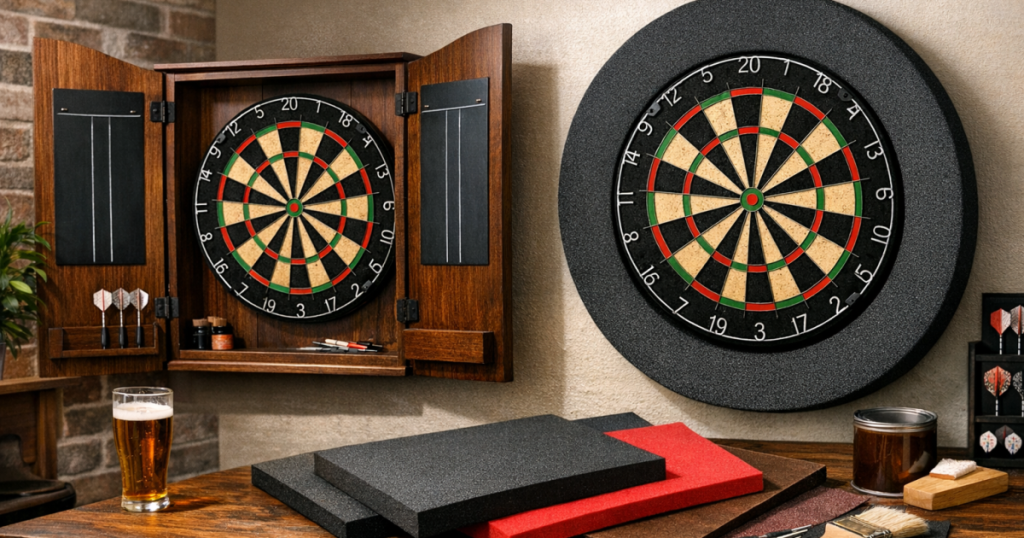
A cabinet or surround changes more than the look of a home board. The dartboard cabinet materials you choose affect wall protection, noise, storage, lighting glare and how easily the area stays tidy. Wood brings structure and storage; foam gives impact absorption with a softer, removable feel; finishes decide whether the setup blends into a living room or stands out as a dedicated oche corner.
The short version
- Wood cabinets suit players who want storage, a neater room finish and a more traditional darts look.
- Foam surrounds are better for simple wall protection around the board, particularly where stray darts are the main concern.
- Finish matters because gloss, dark colours and textured surfaces can change glare, marks and how prominent the setup feels.
- Wall type still matters; a cabinet or surround cannot compensate for a badly chosen fixing point or a cramped throwing area.
- The neatest setups usually combine the right wall, a stable board, controlled lighting and enough surrounding protection for the players using it.
Wood cabinets: tidy, traditional and storage-friendly
A wooden dartboard cabinet is the more furniture-like option. It frames the board, hides the wall fixings, and usually gives you doors that close over the board when the area is not in use. For a spare room, dining room, garage conversion or office corner, that can make the difference between a casual board on the wall and a darts area that looks intentional.
The main advantage is organisation. Cabinets can keep darts, spare flights, chalk, marker pens or a small scoreboard close to the board rather than scattered across a shelf. They also create a visual boundary around the board, which helps the setup feel complete. The limitation is that a cabinet does not protect as wide an area as a full surround, especially at the sides and below the board where casual players often miss.
Wood also changes how the board area sounds and feels. A cabinet fixed firmly to a suitable wall can feel solid and satisfying, but a poorly mounted one may rattle when darts land. Before committing to a heavy cabinet, check the wall surface and fixing method. If the wall itself is the bigger question, start with choosing the best wall for a dartboard before thinking about style.
Solid wood, veneer and MDF finishes
Not every cabinet described as wooden is made in the same way. The construction affects weight, durability, feel and how well the cabinet copes with everyday use.
- Solid wood has a traditional look and can feel more substantial, but it is usually heavier and can show dents or knocks.
- Wood veneer gives a timber appearance over a manufactured core, often with a smoother and more consistent finish.
- MDF or similar board is common in home cabinets because it can be shaped, painted and finished cleanly, though exposed edges and corners need reasonable care.
- Laminated or wrapped surfaces can be easier to wipe down, but cheaper finishes may mark or peel if knocked or exposed to damp conditions.
In a typical UK home, moisture is worth considering. A cabinet in a dry spare room has an easier life than one in an unheated garage, conservatory or outbuilding. Wood-based materials can react to damp, cold and temperature swings, so the finish and the room environment matter as much as the cabinet’s appearance.
Foam surrounds: simple protection with less visual weight
A foam dartboard surround is usually chosen for one reason: reducing the chance of visible wall damage from missed darts. It sits around the board and gives a wider protective area than the cabinet frame itself. For mixed-ability households, visiting friends or younger adult beginners, that extra coverage can be more useful than storage doors.
Most home surrounds are made from dense foam designed to accept dart impacts and sit snugly around a standard bristle dartboard. Some are one-piece rings, while others come in segments that join around the board. A snug fit is important because gaps can expose the wall, and a loose surround can shift during play.
Foam is not magic armour. Hard throws, worn points, unusual impact angles or repeated hits in one spot can still leave marks over time. But for normal home use it is one of the cleanest ways to add protection without building a full cabinet or drilling extra panels around the board. For more detail on fit and grip, see the guide to removable dartboard surrounds.
One-piece rings versus segmented surrounds
One-piece surrounds look cleaner because there are no visible joins. They can be quick to place over the board, but they need enough room around the board when fitting and removing them. Segmented surrounds are easier to store, easier to transport and less awkward in tight spaces. The trade-off is that the joins need to stay neat and tight, otherwise the finish can look less seamless.
Foam density and surface texture also matter. Very soft foam may show wear sooner, while firmer foam can feel more robust but may not grip every board equally. Rather than focusing only on colour, check whether the surround sits flat, hugs the board evenly and covers the most likely miss zones for your players.
Finish choices: colour, sheen and room feel
Finish is not just decoration. The surface around a dartboard affects visibility, glare, fingerprints and how strongly the setup dominates the room. A dark cabinet can look smart and traditional, but it may make a small corner feel heavier. A pale or natural wood finish can blend into domestic spaces more easily, though it may show scuffs or dart marks sooner.
Gloss finishes can look polished when new, but they may reflect light from ceiling fittings, ring lights or windows. That matters because darts is a visual game: distraction around the treble bed or glare near the board edge can make the setup feel less comfortable. Matte and satin finishes are usually calmer to look at, particularly in rooms with bright overhead lighting.
Foam surrounds are often plain black, red, blue or grey, but colour still has practical consequences. Black hides many marks and frames the board sharply. Grey can feel softer in a living space. Brighter colours make the darts area more prominent, which some players love and others find too loud for shared rooms.
Cabinet, surround or both?
A cabinet and a surround solve different problems. A cabinet is about presentation and storage first, with some framing around the board. A surround is about wall protection first, with minimal fuss. Some home setups use both, but it needs careful spacing because the cabinet doors, board depth and surround thickness all need to work together.
- Living room or dining room setup: a cabinet can help the board disappear when not in use, especially if the finish matches nearby furniture.
- Garage or games room: a foam surround often makes more sense because function and protection usually matter more than hiding the board.
- Rented home: a removable surround and carefully planned mounting can reduce visible wear, though you still need permission for any wall fixings required.
- Family or social play: wider foam protection is helpful because occasional players are more likely to miss the scoring area.
- Compact corner: a cabinet may look neat, but check that open doors do not clash with shelving, radiators, curtains or walkways.
If you use a cabinet with doors, remember that the open-door width becomes part of the playing area. It should not create a head-height obstacle, block a walkway or sit where someone can brush against it during a throw.
Checks before fitting anything around the board
The material choice only works if the rest of the setup is sensible. Before fitting a cabinet or surround, check the area from the board face to the oche, the wall behind the board, nearby furniture and the route people take through the room.
- Board position: confirm the board height and throwing distance before deciding where the cabinet or surround will sit.
- Wall surface: masonry, timber, plasterboard and tiled surfaces behave differently when fixings are added.
- Door clearance: cabinet doors need space to open fully without striking walls, shelves or light fittings.
- Miss zones: look at where stray darts are most likely to go: sides, below the board and occasionally above it.
- Lighting: check glare on cabinet doors and shadows cast by deep frames or surrounds.
- Floor area: the oche should be clear, stable and easy to return to between throws.
Good wall protection does not replace a safe layout. If you are planning a new room or moving the board into a busier part of the home, use the advice on how to plan a safe throwing area so the cabinet or surround supports the whole setup rather than just the wall behind the board.
Care: keeping wood, foam and finishes looking decent
Wood cabinets need basic household care rather than specialist maintenance. Wipe dust away with a dry or lightly damp cloth, avoid soaking the surface, and check hinges occasionally so doors do not sag. If the cabinet has a chalk scoreboard, clean it gently rather than scrubbing the surrounding finish.
Foam surrounds need a different approach. Remove loose dust, avoid harsh cleaners, and rotate or reposition the surround if its design allows and one area is taking repeated hits. Darts with burred or damaged points can chew up foam and mark wood more easily, so point condition matters. If darts are bouncing out or landing unpredictably, check the board, points and throw rather than blaming the surround straight away.
For both materials, sunlight and damp are common enemies. Direct sunlight can fade finishes, while damp rooms can encourage swelling, odours or surface deterioration. A darts area does not need showroom treatment, but it does benefit from being dry, ventilated and away from obvious knocks.
FAQ
Is a wooden dartboard cabinet enough to protect the wall?
It protects the area immediately around the board better than a bare wall, but it usually does not cover as much space as a foam surround. For beginners or social play, wider protection is normally more forgiving.
Can I put a foam surround inside a cabinet?
Sometimes, but only if there is enough depth and clearance for the surround, board and cabinet doors. Measure the open space carefully and check that the doors still close without pressing on the board.
Which finish is easiest to live with in a shared room?
Matte or satin wood-effect finishes tend to blend in well and avoid strong reflections. Black foam is practical for hiding marks, but it creates a more obvious darts-zone look.
Do foam surrounds blunt steel tip darts?
Normal foam contact is not usually the main cause of blunting. Hard surfaces behind or around the board, damaged points, poor storage and repeated floor hits are more likely to cause problems.
Should I choose storage or wall protection first?
Start with the problem you are actually trying to solve. If the wall is getting marked, prioritise protection. If the area looks untidy, a cabinet may be the better first change.
Main lessons
Think of dartboard cabinet materials as part of the whole playing area, not just a decorative choice. Wood brings structure, storage and a more finished appearance. Foam brings forgiving wall protection and easier removal. The finish then decides how the setup looks under real lighting and how well it copes with daily use.
The best home darts areas usually come from matching the material to the room: a smart cabinet in a shared interior, a robust surround in a practice space, or a careful combination where storage and protection both matter. Get the wall, clearances and lighting right first, then choose the material that makes the setup easier to enjoy and easier to keep tidy.