Wall protection is one of those upgrades you only really appreciate after the first wild bounce-out. This Mission Dartboard Surround Review looks at whether Mission’s surround is a sensible, tidy way to protect the wall immediately around a home board without turning the room into a full pub-style oche setup. Quick verdict: it is a strong, simple option for standard bristle-board setups, provided you understand its coverage limits and check the fit around any cabinet, light ring or nearby furniture before buying.
Product overview
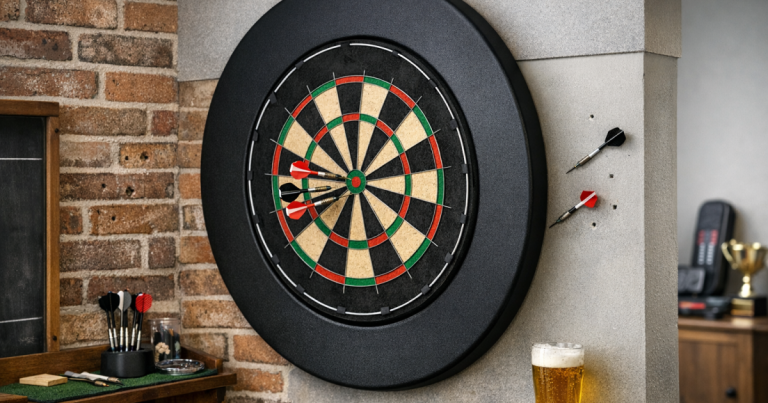
Mission Dartboard Surround is a protective ring designed to sit around a dartboard and catch darts that miss the scoring area by a modest margin. It is the kind of accessory that makes most sense in spare rooms, garages, dining areas and living rooms where a permanent backboard would feel too heavy or visually intrusive.
The appeal is straightforward: it gives you a cleaner border around the board, helps disguise small scuffs behind the setup, and reduces the chance of errant darts marking plaster, wallpaper or painted walls close to the board. It is not, however, a complete wall-protection system. If your board is close to a door frame, window reveal, shelf, picture frame or radiator, the surround only protects the area it physically covers. For awkward rooms, it is worth planning the whole throw zone first rather than relying on the surround to solve every miss; our guide to planning a darts area around doors and windows is a useful next step before you commit.
As a soft-monetised accessory, this is not a product that needs overcomplicating. The decision comes down to fit, coverage, finish and how forgiving your room layout is. If it matches your board and the room gives you enough safe wall space, it is an easy shortlist item.
Key specs
- Product type: dartboard surround for home wall protection.
- Primary use: protecting the wall immediately around a standard dartboard from near misses.
- Fit style: push-fit surround around the outer edge of the board; buyers should verify compatibility with their exact dartboard and mounting depth.
- Board compatibility: intended for standard round bristle-style dartboards rather than soft-tip electronic boards or unusual novelty boards.
- Installation type: no separate wall fixing is normally needed for the surround itself, although your dartboard still needs to be mounted correctly.
- Room compatibility: best suited to open wall space where the board is not tight against doors, windows, cabinets or protruding furniture.
- Maintenance: wipe clean gently and check periodically for deep dart cuts, compression or looseness around the board.
Pros and cons
Pros
- Simple upgrade: it adds meaningful wall protection without needing a full backboard or a DIY panel.
- Clean visual finish: the ringed look frames the board neatly, which helps in shared rooms where the setup needs to look intentional.
- No-drill surround fitting: the surround itself is typically a push-fit accessory, so it is friendly for renters or anyone avoiding extra holes around the board.
- Good for normal near misses: it is useful for the common misses just outside the doubles ring, particularly during casual practice or family games.
- Easy to remove: you can take it off for cleaning, board rotation or a room refresh without dismantling the whole setup.
Cons
- Limited coverage: it will not protect a wide wall area, skirting, nearby furniture or anything far outside the board’s edge.
- Fit needs checking: cabinets, thick light rings and unusual board mounts can affect how neatly it sits.
- Not a cure for poor layout: if the board is too close to a door, window or walkway, a surround does not solve the underlying room-planning issue.
- Can show wear: repeated impacts in the same section may leave visible marks over time, especially with heavier practice sessions.
Performance in real use
The Mission surround performs best in the exact situation most home players need help with: protecting a modest halo around the dartboard. If your misses are usually close to the doubles, it can save a lot of cosmetic damage. That makes it more valuable for everyday home setups than its simple design suggests, because small wall chips and dart holes quickly make a board area look messy.
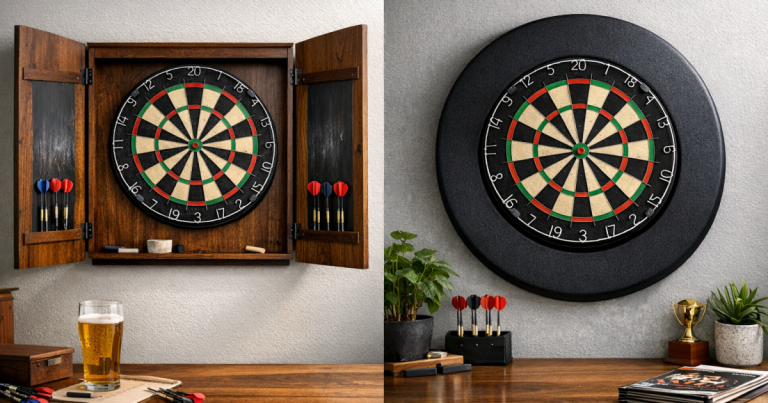
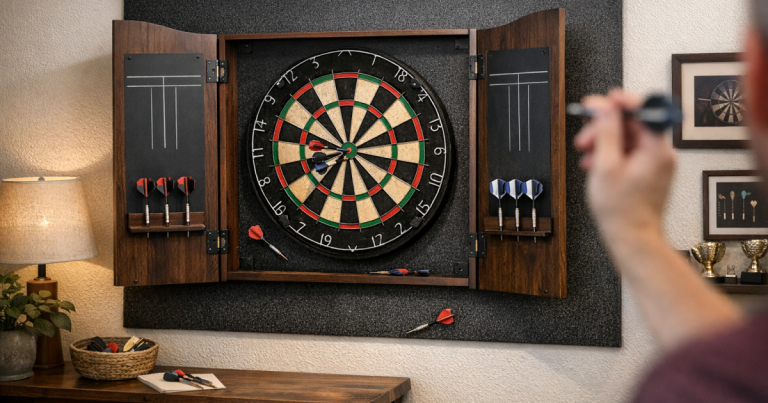
Fit is the first thing to get right. A surround should sit snugly enough around the dartboard that it does not sag, twist or leave obvious gaps. Before buying, check your board type, the way it sits on the wall, and whether you use a cabinet or lighting system. If the board is recessed inside a cabinet, the surround may not fit in the way you expect. If you are thinking about combining wall protection with a cabinet, read our breakdown of whether dartboard cabinets are worth it for a living room before mixing accessories.
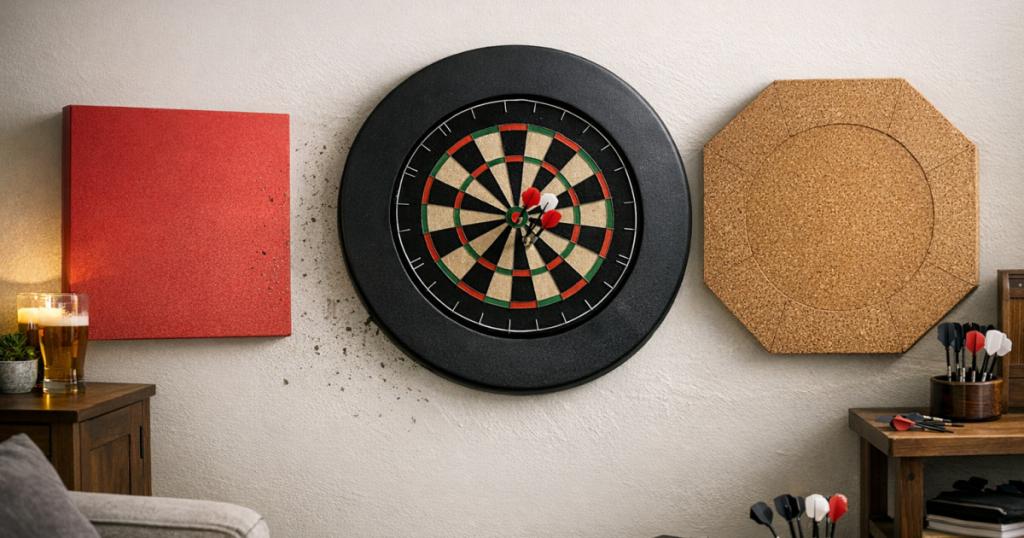
Coverage is good for standard, close-range misses but should not be overestimated. A surround is a ring, not a backboard. Beginners, younger players and guests can still miss beyond it, particularly if the throw line is cramped or the player is standing off-centre. In a multi-use room, the safer approach is to treat the surround as one layer of protection alongside sensible board placement and clear space around the oche.
The finish is another strength. Mission accessories generally aim for a smart club-style look rather than a homemade feel, and that matters if your board is in a living room or dining area. A plain surround tends to disappear visually once the board is up, which is often exactly what you want. It frames the board without drawing attention to itself.
Durability depends heavily on use. Casual players throwing a few legs a week should get a long spell of service from a surround if they rotate the dartboard and avoid repeatedly peppering the same area. More serious home throwers who practise trebles and doubles daily may see wear sooner around popular miss zones. That is not a deal-breaker, but it is a realistic part of owning any soft wall-protection ring.
Maintenance is minimal. Remove dust, avoid harsh cleaning products, and check that dart tips are not leaving loose fragments or torn areas. If you notice the surround no longer grips cleanly around the board, re-seat it rather than carrying on with it slightly misaligned.
Who it’s best for / who should skip it
The Mission Dartboard Surround is best for home players who already have a standard bristle dartboard on a reasonably open wall and want a tidy, low-effort way to reduce wall damage. It suits renters, shared households and anyone who wants the darts area to look presentable without building a large timber backboard.
It is also a sensible option for casual family games, provided the players are reasonably accurate and the room gives you enough clearance around the board. In that setting, the surround protects against the most likely mistakes while keeping setup time and visual clutter down.
You should skip it, or at least add more protection, if your wall is already tight for space. Boards mounted close to doorways, windows, shelving, fireplaces or expensive furniture need wider planning than a ring surround can provide. It may also be the wrong choice if you use a dartboard cabinet that does not leave enough room around the board, or if you need to hide existing wall damage over a much larger area.
Alternatives
If you like the idea but want to compare the style or availability before deciding, two realistic alternatives are worth noting. Target Pro Tour Dartboard Surround is a familiar option for players already using Target accessories and wanting a clean modern look. Winmau Xtreme Dartboard Surround is another recognisable surround from a major darts brand, and may appeal if you are building a setup around a Winmau board.
The bigger alternative is not another surround at all, but a larger backboard or cabinet setup. That route offers broader wall coverage, but it usually has more visual impact and may need more careful mounting. For a living-room setup, the trade-off is simple: a surround is neater and lighter; a backboard is more protective.
Helpful questions
Will it stop all wall damage around a dartboard?
No. It helps with near misses around the board, but it will not protect the wider wall, nearby furniture, door frames or windows.
Does it work with any dartboard?
It is intended for standard round bristle dartboards, but you should check your exact board, wall bracket, cabinet and lighting arrangement before buying.
Is it suitable for rented homes?
Yes, the surround itself is a low-commitment accessory because it does not usually require extra fixing holes. The dartboard mount still needs to be secure and appropriate for the wall.
Can beginners use it safely?
Beginners can use it, but very wide misses may still land outside the protected area. Leave a clear, uncluttered throw zone and avoid placing the board near fragile surfaces.
Verdict + score
The Mission Dartboard Surround is a neat, worthwhile upgrade for a standard home darts setup where the main problem is protecting the wall immediately around the board. It is easy to live with, visually tidy and practical for everyday play, but it should not be treated as a full-room protection solution. Check the fit around cabinets, lights and awkward wall layouts before buying, and consider a larger backboard if your misses or room risks are wider than the surround can cover. Score: 8.3/10.
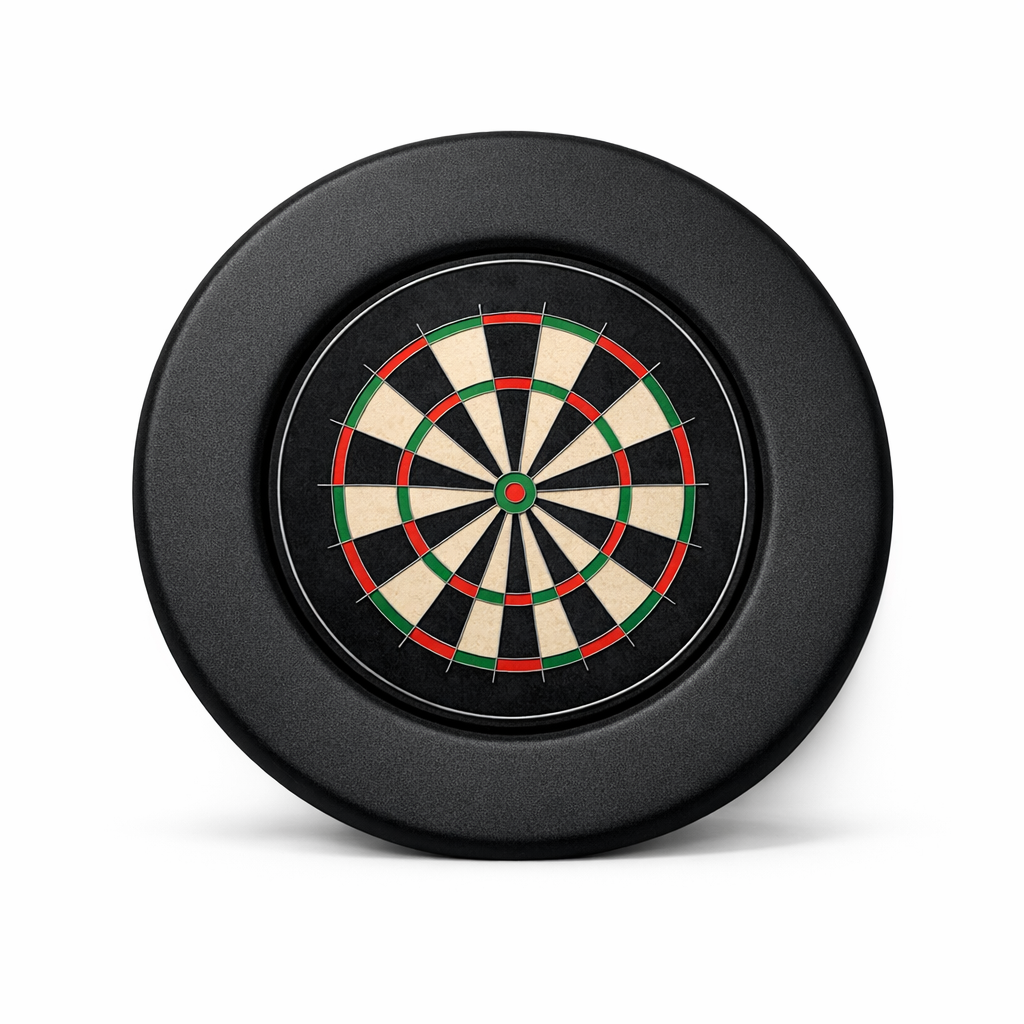
Mission Dartboard Surround
Check the fit around cabinets, lights and awkward wall layouts before buying, and consider a larger backboard if your misses or room risks are wider than the surround can cover.
You might also like: How to Stop Dartboard Noise Travelling Through a Shared Wall.