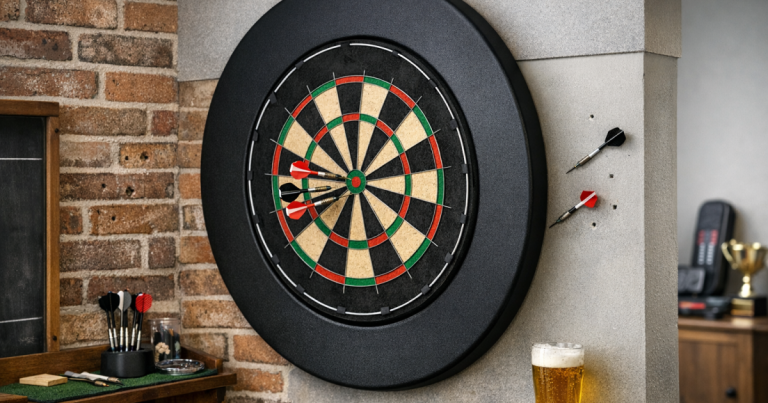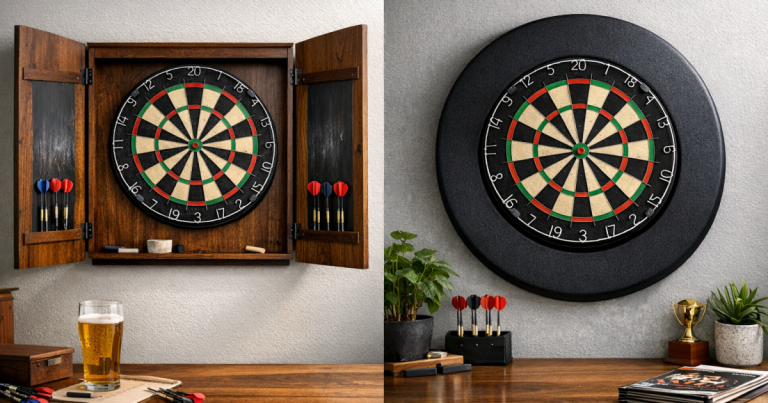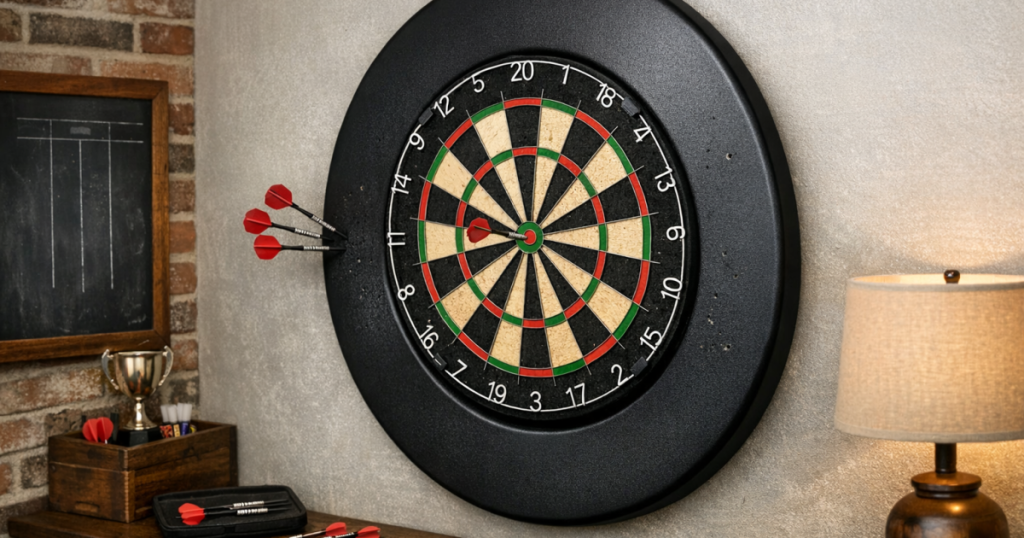
A Winmau Dartboard Surround review is really a question of damage control: how much wall do you want to protect, and how discreet do you want the solution to look? For many home players, a foam surround is the clean middle ground between doing nothing and fitting a full cabinet or large backboard.
Quick verdict: the Winmau Dartboard Surround is a sensible, low-fuss wall protection upgrade for a standard home darts setup. It is not a magic shield for every stray dart, but it gives useful coverage around the board, looks tidy, and suits players who want protection without turning the wall into a workshop project.
Product overview
The Winmau Dartboard Surround is a protective ring designed to sit around a bristle dartboard and absorb many of the near-miss darts that would otherwise mark plaster, paint, wallpaper or timber panelling. It is aimed squarely at home players who already have a board up and want a cleaner, safer-looking playing area without committing to a cabinet.
Its appeal is simplicity. There is no big frame, no doors to swing open, and no need to redesign the whole wall. For a living room corner, spare bedroom, garage or utility space, that matters. A surround can make a darts setup look more intentional, which is useful if your board is in a shared room rather than a dedicated games space.
The most important limitation is coverage. A surround protects the area immediately around the dartboard; it does not protect the wider wall, skirting, floor, ceiling, nearby shelves or anything sitting close to the throw line. If your darts regularly miss by a long way, the solution is not only more wall protection. It is worth checking your board height, stance room and throw line first. If your oche is not set accurately, use our guide to setting the correct oche distance at home before judging whether the surround gives enough protection.
Key specs
- Product type: dartboard wall protection surround.
- Main material: dense protective foam or similar impact-absorbing surround material; check the current retailer listing for the exact material description.
- Intended fit: designed for use around a standard bristle dartboard.
- Fixing style: generally fitted around the board rather than mounted as a separate framed cabinet.
- Coverage style: circular protection around the outside of the dartboard, focused on near misses.
- Best suited to: steel-tip home darts setups where the wall directly around the board needs protection.
- What to verify before buying: compatibility with your dartboard size, board depth, wall clearance, colour choice and whether your existing bracket leaves enough room for a neat fit.
Pros and cons
Pros
- Immediate wall protection: it covers the most common near-miss zone around the board, which is where many casual home setups take the most damage.
- Clean appearance: the round outline looks purposeful and less bulky than a cabinet or large backboard.
- No major room changes: it is a small upgrade rather than a full rebuild of the darts area.
- Good for shared spaces: it can help a board look more finished in a lounge, hallway nook or spare room.
- Easy to remove for decorating: because it is not a permanent board-sized wall panel, it is simpler to take down when refreshing the room.
Cons
- Limited outer coverage: wide misses can still hit the wall beyond the surround.
- Fit depends on your board and bracket: a board mounted proud of the wall, or an unusual fixing setup, can affect how neat the surround looks.
- Not a storage solution: unlike a cabinet, it does not hold darts, flights, chalk or accessories.
- May not suit very rough practice areas: if beginners, children under supervision, or guests throw often, a larger protective zone may be more reassuring.
- Surface marks can build up: like any protective surround, it can show wear over time if it is taking regular hits.
Performance in real use
The Winmau Dartboard Surround performs best when it is solving the right problem: near misses around a properly mounted board. If your darts tend to clip just outside doubles, land beside the board, or drift into the narrow wall area around the outer wire, this is exactly the kind of accessory that earns its space.
Fit is the first thing to get right. A surround needs to sit neatly around the dartboard without twisting, sagging or leaving awkward gaps. Standard bristle boards are the natural match, but home setups vary more than people expect. Some boards sit close to the wall; others sit proud because of the bracket, a light ring, a backing panel or previous DIY fixes. Before buying, check how your current board sits and whether the surround can sit flat enough to look tidy.
Coverage is useful, but it is deliberately localised. The protected area surrounds the scoring face and catches the common mistakes: overhit doubles, tired throws, loose grouping, and the odd bounce-out that clips away from the board. What it will not do is protect the wall far to the side, above a shelf, or below the board where dropped darts and bounce-outs can still cause damage. For most intermediate home players, that trade-off is acceptable. For heavy beginner use, a broader backboard may make more sense.
Durability depends on how often it is hit and how sharp your points are. A good surround should be treated as sacrificial protection: it is there to take marks that your wall otherwise would. That means small punctures and scuffs are part of the job. If you rotate players often or host friends who are still finding their line, expect the surround to age faster than it would in a solo practice setup.
Ease of use is a strong point. There is very little to maintain beyond occasionally wiping surface dust and checking that the surround is still seated properly around the board. It also avoids one of the common cabinet annoyances: door clearance. In a narrow room, garage bay or alcove, cabinet doors can make the setup feel more intrusive. A surround keeps the footprint visually tight.
Style is subjective, but this is where the product will appeal to many UK home players. It gives the board a finished outline without dominating the wall. In a garage it looks neat; in a spare room it looks less improvised; in a shared living space it can stop the board feeling like it has simply been screwed up as an afterthought.
Who it’s best for / who should skip it
Best for
- Home players with a mostly accurate throw: if your misses are usually close to the board, the coverage is well targeted.
- Rented or recently decorated rooms: it can reduce obvious wall marks without adding a large permanent-looking panel.
- Compact setups: the slim, board-hugging design suits tighter darts corners where a cabinet feels too bulky.
- Players who value a tidy look: it frames the board neatly and helps the whole setup feel more finished.
Worth skipping if
- You need very wide protection: a larger backboard or panel will be better if darts regularly miss by a wide margin.
- You want built-in storage: a cabinet is more useful if you need somewhere for spare stems, flights, chalk or score markers.
- Your wall surface is already fragile: crumbly plaster, damaged fixings or uneven backing may need sorting before any accessory will sit properly.
- Your board area feels cramped: fix the room layout first, because wall protection will not solve poor throwing space.
Key questions answered
Will it stop every dart from hitting the wall?
No. It protects the near-miss area around the dartboard, not the entire wall. Very wide, high or low misses can still land outside the surround.
Does it replace a dartboard cabinet?
Not completely. It is better for simple, compact protection, while a cabinet adds doors, a more furniture-like look and sometimes extra practical space around the board.
Is it suitable for a garage darts setup?
Yes, provided the board is mounted securely and the surrounding area is dry and suitable. In a busy garage, think about wider wall and floor protection as well.
Can beginners use it?
Yes, but beginners often miss by more than the surround covers. For regular beginner use, a larger protective panel behind the board may be a safer choice for the wall.
Alternatives
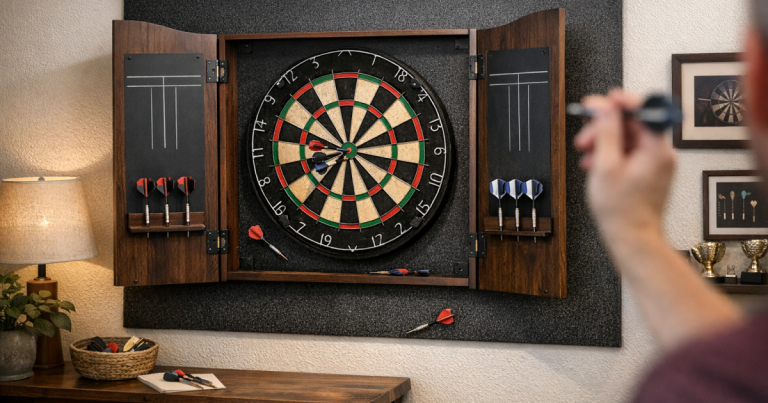
The main alternative is a full dartboard cabinet. A cabinet can make the setup feel more traditional and may suit a room where you want the board hidden when not in use. It also gives a stronger visual boundary around the dartboard, although the side coverage and wall protection depend on the cabinet design and how accurately people throw. If you are considering that route on a plasterboard wall, read our advice on fitting a dartboard cabinet on plasterboard before choosing fixings or placement.
A larger backboard is the other sensible alternative. This is the better route if your priority is maximum wall protection rather than neatness. A painted timber panel, felt-backed board or purpose-made wall panel can protect a much wider area, though it takes up more visual space and can look heavier in a shared room. For a dedicated garage or games room, that may be a good trade. For a tidy board in a spare room, the Winmau surround is usually the cleaner-looking option.
Verdict + score
The Winmau Dartboard Surround is a strong choice for home players who want neat, targeted wall protection without the bulk of a cabinet or the visual weight of a large backboard. Its biggest strength is its simplicity: it frames the board, protects the common miss zone and keeps the setup looking clean. Its biggest weakness is also obvious: it only protects the area immediately around the board, so very loose throwing or busy beginner sessions may need something larger. For a typical home darts corner with a standard bristle board and reasonably controlled throwing, it is an easy upgrade to recommend: 8.4/10.
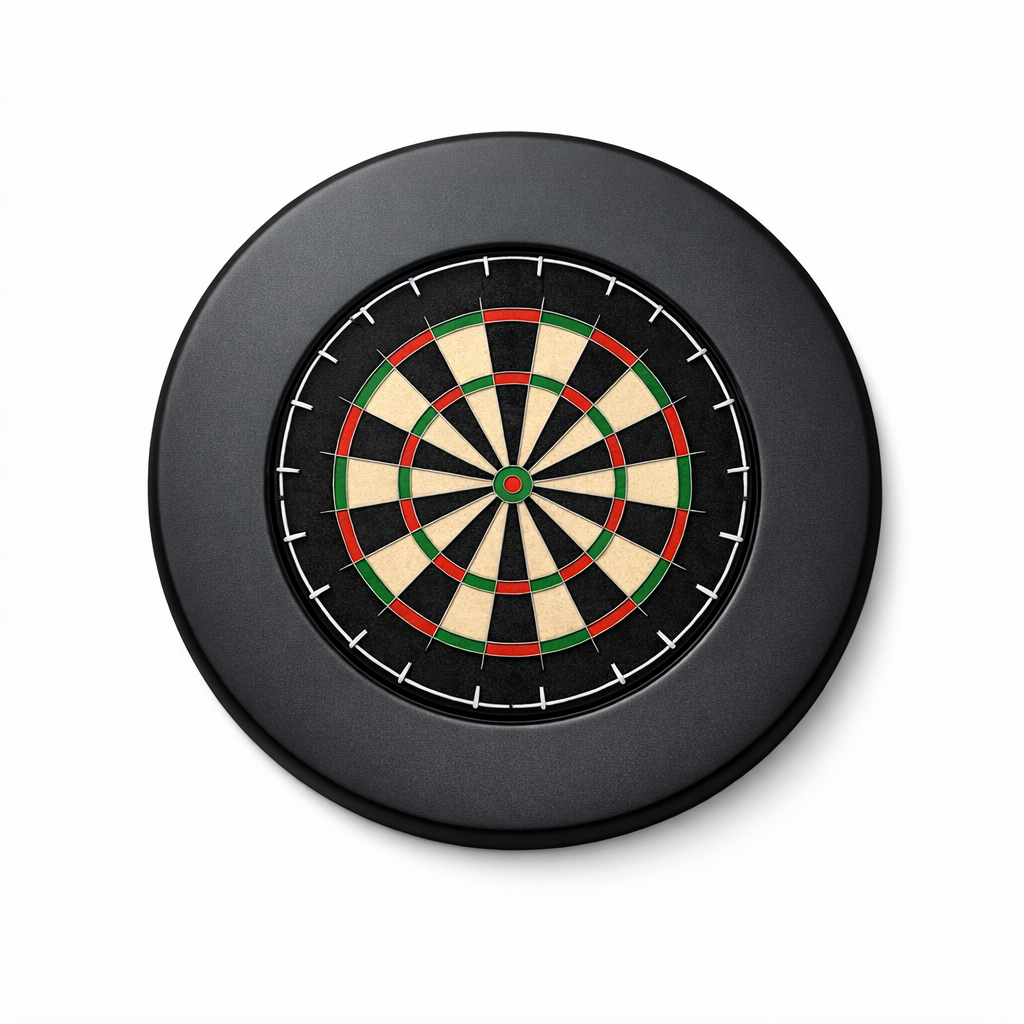
Winmau Dartboard Surround
For a typical home darts corner with a standard bristle board and reasonably controlled throwing, it is an easy upgrade to recommend: 8.
You might also like: How to Set Up a Grab-and-Go Darts Maintenance Kit.