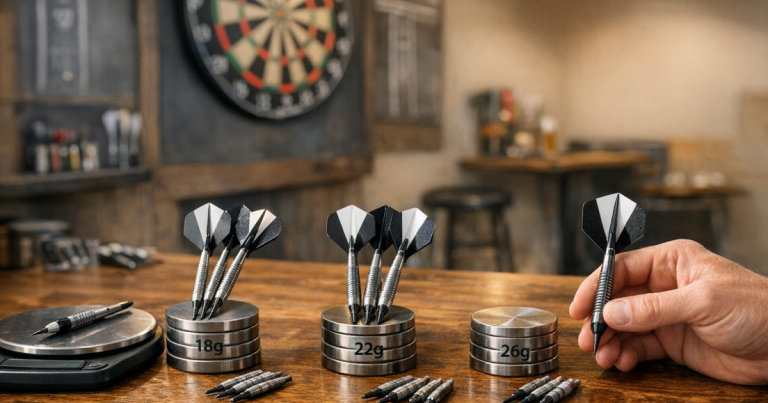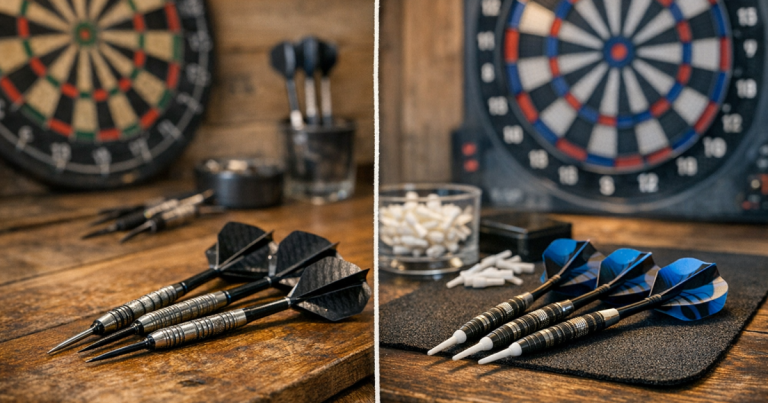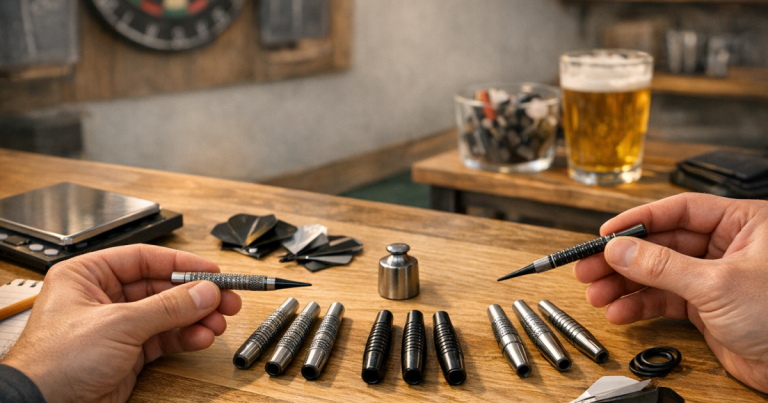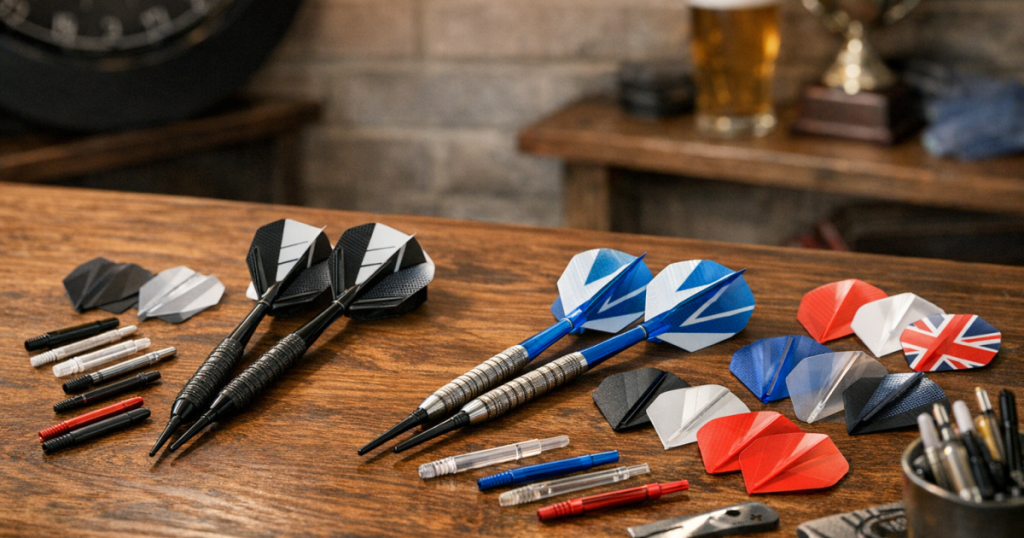
A dart can feel completely different when you change the parts behind the barrel. Choosing dart shafts and flights is about finding a tail setup that helps the dart leave your hand cleanly, fly consistently and sit in the board at a useful angle for your next throw.
The right combination is not the same for everyone. Your grip, release, dart weight, board position and grouping pattern all affect whether you need a shorter, longer, slimmer or more stabilising rear setup.
The short version
- Use shaft length to control how the dart sits in the board: shorter shafts often feel more direct, while longer shafts can add stability.
- Use flight shape to control lift and drag: standard flights usually give more stability, while slim flights tend to suit faster, flatter throws.
- Change one thing at a time. Swapping shaft length and flight shape together makes it harder to know what worked.
- Check your grouping, not just one good visit. A setup that produces fewer deflections and more repeatable angles is usually the better choice.
- Keep spares in the same size and shape once you settle on a setup, because worn flights and loose shafts can undo good throwing form.
Start by reading your dart’s landing angle
Before buying a handful of accessories, look at how your current darts land. A dart that regularly enters the board tail-up, tail-down or sideways is giving you useful feedback. You are not trying to make every dart sit perfectly level; you are trying to find an angle that works with your grouping and does not block the treble bed more than necessary.
If the tail sits too high and your following darts keep clattering into the flight, a slightly shorter shaft or lower-drag flight may help. If the dart drops low or feels unstable in the air, a longer shaft or broader flight can add steadiness. If the dart fishtails before reaching the board, the issue may be release-related, but the rear setup can still make the wobble more or less obvious.
It is worth checking the board itself before blaming your darts. A tired or poor-quality board can exaggerate bounce-outs, poor entry and strange landing feedback, so use a basic dartboard quality check if you are setting up a new home practice area or replacing an old board.
Step 1: choose a shaft length that matches your release
Shaft length changes the balance and timing of the dart in flight. There is no universal best length, but there are patterns that make testing easier.
Short shafts
Short shafts usually make the dart feel more compact. They can suit players who throw firmly, release cleanly and want less rear-end movement. They may also help if your darts sit too upright and block the bed for the next dart. The trade-off is that a short setup can feel twitchy if your release is inconsistent.
Medium shafts
Medium shafts are a sensible starting point for many home players because they give a balanced amount of stability without making the dart feel overly long. If you are unsure where to begin, start here, throw several legs or practice routines, then move shorter or longer only if the evidence points that way.
Long shafts
Longer shafts can calm the dart in the air and help it track more predictably. They may suit a smoother or slower throw, or a player whose darts feel nose-heavy and drop too steeply. The downside is extra length at the back, which can increase contact with later darts if your grouping is tight.
Step 2: pick the shaft material and locking style
Most players choose between nylon, polycarbonate-style plastic, aluminium or more specialist systems. For everyday home darts, the main questions are simple: does the shaft stay tight, does it hold the flight securely, and does it survive normal use without constant fuss?
- Nylon shafts are light, affordable and easy to replace. They are a good option while you are still experimenting.
- Aluminium shafts can feel more solid and may last well, but they can loosen during play unless checked regularly.
- Grip-ring and locked-in flight systems can reduce flight drop-outs, which is useful if you practise on hard floors or play long sessions.
- Integrated shaft-and-flight systems remove one connection point, but they are less flexible if you want to mix lengths and flight shapes.
Real-world examples worth comparing include Harrows Supergrip Shafts for a conventional replaceable setup and Target Pro Grip Shafts if you want another familiar push-in flight option. Do not buy purely by brand; check the length, thread compatibility and how tightly your chosen flights sit.
Step 3: match the flight shape to the speed of your throw
Flights create drag and help the dart stabilise. Larger flights slow the rear of the dart more, while smaller flights let the dart cut through the air with less resistance. The best choice depends on how hard you throw and how the dart behaves after release.
Standard flights
Standard flights are the easiest reference point. They suit a wide range of throws and are forgiving if your release is still developing. If your darts wobble or drift, standard flights are a good baseline before trying narrower shapes.
Slim flights
Slim flights often suit faster, more direct throws. They can reduce drag and help the dart sit flatter, but they give less stabilising help. If your throw is gentle or loopy, going too slim may make the dart feel unsettled.
Shape, kite and pear flights
Intermediate shapes are useful when standard flights feel too bulky but slim flights feel too lively. Kite and pear-style flights can change how quickly the back of the dart corrects itself in the air. Treat them as fine-tuning options rather than magic fixes.
Integrated flights
Integrated systems such as Condor Axe Flights or moulded systems like L-Style L1EZ Flights can be appealing if you dislike flights popping out or splitting at the base. Check the exact length, shape and thread arrangement before buying, because these systems can change the feel more noticeably than a simple flight swap.
Step 4: test one change at a time
The quickest way to waste money is to buy several sets, throw a few visits with each, and make a decision based on one lucky 140. A better test is slower but far more useful.
- Start with your current barrel and only change the shaft length. Keep the same flight shape.
- Throw at least a few scoring turns and a few doubles with each length, not just treble 20s.
- Note the landing angle, number of deflections, and whether your third dart has a clear route into the target.
- Once the shaft length feels close, test flight shape using that same shaft length.
- Keep the setup that gives repeatable visits, not the one that produced one standout score.
If you practise at home, storage matters more than many players expect. Flights left loose in a drawer get bent, and mixed shaft sizes make it easy to rebuild one dart slightly differently from the others. A simple labelled setup, like the ideas in this wall storage station for darts gear, makes repeat testing much easier.
Step 5: check your setup under real playing conditions
A shaft-and-flight combination can feel fine in a short practice burst and less convincing over a full evening. Test it when you are warmed up, when you are slightly tired, and when you are moving around the board. Doubles, cover shots and awkward lie situations reveal more than repeated throws at the same target.
Lighting also affects how confidently you read the dart’s angle and grouping. Shadows around the treble bed can make it harder to judge whether the flight is blocking the target or whether the dart is simply sitting at a different angle. If your board area is dim or uneven, improve visibility with the advice on choosing dartboard lighting that avoids glare and shadows.
Common buying mistakes to avoid
- Copying a professional player’s setup without matching their throw speed, barrel weight or release style.
- Changing barrel, point, shaft and flight at the same time, then not knowing which change helped.
- Using damaged flights during testing. A split or warped flight gives unreliable feedback.
- Assuming expensive means better. Consistency and fit matter more than premium packaging.
- Ignoring how the darts group. A great-feeling dart that blocks every follow-up dart may still be the wrong setup.
How to test dart shafts and flights at home
Use a simple routine that gives you repeatable evidence. Set up three identical darts with the same barrels and points. Fit one shaft length and one flight shape, then throw a fixed routine: 30 darts at treble 20, 15 darts at treble 19, and a short doubles run around your usual checkout targets.
Write down what you notice in plain terms: tail high, tail low, too much wobble, clean grouping, many flight hits, or comfortable release. Then change only one part and repeat. You do not need a complicated scoring spreadsheet; a few clear notes are enough to stop guesswork taking over.
Once you find a combination that works, buy spares in the same size and shape. Flights wear faster than most players realise, and even small bends can change how the dart behaves. Shafts should also be checked for cracks, bent tops and loose threads.
Common questions
Should beginners use short or medium shafts?
Medium shafts are usually the safer starting point because they offer a balanced feel and enough stability for most developing throws. Move shorter only if your darts sit too upright or feel bulky at the back.
Do heavier darts need bigger flights?
Not always. Heavier darts can work with several flight shapes, depending on throw speed and release. If the dart drops or wobbles, try a more stabilising flight before changing the barrel.
Why do my flights keep falling out?
The flight slot may be loose, the flight may be worn at the base, or the shaft may not grip well. Try fresh flights, a grip ring system or a shaft designed to hold flights more securely.
Can different flights improve scoring straight away?
They can make the dart fly more consistently, but they will not replace practice. Judge success by tighter grouping, fewer deflections and a more predictable board angle over several sessions.
Should all three darts have identical shafts and flights?
Yes, for normal scoring play. Mixed rear setups make each dart fly differently, which makes it harder to build a repeatable throw.
Main lessons
The best rear setup is the one that makes your throw easier to repeat. Start with a medium reference setup, read the landing angle, then adjust shaft length and flight shape separately. Keep notes, use fresh parts and judge the result over proper practice rather than a handful of good visits.
Once your darts are grouping cleanly and entering the board at a useful angle, stop tinkering for a while. Consistency is the point: the right setup should help you focus on the target, not keep you wondering whether the next accessory change will solve everything.