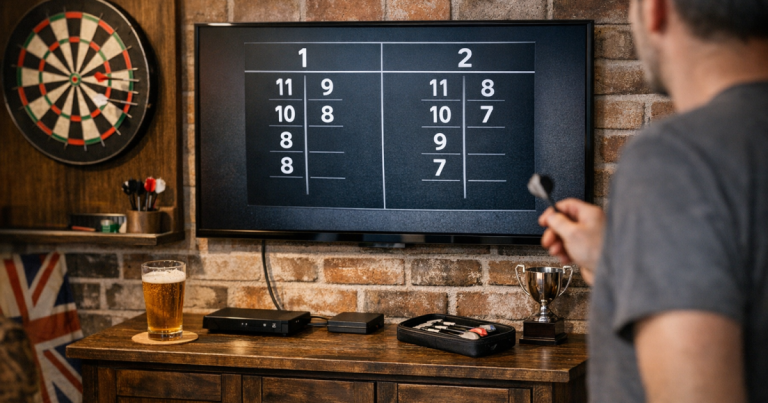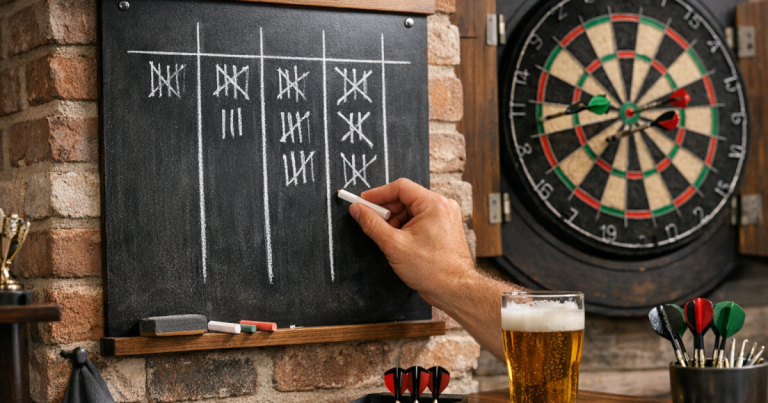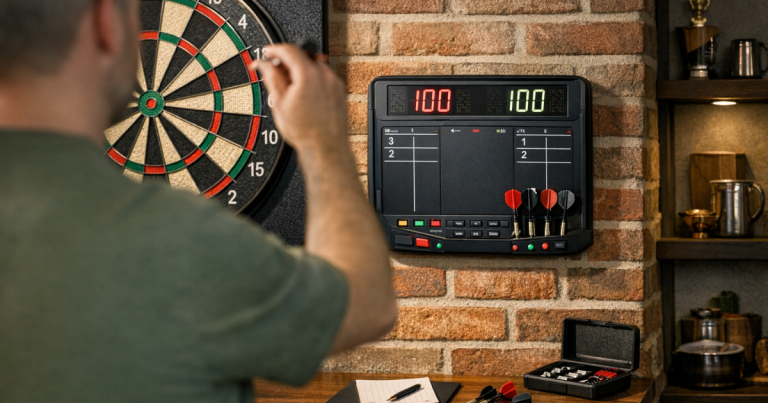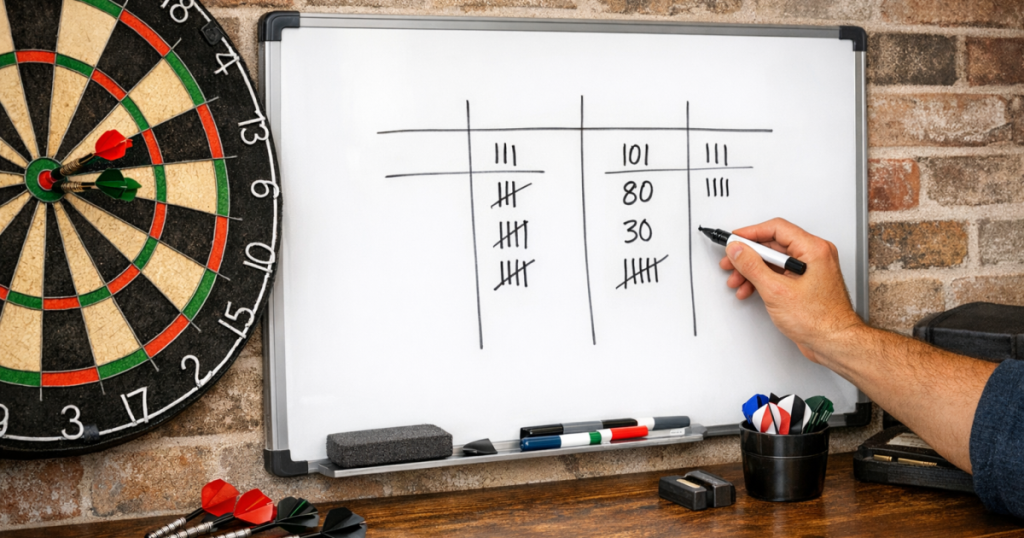
A darts scoreboard whiteboard is one of the simplest upgrades you can make to a home setup: cheap to run, easy to change, and clear enough for casual legs or proper match practice. The trick is not just writing numbers on a board, but setting it up so the layout, marker choice and position actually work during play.
A converted board should let players record scores quickly, check remaining totals at a glance, and wipe clean without ghost marks. If you already have a spare whiteboard in the house, you can usually turn it into a tidy scoring station in under an hour.
What to know first
- Use a board large enough for two player columns, remaining scores and a small checkout area.
- Place it where the chalker or scorer can reach it without standing in the throwing lane.
- Create permanent guide lines with tape, not marker, so the scoring layout stays neat.
- Use proper dry-wipe markers and a soft cloth to avoid staining and scratching.
- Keep the layout simple: too many boxes slow the game down.
Choose the right whiteboard for scoring
Most standard dry-wipe boards can be used for darts scoring, but some are much more pleasant than others. A tiny kitchen memo board quickly becomes cramped once you have player names, 501 totals, legs, sets and missed-dart notes. A medium board is usually easier to read from across a living room, garage or spare room.
A smooth, glossy writing surface is easier to clean than a textured or worn board. If the old board already has heavy ghosting, permanent marker shadows or dents, it can still work, but the numbers may become harder to read under dartboard lighting. Give it a full clean before you decide whether it is worth converting.
Magnetic boards are handy because you can use small magnets for player names, match format notes or a moveable throw indicator. Non-magnetic boards are still fine; you just need to write those details by hand.
Plan where the scoreboard will sit
The best position is close enough to the board for quick scoring, but not so close that the scorer has to step into the path of play. In a compact UK living room setup, the scoreboard often works well on the side wall, on the outside of a dart cabinet, or on a removable panel that can be put away after the match.
Avoid placing it directly behind the dartboard where players may be tempted to stand in front of the oche while checking scores. It should also be readable without turning the main light into a glare problem. If you are already adjusting your setup, it is worth checking your throwing line and room flow alongside this; a removable darts oche can help keep the scoring area and throwing position consistent without permanently changing the room.
Think about who is using it. A board mounted too high looks neat on the wall but can be awkward for younger players or anyone shorter to write on. A good working height is one where the main scoring area sits roughly between chest and eye level for the person doing most of the chalking.
Clean and prepare the board
Before adding any layout lines, clean the whole surface properly. Wipe away old ink with a dry cloth first, then use a suitable whiteboard cleaner or a lightly damp microfibre cloth. Let the board dry fully before applying tape, otherwise the edges may lift.
If the board has stubborn marker stains, write over the old marks with a fresh dry-wipe marker and wipe immediately. This often lifts residue because the solvent in the marker reactivates the old ink. Avoid abrasive pads, kitchen scourers or gritty cleaners, as these can dull the surface and make future marks cling more stubbornly.
Check the frame too. Loose corners, sharp clips or wobbly wall brackets are annoying during a match. Tighten what you can and make sure the board will not shift when someone writes quickly after a visit.
Create a simple scoring layout
For most home darts, a two-column layout is the cleanest option. You want enough structure to stop the board becoming messy, but not so much that every visit feels like filling in a form.
Basic two-player 501 layout
- Top row: player names, one above each scoring column.
- Left or centre strip: visit numbers if you like tracking rhythm, though this is optional.
- Main columns: remaining score after each visit, written large enough to read from the oche.
- Small lower box: legs and sets won.
- Side or bottom box: useful checkouts, notes or the current target.
Use thin vinyl tape, chart tape or narrow masking tape for the permanent lines. Tape is better than permanent marker because you can reposition it later and remove it if the layout does not suit your games. Keep the lines straight by marking light pencil points on the frame or measuring equal column widths before sticking anything down.
For 501, the remaining total should be the largest number on the board. Newer players often write the score hit in large numbers and the remaining score in tiny numbers, which slows the next throw. Put the remainder front and centre, because that is what the thrower needs before stepping up.
Add space for match formats
If you only play casual 301 or 501, the layout can be very plain. If you host regular matches at home, add a small match-control area so everyone knows the format without asking after every leg.
- Format: 301, 501, pairs or cricket.
- Start rule: straight in or double in.
- Finish rule: double out or straight out for beginners.
- Legs: first to 3, first to 5, or whatever you are playing.
- Throw order: useful when rotating more than two players.
Keep this section small. It is there to prevent confusion, not to dominate the board. If you play several formats, leave the labels flexible rather than making the whole surface specific to one game.
Make the numbers readable under darts lighting
Scoreboards often fail because of glare rather than layout. A glossy whiteboard can reflect a ceiling light, dartboard ring light or window, leaving a bright patch exactly where the scores are written. Before fixing the board permanently, hold it in the planned position and check it from the oche, the seating area and the scorer’s spot.
Use dark, thick dry-wipe markers for main scores. Black and blue are usually easiest to read; red is useful for highlights but can look lighter at a distance. Avoid pale colours for remaining totals. If your board sits near the dartboard, review your lighting angle as part of the whole setup rather than treating the scorer as an afterthought. Good lighting should illuminate the board without forcing reflections onto the scoring surface, and this guide to dartboard lighting without glare and shadows is a useful next step if your room has awkward reflections.
Use the right writing routine
A tidy scoreboard depends on habits as much as materials. Agree how scores will be written before the first leg starts. The usual method is to write the new remaining total after each visit, not every individual dart. For example, if a player starts on 501 and scores 60, the next number written is 441.
Leave enough vertical spacing between visits so corrections are possible. If someone miscounts, cross through the wrong number lightly or wipe just that area, then rewrite clearly. Do not crowd three visits into the same small patch simply to save space; it makes checkouts harder and can start arguments when the match gets close.
For casual games with newer players, it can help to keep a small checkout corner. Write only the next useful target, not a full checkout chart. For example, from 40, write D20; from 32, write D16. This keeps play moving without turning the board into a maths lesson.
Stop smudging during play
Smudging usually happens because the scorer writes too low, rests a hand on fresh ink, or uses old markers that take too long to dry. Keep the active scoring area at a comfortable writing height and store the cloth away from the marker tray so it does not drag across the board accidentally.
- Use a separate cloth for the scoreboard, not the one used for dusty shelves or general cleaning.
- Replace markers when the line becomes faint or patchy.
- Let fresh writing dry for a moment before leaning on the board.
- Wipe from top to bottom at the end of a session so ink dust does not spread across clean areas.
- Deep-clean the board occasionally rather than scrubbing hard every time.
If ghosting appears, clean it sooner rather than letting old ink sit for weeks. A board that is wiped properly after each session will stay much clearer over a season of home play.
Make it removable for shared rooms
Not every home darts setup has a dedicated games room. If your board lives in a lounge, hallway or dining space, a removable scoring board can be more practical than a permanent wall fixture. A lightweight board can hang on picture hooks, sit on a small easel, or attach to the inside of a cabinet door if the space allows.
The key is repeatability. If the board moves every session, mark a discreet position so it returns to the same spot. That keeps sight lines familiar and prevents the scorer from drifting into the thrower’s space.
Between games, put markers and magnets away rather than leaving them loose on the tray. This matters if children use the room, or if younger visitors are tempted to treat the scoring area as a drawing board. For a wider room reset routine, especially in family spaces, use these ideas on how to childproof a dartboard area between games.
Example layouts that work well
Casual two-player layout
Split the board into two equal columns with player names at the top. Write remaining scores down each column. Add a small legs box at the bottom. This is the fastest layout and suits most evening games.
Practice layout
Use one large column for your remaining score and a side section for notes such as average visit score, doubles attempted or favourite checkout routes. Keep the notes brief so you can still throw naturally.
Small group layout
For three or four players, divide the board into narrower vertical sections and write only the current remaining total for each player, wiping and updating as you go. This is less detailed but easier than trying to fit every visit onto a small board.
Things readers ask
Can I use permanent marker for the layout?
Tape is usually better. Permanent marker can stain or leave shadows, while tape gives you clean lines that can be adjusted if the layout feels cramped.
What size whiteboard is best for home darts?
Use the largest board that fits comfortably beside your setup without crowding the throwing area. For two-player 501, a medium wall board is far easier to read than a small memo board.
Should I write scores hit or remaining scores?
Write the remaining score after each visit. It is quicker for the next thrower and makes checkout decisions clearer.
How do I stop old marks staining the board?
Use proper dry-wipe markers, wipe the board after each session, and deep-clean it when ghosting starts. Avoid abrasive cleaning pads.
Can I use the same board for cricket and 501?
Yes, if you keep the layout flexible. Use tape for the main columns and leave one blank area that can change depending on the game.
Why it matters
A converted whiteboard will not make you hit more doubles, but it will make home matches smoother. Clear scoring keeps the pace up, reduces miscounts and makes casual games feel more like proper darts without adding clutter or complication.
Start with a simple two-column layout, test it during a few legs, then adjust the tape lines once you know what your room and playing group actually need. The best scoreboard is the one everyone can read, use and wipe clean without thinking about it.