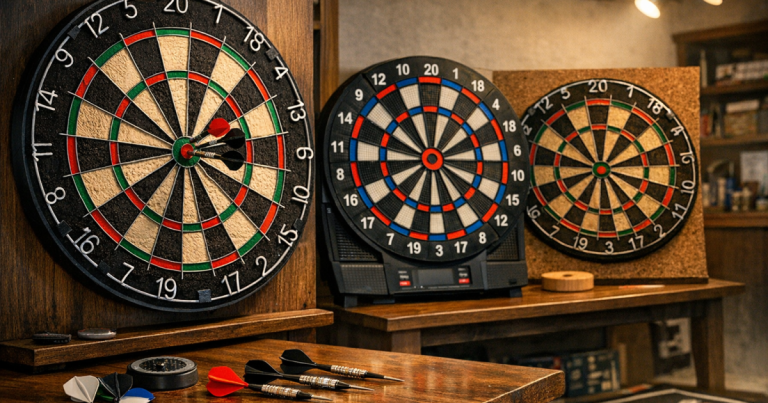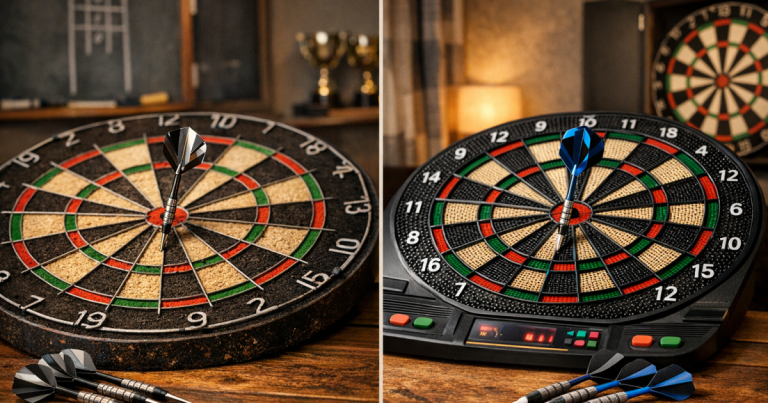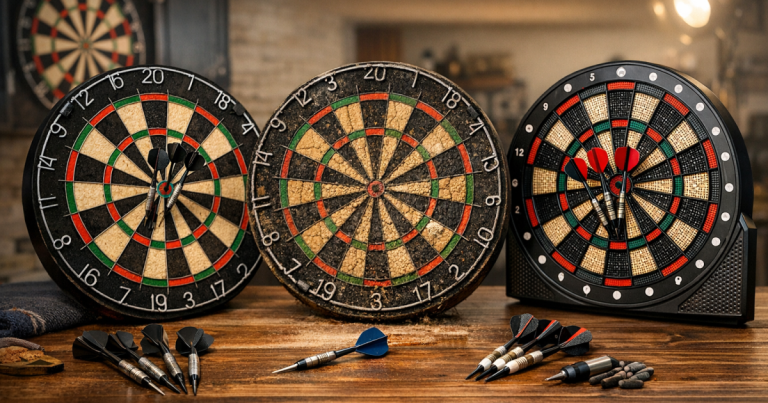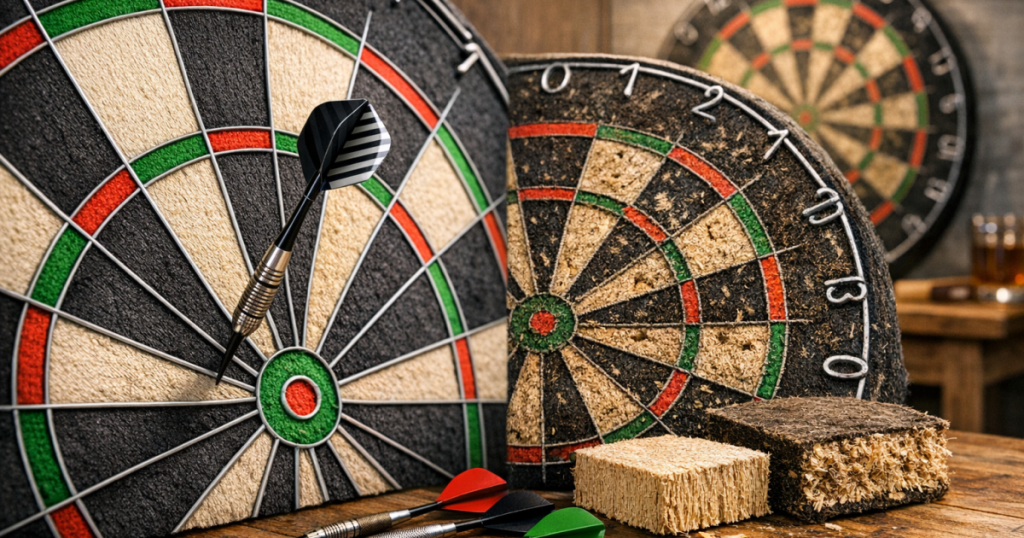
A good home board should feel firm under the dart, mark evenly, and recover well enough that the trebles do not look shredded after a few sessions. The quality of bristle dartboards comes down to three connected things: the sisal fibre itself, how densely it is compressed, and how neatly the playing surface is finished. Get those right and the board usually scores more cleanly, lasts longer and feels better in a normal spare-room, garage or dining-room setup.
What to know first
A bristle board is not made from animal bristles. It is made from sisal fibres, which are packed tightly together and held under compression so that a steel-tip dart can enter the board, then the fibres close back around the hole after the dart is removed. That self-closing behaviour is the main reason sisal boards remain the standard choice for serious steel-tip play at home.
The important point is that sisal quality is not just about how a board looks when new. A smart printed surface can hide mediocre fibre, loose compression or uneven finishing. The real test is how consistently the board accepts darts across the singles, doubles, trebles and bull, and how gracefully it wears after rotation and regular use.
For most home players, a better board is not necessarily the one that feels rock hard on day one. It is the one that balances grip, recovery and consistency. Too soft and the surface can mark quickly. Too dense or dry and darts may struggle to sit cleanly, especially if points are worn, dirty or overly smooth.
How sisal quality affects play
Sisal is a natural fibre, so boards can vary in texture, colour and feel. Better fibre tends to be cleaner, more even and more resilient. When it is cut and packed well, the surface accepts darts without crumbling, tearing or leaving obvious open holes after each throw.
Lower-quality fibre often shows itself through inconsistent feel. One segment may take darts cleanly while another feels loose or oddly resistant. Over time, weak areas can become fluffy, raised or compressed into dead patches. This is especially noticeable around popular targets such as treble 20, treble 19, double 16 and the bull.
Colour alone is not a perfect guide. A tidy, bright surface may look reassuring, but heavy ink, lacquer or an overly polished finish can affect how darts enter the board. A slightly natural-looking surface is not a problem if the fibre is well packed and the spider sits neatly.
Density: the balance between grip and recovery
Density is one of the biggest differences between an average board and a satisfying home board. It describes how tightly the sisal is compressed. Good density helps the board hold darts securely while still allowing the fibres to close after the dart is removed.
If a board is too soft, darts may sink deeply and leave bigger visible marks. The surface can also become lumpy as heavily used segments compress faster than others. Softness is not always obvious on the first throw, but it becomes clearer when the same beds are hit repeatedly during practice routines.
If a board is too dense, the dart can struggle to penetrate cleanly. That can contribute to darts dropping out, sitting at an awkward angle or bouncing away when they meet the wire. Hard boards can still be excellent, but they need good fibre quality, a clean surface and suitable dart points to work well.
The ideal feel is firm but not unforgiving. A well-made board gives a muted, solid entry sound, holds the dart without excessive wobble, and does not leave every landing mark looking like a small crater. If you are trying to understand unwanted rebounds, the board is only one part of the picture; point condition, throw angle and wire contact matter too. The separate guide on how to reduce dart bounce-outs on a bristle board is a useful next step if your darts are not staying in consistently.
Surface finish is more than cosmetics
The surface finish affects both playability and confidence. A clean finish means the sisal is cut evenly, the ink is applied without heavy build-up, and the wire system sits neatly against the face of the board. You should not see major ridges, loose fibres, deep dips or raised printed areas before the board has been used.
The spider also matters. Thinner, cleaner wires reduce the amount of metal a dart can strike, but the important thing is how well the wire is set into the surface. If sections of wire sit proud, bent or uneven, darts are more likely to deflect. If the wire is buried neatly and the sisal meets it cleanly, the board feels more consistent across the scoring beds.
Look closely at the bull area as well. It takes a lot of punishment during practice games and checkout drills. A neat bull should look cleanly centred, with no obvious looseness or ragged fibre before use. It is normal for this area to wear, but it should not look tired straight out of the box.
Examples of what you might notice at home
In a real home setup, sisal quality becomes obvious through patterns rather than single throws. A few bounce-outs do not prove a poor board, and a few neat holes do not prove a great one. Watch how the board behaves over several sessions.
- After 30 minutes of treble practice: the best boards show light marking but still look compact. Weaker surfaces may look torn or furry around the target bed.
- When rotating the board: a well-balanced board gives similar feel as fresh segments move into high-use positions. Uneven boards can feel noticeably different after rotation.
- During doubles practice: consistent density helps darts enter at a predictable angle rather than kicking out from certain outer beds.
- With different darts: heavier or sharper-pointed darts may mask a hard surface, while lighter darts can reveal whether the board is genuinely forgiving.
For a named example of how these qualities show up in a home context, our Unicorn Eclipse Ultra home setup review looks at a recognisable steel-tip board through the lens of everyday play, mounting and room use rather than showroom appearance alone.
Checks before you judge a board
Before deciding a board is too hard, too soft or wearing badly, remove a few variables. Many problems blamed on sisal are actually caused by tired dart points, poor lighting, damp storage or a board that is never rotated.
- Check dart points: smooth, rounded or burred points can cause grip problems and messy entry holes. Points should be clean and suitable for sisal, not excessively rough.
- Rotate regularly: high-use segments need rest. Moving the number ring spreads wear and helps the board recover more evenly.
- Avoid damp conditions: garages and outbuildings can work for darts, but persistent dampness is bad for sisal and metal components.
- Use even lighting: shadows can make the surface look more uneven than it is and can affect grouping, especially around doubles.
- Remove darts properly: twist gently as you pull rather than yanking downwards, which can drag fibres and enlarge holes.
If your board is already installed and you want to extend its useful life, the dartboard maintenance guide covers rotation, cleaning and signs that it is time to replace rather than keep patching over worn sections.
What a good board should feel like over time
The first few sessions can feel slightly different from later play. Some boards bed in as the surface settles and the fibres open up. That does not mean a board should need weeks of use before it plays properly, but a small change in feel is normal.
After regular play, a good sisal board should still have clear segment definition, a reasonably flat face and no dramatic difference between rotated high-use areas and lesser-used beds. Trebles and doubles will always age faster, but they should not collapse into deep grooves after modest home use.
Noise can be a subtle clue. A clean, solid thud normally suggests the dart is entering the fibre properly. A sharp clack may mean wire contact, a very hard surface or a mounting issue that lets the board move against the wall. A dull, loose sound can point towards soft or tired fibre, particularly if the dart sits too deep.
Common surface problems and what they usually mean
- Fluffy patches: often caused by repeated use of one segment, poor fibre recovery or dragging darts out without twisting.
- Raised fibres around holes: can be normal in small amounts, but heavy lifting suggests the surface is being pulled rather than closing neatly.
- Hard shiny areas: may appear where ink, compression or wear has made the surface less grippy.
- Loose-looking wire: can affect deflections and may indicate the board has taken a knock or is reaching the end of its useful life.
- Uneven colour fading: usually matters less than texture, firmness and whether the scoring beds remain clear.
It is worth being realistic. No sisal board stays pristine if you practise regularly. Wear is part of the game. The difference is whether the board wears gradually and predictably, or whether it develops frustrating dead zones early on.
Things readers ask
Is denser sisal always better?
No. Density helps durability and dart retention, but an overly hard board can increase deflections if the fibre, wire finish or dart points are not working together. The best feel is firm, consistent and forgiving enough for clean entry.
Why does my new board look marked already?
Sisal closes around dart holes rather than becoming invisible. Light marking is normal. Deep craters, fluffy tearing or obvious loose patches after limited use are more concerning.
Can I wet a bristle board to help it heal?
No. Adding water can damage sisal, distort the surface and encourage problems with metal parts. Keep the board dry and rely on rotation, sensible storage and proper dart removal.
Does a blade-style wire make more difference than sisal quality?
Both matter. A clean wire system can reduce deflections, but poor fibre quality or uneven density will still affect how the board grips darts and wears over time.
How often should I rotate the board?
For regular home practice, rotate before one scoring bed becomes heavily worn. Players who practise trebles most days may rotate frequently, while occasional players can do it less often.
What stands out
The best bristle dartboards do not rely on one headline feature. They combine resilient sisal, balanced compression and a tidy playing surface so the board feels consistent from the first session through months of normal use. When judging a board, look beyond colour and branding. Pay attention to how the fibre grips, how the surface recovers, how the wires sit, and how evenly the board ages after rotation.
For a home darts setup, that practical consistency matters more than perfection. A board that accepts darts cleanly, spreads wear sensibly and remains enjoyable to throw at will do more for your practice than one that only looks impressive on the wall.