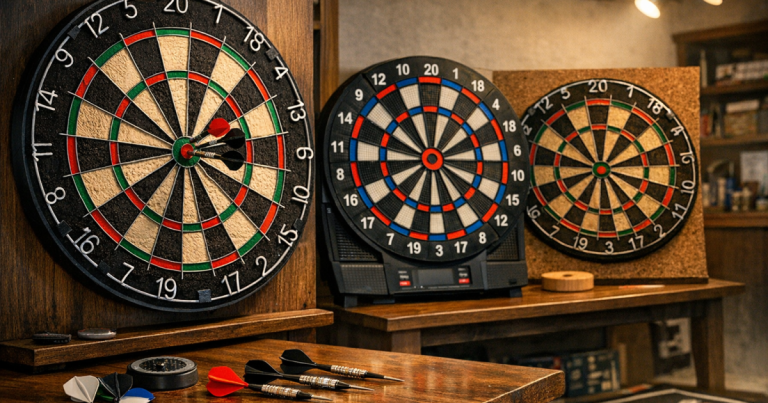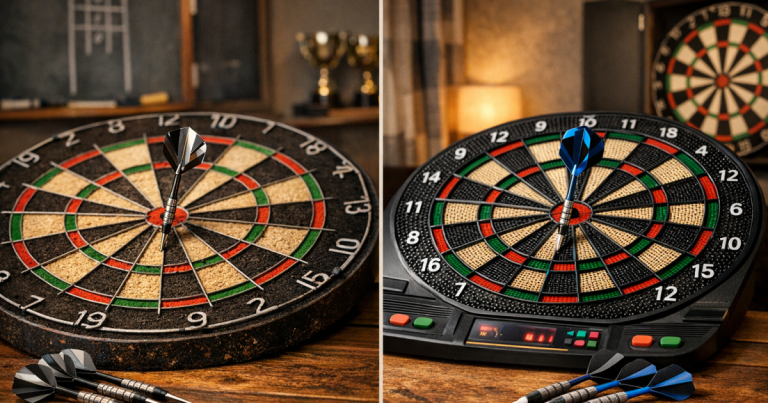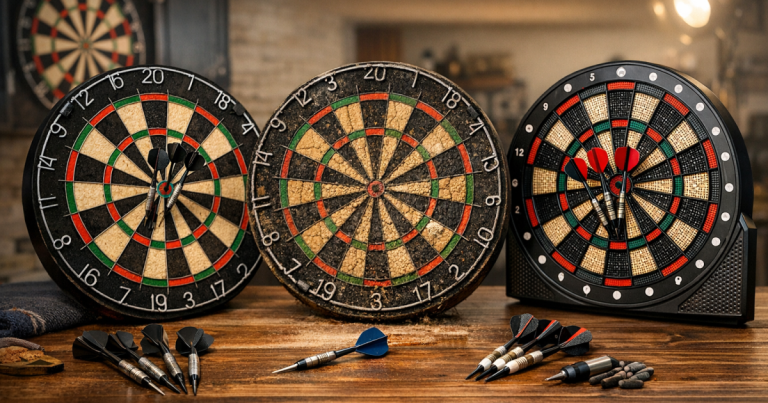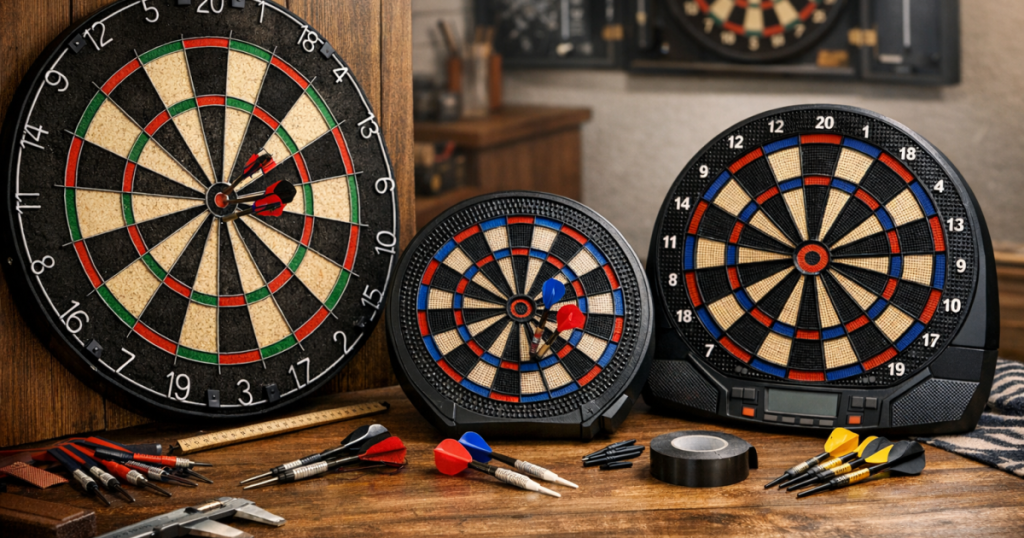
Buying a dartboard is not just about picking the one that looks most like the boards on television. A good dartboard buying guide should help you understand size, playing surface, wiring, wall space and day-to-day use before you commit. For a UK home setup, the right choice usually comes down to three questions: what darts you throw, how much room you have, and how often the board will be used.
At a glance
For most steel-tip home players, a full-size bristle board is the easiest and most authentic choice. It gives the familiar feel, works with standard steel-tip darts, and can be rotated to spread wear. Electronic boards are better suited to soft-tip darts, automated scoring and more casual family use, but they feel different and often have different segment layouts or throwing-distance guidance.
The details that separate a satisfying board from a frustrating one are usually less glamorous: the density of the playing surface, the thickness and shape of the wire, how securely the number ring sits, whether the board rotates cleanly, and whether your room can comfortably take the board, oche and protection around it.
Standard dartboard size and what it means at home
A standard match-style bristle dartboard is roughly 451 mm across. The bull centre is normally mounted 1.73 m from the floor, with the toe line 2.37 m from the face of the board for steel-tip play. Those numbers matter because a board that fits on the wall can still feel wrong if the throw line runs into a sofa, doorway or kitchen unit.
Measure the room before choosing accessories. Allow space not just for the board, but for the thrower’s stance, arm movement, missed darts and anyone walking nearby. In a compact spare room or garage corner, the board may fit physically while the oche position feels cramped. If that sounds familiar, the room-planning advice in choosing the right dartboard for a small room is a useful next step before you buy anything.
Electronic boards can vary more in playable area and setup guidance, so check the manufacturer’s instructions rather than assuming every board follows the same arrangement as a bristle board. If you are buying for young players, casual games or mixed family use, that may be perfectly fine; just make sure everyone understands the board is a different format rather than a direct substitute for a match-style steel-tip setup.
Bristle, paper, cork and electronic surfaces
The surface material has the biggest effect on feel, durability and how cleanly darts land. Bristle boards are usually made from compressed sisal fibres. When a steel-tip dart enters the bed, the fibres part and then close back up as the dart is removed. That is why bristle boards are the normal choice for regular steel-tip practice.
Paper-wound or coiled boards are usually cheaper and more basic. They can be fine for occasional novelty use, but they do not recover like sisal and tend to show damage more quickly. Traditional cork or wooden boards exist too, but they are less common for the kind of modern home setup most UK players are building.
Electronic boards use moulded scoring segments designed for soft-tip darts. The appeal is convenience: automatic scoring, game modes and a less intimidating format for casual players. The trade-off is a different throw feel, more bounce-outs from plastic segments, and the need to use compatible soft tips. If you are choosing between bristle and electronic, the broader comparison in bristle or electronic dartboards for UK home players explains the practical differences in more depth.
How wiring affects scoring and bounce-outs
The wire frame, often called the spider, divides the scoring segments. It looks simple, but it has a major influence on how forgiving the board feels. Older or basic boards often use round wire fixed with visible staples. When a dart hits that metal, it is more likely to bounce out or sit awkwardly.
Triangular or angled wire is designed to guide the dart towards the scoring bed rather than sending it straight back. Thinner blade-style wiring reduces the amount of metal covering the target area. Staple-free construction also removes small extra obstruction points around the treble, double and bull areas.
That does not mean every thinner-wired board will suit every player. You still need a firm, even sisal bed, a stable mounting system and a number ring that can be removed for rotation. Recognisable bristle-board examples include Viper Shot King and Winmau Blade 6 Triple Core; when looking at any specific board, verify the current wire profile, mounting hardware and included accessories rather than relying on the product name alone. For a closer look at a premium bristle example, see the Blade 6 Triple Core review.
Board depth, density and rotation
Good bristle boards feel firm without being rock hard. If the bed is too soft, darts can sit loosely and the surface may mark quickly. If it is too hard, lighter throws may struggle to hold. Most product pages will not tell the whole story, so look for signs of quality construction: clean segment definition, a properly fitted spider, a removable number ring and clear instructions for mounting and rotating the board.
Rotation is essential for regular home practice. The 20 segment takes the most punishment, especially if you are working on trebles. By removing the number ring and turning the board, you spread wear across fresh areas of sisal. A board that cannot be rotated easily will develop tired sections much sooner.
Also check how the board mounts. A centre screw and stabilisers are common on bristle boards, but the exact arrangement varies. The aim is simple: the board should sit flat, resist wobble and be easy enough to remove when you need to rotate it. If the wall is uneven, you may need to adjust the backing or mounting position rather than blaming the board.
Choosing for different home setups
For regular steel-tip practice
Choose a full-size bristle board with a removable number ring and modern, low-profile wiring. This gives the closest experience to league or pub-style play and supports proper practice routines. Add a surround or cabinet if the board is in a decorated room.
For casual family games
An electronic soft-tip board can make sense where automatic scoring and party-style games matter more than match realism. Check the recommended throw distance, compatible dart tips and sound controls if the board will be used in a shared room.
For tight rooms and shared spaces
Prioritise the complete footprint, not just the board diameter. A full-size board may still be right, but you might need a roll-out mat, a slim surround or a cabinet that closes when not in use. Avoid placing the board where a missed dart could hit glass, radiators, electrical fittings or a busy walkway.
Protection and accessories that influence the board choice
The board itself is only part of the setup. A surround protects the wall from near misses and is usually quicker to fit than a full cabinet. Cabinets add a neater look and can hide the board, but they need more wall width and door clearance. If your board will live in a lounge, hallway or multi-use room, the surrounding protection may influence which board feels realistic.
Surround fit is worth checking carefully. Most standard bristle-board surrounds are designed to grip around a full-size board, but fit can vary by board shape, cabinet design and wall position. Before ordering extras, compare the board diameter, cabinet clearance and wall space. The dartboard surround size and fit guide covers the practical measurements to check.
Lighting is another consideration, although it should not drive the board choice on its own. A board with deep shadows across the trebles is harder to practise on, even if the surface is excellent. If the board will be in a garage, shed or darker spare room, leave enough space for a ring light or suitable overhead lighting later.
Checks before you commit
- Confirm the dart type: steel-tip darts need a bristle-style board; soft-tip darts need a compatible electronic or soft-tip board.
- Measure the room: check board height, throw line distance and side clearance before thinking about cabinets or mats.
- Look at the wiring: thinner angled or blade-style wiring usually gives more open target area than thick round wire.
- Check rotation: a removable number ring helps you extend the useful life of a bristle board.
- Plan wall protection: a surround or cabinet is sensible in most homes, particularly for newer players.
- Read the included-parts list: mounting brackets, fixings, darts and accessories vary, so verify what is actually in the box.
- Match the board to the room: a premium board in a cramped or badly lit corner will not feel as good as a well-positioned mid-range setup.
Main lessons
The best dartboard for a home setup is the one that matches your darts, space and practice habits. For most serious or improving players, that points towards a full-size bristle board with good sisal, rotatable construction and low-profile wiring. For casual shared use, an electronic soft-tip board may be more convenient, provided you accept the different feel.
Use this dartboard buying guide as a checklist rather than a shortcut: confirm the size, understand the material, inspect the wiring style, and plan the protection around the board. Get those basics right and the rest of the setup becomes much easier to refine.