A darts mat can make a home board feel more settled: it protects flooring, marks the throw line, and helps players reset their stance. The catch is that darts mat materials vary more than many people expect, and the wrong surface can creep, curl, smell rubbery, or feel awkward underfoot in a small spare room.
For most UK home players, the right choice is less about copying a pub or competition venue and more about matching the surface to your room. A garage setup, a living-room board, a rented flat and a dedicated darts room all put different demands on the mat.
The short version
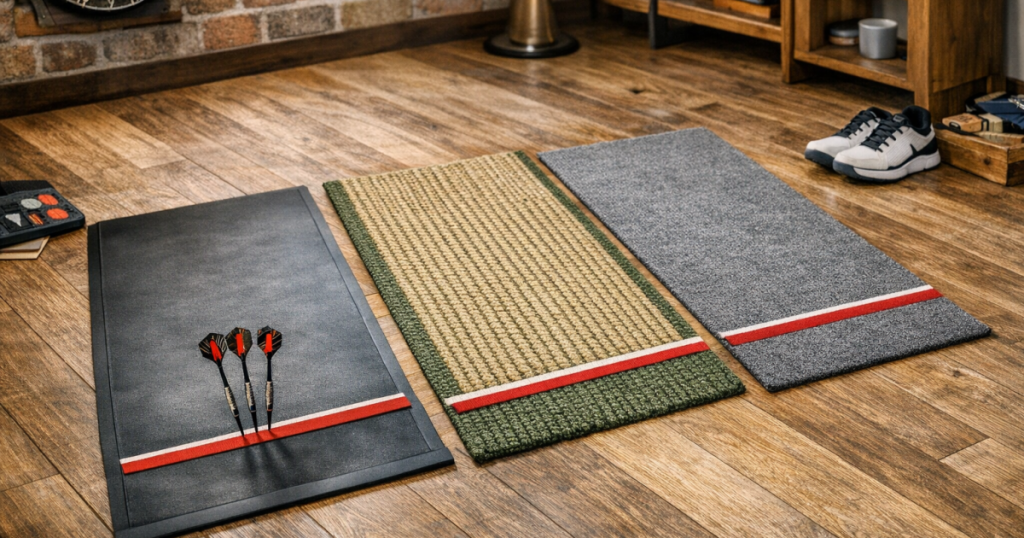
- Rubber mats are popular because they grip well, protect floors and are usually simple to roll away, but some can be heavy or have an odour when new.
- Carpet-style mats feel warmer and quieter underfoot, though they can move on smooth floors unless backed properly.
- Vinyl and PVC-style mats are easy to wipe down, but thin versions may curl or offer limited impact protection.
- Foam-backed or layered mats can improve comfort, but very soft surfaces may make your stance feel less consistent.
- The best oche setup keeps the throw line clear, flat and repeatable, without becoming a trip edge in the room.
Why the mat material matters at the oche
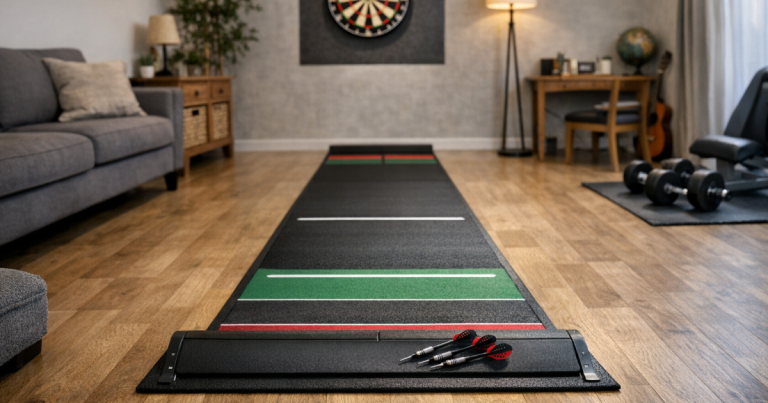
A darts mat does three jobs at once. It marks the throwing distance, gives your lead foot a repeatable place to land, and provides a buffer between darts, shoes and flooring. Material choice affects all three.
A mat that slides slightly each time someone steps on it can gradually pull your oche line out of position. A mat that curls at the end can become annoying in a narrow room. A mat that is too thin may be fine for marking the throw, but less reassuring if a steel tip dart drops onto laminate, engineered wood or tiles.
This is why a better setup starts with the room, not the label on the packaging. If you are still mapping out the whole playing area, it is worth pairing material choice with a more complete plan for a reliable darts mat and oche area, including how the mat sits relative to skirting boards, furniture and walkways.
Rubber mats: grip, weight and floor protection
Rubber is one of the most common choices for home oche mats because it naturally grips many floor surfaces. On carpet it tends to feel planted, and on hard floors it can reduce unwanted movement when compared with very light mats.
The main benefit is confidence. A good rubber mat gives a firm feel underfoot, so your front foot is less likely to slide as you settle into your throw. It also gives more impact resistance than a thin printed sheet, which matters if stray darts occasionally land short of the board.
There are trade-offs. Rubber can be weighty, which is useful when the mat is down but less convenient if you need to roll it away after every session. Some rubber mats also have a noticeable smell when new, especially in smaller rooms with poor ventilation. That usually matters more in bedrooms, box rooms and multi-use living spaces than in a garage or games room.
Where rubber works well
- Garage and utility-room setups where durability matters more than appearance.
- Hard floors that need extra grip and impact protection.
- Players who want the mat to stay put during longer practice sessions.
- Rooms where the mat can be left flat rather than rolled away every night.
Carpet-style mats: comfort and a quieter feel
Carpet-style darts mats are appealing in homes because they feel softer and warmer than plain rubber. They can also look less industrial, which helps when the dartboard shares space with a spare room, study or living area.
The underfoot feel is often the biggest advantage. If you practise for longer periods, a slightly warmer surface can feel more comfortable than standing on cold tiles or concrete. A carpet surface can also reduce the sharp sound of footsteps, which is useful in flats or shared homes.
The limitation is stability. A carpet-top mat without decent backing can ruck up or creep across smooth flooring. On deeper household carpet, it may not lie perfectly flat, particularly if it has been stored rolled tightly. If the mat includes a printed throw line, any movement affects your distance from the board, so check its position regularly rather than assuming it has stayed true.
Where carpet-style mats make sense
- Multi-use rooms where appearance matters.
- Players who prefer a warmer, quieter stance area.
- Homes where the mat is being used mainly to define the oche rather than absorb frequent dart impacts.
- Spaces where a non-slip backing can sit flat without bunching.
Vinyl and PVC-style mats: wipe-clean convenience
Vinyl and PVC-style mats are usually chosen for convenience. They tend to be easy to wipe clean, and they can be light enough to move around without much effort. That makes them practical for occasional players or homes where the board comes out for social sessions rather than daily practice.
The issue is thickness. A thin mat can mark the oche perfectly well, but it may not give much protection if a steel tip dart falls point-first. Thin edges can also curl, particularly after storage, and that can spoil the feel of the throw line even if the printed measurement is correct.
If you like the wipe-clean idea, pay attention to how the mat lies once unrolled. The surface should settle flat without waves near the oche line. It should also have enough texture that your shoe does not skate across it, especially if the mat is used in a kitchen, conservatory or garage where the floor can become dusty.
Foam-backed and layered mats: comfort with a few cautions
Some mats use a layered build, such as a printed top surface with a softer backing. This can make the stance area more comfortable and can help with floor protection. For casual home darts, that extra cushioning may be welcome.
However, too much softness can work against consistency. A very spongy surface changes how your foot settles, particularly if you stand with one foot partly on the mat edge. It can also make a raised oche feel less stable if the oche is not properly supported.
The aim is not to find the softest mat possible. The aim is to find a surface that feels forgiving but still firm enough for a repeatable stance. If you use a physical raised oche, check that it sits securely and does not rock, sink or tilt on the backing.
How each material behaves on common UK floors
Most home setups are built around the room you already have, so the floor underneath the mat matters as much as the mat itself.
- Laminate and engineered wood: Grip is the main concern. Rubber or a mat with reliable backing usually works better than a very light vinyl sheet. Check that the underside will not mark the floor finish.
- Carpet: A heavier mat tends to sit better, but thick pile can make edges lift. Avoid anything that bunches near the throw line.
- Tiles: Impact protection becomes more important because dropped darts can damage points and hard surfaces can be unforgiving. A firmer rubber or layered mat usually feels safer than a thin sheet.
- Concrete garage floors: Durability and comfort matter. Rubber handles rougher use well, while a cushioned layer can make longer practice less tiring.
- Vinyl household flooring: Look for stability and check whether the mat underside is suitable for the floor. Some finishes can react poorly to certain rubber backings over time, so it is worth verifying with the floor manufacturer’s care guidance.
Flat oche line or raised oche?
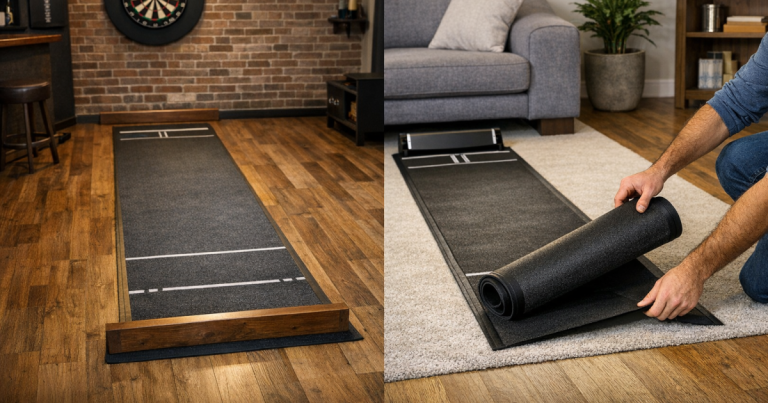
The mat material also changes how the oche itself feels. A flat printed line is simple, low-profile and easy to roll away. It suits shared spaces because there is no raised edge to step over. The downside is that you have to discipline yourself not to creep forward, especially during casual games.
A raised oche gives a more physical reference point. It can help you set your foot consistently, but it needs a stable base. On a soft mat, a raised strip can move or rock. On a thin mat over a hard floor, it can feel more secure but may need careful placement so it does not become a trip point.
For a home setup, the best answer often depends on how permanent the board area is. A dedicated darts room can justify a more fixed-feel arrangement. A living-room or hallway setup is usually better with a lower-profile mat that can be moved without fuss.
Safety and room planning still come first
A mat is useful, but it does not make a cramped or poorly placed board safe. You still need enough room behind the thrower, sensible clearance around the board, and a layout that keeps people from walking across the throw path.
This is particularly important in UK homes where dartboards are often fitted in garages, dining areas, garden rooms or spare bedrooms rather than purpose-built games rooms. Before focusing on finish and feel, make sure the board position, standing area and surrounding space are sensible. The guide to planning a safe throwing area around your dartboard is a useful next step if your room is tight or shared with family traffic.
Material choice by playing style
Different players put different demands on a mat. A casual player who throws a few legs at the weekend may value easy storage more than maximum impact protection. A home practiser who throws daily will notice small changes in stance, grip and mat movement much sooner.
- Occasional social play: A lighter mat can be enough if it lies flat and clearly marks the oche.
- Regular practice: A heavier rubber or well-backed mat is usually more satisfying because it moves less.
- Shared living space: A carpet-style or neater low-profile mat may blend in better and be easier to store.
- Garage darts: Durability, grip and comfort on colder floors should take priority.
- Players using steel tip darts: Floor protection matters more than it does with soft tip setups, especially on hard flooring.
Seen this way, darts mat materials are not simply a neatness detail. They influence how stable the oche feels, how protected the floor is, and how likely you are to leave the setup ready for regular use.
Common problems and what causes them
The mat keeps creeping forward
This usually points to low weight, poor backing or a very smooth floor. A heavier mat often helps, but so does checking that dust, polish or grit is not reducing grip underneath. On carpet, movement can be caused by pile direction, not just the mat itself.
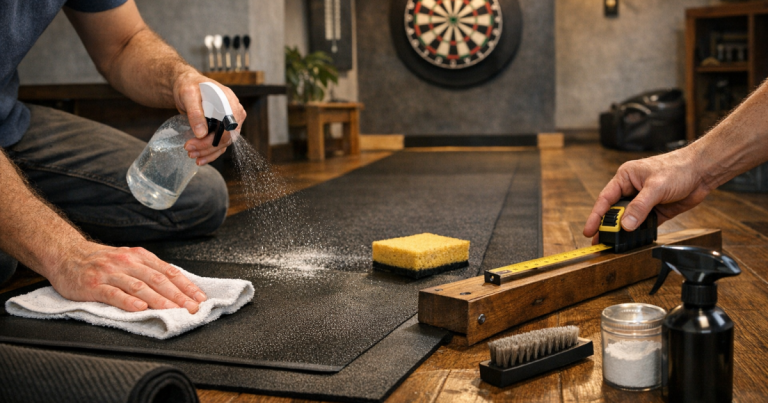
The edges curl after storage
Curling is common when mats are stored tightly rolled. Letting the mat settle flat before play helps, but persistent curling is a sign that the material may be too thin or too memory-prone for your room. Avoid placing the oche line near a curled edge.
The throw line looks right but feels wrong
If your stance feels cramped or stretched, recheck the full setup rather than blaming the mat immediately. Board height, oche distance, wall choice and floor level all interact. A mat can only mark the correct position if the board and room have been set up accurately. If you are still deciding where the board belongs, start with choosing the best wall for a dartboard before committing to a permanent mat position.
Questions people ask
Is a rubber darts mat better than a carpet mat?
Rubber is usually better for grip and floor protection, while carpet-style mats often feel warmer and look softer in a home room. The better choice depends on whether stability, comfort or appearance matters most in your setup.
Can I use a normal rug as a darts mat?
You can, but it is not ideal unless it lies flat, does not slide and has a clearly measured oche line. A normal rug may look fine but can move enough to make your throwing distance inconsistent.
Will a darts mat protect laminate flooring?
A good mat can reduce the risk of scuffs and dropped-dart marks, but protection depends on thickness, backing and how often darts land short. For laminate, avoid thin mats that slide or offer little impact resistance.
Should the oche be raised or printed on the mat?
A printed line is easier to store and safer in shared rooms. A raised oche gives stronger foot feedback, but it needs to sit securely and should not create a trip edge.
How often should I check the mat position?
Check it before each session if the mat is moved or rolled away. If it stays down permanently, a quick visual check is usually enough, with occasional measuring to confirm the oche has not shifted.
Final thoughts
A better oche setup is not just about having a mat with the right measurement printed on it. It is about choosing a material that stays flat, grips the floor, feels consistent underfoot and suits how the room is actually used.
Rubber is the dependable choice for many regular players. Carpet-style mats bring comfort and a more homely feel. Vinyl and PVC-style options can work well for occasional play when easy cleaning and storage matter. Layered mats can add comfort, provided they do not become too soft or unstable at the throw line.
The simplest test is practical: stand at the oche, settle your lead foot, and ask whether the surface helps you repeat the same stance without thinking about it. If it does, the mat is doing its job.