A throw line mat sounds like a small upgrade until you are forever rechecking your toe position, nudging tape back into place, or worrying about darts landing on a hard floor. This DartMat Pro Throw Line Mat review focuses on whether it is a tidy, worthwhile fix for a home darts space rather than just another accessory under the board.
Quick verdict: the DartMat Pro Throw Line Mat makes most sense for players who want a clear, repeatable throw line without fitting a permanent oche. It is not a substitute for measuring your setup properly, and buyers should verify the current dimensions, printed markings and floor compatibility before ordering, but as a simple home upgrade it has a lot of appeal.
Product overview
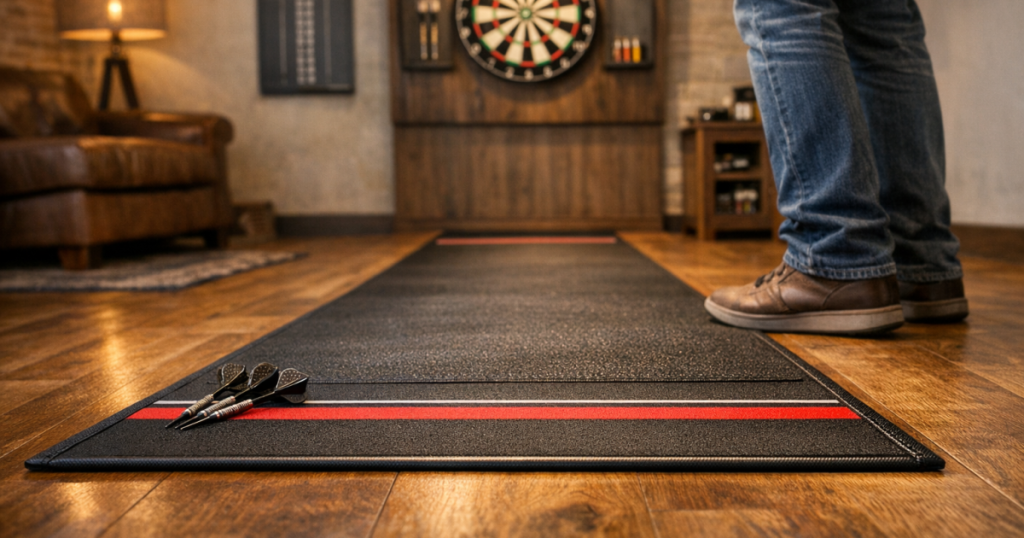
The DartMat Pro Throw Line Mat is a throw line mat designed to sit between the player and the dartboard, giving you a visible oche position while adding a layer between falling darts and the floor. For many UK home setups, that is the sweet spot: more structured than tape on carpet or laminate, less permanent than screwing down a raised oche, and easier to move when the room has to go back to normal.
The main value is consistency. A mat gives your feet a repeatable reference point, which matters if you practise regularly or share the board with other players. It also helps define the playing area visually, which is useful in spare rooms, garages, garden rooms and mixed-use living spaces where the dartboard is not the only thing in the room.
It is still worth being precise. A printed throw line does not remove the need to measure from the face of the board to the oche position. If you are deciding whether a mat is right compared with a fixed toe line, raised stop or recessed option, the guide to raised, recessed and marked darts oche types is a useful next step before you commit.
Shopping note: check the latest retailer listing carefully for size, surface material, backing style, printed distance markings and delivery format. Dart mat product details can vary by listing, and the right choice depends heavily on your room depth and floor finish.
Key specs
- Product name: DartMat Pro Throw Line Mat.
- Brand: DartMat.
- Product type: throw line mat for a home darts setup.
- Primary purpose: marking the throw line and helping protect the floor area in front of the board.
- Setup style: non-permanent floor placement; verify whether the current version is supplied rolled or flat-packed by the retailer.
- Room requirement: measure your available throw area before buying, including clearance behind the player.
- Throw distance markings: confirm the current printed markings match the dartboard format and distance you intend to use.
- Floor compatibility: check suitability for carpet, laminate, vinyl, tiles or garage flooring before purchase.
- Maintenance: follow the seller or manufacturer care guidance for cleaning, rolling and storage.
Pros and cons
Pros
- Clearer foot placement: a visible mat line is easier to use consistently than a small tape mark, especially when several people use the same board.
- Non-permanent setup: useful for rented homes, spare rooms and shared spaces where you do not want to drill, screw or permanently mark the floor.
- Helps define the playing zone: the mat makes the board area feel more deliberate and organised, which can improve practice rhythm.
- Some floor protection: it adds a sacrificial layer where darts are most likely to drop, although it should not be treated as full-room protection.
- Easy to remove: being able to roll or move a mat is a big advantage when the room has other uses.
Cons
- Must still be measured accurately: relying on placement by eye can leave the oche wrong, even if the mat itself is well made.
- May move on some floors: smooth flooring can make any mat more prone to creeping unless the backing grips well.
- Not as solid as a raised oche: players who like a physical toe stop may still prefer a fixed or raised solution.
- Protection is limited to its footprint: bounce-outs and stray darts can still land beyond the mat.
- Storage matters: poor rolling or folding habits can affect how neatly a mat sits when brought back out.
Performance in real use
The best thing about the DartMat Pro Throw Line Mat is the way it turns an informal board area into a proper throwing lane. That sounds cosmetic, but it has a practical effect. When the oche is visible and the playing space is clearly defined, practice feels less improvised. You are not guessing where your toes were last time, and guests are less likely to stand too close or too far away.
Oche accuracy and repeatability
A mat can only be as accurate as the person who positions it. The sensible approach is to set the dartboard height first, then measure the throwing distance from the board face, not the wall, before placing the mat. Once positioned correctly, the line gives a repeatable reference point that is much more convenient than rechecking tape every session.
For serious practice, the lack of a physical stop is worth noting. Some players like to feel the front edge of a raised oche under the shoe because it gives an immediate cue that the foot has reached the limit. A printed or marked line asks for a little more discipline. That is not a flaw for casual and intermediate home players, but it is a real distinction.
Stability underfoot
Stability depends on the mat backing, the floor surface and how often it is moved. On carpet, mats often feel naturally settled, though thicker pile can make edges less crisp. On laminate, vinyl or tiles, the key thing to verify is grip. A mat that creeps forward during a session quickly becomes irritating because the throw line is only useful if it stays where you placed it.
If your darts space is in a garage or outbuilding, also think about dust and grit. Small debris under any mat can make it less stable and may mark the floor over time. A quick sweep before laying it down is a small habit that helps the mat sit flatter and last better.
Floor protection
For a home setup, a throw line mat is most useful as everyday floor protection in the highest-risk zone. It can help with darts that slip during practice, bounce-outs that drop short, or darts placed down between visits to the board. It is not the same as protecting the wall, skirting board or a wide floor area around the cabinet.
Soft flooring will still compress, hard flooring can still be marked beyond the mat, and steel-tip darts can behave unpredictably when they fall. If your priority is preserving a newly decorated room, treat the mat as one part of the setup rather than the whole protection plan.
Comfort and room feel
One underrated benefit is comfort. Standing in a defined position on a mat can feel better than standing directly on a cold garage floor or polished laminate, particularly during longer practice sessions. It also gives the board area a more finished look without needing a cabinet, surround, lighting ring and permanent oche all at once.
In smaller UK rooms, check the full footprint before buying. The issue is not just whether the mat fits from board to player; you also need space behind the oche for a natural stance and for people to move around safely. A mat that has to be tucked under furniture or bent up against a wall will quickly become annoying.
Cleaning and storage
Maintenance should be simple, but the current care advice from the seller or manufacturer should take priority. In general, a darts mat benefits from being kept dry, cleaned gently and stored without sharp folds. If it arrives rolled, give it time to relax flat before judging how it sits.
Players who put the board away after every session should think carefully about storage. A removable mat is convenient, but only if you have somewhere sensible to keep it. Repeatedly crushing it behind furniture can cause edge curl or make it slower to settle when you bring it back out.
Who it’s best for / who should skip it
The DartMat Pro Throw Line Mat is best for players who want a cleaner, more consistent home setup without fitting anything permanent to the floor. It suits casual players who want the room to look neater, improving players who are starting to practise more seriously, and households where several people use the board and need an obvious throw line.
It is also a strong fit for rented homes, spare bedrooms, multipurpose garages and garden rooms. In these spaces, a fixed oche can feel excessive, while tape often looks scruffy and wears quickly. A mat lands in the middle: practical, removable and visually clearer.
You should skip it if you need a solid raised toe stop for league-style practice, if your available floor space is tight, or if your main concern is wall protection rather than floor protection. It may also be less suitable if your floor is very slippery and the listing does not give you confidence about backing grip.
Before buying, measure the room and check the live product details rather than assuming it will fit because it is “just a mat”. That one step prevents most of the frustration people have with darts floor accessories.
Alternatives
If you like the idea of a mat but want to compare formats, the Winmau Xtreme Dart Mat is a recognisable alternative to look at alongside the DartMat option. Do not assume one is better purely from the name; compare the published dimensions, backing, printed markings, storage format and how well each suits your floor surface.
If the real problem is missed darts hitting painted walls rather than darts dropping near the oche, a surround may be a smarter upgrade than another floor mat. The Red Dragon Defender Surround review looks at that wall-protection question more directly and pairs naturally with a mat-led setup.
A fixed raised oche is the other route, but it changes the feel of the room. It gives a physical stop and a more permanent practice lane, yet it is less flexible if the space doubles as a home office, utility area or family room. For many homes, the decision comes down to whether you value a removable setup or a competition-style toe reference.
Helpful questions
Does the DartMat Pro Throw Line Mat replace measuring the oche?
No. You still need to measure the throw distance properly from the dartboard face before positioning the mat. The mat helps you keep that position consistent once it is set.
Will it protect laminate or wood flooring?
It can help protect the area it covers, but it cannot protect the whole room. Check the backing suitability for your floor type and remember that bounce-outs can land beyond the mat.
Is a mat better than tape for a home darts setup?
For most regular players, yes. A mat looks neater, is easier to see and is less likely to peel or shift than tape, although tape is cheaper and takes up no storage space.
Can it be used with a dartboard cabinet?
Usually, provided the board is mounted at the correct height and you have enough floor depth. Measure from the board face, not the cabinet doors or the wall behind it.
Verdict + score
The DartMat Pro Throw Line Mat is a sensible upgrade for home players who want a clearer oche, a tidier room and a bit of floor protection without making the setup permanent. Its value depends on fit: measure carefully, verify the current product details, and think about your floor surface before ordering. It will not satisfy everyone who wants a raised toe stop, and it should not be treated as a complete protection system, but for a flexible home darts area it is easy to recommend. Score: 8.3/10.
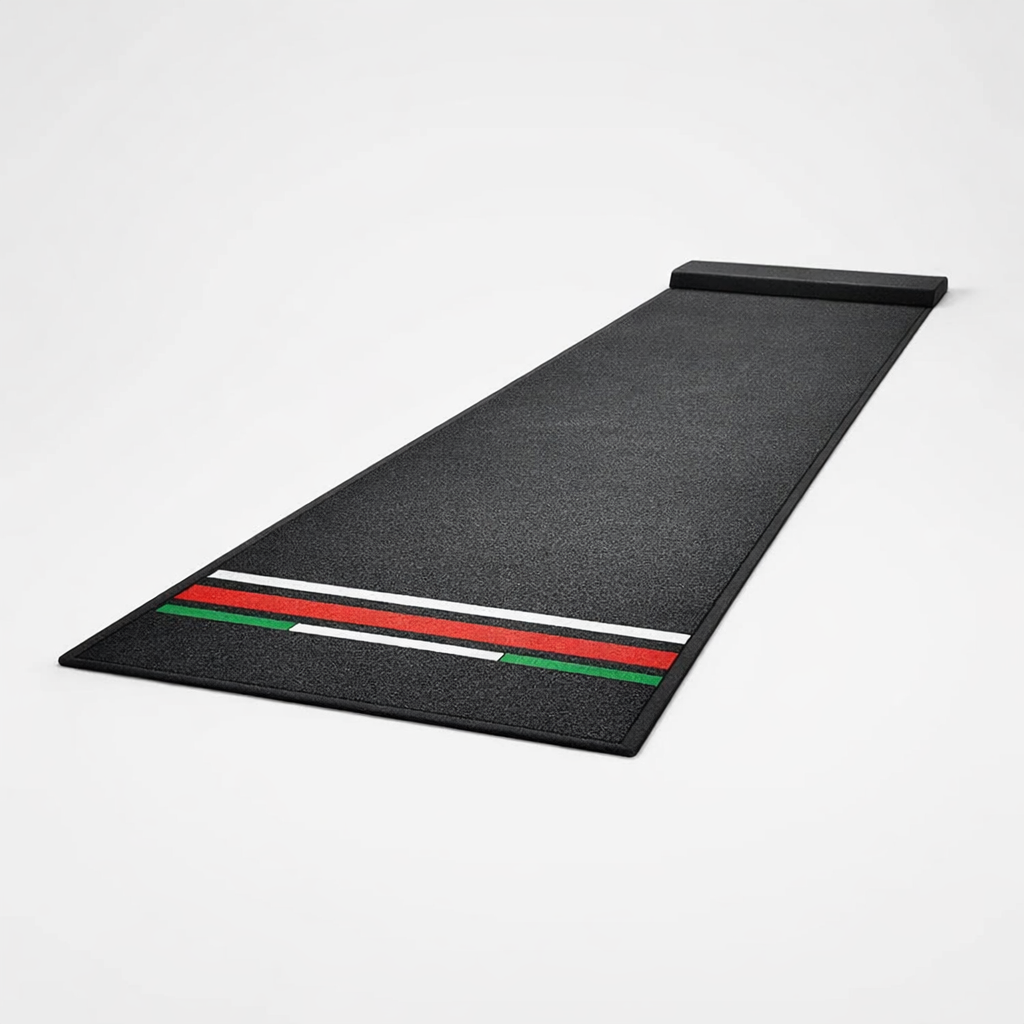
DartMat Pro Throw Line Mat
It will not satisfy everyone who wants a raised toe stop, and it should not be treated as a complete protection system, but for a flexible home darts area it is easy to recommend.
You might also like: Dartboard Lighting Brightness: Lumens, Colour Temperature and Placement.